Fløibanen funicular guide — prices, tips, and what to expect at Mount Fløyen
Bergen: 24, 48, 72 or 96-Hour Bergen Card
Is the Fløibanen funicular worth it in Bergen?
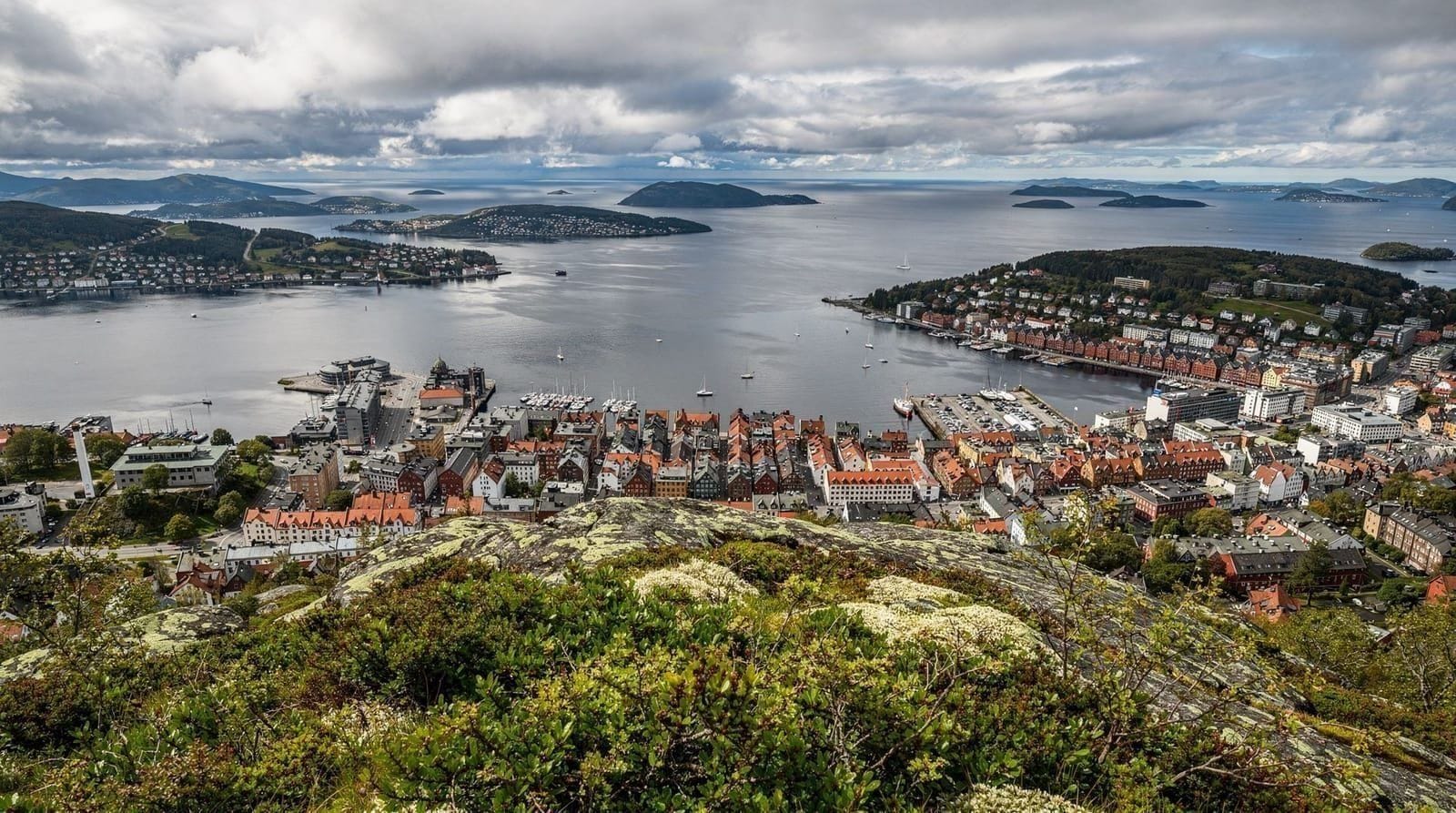
Yes, reliably so. The 6-minute ride to Mount Fløyen (320 m) gives the clearest panoramic view over Bergen harbor and the seven mountains. Current ticket prices are on floibanen.no. Pre-book a specific departure time in summer to avoid 30–60 minute queues. Even in light rain, the ride is worth taking.
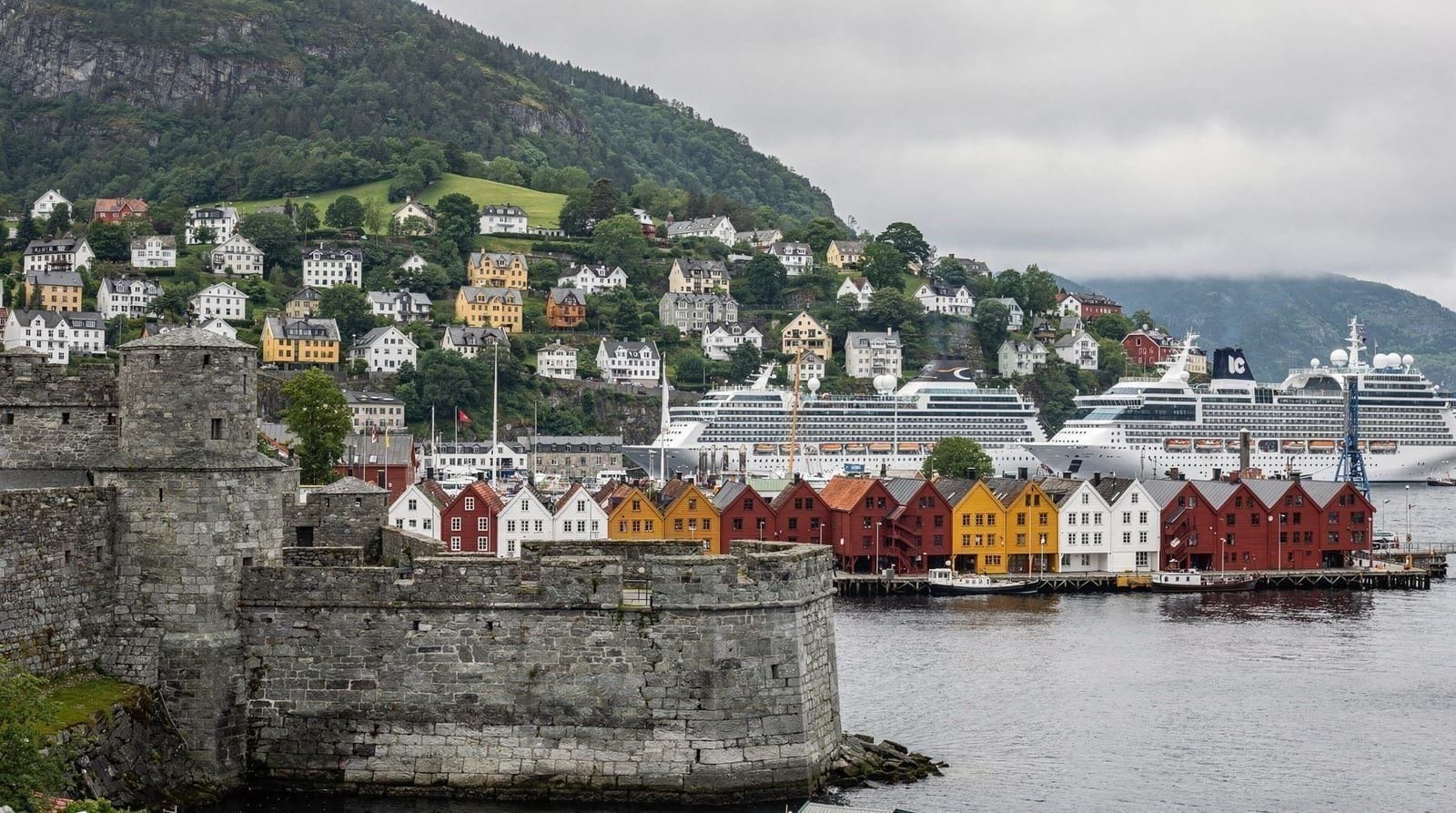
The Fløibanen is Bergen’s most-visited paid attraction, and for good reason: it solves a specific problem elegantly. Bergen is set among seven mountains and the harbor, but seeing the city from above requires climbing 320 meters. The funicular does this in 6 minutes from a station that is a 3-minute walk from Bryggen. For most visitors, this is the clearest way to understand Bergen’s geography before exploring at street level.
| Where | Vetrlidsallmenningen, 3 min walk from Bryggen |
| Cost | NOK 220 return adult; NOK 110 with Bergen Card |
| Time needed | 6 min ride; 30–60 min at the summit; up to 2 hours with trails |
| Getting there | On foot from Bryggen or the Fish Market |
| Best time | Before 9 am or after 4 pm to skip summer queues |
How the Fløibanen works
The funicular runs on two cables between the lower station at Vetrlidsallmenningen (behind the Fish Market) and the summit of Mount Fløyen at 320 meters elevation. It operates continuously throughout the day on a timetable that varies by season. The carriages carry roughly 100 passengers each.
2026 prices (return ticket):
- Adult: NOK 220
- Child 6–15: NOK 110
- Under 6: free
- Bergen Card holders: 50% discount (NOK 110 adult)
One-way pricing is also listed at floibanen.no — relevant if you plan to walk down (45–60 minutes, well-marked path) rather than take the funicular back.
Opening hours (approximate):
- Summer (mid-May–Sep): 7:30 am – 11 pm (last departure varies by day)
- Shoulder (Mar–mid-May, Oct): 8 am – 10 pm
- Winter (Nov–Feb): 8 am – 11 pm (reduced; check flibanen.no for exact timetable)
Booking ahead — why it matters in July and August
Between late June and mid-August, the Fløibanen lower station queues reach 30–60 minutes for walk-up passengers between roughly 10 am and 3 pm. The online ticket system allocates passengers to specific departure slots — buying online guarantees your departure time and allows you to skip the ticket queue (there is still a boarding queue, but it moves faster).
Book at flibanen.no or via the Bergen Card app. For cruise passengers with limited port time, pre-booking is particularly important — a 60-minute queue can derail a 4-hour itinerary.
In September and outside summer, walk-up is usually fine; queues are minimal or nonexistent.
What you see from the top
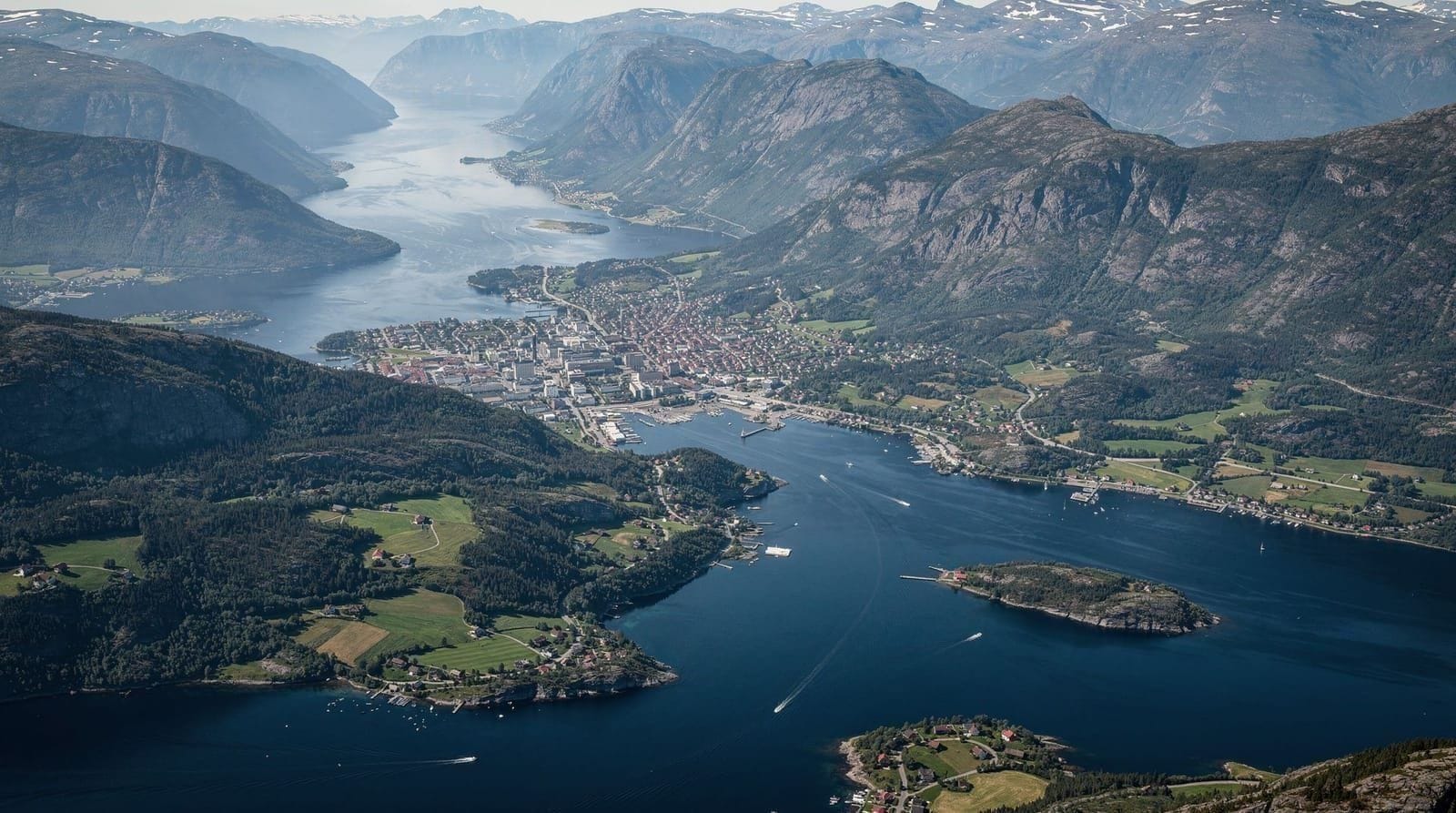
From the Fløibanen summit platform, the view takes in:
- Vågen harbor and the Bryggen frontage directly below to the north
- The Nordnes peninsula and Bergen Aquarium to the west
- The city spreading south toward Flesland airport
- The ring of the seven mountains: Fløyen (320 m, where you stand), Ulriken (643 m), Sandviksfjellet, Løvstakken, and others
- Bergen’s islands to the west on clear days
The standard view is from the paved summit platform immediately above the upper funicular station. A short walk (3 minutes) to the Fløibanen viewpoint monument gives a slightly cleaner angle without other tourists in frame.
In thick cloud and heavy rain, the view is obscured, though the experience of traveling into low cloud is its own kind of atmospheric. In light rain or thin cloud, the city below remains visible. Bergen has approximately 230 rainy days per year, so accepting some mist is part of the experience.
Things to do at the Fløibanen summit
Fløien Folkerestaurant: The summit restaurant has been operating since 1925 in its current form and serves Norwegian classics. Outdoor terrace seating in summer with the harbor view. Breakfast from NOK 120; lunch mains NOK 180–280; dinner mains NOK 260–350. The waffles (NOK 75) are the best-value option and a Bergen institution. The restaurant is open daily; kitchen hours vary seasonally.
Troll Forest (Trollskogen): A short loop trail from the summit area passes through a family-oriented section with carved wooden trolls and story boards. Primarily for children, but the walk takes you into the birch and pine forest above the exposed summit area and is worth 20 minutes regardless of age.
Hiking trail network: Mount Fløyen sits at the center of a marked trail network that extends to Rundemanen (568 m, 2–3 hours round trip) and along the ridge toward Ulriken (643 m, Bergen’s highest mountain). The ridge walk from Fløyen to Ulriken takes approximately 3 hours one-way; the descent from Ulriken is by cable car (NOK 190 one-way) or by a marked trail back into the city.
The walking descent: A marked trail descends from the summit to the lower funicular station in 45–60 minutes. It is well-graded but can be slippery in wet weather — wear shoes with grip. This is a good option for visitors who want some hiking without a full day commitment.
The Fløibanen in winter
The funicular operates year-round. Winter visits are genuinely underrated. The city below in snow (December–February, though snow is not guaranteed at sea level) is unusually quiet; the low slanted winter light on the harbor hits differently from above. Crowds are minimal; queues essentially nonexistent.
In December, Bergen’s Christmas market (Julemarked) is visible from the summit spread along the historic center below. The city’s lights in the dark winter evenings, from above on the funicular, are one of Bergen’s most cinematic moments. See the Bergen in winter guide for what else to plan around a cold-season visit.
Fløibanen for cruise passengers
For cruise passengers with a 4-hour port stop, the Fløibanen is a priority. The lower station is walkable from the cruise pier (Skolten/Jekteviken terminals) in approximately 15 minutes via Bryggen. At 6 minutes each way plus 20–30 minutes at the top, the entire Fløibanen experience takes under 2 hours including walking time.
Pre-book your departure slot before your ship arrives — see the cruise port guide for complete 4-hour and 8-hour itinerary suggestions.
Bergen Card — includes 50% off FløibanenWhat the summit view teaches you about the rest of Bergen
Because the Fløibanen is so central and so quick, it works well as an orientation stop before exploring the rest of the city at street level. From the summit platform you can trace the exact route you will later walk through Bryggen’s alleyways, pick out the KODE museum buildings along the harbor described in the Bergen museums and culture guide, and see how compact the historic center actually is relative to the mountains around it — useful context if you are also planning the getting around Bergen logistics for your stay.
Many first-time visitors do the Fløibanen last, as a “nice view to finish the trip,” when doing it first on day one actually makes the rest of the visit easier to navigate mentally. Once you have seen the harbor, the fjord entrance, and the ring of surrounding mountains from above, street-level Bergen makes considerably more geographic sense.
Fløibanen vs. Ulriken cable car
Bergen has two cable ascents: the Fløibanen funicular (320 m) and the Ulriken cable car (643 m). They are not interchangeable.
Fløibanen is the better choice for most visitors: it starts in the city center, the view is directly over the harbor and Bryggen, and the summit area is well-developed with restaurant and trail access. The ride itself is part of the experience.
Ulriken (NOK 255 one-way, NOK 435 return) gives a higher vantage point and access to the mountain plateau, but the lower station requires a bus from the city center (or a long walk) and the view is more spread — you see more of Bergen but with less of the harbor-and-Bryggen drama. Ulriken makes more sense as a half-day hiking addition than as a standalone city sightseeing activity.
The Fløibanen ridge walk — combining with Ulriken
For visitors who want a full mountain day without a serious expedition, the Fløyen–Ulriken ridge walk is Bergen’s best long-hike option. Take the Fløibanen up (6 minutes), then follow the marked ridge trail south past Rundemanen (568 m) toward Ulriken (643 m). The walk takes 3–4 hours depending on pace. At Ulriken, take the cable car down (NOK 190 one-way) to the lower station, then bus or taxi back to the city.
Total cost: a one-way Fløibanen ticket plus the Ulriken cable car down; check current prices on floibanen.no and ulriken643.no.
If you would rather not navigate the ridge alone, a guided walk exploring Mount Fløyen on foot is an easy way to get the trail context and the stories behind the landscape. For the trail itself, the Mount Fløyen guide covers the summit area in more detail, and the Ulriken cable car guide explains the other end of the traverse. More route ideas are collected in the guide to hiking around Bergen.
The trail is marked but requires appropriate footwear — waterproof hiking boots or sturdy trail runners. In wet weather, the section between Rundemanen and Ulriken can be boggy. In summer (June–August), the trail is well-maintained and suitable for fit walkers; earlier in spring or later in autumn, check conditions at the Fløibanen upper station.
The descent from Ulriken by cable car provides a completely different angle on Bergen than the Fløibanen ascent — you see the city from the east rather than the north, with the harbor in the background and the airport visible to the south on clear days.
Photography from Fløibanen — the best shots
The Fløibanen offers several distinct photographic perspectives that justify multiple visits at different times of day or season.
The harbor overview: From the summit viewpoint, the classic shot is a wide-angle frame capturing Bryggen’s frontage on the north quay with Vågen harbor below and the outer islands beyond. This works best in the golden hour before sunset (in summer, this can be as late as 9–10 pm), when the low western sun illuminates the painted timber frontages.
The funicular cars in the gorge: From the lower approaches and certain points along the hiking trail, the funicular cars crossing in the narrow gorge section (about 200 m above the lower station) make for a distinctive technical-infrastructure photograph. The crossing point of the two cars on the double track is a timed shot.
The mist and cloud shots: Bergen’s atmospheric misty conditions, which most visitors try to avoid, produce some of the most interesting Fløibanen photographs — the city disappearing into low cloud below the upper station, the light rail line emerging from the mist toward you. These are available in every season but are most dramatic in autumn and winter.
Night views: The funicular runs until 11 pm in winter and even later in summer. Bergen at night from the Fløibanen summit — city lights, harbor lights, and the dark mountains in the background — is a completely different photograph from the daytime overview. Arrive 30 minutes before sunset and stay through blue hour.
What to skip if you are short on time
Not every element of a Fløibanen visit needs to make the cut on a tight schedule. If you have 60–90 minutes total, prioritize in this order: the ride itself and the main viewpoint (non-negotiable, roughly 20 minutes including boarding), a short loop toward the Fløibanen viewpoint monument for a cleaner photo angle (5–10 minutes), and the descent by funicular rather than on foot if time is genuinely tight. Skip the Troll Forest unless traveling with children — it is charming but adds 20 minutes for limited payoff for adult travelers. Skip the full ridge walk toward Rundemanen or Ulriken entirely unless you have a dedicated half-day for hiking; it is a serious 3–4 hour undertaking, not a quick summit add-on.
If you do have a full half-day, reverse this priority — the ridge walk and the Troll Forest are exactly the elements that reward unhurried time and are easy to miss if you treat Fløibanen purely as a photo stop.
For visitors combining Fløibanen with a fjord day trip on a different day, this quick-visit version pairs naturally with an early city morning before heading out on one of the best day trips from Bergen — arrive at opening, ride up, take the main photo, and be back down within 45 minutes, leaving the rest of the day free.
The history of Fløibanen
The Fløibanen opened in 1918 and was one of the first funiculars in Norway. The original single-track line was upgraded to the current double-track system in 1955. The carriages have been modernized several times; the current generation seats approximately 100 passengers and incorporates modern safety systems while maintaining the heritage character of the route.
The funicular was built as a practical transport link for Bergen residents living on the Fløyen hillside — the neighborhoods of Fjellsiden, above the lower station, were accessible primarily by foot or funicular before road infrastructure was built to the area. Today it is primarily a tourist attraction, though Bergen residents also use it for mountain access, morning runs, and the occasional restaurant visit at the summit.
The name “Fløibanen” translates roughly as “Fløy rail” — Fløyen being the mountain and bane (or banen) being the Norwegian word for a rail line or track. The word appears throughout Norwegian transport nomenclature: Bergensbanen, Flåmsbana, Bybanen.
Planning your Fløibanen visit — practical summary
Best time: Dawn to 9 am for quiet alleyways at Bryggen and then the early funicular (7:30 am first departure). Late afternoon (4–6 pm) when cruise crowds have dispersed.
Weather note: Do not skip the funicular because of rain or overcast conditions. Bergen’s atmosphere is often best in these conditions. The view from inside the funicular car as it climbs into cloud cover is one of those city experiences that stays with you.
Food and drink: Fløien Folkerestaurant at the summit is acceptable for waffles and coffee; better options for serious meals are in the city below. Buy a waffle (NOK 75) and eat it on the terrace — this is the recommended summit food strategy.
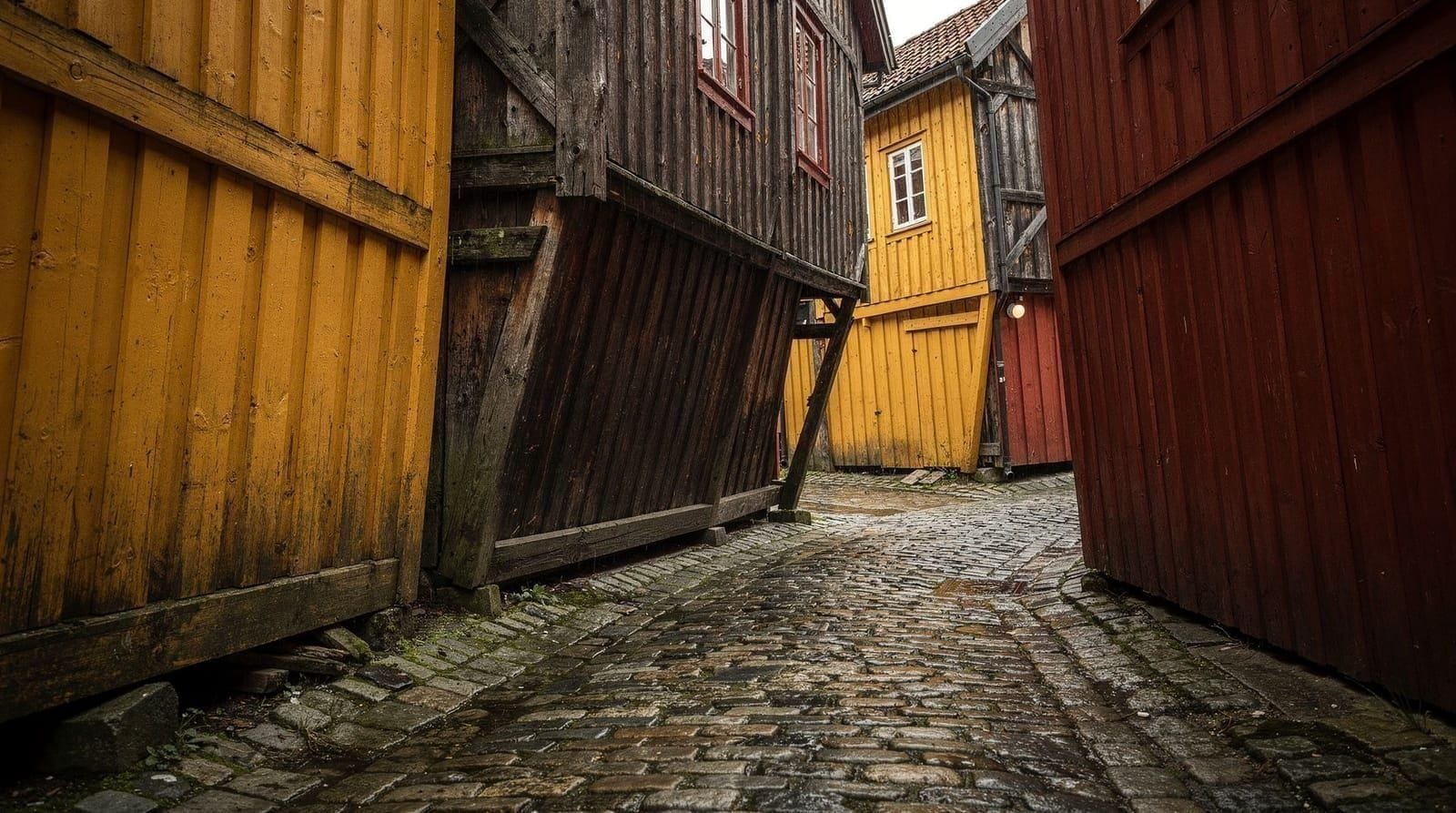
Booking strategy: Book online for summer visits, especially July–August. For September through May, walk-up is generally fine. Booking does not cost extra via flibanen.no and saves potential queue time. If you are also planning Bryggen the same morning, book the earliest Fløibanen slot you can manage and do the alleyways afterward — both sights are at their emptiest before 9 am.
Fitting it into your stay: The funicular slots easily into a short visit — the 2-day Bergen itinerary shows where it sits alongside the harbor and museums. If the forecast is poor, the Bergen in the rain guide helps you decide what to do instead, or in addition. For a wider view of the city, the Bergen city sightseeing guide puts the main sights in order, and if you are still deciding whether to include Bergen on a Norway trip at all, the first-timer guide is a good starting point.
Fløibanen for photographers — the complete guide
Mount Fløyen is Bergen’s primary photography viewpoint, and the subject matter is rich across seasons and times of day. A systematic breakdown:
Sunrise photography (summer): Bergen in summer has first light from approximately 4:30–5 am. The Fløibanen begins running at 7:30 am — meaning the best summer sunrise light is not accessible by funicular. The hiking trail up takes 45–60 minutes, so leaving from the city at 4 am allows a 5 am summit arrival for sunrise. This is what serious Bergen landscape photographers do in June–July. The harbor in early morning mist with the low sun striking Bryggen’s frontage from the northeast is the most famous Bergen photograph and is best captured before 7 am.
Golden hour (summer): Sunset in Bergen in late June is around 10:15–10:30 pm. The Fløibanen runs until 11 pm, making late-summer evening photography fully accessible without hiking. The light quality 30–60 minutes before sunset on a clear day, with the harbor below and the seven mountains turning amber, is outstanding.
Autumn photography: September–October brings two advantages: the deciduous trees on the lower Fløyen slopes turn yellow and orange, giving foreground texture to harbor shots; and the lower sun angle creates more dramatic sidelighting on the water. Cloud inversions are common — the city disappearing into white cloud while you stand above it on the summit.
Winter photography: Bergen in winter from Fløyen is significantly less photographed but potentially more interesting. Snow on the summit against the dark harbor; Christmas lights visible below in December; the low winter sun creating intense shadow-and-highlight contrasts on the fjord landscape. See the Bergen in winter guide for a fuller picture of what a cold-season Fløibanen visit fits into.
Camera gear: A wide-angle lens (16–24mm equivalent) for the panoramic harbor shot. A telephoto (70–200mm) to compress the Bryggen frontage from across the harbor. A tripod for night and blue-hour work. Bergen’s wind at the summit is real — a lightweight travel tripod will be challenged in gusts. Even without dedicated gear, a phone camera captures the wide harbor view well in daylight; it is the low-light and telephoto shots that genuinely benefit from a proper setup.
Frequently asked questions about the Fløibanen funicular
How far is the Fløibanen station from Bryggen?
Approximately 3 minutes on foot. From the south end of Bryggen, walk through the Fish Market area (Torget) and the lower station entrance is immediately behind on Vetrlidsallmenningen. It is the most central major attraction entry point in Bergen.
What is the Fløibanen phone/website for booking?
Book at flibanen.no. The site supports English. Tickets are also available via the Bergen Card app and at the lower station ticket desk.
Can I hike up instead of taking the funicular?
Yes. A marked hiking trail from the Fløibanen station area climbs to the summit in approximately 45–60 minutes at a moderate pace. Some visitors hike up and take the funicular down (buy a one-way descending ticket). The trail is clearly marked and relatively well-graded but steep in sections.
Is the funicular accessible for wheelchairs and prams?
The carriages accommodate prams and there is level boarding. The summit platform is accessible. The hiking trails around the summit are not wheelchair-accessible. Contact Fløibanen AS directly for current accessibility details.
What should I wear for the Fløibanen summit?
Even in summer, bring a layer — the summit at 320 m is noticeably cooler and windier than the city below. In wet weather, a waterproof jacket is essential. The paved summit platform is sheltered on one side but exposed on the viewpoint side.
Is the funicular running during the Bergen cruise port season?
Yes, the Fløibanen operates year-round. During peak cruise season (June–August), it runs until late evening. On high-traffic cruise days, expect queues at the lower station from 10 am.
What is Fløien Folkerestaurant like?
It is a traditional Norwegian restaurant with outdoor terrace seating and a broad menu from waffles to full Norwegian dinners. Not a fine-dining establishment — the food is reliable rather than remarkable, and the view from the terrace is the main draw. Reasonable choice for lunch, overpriced for a special dinner.
Does the Bergen Card cover Fløibanen?
The Bergen Card gives 50% discount, not free entry. Return ticket with Bergen Card: half the standard price (see floibanen.no). Given the card’s NOK 400 (24h) price, the Fløibanen discount alone does not justify the card — combine it with KODE museums (NOK 180 value) and the Aquarium (NOK 380 value) to make it worthwhile.
Top experiences
Bookable activities with verified prices and instant confirmation on GetYourGuide.