Bergen in winter — what to expect, what is open, and whether it is worth visiting
Bergen: 24, 48, 72 or 96-Hour Bergen Card
Is Bergen worth visiting in winter?
Yes, if you go in with realistic expectations. Bergen in winter is genuinely atmospheric — KODE museums, Bryggens Museum, good restaurants, and the Fløibanen funicular all operate year-round. Prices are 30–50% lower than summer. The main cost is weather (frequent rain, wind, short days) and fewer fjord day-trip options. December has the Christmas market; January–February is quiet but cheap.
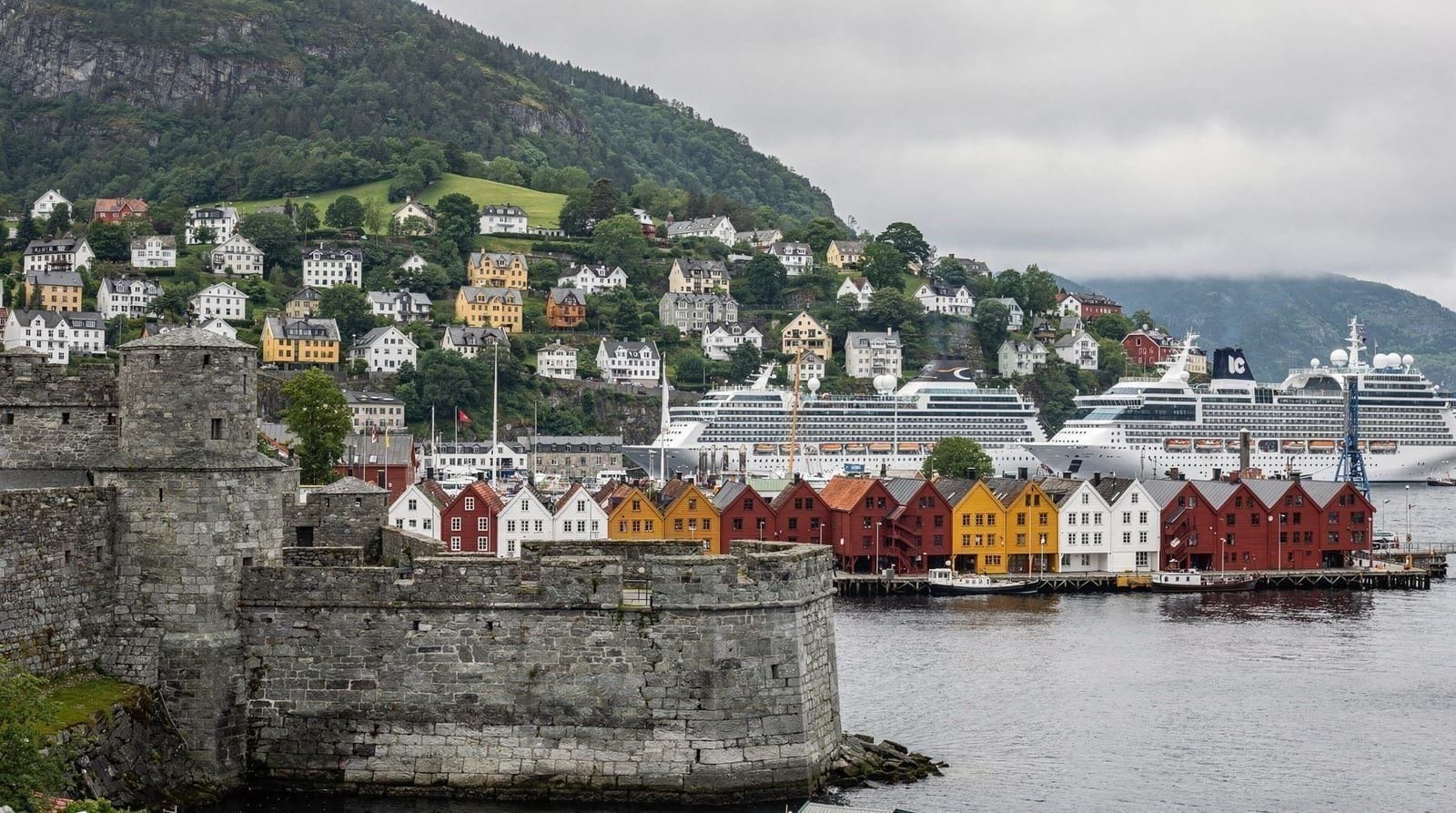
Bergen in winter is not a gentler version of Bergen in summer. It is a different city: darker, quieter, windier, more focused on indoor culture and food, with the mountains and harbor taking on a completely different atmosphere in low winter light and mist. Whether that version appeals to you depends entirely on what you are looking for.
| Where | City-wide — museums and restaurants over outdoor sights |
| Cost | 30–50% below summer for hotels and flights |
| Time needed | 2–3 days covers the winter city comfortably |
| Getting there | Bybanen from Flesland runs normally year-round |
| Best time | October (mildest) or December (Christmas market) |
This guide covers winter Bergen month by month, with honest assessments of what works, what does not, and how to plan for the weather without pretending it does not exist.
The weather — what you are signing up for
Bergen sits at 60.4°N on the Atlantic coast of Norway, exposed to prevailing westerly winds carrying moisture from the North Sea. The city’s famous rain (approximately 230 rainy days per year) concentrates significantly in autumn and winter.
October: Transitional. Autumn foliage still visible in the mountains. Rain increases; first storms begin. Average temperature 8–11°C. Daylight 9 hours. Still one of the more manageable shoulder months.
November: Darker, wetter. Average temperature 4–8°C. Daylight 6 hours. Tourism drops sharply; prices follow. Not a visiting-tourist month for most people.
December: Shortest days (5 hours 51 minutes around the solstice). Cold (0–5°C), wet, occasionally snowy. But also: Bergen’s Julemarked (Christmas market), festive lighting across the city center, and a specific urban-winter atmosphere that has its fans.
January: The quietest month. Temperatures frequently below freezing at night; sea level snow possible but not guaranteed. Daylight 6–7 hours. The cheapest month for hotels. Extremely quiet — most tourists who come in January come specifically for off-season prices and tranquility.
February: Brightening slowly; daylight increasing toward 8–9 hours by month end. Marginally warmer than January. Still quiet; still cheap. First aurora possibilities increase as nights remain dark.
March: Daylight returns to 12 hours by the equinox. A transitional month that feels like the beginning of the end of winter. Snow still possible on the mountain trails; sea-level conditions improving.
Bergen does not experience polar night — the sun always rises, even on the shortest days. But December and January days are very short, and overcast conditions (common) mean even those daylight hours are dim.
What is open in winter
Year-round: Fløibanen funicular, KODE art museums, Bryggens Museum, Hanseatic Museum, Bergen Aquarium, Bergenhus Fortress buildings, most restaurants, cafés, and shops, Bybanen light rail.
Closed or reduced in winter: Geirangerfjord cruises (October–April), Nærøyfjord cruise (very limited off-season sailings), Mostraumen fjord cruise (reduced frequency; some winter departures exist), outdoor fish market stalls (outdoor section closes; indoor Fisketorvet open year-round), Fantoft Stave Church guided tours (reduced hours), Gamle Bergen Museum guided program (May–September; buildings accessible year-round).
Flåm Railway: Operates year-round but with a reduced winter timetable (2–3 trains per day vs. 6–8 in summer). Prices are significantly cheaper in winter — NOK 350 one-way vs. NOK 510 in peak season.
Month-by-month recommendations
October — the most usable shoulder month
October is Bergen’s best off-season month for visitors who want the city to themselves without full winter conditions. The foliage on the mountain trails (Fløyen, Ulriken) is at peak color. The fish market outdoor stalls are typically still operating. Day trip options remain mostly available. Rain is frequent but not as relentless as November–January.
Hotel prices are 20–30% below summer rates in October. The Bergen Card value holds — museums are open and uncrowded.
November and January — for the truly budget-focused
November and January are Bergen’s quietest visitor months. Hotels drop to their lowest annual prices — a mid-range double room that costs NOK 1,800 in July might be NOK 900–1,200 in November or January. Restaurants are easier to walk into without reservations. KODE and Bryggens Museum are practically visitor-free.
The honest cost: short, dark, frequently wet days. These are months for people who specifically want urban winter atmosphere and low prices, not for people who want to see Bergen’s landscapes.
December — the Christmas market month
Bergen’s Julemarked (Christmas Market) runs at Festplassen, typically from late November through December 22–23. The market has approximately 40–60 stalls selling Norwegian Christmas foods (rice porridge, pepperkaker, Christmas mead/gløgg, traditional Norwegian sweets), craft goods, and gifts. It is a genuine Norwegian market rather than a tourist spectacle — Bergen families attend regularly.
The city center is festively lit from late November. Torgallmenningen square and the harbor area have seasonal lighting. Bergen’s compact city center makes the festive atmosphere concentrated and walkable.
This is the only winter month with enough visitor traffic to require booking hotels in advance. December rates are higher than November and January but still below summer peak.
February — the aurora and photography month
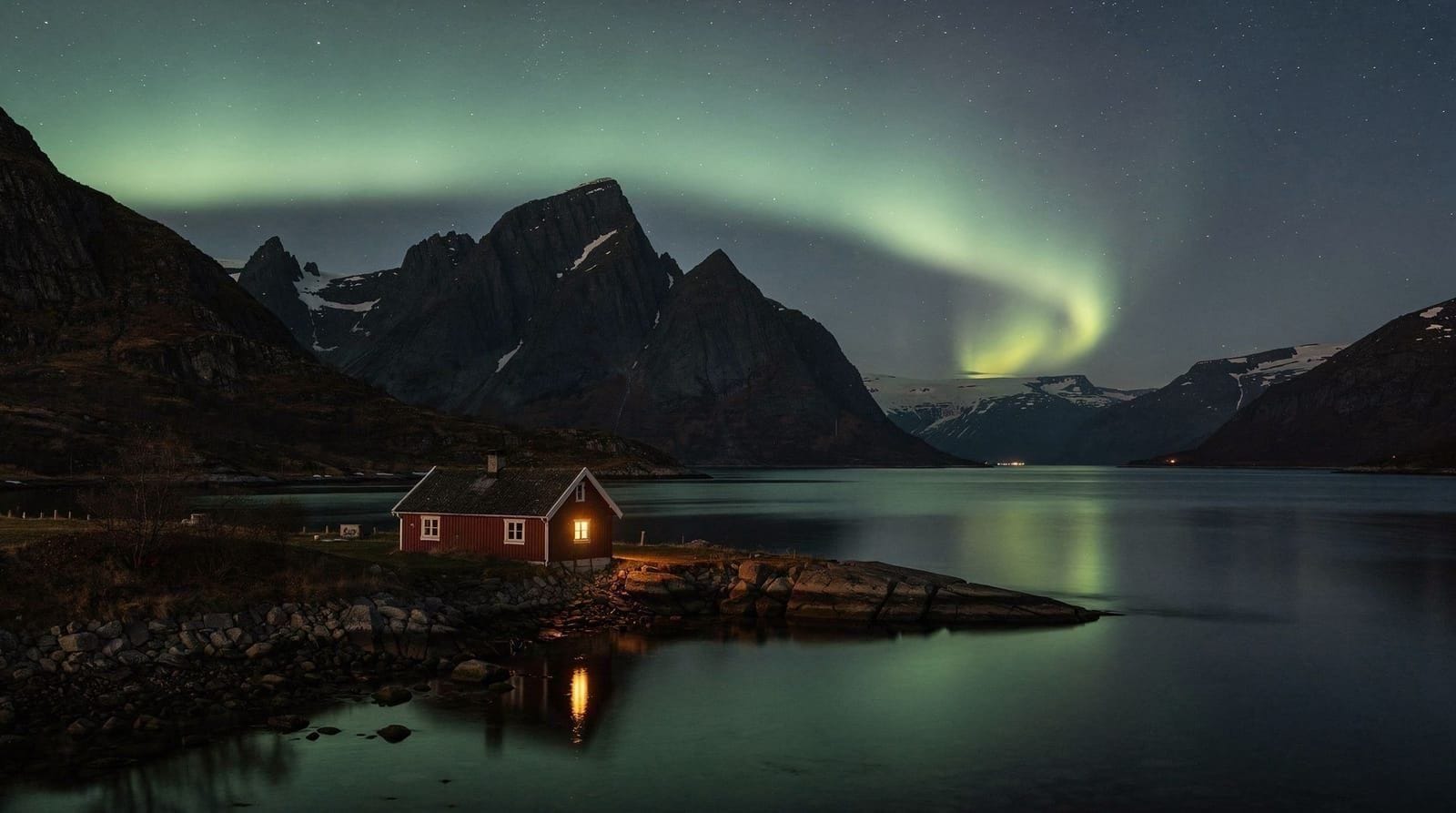
February is the best winter month for photography (low, angled light; occasional frost on the mountaintops; empty city) and the most practical month for aurora hoping — nights are still fully dark but days are brightening. The geomagnetic season is still active. Bergen’s cloud cover remains the challenge; see the northern lights guide for realistic expectations.
Prices remain low. The city is quiet. A February Bergen trip suited to someone who values tranquility, low prices, and the specific aesthetic of a North Atlantic coastal city in winter.
Things to do in winter Bergen
KODE art museums: The ideal winter activity. Four buildings, world-class collections, warm interiors, excellent café at KODE 4 (Lysverket). Without summer crowds, you can spend time properly with the Munch and Picasso holdings at KODE 4 or the Norwegian landscapes at KODE 2. Allow a full day for the museum circuit. See our Bergen museums and culture guide for the full building-by-building breakdown.
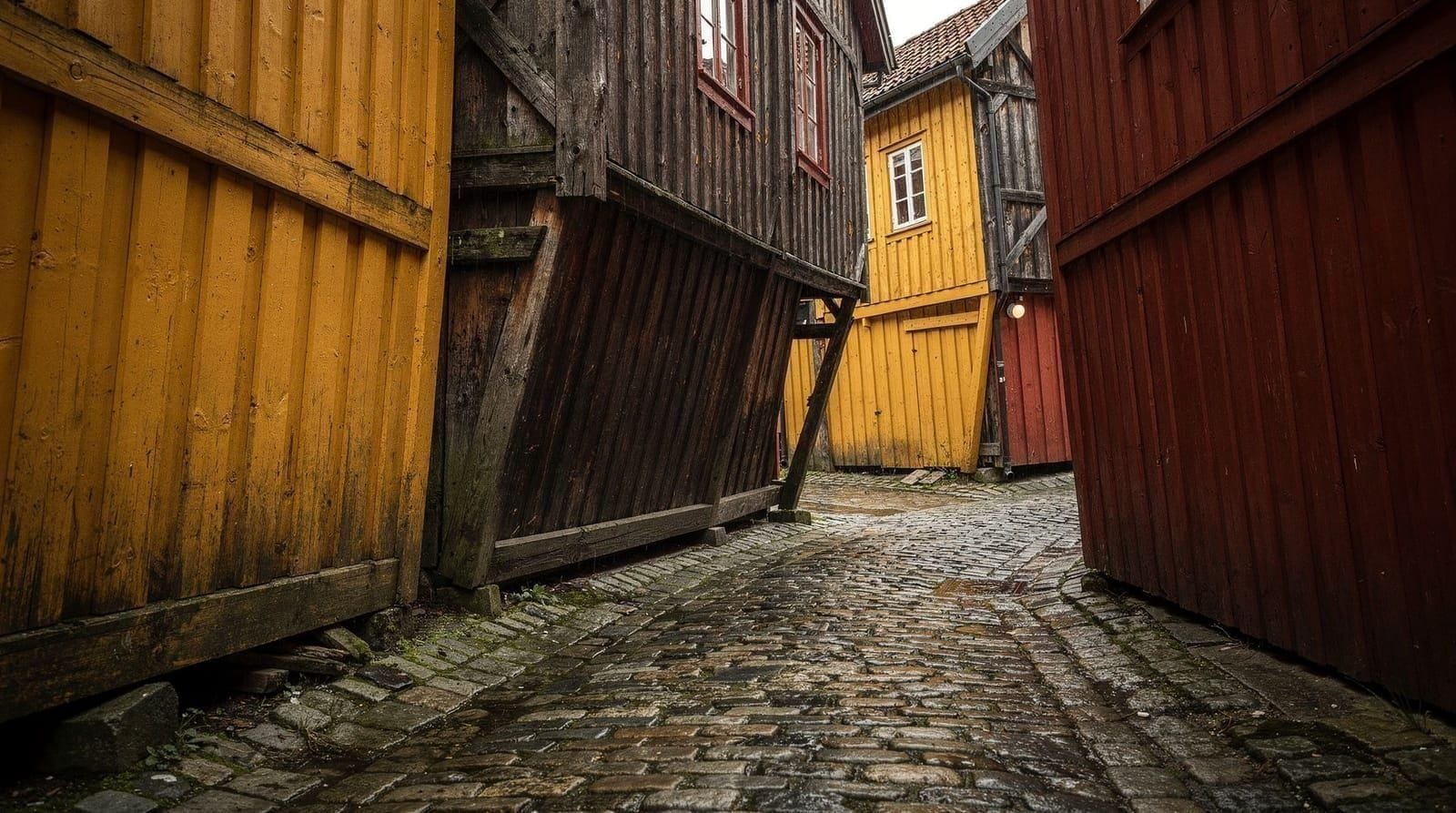
Bergen Card — good value year-roundBryggens Museum and Hanseatic Museum: Also better in winter. The UNESCO-listed alleyways at Bryggen are not crowded; the museums can be enjoyed without timing around cruise groups. Our Bryggen guide covers the full history if you want deeper context before visiting.
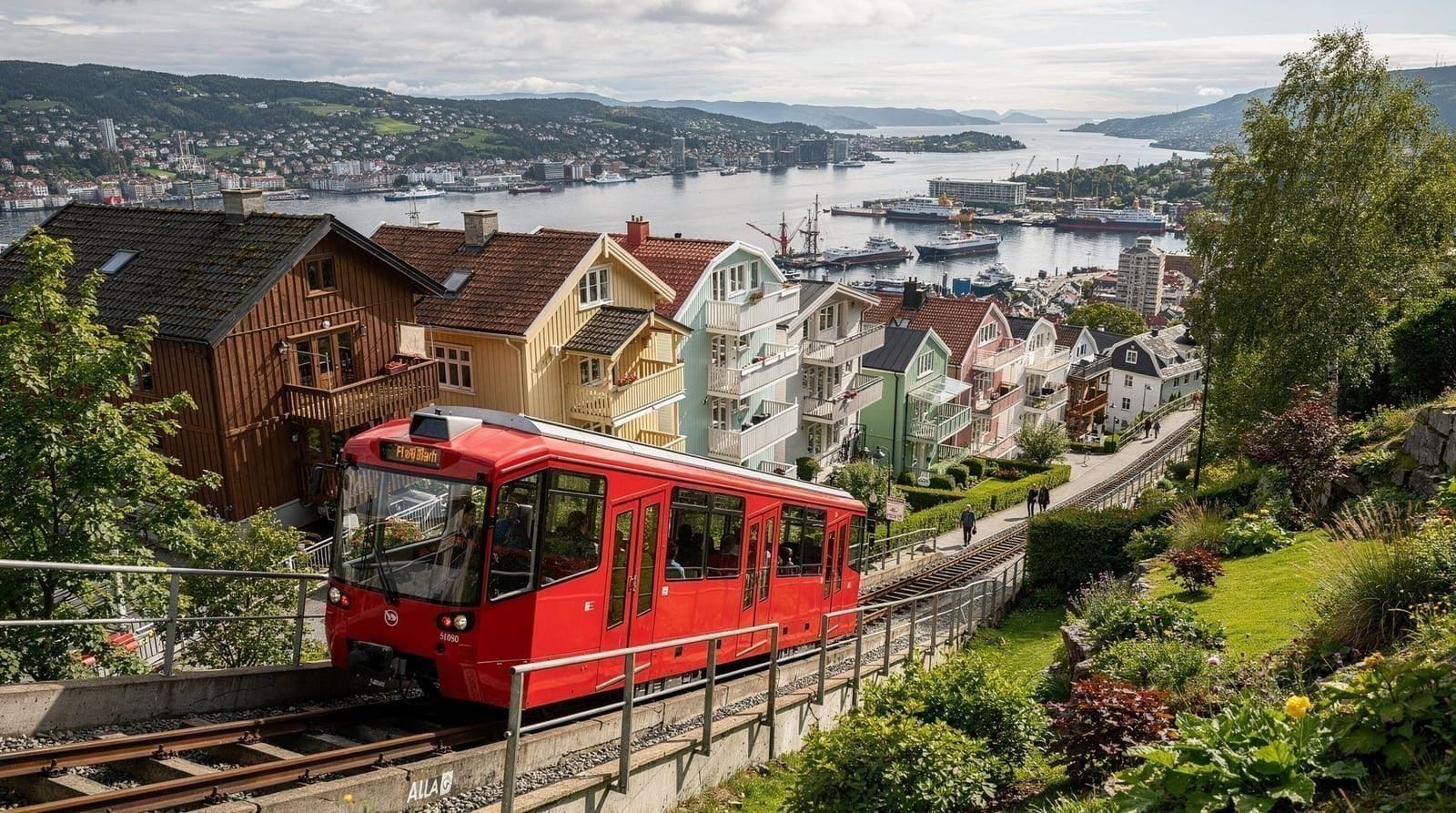
Fløibanen in winter: The funicular runs year-round and the winter summit experience is genuinely different — quiet, atmospheric, the harbor below in winter light, and on clear days, dramatically beautiful. Snow on the summit is not guaranteed from sea level (Bergen’s mild Atlantic climate means sea-level snow is an event rather than a given) but the higher trails sometimes have snow when the city does not. The Fløibanen guide and the Mount Fløyen guide explain the ride and the summit paths, and the Ulriken cable car guide covers the higher alternative when the weather allows.
Bergen’s restaurant scene: Winter is when Bergen’s better restaurants are most accessible without reservations and when the city’s culinary identity — fish-focused, warm interiors, candle-heavy — is at its most appealing. Enhjørningen, Lysverket, and Pingvinen all seat visitors more easily in winter. A long dinner in a Bergen restaurant in November is one of the best versions of the city.
Winter hiking with headlamps: Some Bergen operators run evening headlamp hikes on the lower Fløyen trail in winter — a 2–3 hour excursion that uses Bergen’s winter darkness as an asset rather than a problem. Small groups; lantern-lit sections; coffee at the top. If you would rather join a guided evening than go alone, a winter night hike with headlamps is the version built for the dark months, and our hiking around Bergen guide covers the daytime trails.
Aquarium: Bergen Aquarium on the Nordnes peninsula is a strong wet/cold-day option, particularly for families. Year-round; penguin and seal enclosures; large main tanks. Entry NOK 380 adult.
Most fjord sailings stop between October and April, and the few that continue run into a landscape with snow on the walls and almost nobody on deck: a winter fjord cruise from Ålesund to the Geirangerfjord is one of the sailings that keeps going.
Winter pricing guide
| Category | Summer (June–Aug) | Winter (Jan–Feb) | Saving |
|---|---|---|---|
| Mid-range hotel (double, per night) | NOK 1,800–2,500 | NOK 900–1,400 | 40–50% |
| Hostel dorm | NOK 450–700 | NOK 250–400 | 40–50% |
| Flåm Railway one-way | NOK 510 | NOK 350 | 31% |
| Bergen Card (24h) | NOK 400 | NOK 400 | 0% (same price) |
| Fløibanen return | see floibanen.no | see floibanen.no | 0% (same price) |
| KODE museums | NOK 180 | NOK 180 | 0% (same price) |
Flights and accommodation are where winter savings are most significant. Museum and attraction prices are generally year-round fixed. For the wider cost picture, see the Bergen travel budget guide and the blog’s Bergen on a budget piece.
Restaurant savings are smaller but real: most Bergen restaurants keep the same menu prices year-round, but the practical saving comes from easier walk-in availability — no need to pad the budget for pre-booked premium time slots the way peak-summer dining sometimes requires. Combined with lower hotel and flight costs, a winter Bergen trip typically runs 25–35% cheaper overall than the same itinerary in July, even before accounting for the Bergen Card and museum entries being identically priced.
What winter Bergen is NOT
Winter Bergen is not a northern lights destination (see the northern lights guide). It is not a fjord cruise destination in the full sense — most major cruises are suspended. It is not a hiking destination for the dramatic high trails (Trolltunga is snow-covered and requires a guide and crampons from October; Preikestolen is similarly restricted November–April).
It is a city destination with good museums, good food, and — if you align expectations with reality — a genuinely compelling atmosphere that is simply different from the tourist-season version. For the full-color version of what the city offers year-round, see our Bergen city sightseeing guide and adjust expectations for winter’s reduced fjord options as covered above.
Frequently asked questions about Bergen in winter
What is the best month to visit Bergen in winter?
October for the best balance of manageable weather and remaining outdoor options. December for the Christmas market. February for lowest prices combined with the beginning of brighter days.
Does it snow in Bergen in winter?
Bergen rarely has sustained snow at sea level due to its mild Atlantic climate. Sea-level snowfall happens some winters but is not reliable. The mountain summits (Fløyen, Ulriken) above 300m typically have snow from December through March when temperatures drop. The Hardangervidda plateau (accessible via Voss) is reliably snow-covered December–April.
Is Bergen safe in winter weather?
Yes. Bergen is a fully functioning city in winter. Streets are maintained; the Bybanen and buses operate normally; the Fløibanen runs year-round. Strong storms (November–January) make outdoor walking uncomfortable but not dangerous. The main practical issue is wind on exposed hilltops and the harbor — dress appropriately. Our Bergen in the rain guide and the blog’s rainy day Bergen ideas help when the weather turns.
How should I dress for Bergen in winter?
Waterproof jacket, waterproof trousers or sturdy water-resistant trousers, warm mid-layer, and warm waterproof boots. Wind is often more uncomfortable than cold temperature. A good hat and gloves are essential from November through March. The what to pack for Bergen guide has the fuller list. The same gear works for November and for February — Bergen’s winter temperature range is relatively narrow (−2°C to +8°C typical range).
Are restaurants open in Bergen in winter?
Yes, the main Bergen restaurant scene operates year-round. Some smaller summer-only spots close November–March, but the main restaurants — Enhjørningen, Lysverket, Pingvinen, Bryggeloftet — maintain winter service. Reservations are easier to get than in summer.
Is the Bergen Aquarium good in winter?
Yes. It is one of Bergen’s best year-round indoor options and particularly useful in winter when outdoor activities are limited. The penguin enclosure and main Atlantic fish tanks are unaffected by season.
What is Bergen’s Christmas market like?
The Julemarked at Festplassen is a genuine Norwegian Christmas market: smaller and less commercial than major European Christmas markets, but authentically local. Food focus — rice porridge, gløgg, traditional sweets — with some craft stalls. The surrounding city center lighting adds to the atmosphere. Good for an afternoon; not the all-day mega-market of Cologne or Vienna, but that is part of its appeal.
Can I visit the fjords from Bergen in winter?
Limited options. The Mostraumen fjord cruise operates some winter departures. The Flåm Railway runs year-round on a reduced timetable. The Nærøyfjord cruise is very limited off-season. The Hardangerfjord express boat has reduced but year-round service to some ports. A winter fjord experience from Bergen is possible but requires flexibility and advance planning. The fjord cruises from Bergen guide, the Flåm Railway guide and the best day trips from Bergen page show what to check before you commit.
Is Bergen worth visiting in winter for a first-time visitor?
It can be, but a first-timer with only one Norway trip planned usually gets more from summer or shoulder season, when the full range of fjord day trips runs at normal frequency. Winter suits repeat visitors or travelers specifically drawn to the city-and-museums version of Bergen at lower prices.
How many days should I plan for a winter Bergen trip?
Two to three days covers the winter city comfortably — the museums, Bryggen, and the food scene. Beyond that, the reduced fjord options mean diminishing returns unless you specifically want the Christmas market (December) or aurora hunting (January–February).
Bergen vs. Oslo in winter — the case for Bergen
Oslo is Norway’s winter cultural capital: the National Museum, the Munch Museum (opened 2021), Vigeland Park, and the city’s restaurant scene are all fully operational and arguably better in winter than summer when queues are shorter.
But Bergen in winter has a specific proposition Oslo does not: genuine Atlantic coast atmosphere, a compact city that is entirely walkable, and the mountain-and-harbor character that defines Bergen’s identity throughout the year.
The case for Bergen over Oslo in winter:
- Lower prices: Bergen hotels in January–February are cheaper than Oslo equivalents for comparable quality.
- Fjord access (limited but real): Oslo has no fjord day trips in winter; Bergen has some.
- Atmosphere: Bergen’s harbor, the Bryggen frontage, and the low mountain ridges above the city have a specific winter atmosphere that Oslo’s more urban character does not replicate.
- Size: Bergen is more manageable in bad weather — the distance from hotel to museum to restaurant is shorter.
The case for Oslo over Bergen in winter:
- More culture: The National Museum alone would take 2–3 full visits. Bergen’s KODE is world-class but smaller.
- Better transport links: Oslo’s airport (Gardermoen) has more international connections and cheaper flights than Bergen’s BGO.
- Drier weather: Oslo’s winters are cold (-5°C to -10°C) but significantly drier than Bergen’s.
For most short winter trips to Norway, Bergen and Oslo are complements rather than alternatives — the Bergen–Oslo overnight train or day flight allows a combined itinerary. The blog’s Bergen vs Oslo comparison goes deeper.
Winter food and drink in Bergen
Bergen’s restaurant scene reaches its most local-focused state in winter. The tourist-oriented outdoor fish market closes; the Norwegian-focused restaurants continue, with winter menus that emphasize preserved and slow-cooked preparations.
Seasonal winter dishes to try:
- Pinnekjøtt (dried and salted lamb ribs, the traditional Western Norwegian Christmas dish, typically November–January)
- Ribbe (cured pork belly, the Eastern Norwegian Christmas tradition, also widely available in Bergen)
- Lutefisk (lye-treated dried cod, the most divisive Norwegian tradition — available November–January; an experience rather than a gastronomic recommendation)
- Fårikål (lamb and cabbage stew, NOK 200–280 at traditional restaurants; deeply Norwegian)
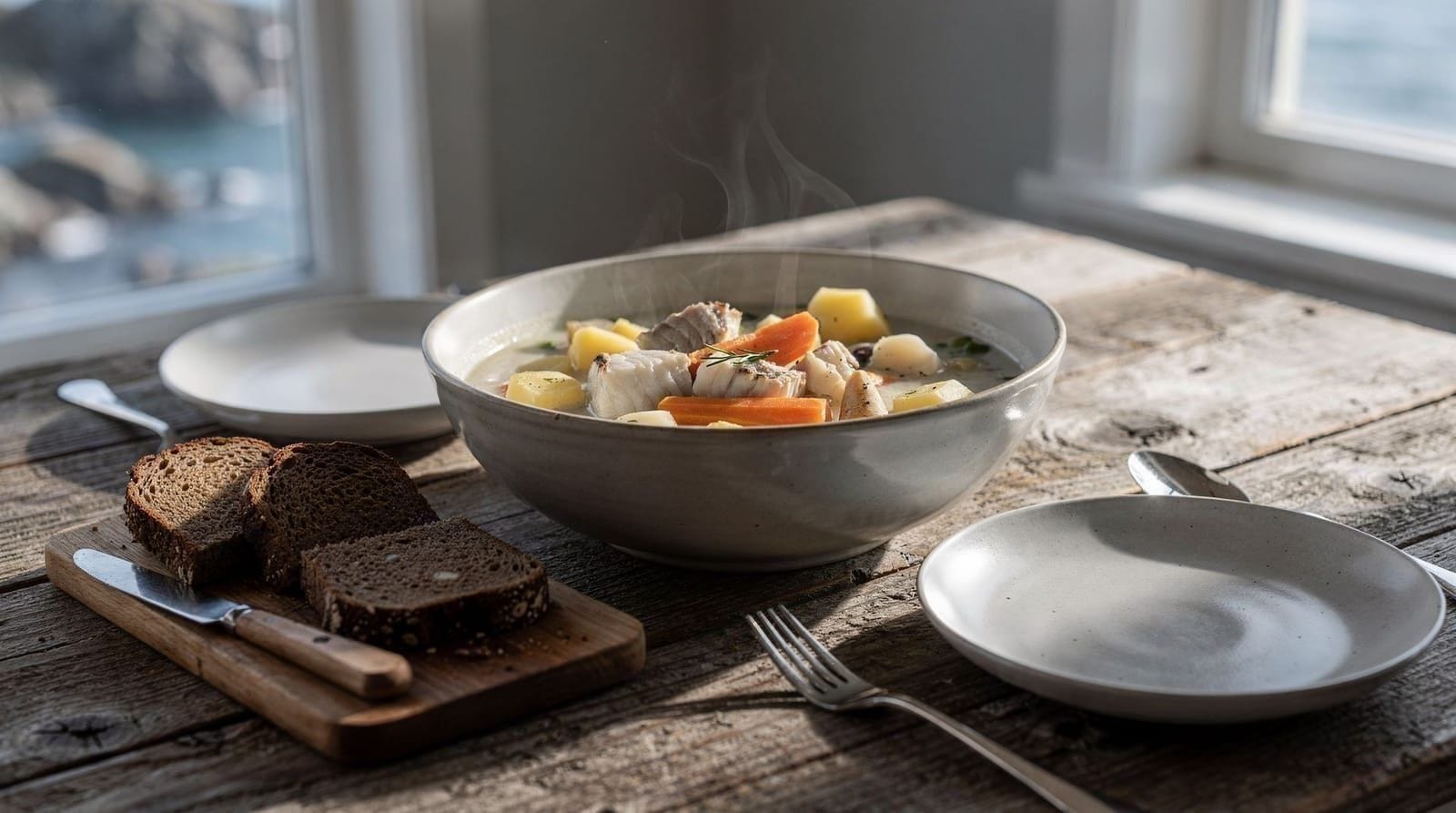
- Fiskesuppe (Bergen-style sweet cream fish soup with root vegetables — available year-round but particularly comforting in winter)
Winter drinking:
- Gløgg (spiced mulled wine) at the Christmas market and some cafés from November: NOK 60–90 per cup
- Aquavit: the Norwegian spirit appears more frequently on winter menus; try it warm as a juleaquavit in December
- Hot chocolate at Bergen’s specialty cafés: NOK 70–90, often with whipped cream
For the full picture of Bergen’s food scene across all seasons, including where locals actually eat versus the tourist circuit, see our food and drink guide.
Driving in winter Bergen
Visitors who rent a car for winter day trips from Bergen should understand the road conditions:
Toll ring: Bergen’s toll ring charges NOK 20–35 per entry. Rental cars are automatically billed via licence plate reader; expect the charge on your final bill.
Winter tyres: Norwegian law requires winter tyres (studded or friction) from a date determined by local conditions, typically November 1 through April. Rental cars in Norway are equipped with winter tyres as a standard requirement; confirm with your rental company.
Mountain road closures: Some mountain roads between Bergen and the inner fjords (including sections of the Hardangervidda crossing) close when weather is severe. Check Statens Vegvesen (vegvesen.no) for current road conditions before driving into the mountains.
Tunnels: Western Norway has an extensive tunnel network. Bergen’s major tunnels (Arnatunnel, Nygårdstunnel, Fyllingstunnel) operate year-round; outer tunnels have heating to prevent freezing. Drive with headlights on at all times in Norwegian tunnels — required by law.
Getting to Bergen in winter — practical transport notes
By air: Bergen Airport Flesland (BGO) operates year-round. In winter, flights from London, Amsterdam, Frankfurt, and Copenhagen continue; some seasonal routes from smaller European cities suspend operations. British Airways, Lufthansa, and SAS are the main carriers. Bybanen light rail from the terminal: NOK 51, 45 minutes to city center.
By train (Oslo–Bergen Line): The Bergen Line operates year-round. The Hardangervidda crossing (highest point: 1,237m) can be delayed by winter weather in November–March but rarely cancelled. The train passes through genuine snowfields and mountain scenery that look completely different in winter from summer — some passengers specifically time their Bergen Line journey for winter atmospheric conditions.
By cruise: Winter cruise traffic to Bergen is minimal — most major cruise operators do not serve Bergen in December–February. Smaller expedition cruise vessels (Hurtigruten, Havila) do call at Bergen year-round as part of the Norwegian coastal route.
Winter for first-timers vs. repeat visitors
Winter Bergen suits repeat visitors particularly well — those who have already done the classic summer city-and-fjords itinerary and want a genuinely different experience of the same place. For a true first-timer with only one trip to Norway planned, summer or shoulder season (May, September) generally delivers more of what people expect from a Bergen and fjords trip, since the flagship day trips run at full frequency and the landscapes are at their most accessible. Our first-timer guide and best time to visit Bergen guide cover that fuller picture if winter turns out not to be the right fit for your first visit.
A realistic 3-day winter Bergen itinerary
Day 1: Morning at Bryggen and the indoor Fisketorvet hall, afternoon at KODE 2 and KODE 4, evening dinner at Pingvinen.
Day 2: Bryggens Museum and Hanseatic Museum in the morning, Fløibanen after lunch if the cloud ceiling allows (check YR.no), Bergen Aquarium as a backup if not, dinner at Lysverket.
Day 3: Bergenhus Fortress and Håkon’s Hall, browsing Mathallen for lunch, a headlamp evening hike on the lower Fløyen trail if operating, or a relaxed final dinner at Enhjørningen.
For a compact version of the same idea, see the 2-day Bergen itinerary. This covers the winter city thoroughly without depending on weather-sensitive fjord day trips, which remain a bonus rather than the core of the itinerary in the coldest months.
Top experiences
Bookable activities with verified prices and instant confirmation on GetYourGuide.