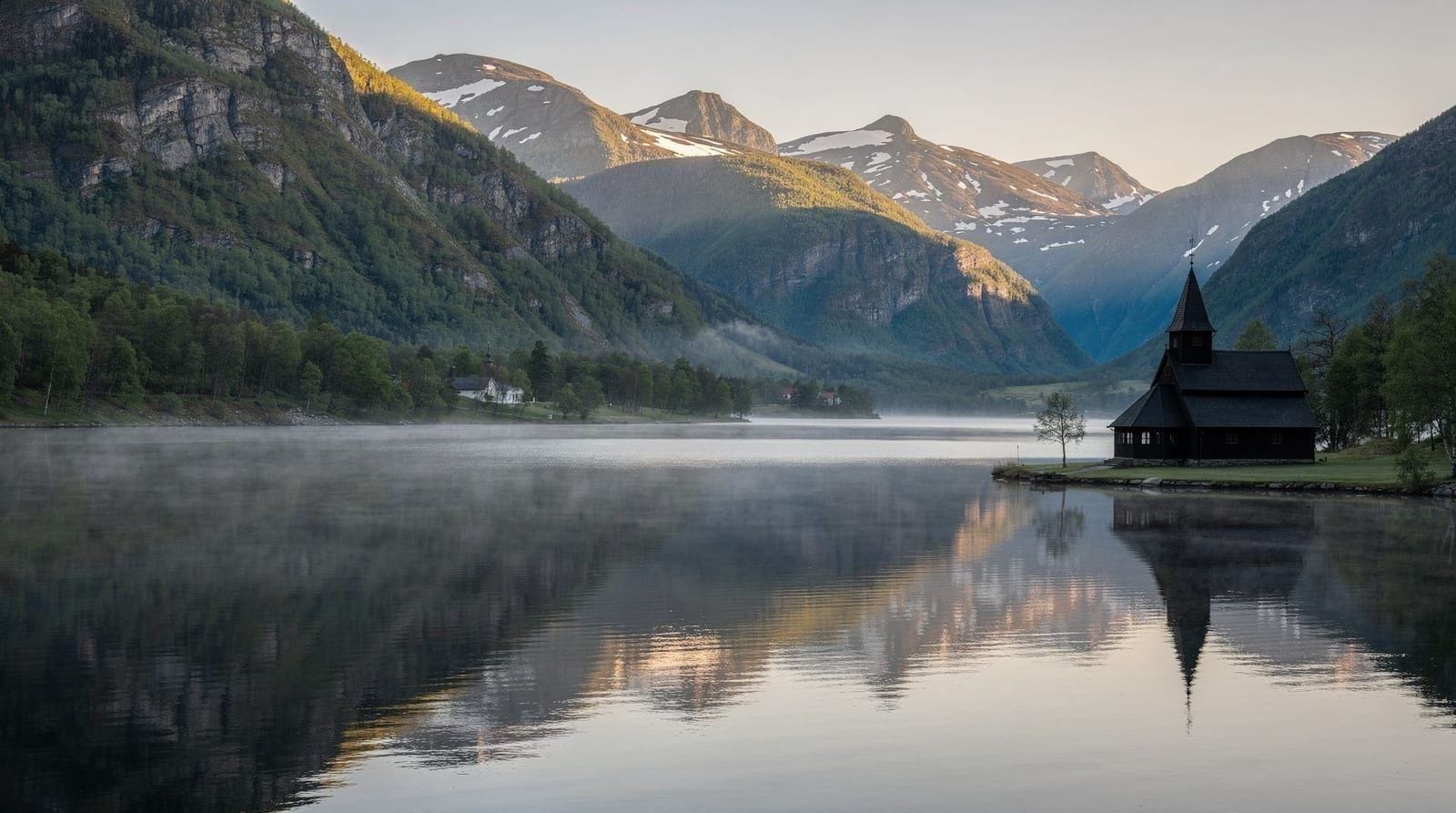
Hardangerfjord
Norway's fjord of waterfalls and orchards: Trolltunga hike, Vøringsfossen, Folgefonna glacier, Eidfjord. Honest guide with NOK prices.
Bergen: Hardangerfjord, Voss Gondola & 3 Great Waterfalls
Duration: 9 hours
Quick facts
- Distance from Bergen
- ~120–180 km depending on route
- Fjord length
- 179 km (Norway's second longest)
- Trolltunga elevation gain
- 700–1,200 m (10 h round trip)
- Vøringsfossen free fall
- 182 m
- Express boat Bergen–Lofthus
- ~2.5 h
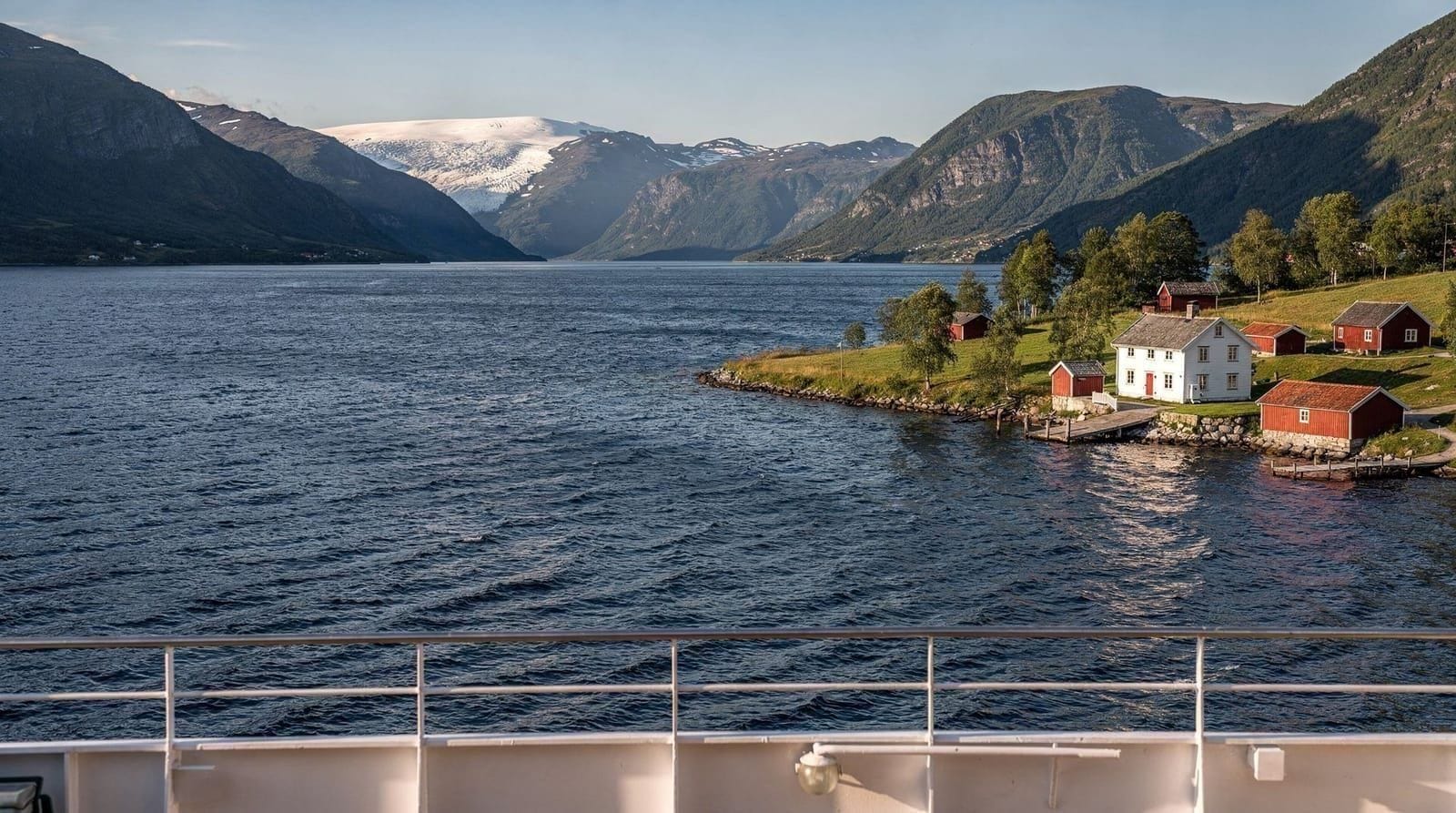
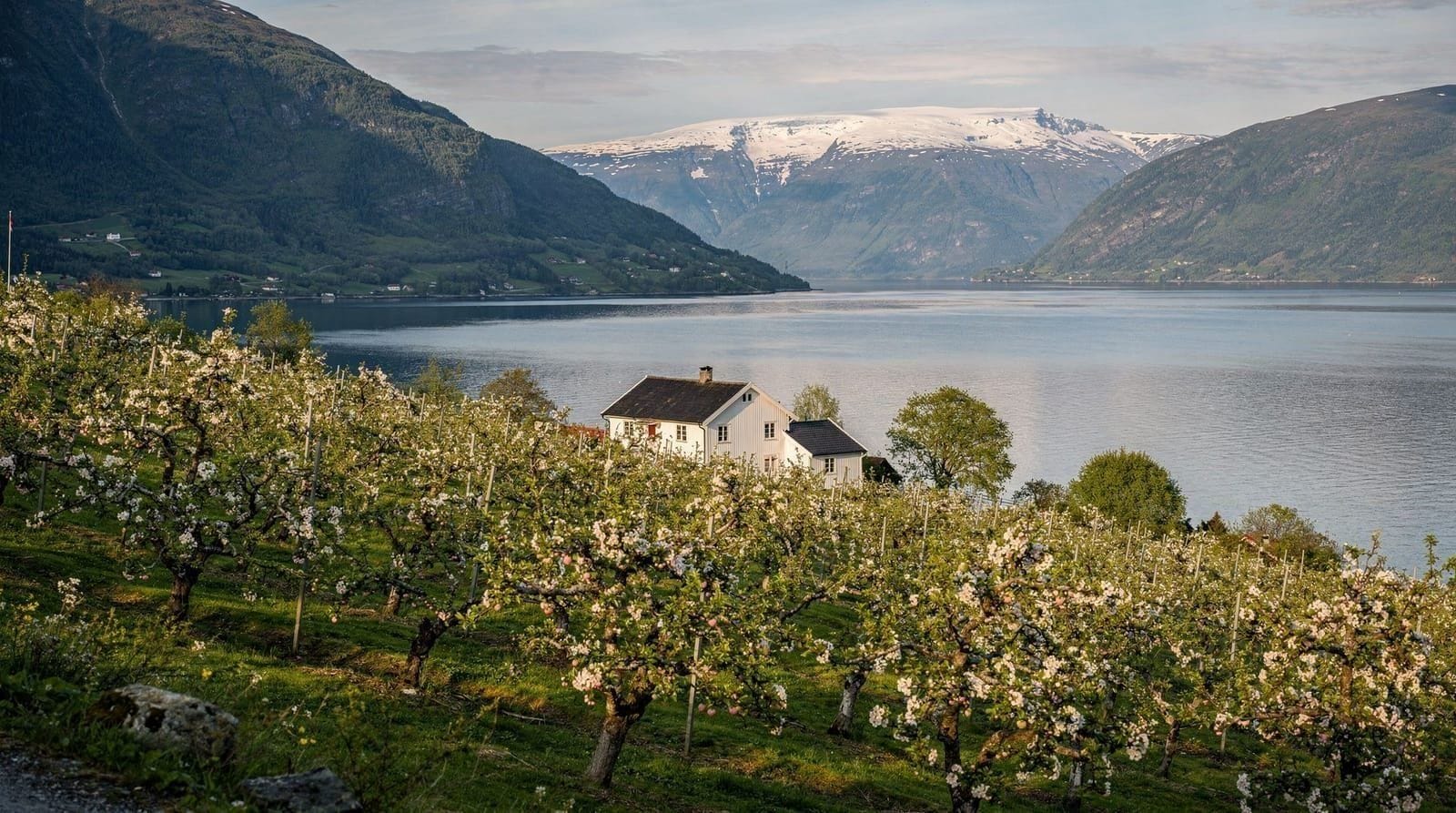
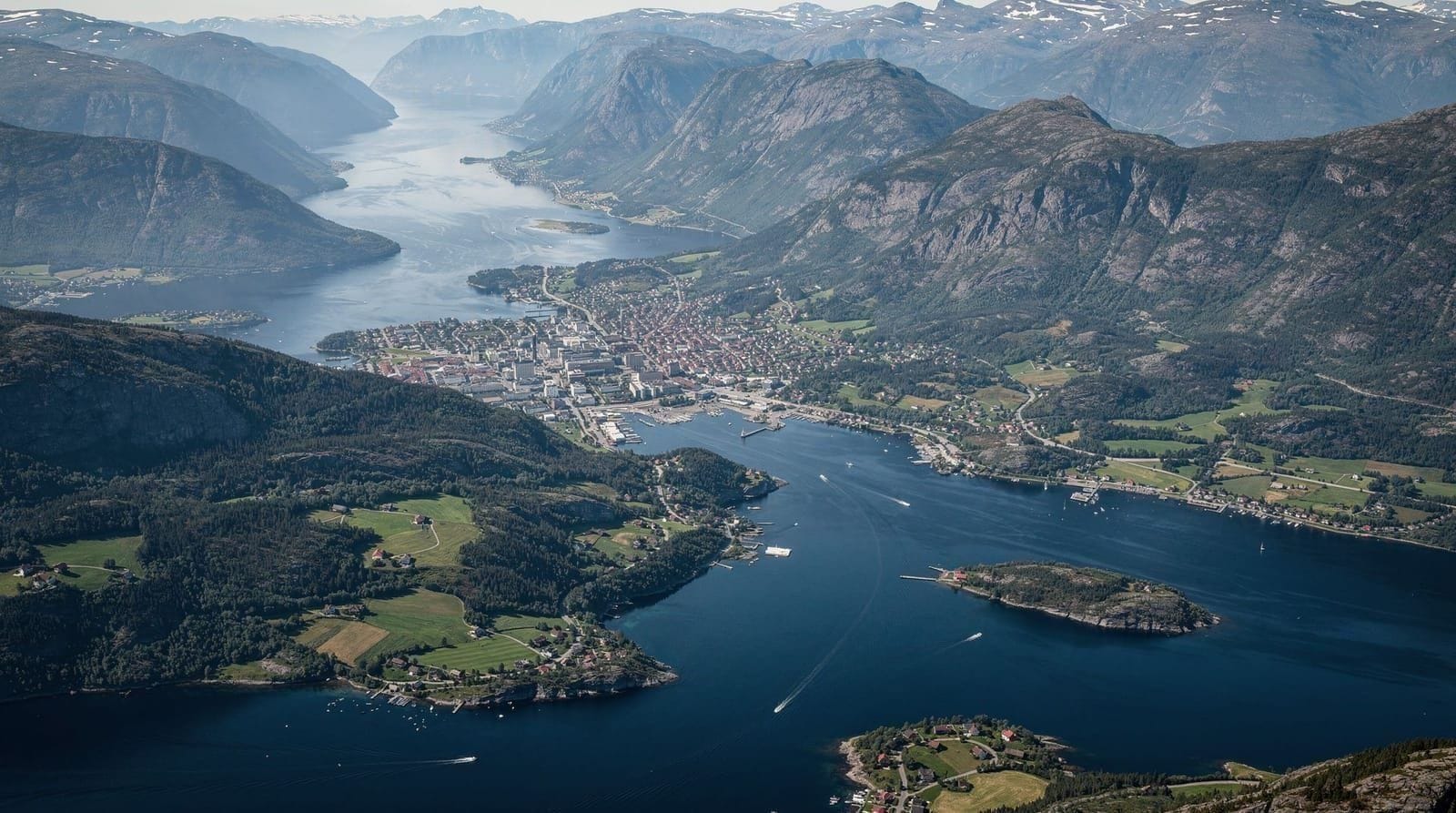
The Hardangerfjord is Norway’s second-longest fjord at 179 km, and it has a personality distinctly different from the Sognefjord and Nærøyfjord. Where Nærøyfjord is steep-walled and dramatic, Hardangerfjord is more open, softer in topography — its banks lined with fruit orchards that bloom pink and white in May. Then you reach Eidfjord at the inner end, and the mountains close in sharply, delivering the highest waterfall in Norway and the trailhead for Trolltunga.
It is a fjord of extremes. The same visit that includes a cider tasting at a family orchard in Lofthus can include a ten-hour demanding hike over bare rock to a ledge 700 m above a glacier lake. Most visitors pick one or the other. This guide covers both.
| Where | Southeast of Bergen, ~120–180 km depending on route |
| Time needed | 1 day for waterfalls/orchards; 2+ for Trolltunga |
| Cost | Around NOK 1,000–2,000/person for a day trip |
| Getting there | Express boat from Bergen, or car via Voss |
| Best time | May–June for blossom; Jun–Sep for Trolltunga |
The Hardangerfjord landscape
The fjord runs roughly southwest to northeast from Rosendal at the outer end to Eidfjord in the inner reaches. Key stops along the way:
Rosendal: Norway’s only barony (Baroniet Rosendal, established 1678) with formal gardens and a small castle. The surrounding Sunnhordland landscape is gentle, with the Folgefonna glacier visible above. The Hardanger Folgefonn Centre in Rosendal covers glacier hiking and the UNESCO Hardangerfjord landscape.
Norheimsund: First major fjordside village from the Bergen direction. Steinsdalsfossen waterfall is 3 km from town — you can walk behind the waterfall on a path, which is rare and worth 30 minutes.
Øystese: Apple cider country starts here. The Hardanger Cider trail (Sideruta) links farms producing cider, juice, and fruit spirits from the local orchard landscape. Ulvik at the inner fjord arm is the densest concentration of cider producers. Stall prices for local cider: NOK 80–150 per bottle at farm shops. The blossom period in early May is the peak visual moment.
Lofthus: Express boat stop from Bergen. The Lofthus cliff hike (Munketrappen — Monk’s Staircase) is a short but steep 30-minute climb offering a strong fjord view. The village itself is small, with a medieval church and a handful of guesthouses.
Eidfjord: The innermost substantial village, where the fjord narrows dramatically. The Norwegian Nature Centre Hardanger (Hardanger Natursenter) explains the plateau and waterfall landscape. The road from Eidfjord to the Hardangervidda plateau carries you up through switchbacks to Vøringsfossen.
Vøringsfossen waterfall
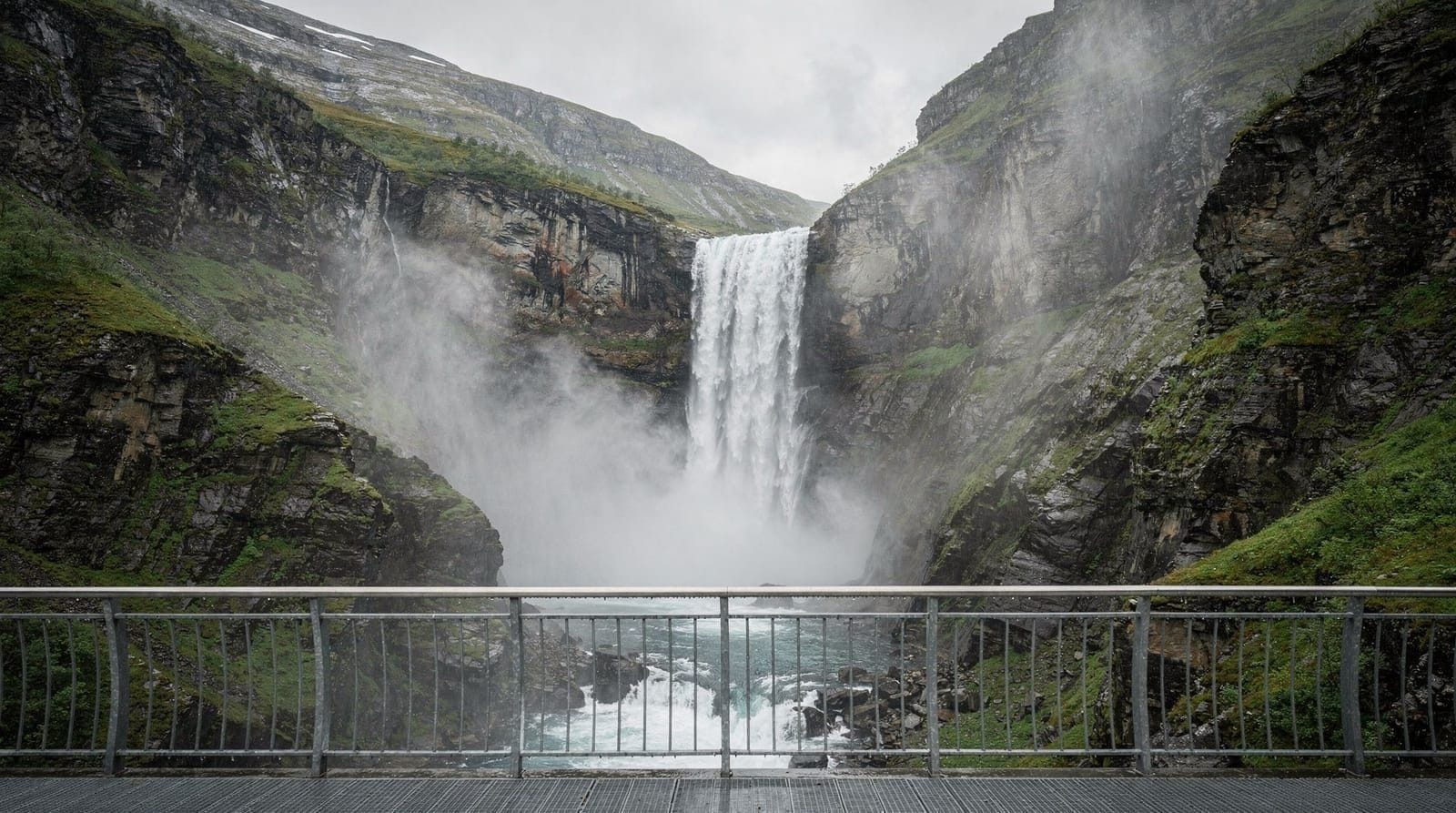
Vøringsfossen plunges 182 m in a single free fall off the Hardangervidda plateau into the Måbødalen valley. It is one of the most-visited natural sites in Norway. The viewing platform at the top was rebuilt in 2019 with a modern suspended walkway (Voringsfossen Visitor Centre — free entry).
Getting there from Eidfjord: 12 km by car up the Rv7 road, about 20 minutes. The express boat from Bergen stops at Eidfjord; from there a local bus or taxi covers the waterfall. In peak season (July–August), a shuttle bus operates from Eidfjord village.
The honest caveat: Vøringsfossen in full flow (May–June, when snowmelt feeds the Bjoreio river) is dramatically powerful. By August, flow can reduce significantly in dry years. Photos from May look different from photos taken in August — not worse, just different.
A guided tour from Bergen to Vøringsfossen covers the scenic Eidfjord approach and the Hardangervidda viewpoint without needing to navigate the plateau road independently.
Vøringsfossen falls 180 metres at the head of the Måbødalen, two hours beyond the orchards that most Hardanger tours turn back at: a private Hardangerfjord and Vøringsfossen tour from Bergen goes the full distance.
Trolltunga — the honest assessment
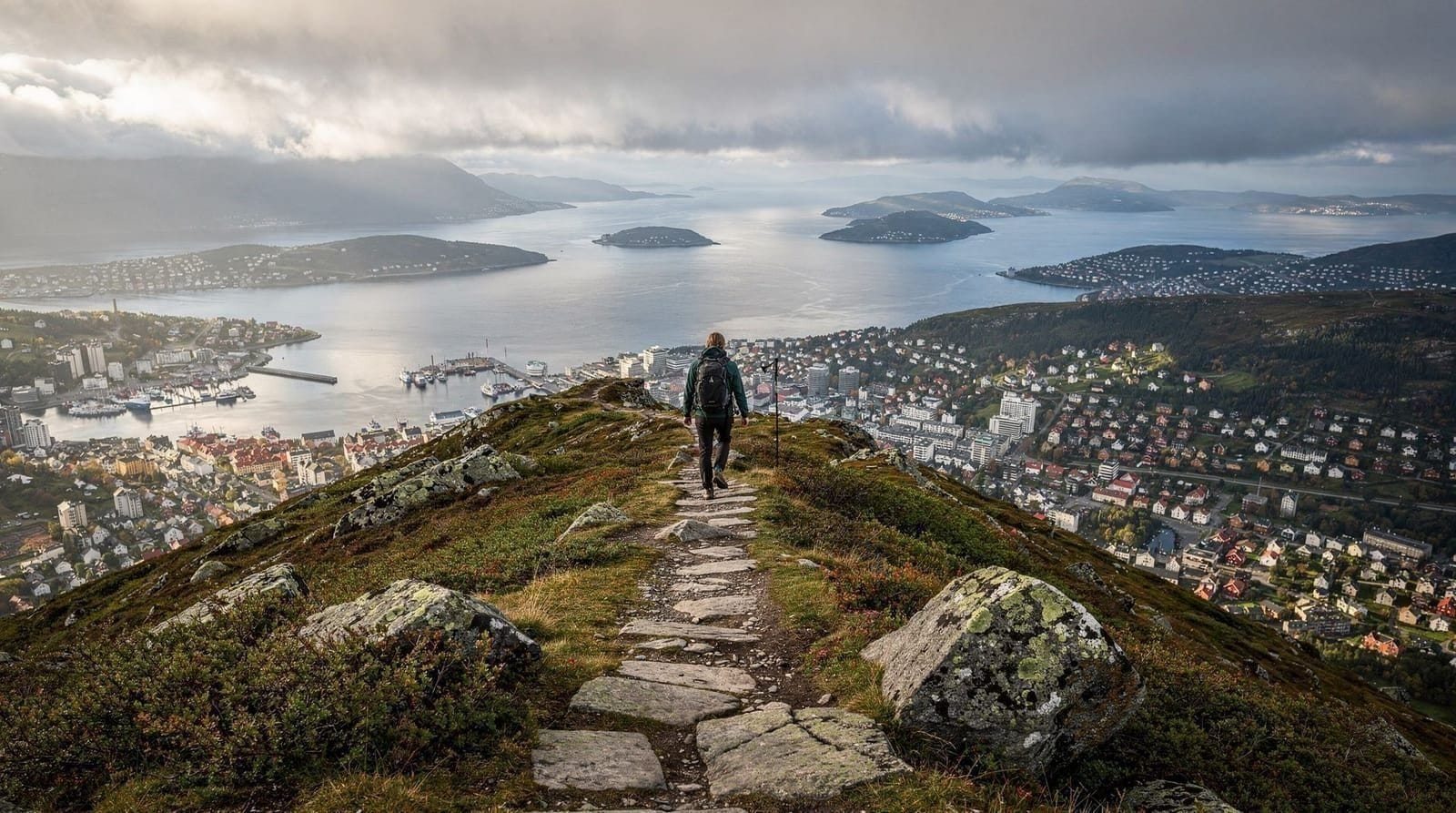
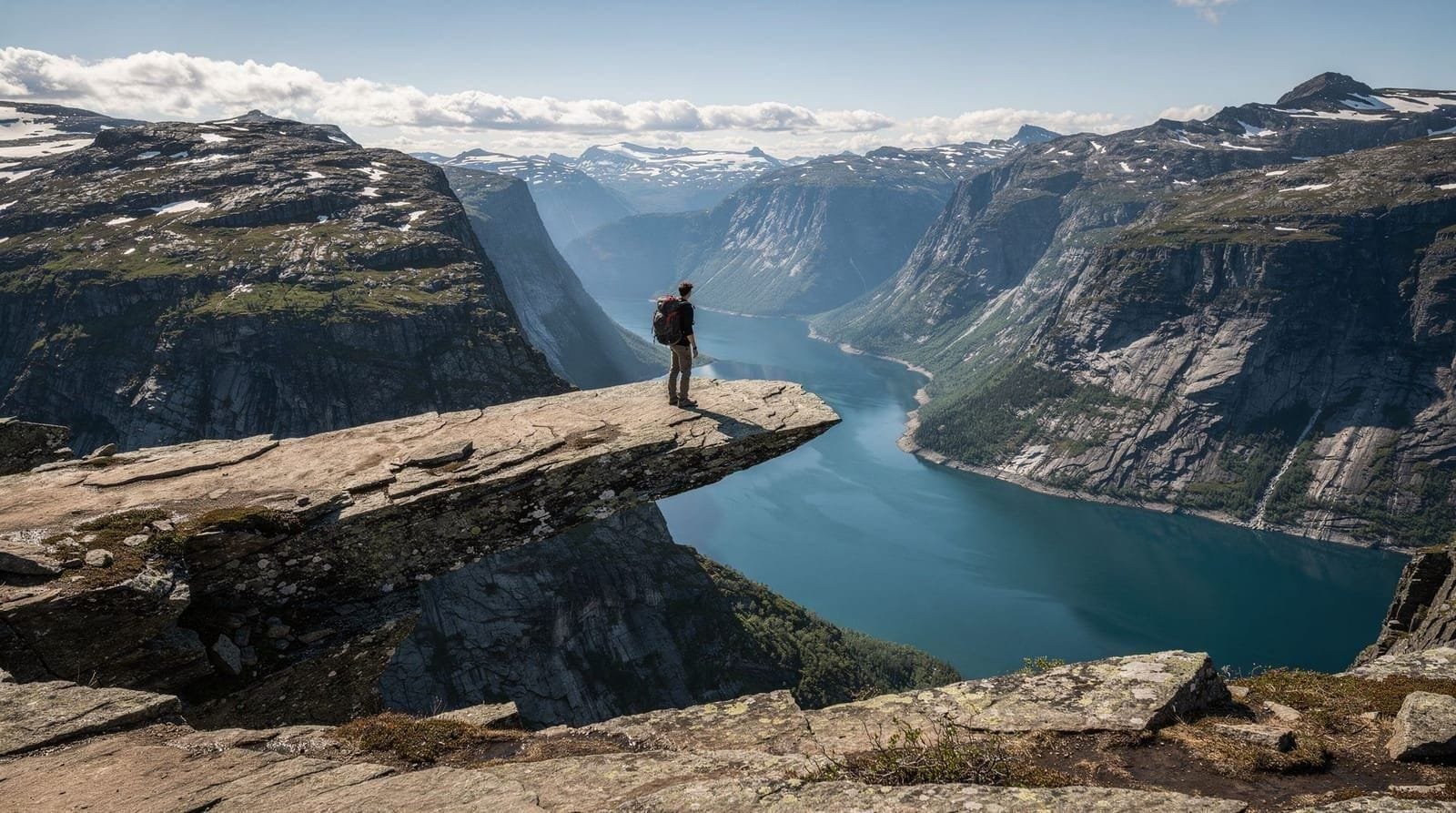
Trolltunga (“Troll’s Tongue”) is a rock ledge projecting horizontally 700 m above the surface of Ringedalsvatnet lake, east of Odda. It is among Norway’s most-photographed hikes. It is also a genuinely demanding full-day undertaking that kills people every year when conditions turn.
The numbers: 20–28 km round trip depending on starting point. Elevation gain: 700 m from the top trailhead (Tyssedal/P2 parking at ~850 m) or 1,200 m from the bottom (P1 parking at ~200 m). Round-trip time: 8–12 hours. Start time recommendation: before 7 am in July–August to avoid afternoon queues at the rock itself (which get 20–30 people deep).
Season: Self-guided hiking: June 1–September 30. Outside these dates, a licensed guide and appropriate equipment (crampons, navigation) are required by the Odda municipality. Snow can remain on the upper section well into June and return in early October — check trail conditions (trolltunga.com publishes daily updates).
Getting from Bergen to Trolltunga: By car — drive via Voss or via Norheimsund to Odda (~3.5 hours). By public transport: express bus from Bergen to Odda (about 3 hours), then local shuttle bus to the trailhead in season. Parking at P2: NOK 300/day.
Guided hike option: Recommended for anyone with limited trail experience, uncertain navigation skills, or visiting outside peak season. Several licensed operators based in Odda run guided day hikes June–September, typically NOK 900–1,400 per person including transport from Odda.
A full-day guided Trolltunga hike from Bergen includes transport both ways and a licensed mountain guide — advisable for anyone unfamiliar with Norwegian mountain hiking.
The detailed route, gear list, and trailhead logistics are in our Trolltunga hike guide.
Folgefonna glacier
Folgefonna is the third-largest glacier in Norway, rising above the southern Hardangerfjord. Glacier hiking on Folgefonna is accessible from the Folgefonn Glacier Resort (Juklavassfjellet), where guided glacier walks operate June–September. A guided glacier walk takes 2–3 hours and requires no prior experience; the operators provide crampons and ice axes. Prices: approximately NOK 600–900 per adult.
The glacier has retreated significantly over the past 30 years. Access conditions vary annually. Operators provide current status. The Folgefonnsenteret (Folgefonn Centre) in Rosendal covers the glacier’s natural history.
Fruit orchards and Hardanger cider
The Hardanger region produces approximately 40% of Norway’s total fruit crop. Cherries ripen from mid-June; apples and pears from August–October. The blossom season (early to mid-May) is the most visually spectacular period — orchards along both fjord banks are in full bloom simultaneously, often with snow still visible on the peaks above.
The Hardanger Cider Trail links family-operated producers. Ullensvang municipality (which includes Lofthus, Kinsarvik, and Aga) has the highest concentration of orchards. Farm shops sell apple cider (traditional and sparkling), apple juice, and aquavit made from local fruit. Some farms offer tastings. Operating hours are seasonal — call ahead outside July–August.
Notable producers along the trail: Hardanger Saft og Siderfabrikk in Øystese (established 1891, sells nationwide), Lekve Gard in Utne (farm cider shop), and Oma Gard (small-scale apple cider). These are real producers, not tourist attractions built around the product — the tasting experience is genuine but also low-key.
Hardangerfjord as a day trip from Bergen
The two main access routes:
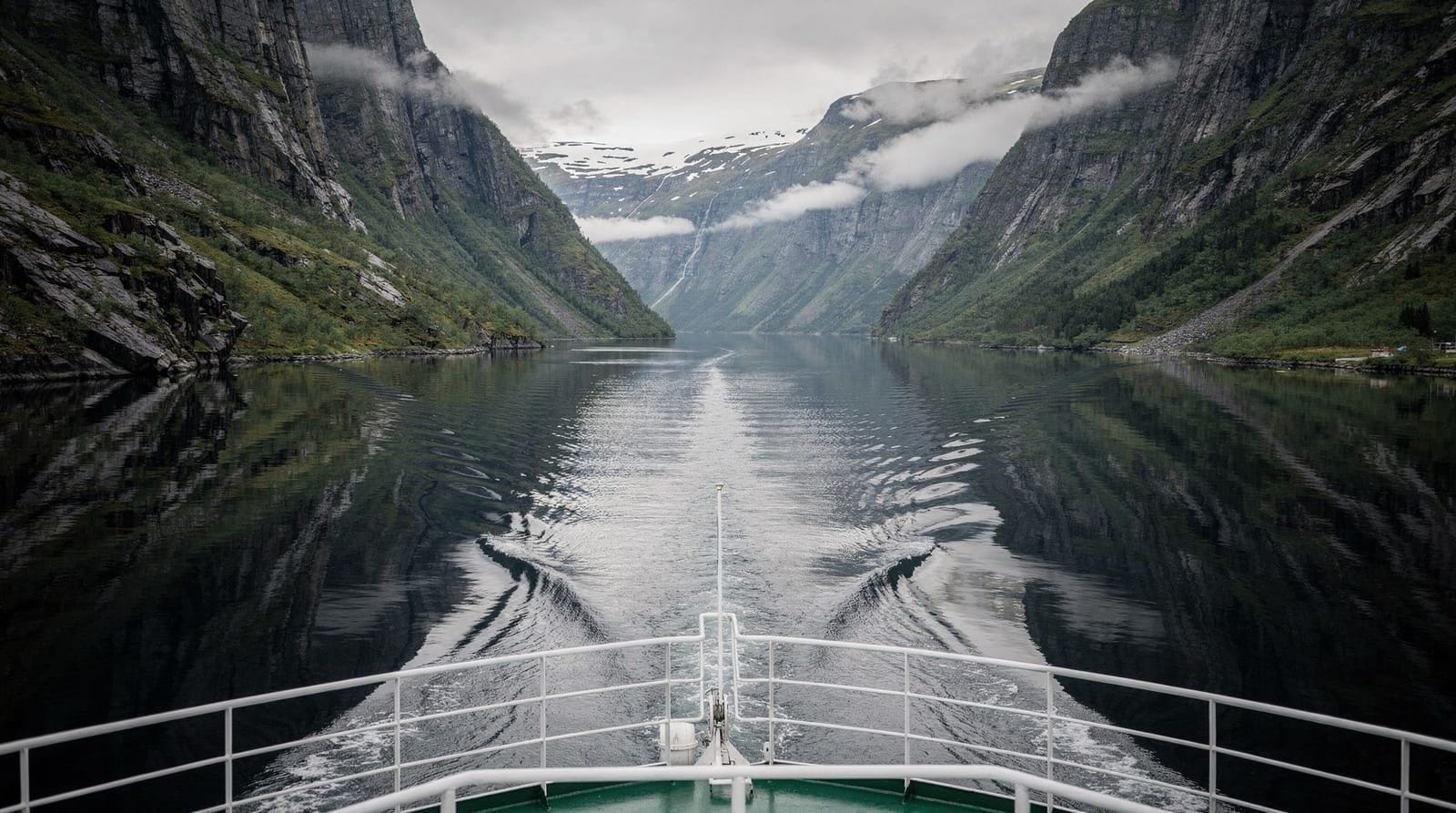
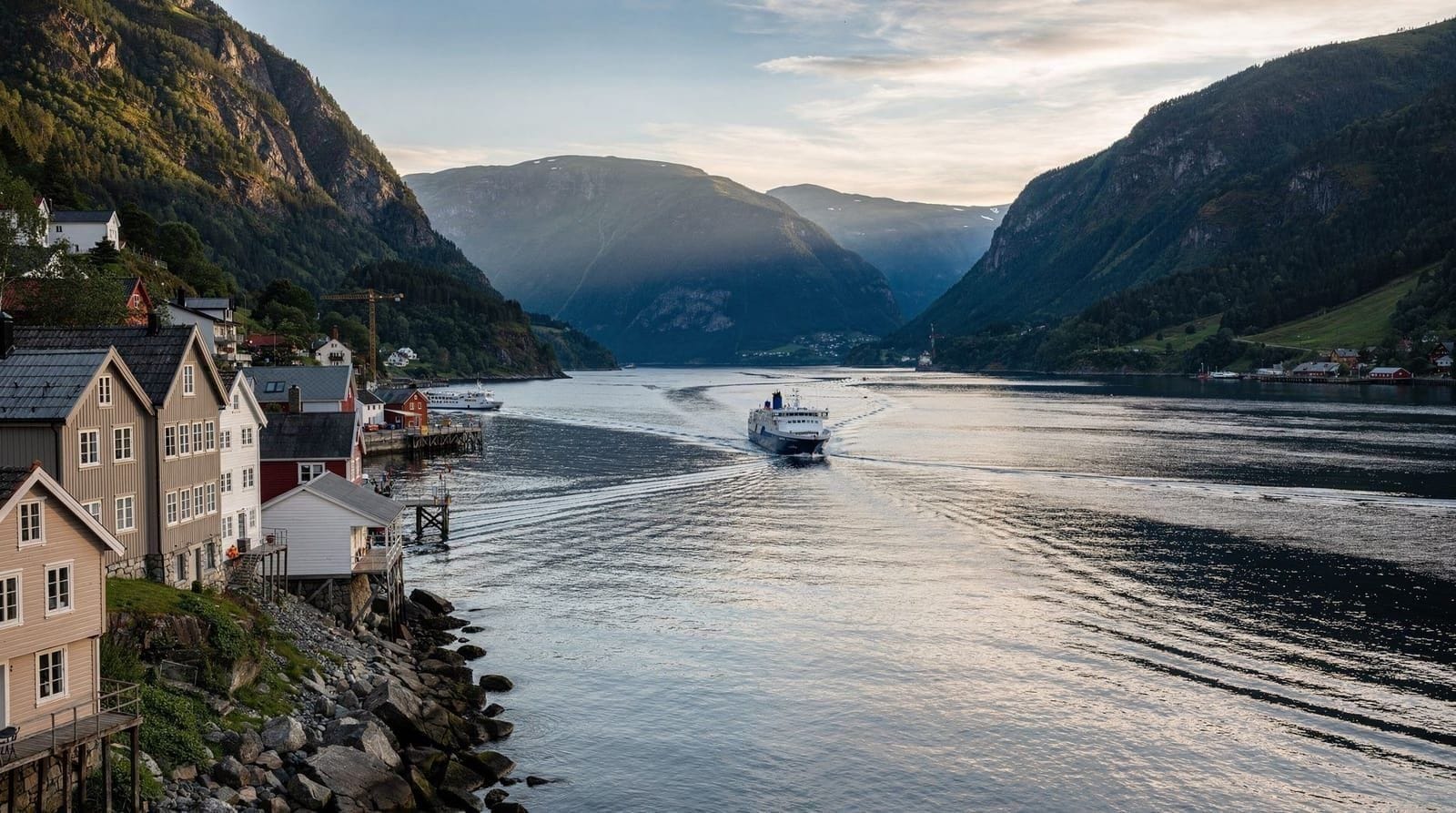
Express boat (Hardangerfjordekspressen): Bergen Strandkaiterminalen → Rosendal → Lofthus → Kinsarvik → Utne → Kvanndal. Journey time varies by stopping pattern: Bergen to Lofthus approximately 2.5 hours. Runs year-round on some routes; reduced service in winter. The boat traverses the open fjord mouth and enters the inner Hardanger landscape — a scenic journey that is itself part of the experience.
By car: Fastest access to Eidfjord and Vøringsfossen. Bergen → E16 toward Voss → Rv13 to Granvin → Rv7 to Eidfjord: approximately 2 hours. For a waterfall-focused day trip from Bergen (Vøringsfossen + Steinsdalsfossen + possible Eidfjord stop), a car is significantly more flexible than public transport.
A combined Hardangerfjord, Voss gondola, and three-waterfall day tour from Bergen covers the main fjord highlights without requiring a car or navigating the plateau road independently.
What to combine in one or two days
One day (Bergen base):
- Express boat to Lofthus → Steinsdalsfossen walk → Eidfjord → Vøringsfossen → return by bus or boat
- Alternatively: guided Hardangerfjord day trip covering orchards, waterfalls, and the gondola
Two days (overnight in Eidfjord or Lofthus):
- Day 1: Orchard trail, cider tasting, Kinsarvik church (one of the oldest in Norway), Steinsdalsfossen
- Day 2: Vøringsfossen + either Trolltunga approach (very long) or Folgefonna glacier hike
The Bergen and fjords 5-day itinerary integrates Hardangerfjord as a dedicated day alongside the Sognefjord circuit.
Steinsdalsfossen — walk behind the waterfall
Steinsdalsfossen near Norheimsund is one of a small number of waterfalls in Norway where a walking path allows you to pass behind the falls. The path is paved and maintained; the experience of standing behind 50 m of falling water with a curtain of white in front of you is about 30 seconds of spectacle followed by dampness. Bring a waterproof jacket.
Free to visit; parking available. Norheimsund is the first significant stop from Bergen on the express boat route (about 1 hour from Bergen, NOK 250–350 single). The waterfall is 3 km from the Norheimsund quay — walkable or a short taxi.
Rosendal and the Barony
Rosendal at the outer southwest end of Hardangerfjord is the site of Norway’s only barony — Baroniet Rosendal, established in 1678 by Ludvig Rosenkrantz and Karen Mowat. The small castle (really a Renaissance manor house, not a military fortress) and formal gardens are open to visitors June–September. Entry: NOK 180 adult (castle and gardens). The surrounding park contains apple orchards, a walled rose garden, and views across the fjord toward the Folgefonna glacier above.
Rosendal is accessible by car (2 hours from Bergen via the tunnel under the Hardangerfjord) or by express boat from Bergen (2.5–3 hours with stops). It is the best single stop for visitors who want Hardangerfjord access without the Trolltunga/Vøringsfossen logistics — a quieter, more cultural entry point to the fjord system.
Hardangerfjord with children
The fjord is more family-accessible than Sognefjord or Lysefjord, which require either long boat journeys or demanding hikes. Practical options for families:
- Norheimsund and Steinsdalsfossen: Easy walk, good waterfall spectacle, accessible by express boat
- Baroniet Rosendal: Gardens and castle suitable for children with some interest in history
- Hardanger Cider trail: Farm shops are welcoming to families; children can taste juices and non-alcoholic cider versions
- Boat tour from Bergen: The express boat itself is an experience for children — the wide fjord, changing mountain landscapes, and working harbour stops along the route
Trolltunga is not suitable for young children. The approach road to Vøringsfossen is manageable for families with a car; the viewpoint platform is accessible without hiking.
Accommodation in the Hardangerfjord region
The fjord has accommodation at multiple price levels distributed across its length:
- Lofthus (Hotel Ullensvang): The most established hotel on the fjord — family-run since 1846, directly on the water at Sørfjorden. Rates: NOK 1,800–2,800 per double in peak season. The garden terraces overlook the fjord toward Folgefonna. Booking essential for summer.
- Eidfjord (Eidfjord Fjell og Fjordhotell): Central location for the Vøringsfossen area. NOK 1,400–1,900 per double.
- Rosendal (various guesthouses): NOK 900–1,500 per double. Quieter and cheaper than the fjord’s busy mid-section.
- Camping: Eidfjord Camping, Lofthus Camping, and several others along the fjord. Tent pitches from NOK 200–280.
Getting around within Hardangerfjord
Car gives the most flexibility — many waterfall viewpoints and farm stops require driving the Rv7 plateau road or narrow valley roads. Without a car:
- Express boat stops at main villages on both sides of the fjord
- Local buses connect Eidfjord with the waterfall and plateau roads (seasonal)
- Cycling is popular along the fjord banks; bike rental available at Lofthus and Eidfjord
Our best day trips from Bergen guide compares Hardangerfjord against the other Bergen day-trip options (Mostraumen, Norway in a Nutshell, Sognefjord).
If you would rather see the fjord from the water than from a car window, the Hardangerfjord cruise guide explains how the boat options differ. Travellers heading inland can pair the fjord with the Voss adventure guide, since Voss sits on the road between Bergen and the inner fjord. Everything here is easiest to organise from Bergen, and anyone with a longer trip can fold the fjord into the Western Norway 7-day itinerary.
Hardangerfjord costs — what to budget
Transport:
- Bergen express boat to Lofthus or Eidfjord: NOK 350–500 per person one-way
- Bergen–Odda bus (for Trolltunga): NOK 250–350 per person one-way
- Car rental add-on from Bergen (per day): NOK 800–1,400 plus tolls (~NOK 50–150/day)
Activities:
- Trolltunga (self-guided, with parking NOK 300): effectively free beyond transport
- Trolltunga guided hike from Bergen: NOK 900–1,400 per person
- Folgefonna glacier walk: NOK 600–900 per person
- Vøringsfossen viewpoint: free; shuttle bus from Eidfjord ~NOK 80 each way
- Steinsdalsfossen: free
Food:
- Farmhouse cider tasting: NOK 80–150 per bottle; many farms offer free tasting
- Hotel Ullensvang restaurant main course: NOK 250–400
- Casual lunch at a fjord café: NOK 150–220
- Supermarket lunch from Rema 1000 (Norheimsund or Eidfjord): NOK 80–120
A realistic day trip from Bergen to Hardangerfjord (express boat + Vøringsfossen + one meal) costs NOK 1,000–1,400 per person. A guided day tour including Trolltunga runs NOK 1,500–2,000 per person total.
Hardangerfjord in autumn and winter
September is particularly good for Hardangerfjord — the harvest season for apples and pears overlaps with the best autumn light and significantly reduced crowds. Farm shops are at their fullest. The orchards in Ullensvang in September, heavy with apple-bowed branches against the fjord and the first snowfall on peaks above, is a strong photographic case for shoulder-season travel.
Winter (November–April): the Trolltunga and Folgefonna glacier hikes require guides and equipment. The express boat runs a reduced schedule. Vøringsfossen may be partially frozen, which is a different kind of spectacle from the summer meltwater flow. Prices across the region drop 30–40% from peak summer levels.
Hardangerfjord by season, at a glance
| Season | Highlight | Trolltunga | Crowds/prices |
|---|---|---|---|
| Early May | Orchard blossom | Closed/unsafe unguided | Low crowds, good value |
| Jun–Aug | Full waterfall flow, warm | Open, self-guided | Peak crowds, peak prices |
| September | Harvest, autumn light | Closing/guide-only late month | 30–40% lower rates |
| Oct–Apr | Frozen waterfalls, quiet villages | Closed to unguided hikers | Cheapest, reduced boat schedule |
If your trip is built around fjord comparisons rather than Hardangerfjord specifically, the Sognefjord guide, Lysefjord guide, and Geirangerfjord guide lay out how each fjord differs in access time and character.
Frequently asked questions about Hardangerfjord
Is Trolltunga safe to hike without a guide?
For fit, experienced hikers with proper navigation skills and appropriate gear, yes — during the official season (June 1–Sep 30) with favourable weather. The trail is marked. But “safe” is relative: weather on the Hardangervidda can change rapidly, the exposure is significant, and rescue operations here are frequent. If you are unsure about your fitness level, have no trail experience, or plan to go outside season, hire a guide. The Trolltunga hike guide covers the realistic difficulty assessment.
When do the Hardanger orchards bloom?
The blossom season varies slightly by year and by orchard location, but typically peaks in the first two weeks of May. Local forecasts from Ullensvang municipality publish expected bloom dates annually. The combination of pink blossoms against fjord water and snow-capped peaks is one of the most striking seasonal phenomena in Western Norway.
Can you see Vøringsfossen without a car?
Yes, but it requires planning. From Bergen: express boat to Eidfjord (3 hours, with stops), then a seasonal shuttle bus up the Rv7 to the viewpoint (check timetable annually). Outside shuttle-bus season, a taxi from Eidfjord to Vøringsfossen costs approximately NOK 400–600 return. A guided day trip from Bergen handles this without the logistics.
How does Hardangerfjord compare to Nærøyfjord?
Different character. Nærøyfjord is narrow, dramatic, steep-walled, and accessed by boat. Hardangerfjord is wider, more agricultural, with softer landscapes punctuated by dramatic waterfalls and glaciers. Nærøyfjord is the “classic” fjord photo; Hardangerfjord is the more varied, less crowded, and arguably more multi-dimensional experience. If you can do one, Nærøyfjord is the priority; if you have two or three days, Hardangerfjord rewards the additional time.
What is Folgefonna and is it worth visiting?
Folgefonna is the third-largest glacier in Norway. Guided glacier walks run from the Folgefonn Glacier Resort from June–September. It is a worthwhile half-day experience if you have not walked on a glacier before and are in the Rosendal or Jondal area. It is less accessible as a standalone trip from Bergen than Vøringsfossen or the orchards.
Is the Hardangerfjord express boat scenic?
Yes — the boat crosses the open outer fjord before entering the narrowing inner arms. It is a slower, more leisurely approach than driving and covers the fjord from the water level, which is different from the road perspective. The mountain scenery increases as you approach Eidfjord.
Top experiences
Bookable activities with verified prices and instant confirmation on GetYourGuide.