Bergen city sightseeing — the honest guide to Bergen's top attractions
Bergen: City Sightseeing Hop-On Hop-Off Bus Tour
What are the best sights to see in Bergen?
Bergen's top sights are Bryggen (the UNESCO Hanseatic wharf), Fløibanen funicular up to Mount Fløyen, the Fish Market (Fisketorget), and the KODE art museums. All are walkable from the city center. Budget NOK 600–900 for a full day hitting all four, or use the Bergen Card to bundle admissions.
Bergen is a small city — it takes about 15 minutes to walk from the railway station to Bryggen — but it rewards slow exploration. The sights cluster tightly around the harbor, which means even a half-day visitor can hit the main points without a taxi. This guide covers what is genuinely worth your time, what to skip if time is short, and what you will pay in honest Norwegian Krone.
| Where | Around Vågen harbor — Bryggen, Fish Market, Fløibanen, KODE all within 15 min walk |
| Cost (main 4 sights) | Around NOK 500–650 without a Bergen Card |
| Time needed | 1 full day for the essentials, 2 days for a relaxed pace |
| Getting there | On foot from the city center — no bus or taxi needed |
| Best time | Before 9am or after 4pm to avoid cruise-ship crowds |
How Bergen’s sights are laid out
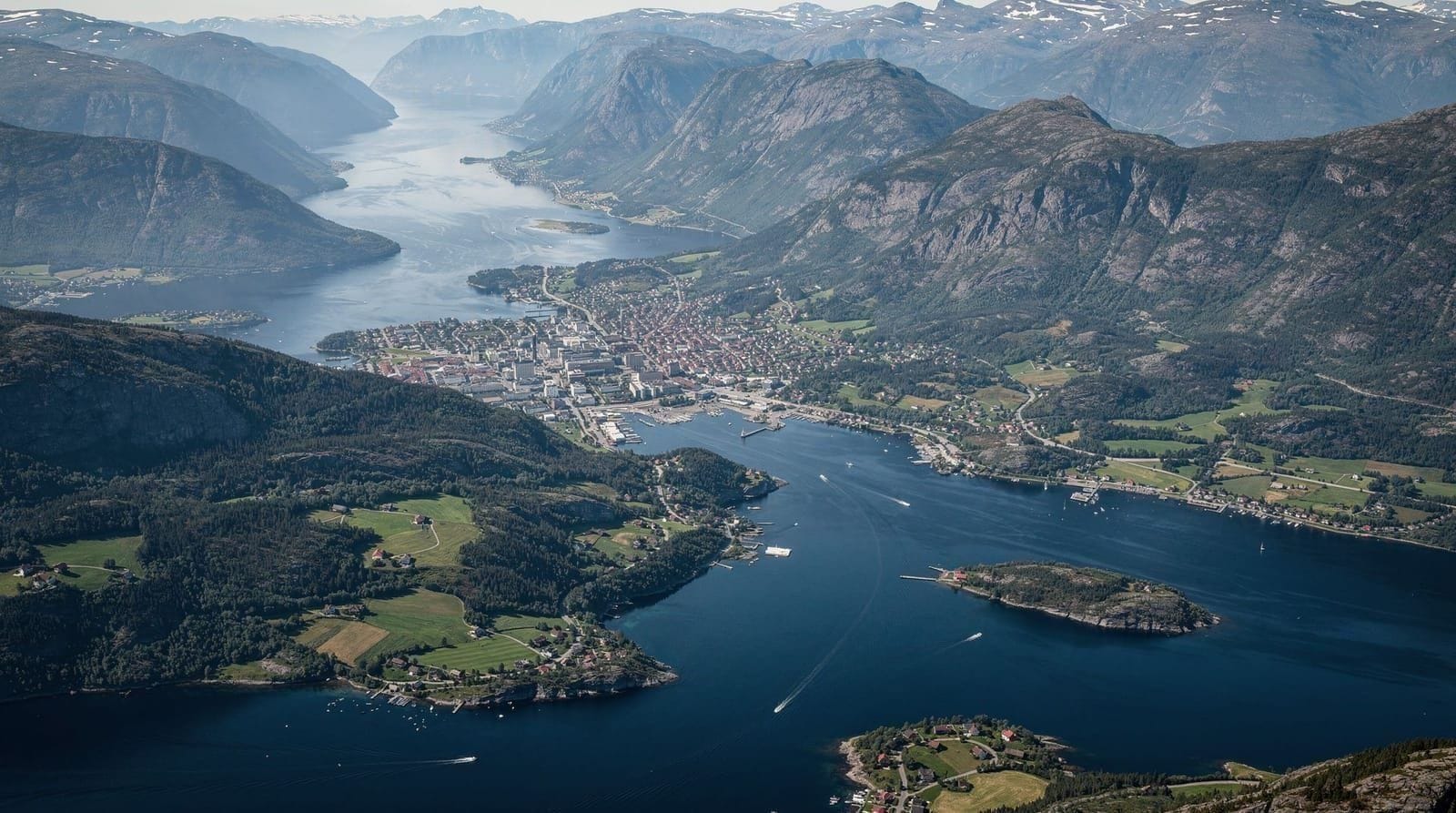
The city is built around Vågen harbor. Bryggen lines the north side of the harbor. The Fish Market sits at the harbor mouth on the east. Fløibanen lower station is a two-minute walk behind the fish market. KODE’s four buildings are five minutes’ walk south along Rasmus Meyers Allé. The Nordnes peninsula — home to Bergen Aquarium — is a 20-minute walk west along the harbor.
This layout matters because a common mistake is renting a car or booking transfers between sights that are genuinely walkable. Save the money.
Bryggen — Bergen’s most recognized landmark
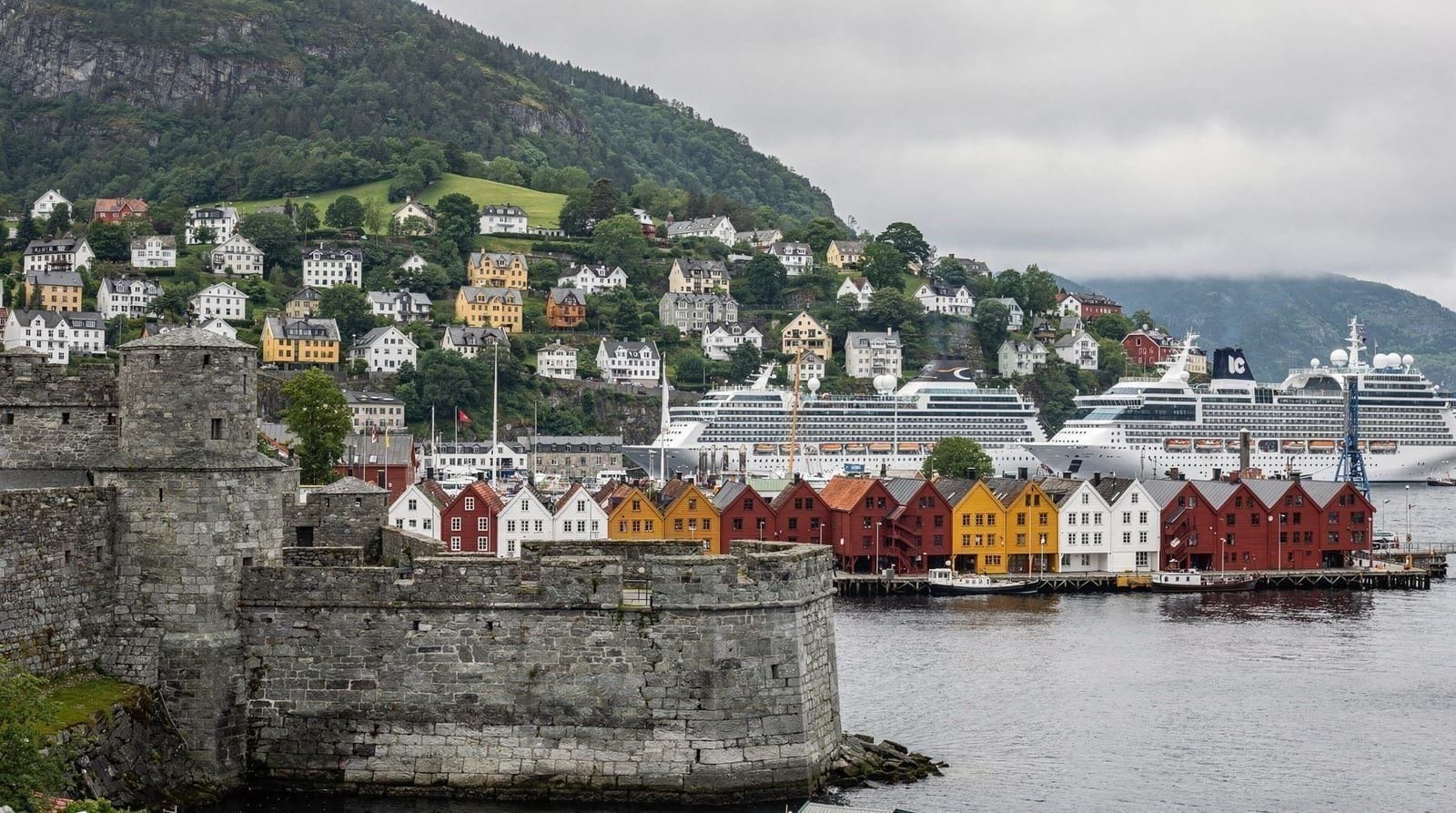
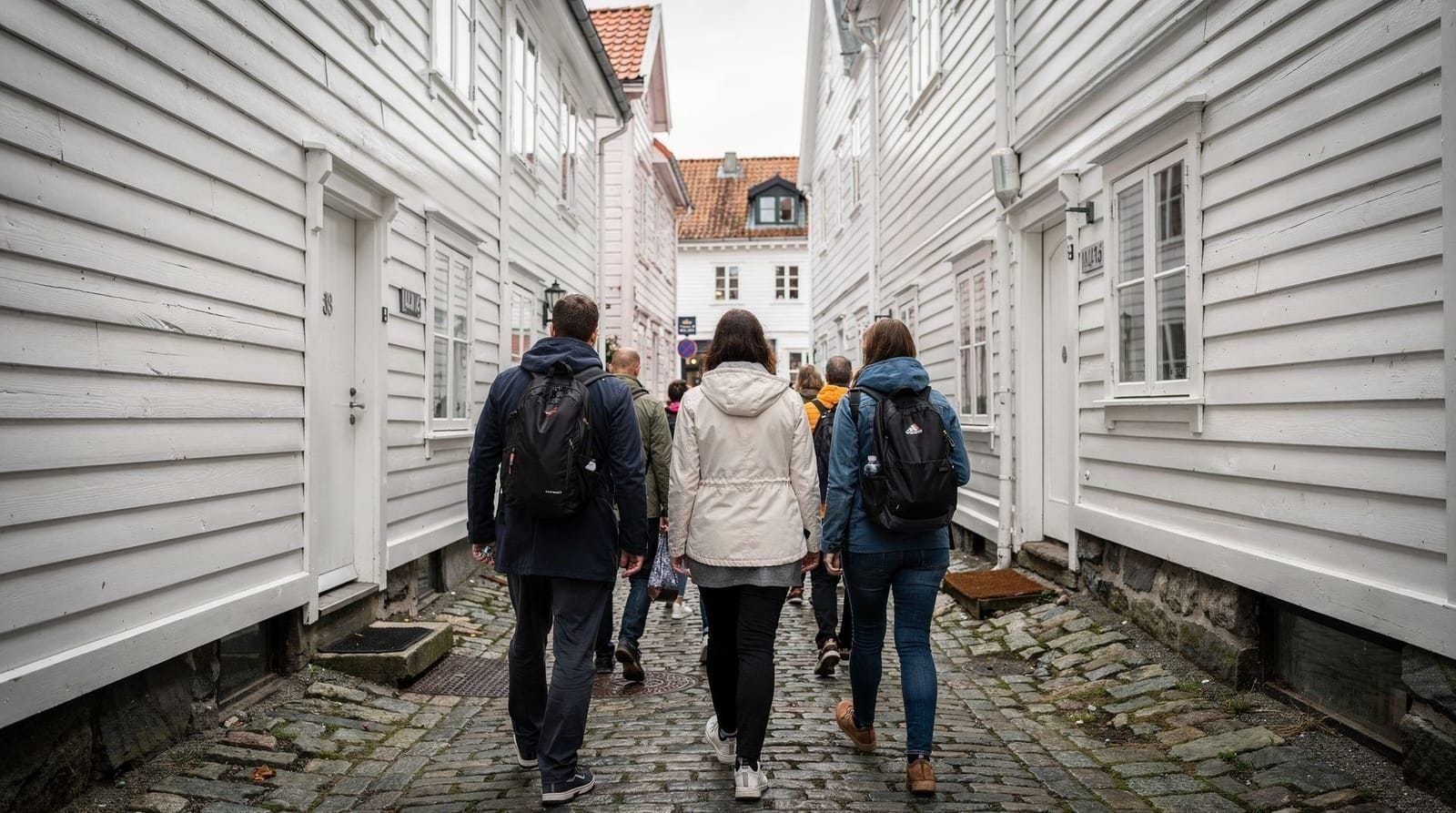
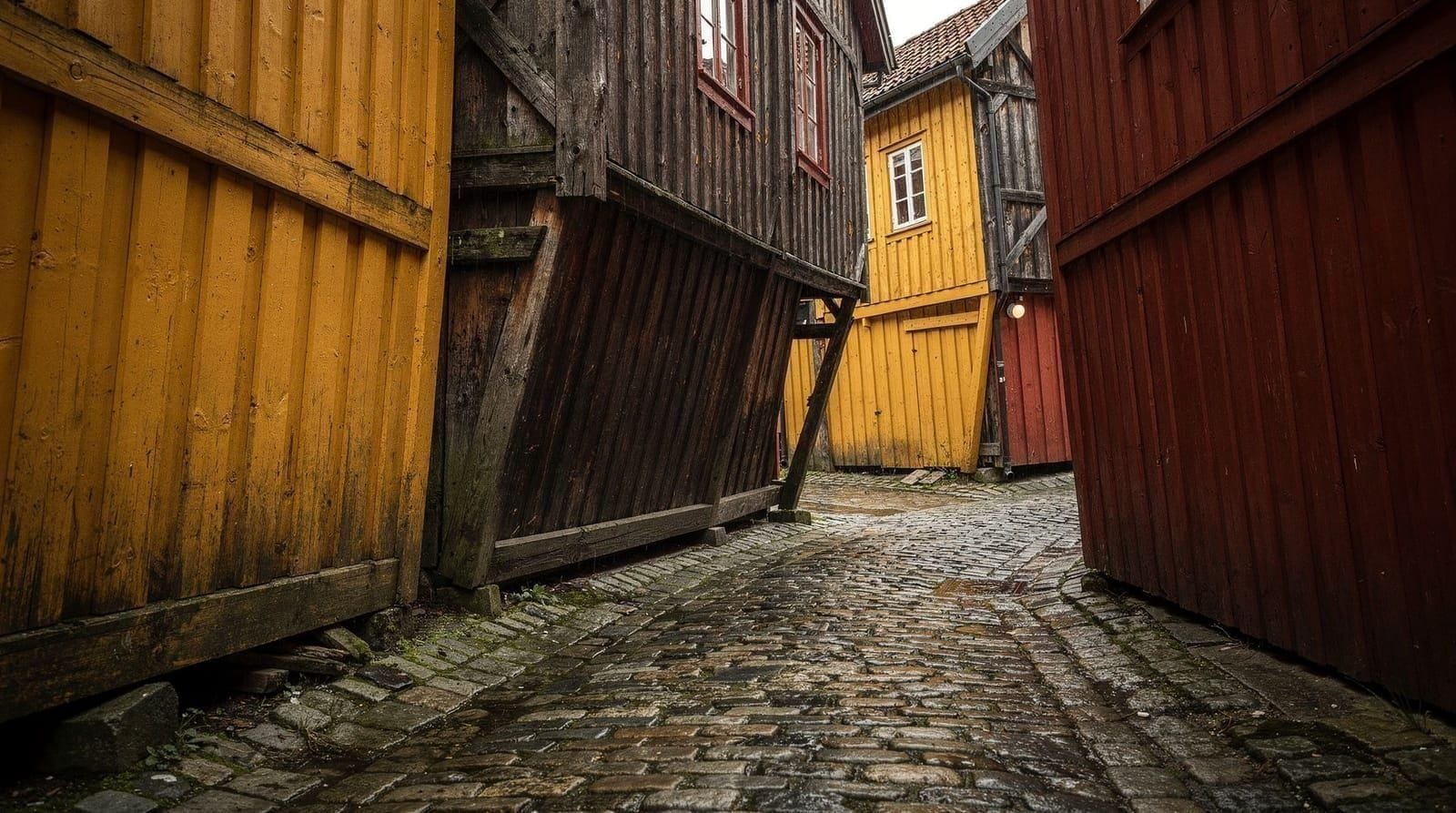
The row of painted timber warehouses along the north quay of Vågen harbor is Bergen’s defining image. These are reconstructed Hanseatic League trading houses, and the site is a UNESCO World Heritage listing (1979). The frontages face the harbor; behind them run narrow alleyways lined with craft shops, galleries, and small museums.
Entry to the alleyways is free. The Bryggens Museum (NOK 130, Bergen Card included) sits at the northern end and provides genuine historical context — the excavations that preceded rebuilding after the 1955 fire uncovered medieval layers going back to the 12th century.
Practical timing: Cruise ships arrive from 8 am and disgorge passengers directly at Bryggen. Between 10 am and 3 pm on peak summer days, the alleyways are genuinely congested. Arrive before 9 am or after 4 pm for a manageable experience. Dawn light on the frontages is excellent for photography.
What the alleyways actually contain: small Norwegian design shops, amber jewelry, trolls (the souvenir kind), a few galleries, and the Hanseatic Museum reconstruction. The food options in the alleyways are tourist-priced and mediocre; eat elsewhere. Our Bryggen deep-dive guide covers the history and the individual buildings in far more detail than fits here, and our Bergen food and drink guide has the honest picks for where to actually eat nearby.
Fløibanen funicular — the clearest panoramic view of Bergen
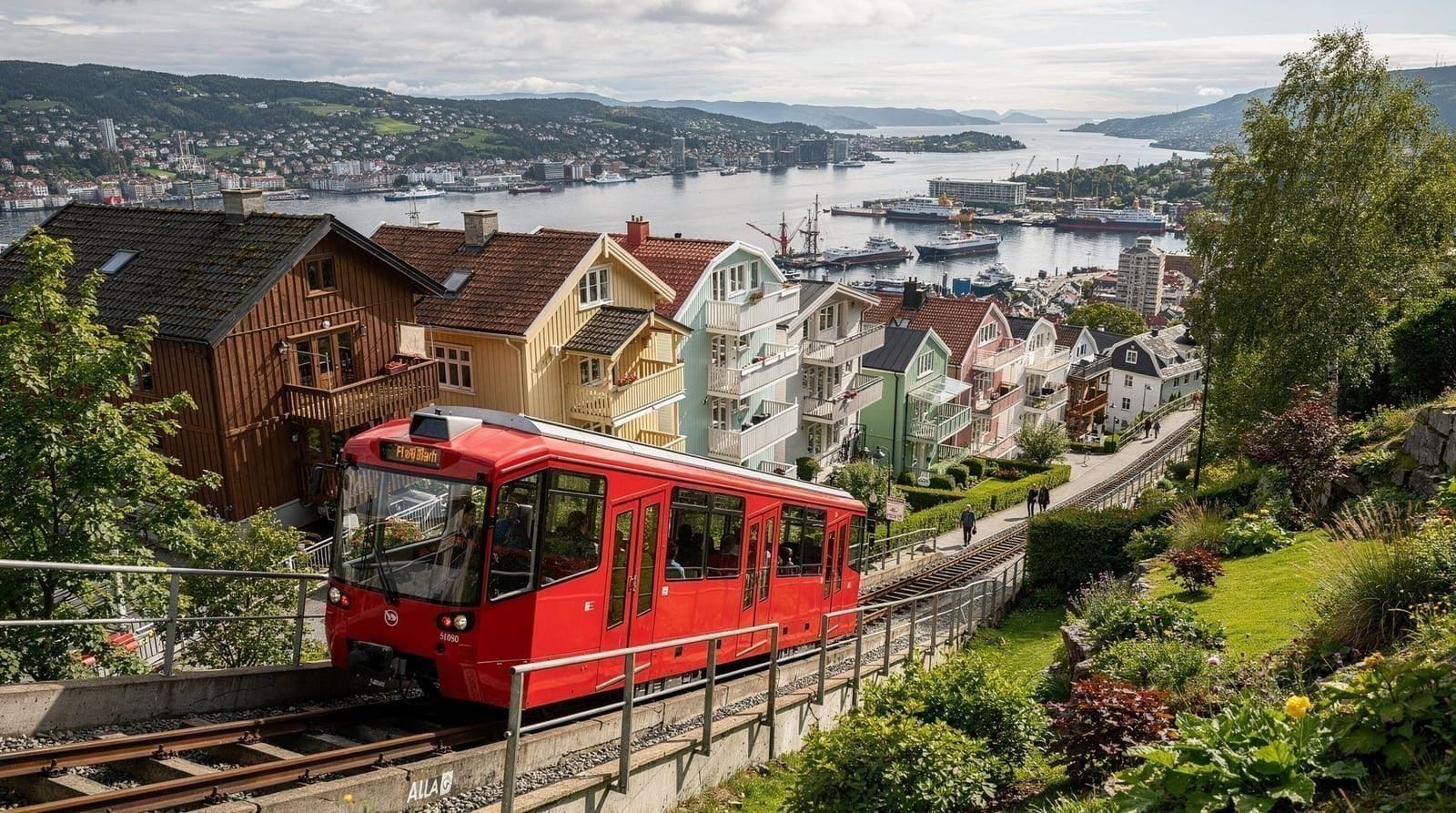
The Fløibanen runs from a station at Vetrlidsallmenningen, a two-minute walk behind the Fish Market, to the summit of Mount Fløyen at 320 meters. The ride takes 6 minutes. The panoramic view from the top takes in the harbor, the seven mountains, and on clear days the islands to the west.
2025–2026 prices (return): NOK 220 adult, NOK 110 child (6–15), under 6 free. Bergen Card gives 50% discount. Online pre-booking saves queuing — in July, walk-up queues reach 30–60 minutes at peak hours (11 am–2 pm). Book a specific departure time online.
The summit has a restaurant (Fløien Folkerestaurant), a small kiosk, playgrounds, and the entrance to the marked trail network. A 45-minute walk along the ridge connects Fløyen to Ulriken, Bergen’s highest mountain (643 m), though the descent requires either the Ulriken cable car (NOK 255 one-way) or another 90-minute walk back.
The funicular operates year-round. Even in rain and low cloud, the ride is atmospheric rather than disappointing — Bergen’s misty mountain atmosphere is part of its character. For the full walking-trail picture from the summit, including how it connects to Ulriken, see the dedicated Mount Fløyen guide and our Fløibanen funicular guide.
Fish Market — touristy, but still worth 30 minutes
Fisketorget (the Fish Market) sits at the east end of Vågen harbor. It splits into an outdoor section (summer only, roughly May–September) and a permanent indoor hall open year-round.
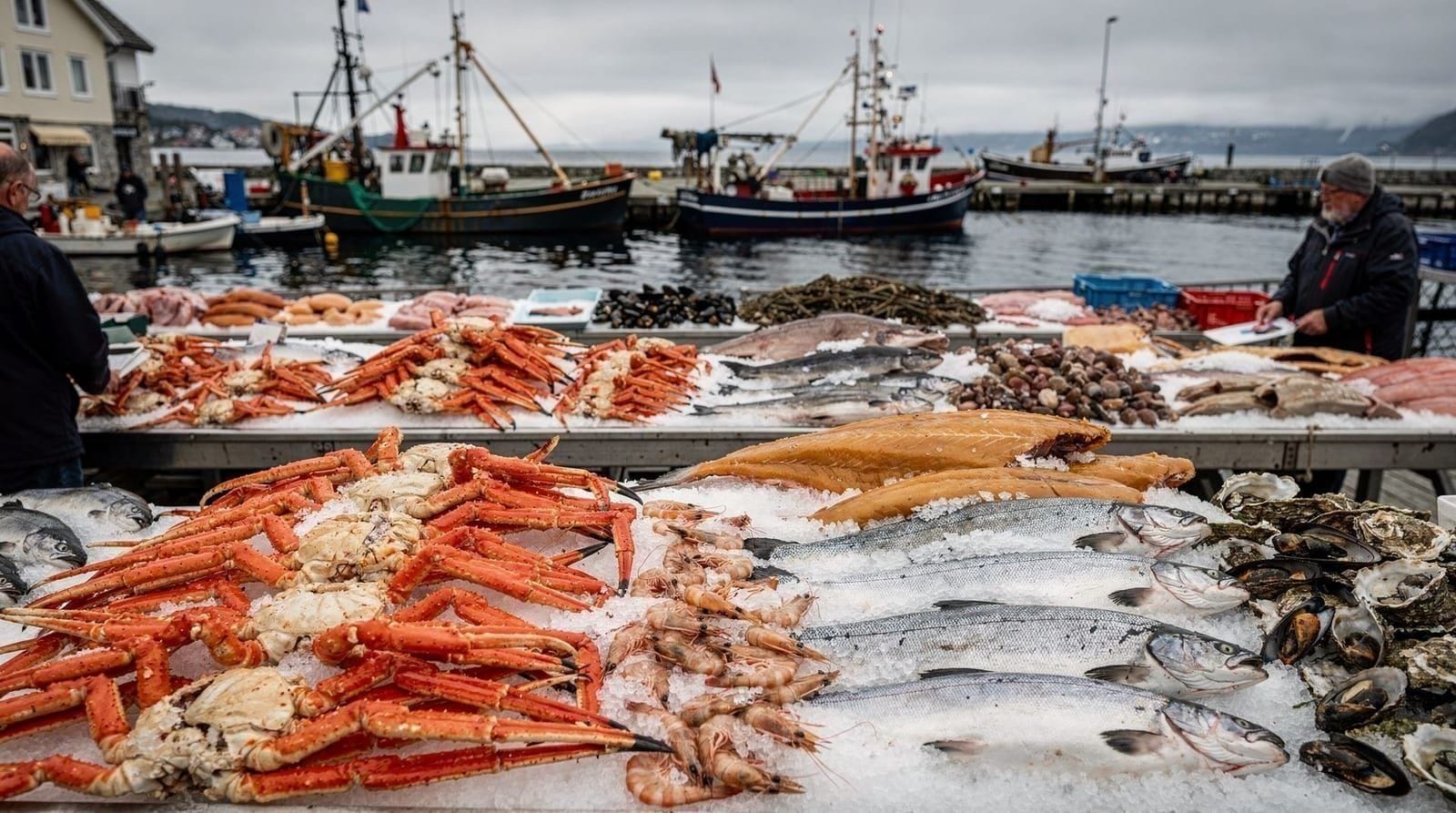
The outdoor stalls are unambiguously targeted at tourists: whole king crab legs at NOK 250–400, shrimp cocktails at NOK 150–200, salmon carpaccio. The prices are high by local standards. Bergen locals do not routinely shop here — they go to Mathallen Bergen (the indoor market hall on Lars Hilles gate) for everyday fish purchases at honest prices.
That said, the outdoor market is visually engaging and the shrimp (reker) are good quality. If you want an authentic fish-market experience, arrive at 8 am when the traders are setting up and the cruise tour groups have not yet arrived. A small plate of local shrimp is a reasonable splurge; a full crab lunch for two will cost NOK 1,000+.
The indoor Fisketorvet hall has a better price-to-quality ratio for sit-down seafood. For a deeper look at what to actually order and how to avoid the tourist traps, see our dedicated Bergen Fish Market guide.
KODE art museums — Bergen’s underrated gem
KODE runs four buildings along Rasmus Meyers Allé, within walking distance of Bryggen. The collection spans Norwegian and Nordic art from the 19th century to contemporary, including the world’s largest collection of Edvard Munch works outside Oslo, and a substantial Picasso holding in KODE 4.
Combined admission (all four buildings): NOK 180 adult, free under 18. Bergen Card includes entry. KODE 2 is the main building for Norwegian classics; KODE 4 (formerly Lysverket) houses the international collection and has an excellent café on the ground floor.
Most visitors spend 2–3 hours across two or three buildings. If time is short, KODE 2 and KODE 4 are the priority. For a full rundown of Bergen’s museum scene beyond KODE, including Bryggens Museum and the Hanseatic Museum, see our Bergen museums and culture guide.
Bergen Aquarium (Akvariet) — best with children
Akvariet på Nordnes sits at the tip of the Nordnes peninsula, a 20-minute walk from Bryggen along the harbor. It is Western Norway’s largest aquarium and genuinely well-run. The penguin and seal enclosures are outdoors; the main tanks cover Atlantic species including cod, wolffish, and deep-water invertebrates.
Entry: NOK 380 adult, NOK 280 child (3–15). Feeding times are posted at entry. Budget 2 hours. With young children, this is one of Bergen’s best wet-day options.
Bergenhus Fortress — free and underused
Bergenhus Fortress at the north end of Bryggen is one of Norway’s oldest and best-preserved medieval fortresses. Rosenkrantz Tower and Håkon’s Hall are the two main structures; both charge NOK 100 entry (Bergen Card included). The fortress grounds are free to walk and provide an excellent view of the harbor entrance. Most visitors walk past it while heading between Bryggen and the boat terminals — it deserves more than that.
Bergen for first-timers — the honest orientation
Bergen confuses first-time visitors in two main ways. First, the compact city center appears simpler on a map than it feels on the ground — the seven mountains create sudden elevation changes and the harbor curves in ways that make compass orientation unreliable. Second, the cluster of major sights (Bryggen, Fish Market, Fløibanen, KODE) leads many visitors to spend all their time in a 500-meter radius, missing the neighborhoods and harbor walk that give Bergen its actual character.
A useful mental model: Bergen is organized around Vågen harbor, which curves from Bryggen in the north to the Fish Market in the east. Everything important is within 15 minutes’ walk of that harbor perimeter. The mountains rise immediately from the streets — you can see trails starting from within the city blocks. The city does not gradually transition to nature; the transition is abrupt and present throughout the city.
What Bergen is not: Bergen is not a large city. With 285,000 inhabitants in the metropolitan area, it is smaller than many European cities that visitors find more complex. The main sights in two full days, the outlying attractions (Troldhaugen, Fantoft) in a half-day each, and a fjord day trip or two — five days is a generous allocation. Most visitors cover the essentials in 2–3 days and use Bergen as a base for the wider Western Norway itinerary.
Bergen vs. Oslo: Bergen is smaller, more concentrated, and more weather-defined than Oslo. Oslo has broader cultural institutions (National Museum, Opera House, Vigeland Park). Bergen has more direct access to nature, a more intimate city character, and the fjords immediately accessible. A combined Oslo–Bergen trip (the two cities are connected by the famous Bergen Line train, 7 hours) gives a complete Norwegian city experience.
Getting around the sights
Bergen’s city center sights are all walkable. A Bybanen light rail ticket (NOK 51 per trip) covers routes to the suburbs and airport but is not needed for the main sights.
The hop-on hop-off bus is a reasonable option for visitors who want to see Fantoft Stave Church, Edvard Grieg’s home Troldhaugen, and other outer-city sights without renting a car.
Hop-on hop-off sightseeing busThe Bergen Card (24 h / 48 h / 72 h / 96 h: NOK 400 / 500 / 600 / 700) covers the Fløibanen (50% off), all KODE buildings, Bergenhus Fortress buildings, Aquarium, and the Bybanen. Run the numbers against your planned activities before buying — it is not automatically cheaper for light visitors.
Bergen Card — 24, 48, 72 or 96-hour passBergen’s centre is compact enough to walk but its sights sit on three separate levels — wharf, city floor and mountainside — and a group tour has to pick one pace for all of them: a private guided city sightseeing tour lets the climb happen at yours.
One-day city sightseeing route
8:00 am Bryggen at dawn before cruise ships arrive — walk the alleyways, photograph the frontages.
9:00 am Bryggens Museum opens (NOK 130, or Bergen Card).
10:30 am Fish Market — one plate of shrimp, then move on.
11:00 am Fløibanen up (book in advance for this time slot to avoid queues). 30 minutes at the summit.
12:30 pm Fløien Folkerestaurant for lunch, or descend and eat at a Mathallen Bergen stall.
2:00 pm KODE 2 and KODE 4 — 2 hours minimum.
4:30 pm Bergenhus Fortress grounds and Rosenkrantz Tower.
Evening Dinner at Bare Restaurant (Zander K) or Lysverket in KODE 4 for a higher-end meal, or one of the Bryggen-adjacent restaurants at the harbor.
Two-day Bergen city sightseeing route
If you have two full days in Bergen, the city rewards a slightly slower pace that allows more depth at each site.
Day one: Bryggen at dawn, Bryggens Museum, Fish Market, Fløibanen, Fløien Folkerestaurant lunch, afternoon at KODE 2 and KODE 4, evening at Enhjørningen or Lysverket.
Day two: Bergen Aquarium in the morning (20-minute harbor walk from Bryggen; 2 hours minimum with children, 90 minutes without). Bergenhus Fortress and the Rosenkrantz Tower. Afternoon for the Hanseatic Museum and the Theta Museum on Bryggen (sites you may have missed on Day One). Evening at Pingvinen for traditional Norwegian food.
A Bergen Card (48 h, NOK 500) covers both days comfortably: KODE, Fløibanen (50% off), Bryggens Museum, Hanseatic Museum, Aquarium, and Bergenhus buildings combined value exceeds NOK 1,000.
Bergen’s outdoor walking routes
Beyond the named attractions, Bergen has several excellent walking routes that are free and reveal the city’s character:
Nordnes peninsula walk: From Bryggen, follow the harbor promenade west along the Nordnes peninsula to Bergen Aquarium at the tip. The walk passes the harbor bath (Nordnesbadet), the small park at the peninsula’s end, and residential neighborhoods with good views back toward Bryggen. Round trip: 40–50 minutes walking.
Sydneshaugen: The hillside neighborhood south of the Fløibanen lower station has painted wooden houses in a variety of 19th-century styles, narrow streets, and harbor views. A 20-minute wander here shows Bergen’s residential architectural vernacular alongside the historic sites.
The harbor promenade from Bryggen to Nøstet: Walking south along the harbor from Bryggen past the fish market, through the Zachariasbryggen restaurant area, and along to Nøstet takes 30–40 minutes and covers the full arc of the inner harbor. The waterfront is continuously developed for leisure use and provides a useful spatial orientation for the city.
Sandviken: The neighborhood north of Bryggen, beyond Bergenhus Fortress, has well-preserved 19th-century workers’ housing and the area around Sandviken hospital (a historic institution) is architecturally interesting. Gamle Bergen museum is 4 km further north along the same coastal road.
Bergen’s seven mountains — the city’s defining geography
Bergen is defined by its relationship to seven named mountains (de syv fjell). Understanding the geography helps orient you during city sightseeing:
Fløyen (320 m): Directly above the city center; accessed by the Fløibanen funicular. The most visited summit.
Ulriken (643 m): Bergen’s highest mountain; to the east of the city. Accessed by cable car (Ulriken643) from the Haukeland area. The ridge from Ulriken west to Fløyen is Bergen’s classic mountain traverse.
Sandviksfjellet (354 m): North of the city center, above Sandviken.
Løvstakken (477 m): Southwest of the city, above the Gyldenpris neighborhood.
Damsgårdsfjellet (318 m): Above the Laksevåg area across the Puddefjorden.
Lyderhorn (397 m): On the Sotra island to the west; accessible by bus.
Rundemanen (568 m): On the ridge between Fløyen and the west-facing mountains; reached via the Fløyen trail network.
The Fløibanen and Ulriken cable car give access to two of the seven mountains without hiking; the others require walking. Bergen’s DNT (Norwegian Trekking Association) maintains marked trails connecting all seven. If the mountains are the reason you’re visiting rather than the museums, our hiking around Bergen guide covers routes and difficulty levels for each, and the outdoor adventure Bergen guide rounds up activities beyond walking.
Sightseeing by season
Bergen’s sights are open year-round, but the experience shifts noticeably with the seasons. Summer (June–August) brings the longest daylight, the outdoor Fish Market stalls, and by far the biggest cruise-ship crowds — plan around the 10am–3pm congestion window described above. Shoulder season (April–May, September–October) offers thinner crowds at Bryggen and KODE, cooler but still walkable weather, and shorter Fløibanen queues, at the cost of the outdoor fish stalls closing.
Winter (November–March) means short daylight hours (as little as 6 hours in December), but also empty photo opportunities at Bryggen, cosy KODE and museum visits, and the funicular still runs, often into low cloud that makes for a genuinely atmospheric ride. For a full seasonal breakdown, see our Bergen in winter guide and best time to visit Bergen.
Shopping in Bergen — what is worth buying
Bergen’s souvenir and shopping scene ranges from high-quality Norwegian crafts to mass-produced tourist items. The main shopping areas:
Bryggen alleyways: Quality varies widely. At the better end: hand-knit Norwegian knitwear (check for the Norges Husflidslag “genuine Norwegian” label), silver jewelry from Bergen designers, and ceramic work from local artists. At the lower end: machine-knit knitwear labeled “Norway” but produced outside Norway, and the same trolls available everywhere.
Galleriet shopping center (Torgallmenningen): Bergen’s main urban shopping center, with international chains and a reasonable food court. Useful for practical purchases.
Norwegian design shops: Several Bergen-based design shops carry housewares and fashion from Norwegian designers — Fjord & Fjell and similar concept stores near the harbor. Higher prices than tourist souvenir shops but genuinely Norwegian design rather than production-line products.
Foodstuffs worth bringing home: Brunost (brown cheese, available vacuum-sealed at supermarkets), dried stockfish products (check customs regulations for your home country), Norwegian smoked salmon (vacuum-sealed; 5-day shelf life unopened), and klippfisk preparations. If you plan a broader taste of Bergen cuisine beyond souvenirs, our food and drink guide covers where locals actually eat, from Mathallen stalls to traditional restaurants like Pingvinen and higher-end options in KODE 4.
Timing your shopping around opening hours: most Bryggen shops open around 10am and close by 6pm, earlier on Sundays when many are closed entirely. Galleriet keeps longer, mall-standard hours. If souvenir shopping matters to your itinerary, build it into the same window as Bryggen sightseeing rather than treating it as a separate trip — the shops sit within the same few hundred meters as the museums.
Sightseeing with limited mobility
Bergen’s harbor-front sights are largely accessible: the promenade from Bryggen to the Fish Market and on to Nordnes is flat, paved, and step-free. The Fløibanen carriages and Bergenhus Fortress grounds are wheelchair-accessible, though Rosenkrantz Tower’s interior has stairs with no lift. Bryggen’s cobbled alleyways behind the frontages are uneven and narrow, which is worth knowing before committing to a full alleyway walk with a wheelchair or a stroller — the main frontage walkway along the harbor is the easier route and still gives the classic photograph. KODE’s buildings all have lift access between floors.
What to skip if time is short
Theta Museum (the wartime resistance site on Bryggen): historically fascinating but very small — 45 minutes maximum. Skip unless you have genuine interest in Norwegian WWII history.
Mt. Ulriken cable car: best combined with a ridge walk to Fløyen, making it a half-day commitment. Not worth a standalone visit unless you have time.
Commercial “troll shops”: Bergen has dozens of souvenir shops selling the same trolls, Viking horns, and reindeer pelts. One pass through is enough.
Frequently asked questions about Bergen city sightseeing
How much does it cost to see Bergen’s main sights?
A single day hitting Fløibanen return (current price at floibanen.no), Bryggens Museum (NOK 130), and KODE two buildings (NOK 180) adds up quickly before food. A 24-hour Bergen Card (NOK 400) covers all three and the Aquarium — worth it if you plan to visit four or more sights.
When is the best time to avoid cruise ship crowds in Bergen?
The worst crowd congestion at Bryggen and the Fish Market runs from 10 am to 3 pm, June through August. Ships arrive from 8 am; passengers disperse into the city center by 9–10 am. Arrive at Bryggen before 9 am or after 4 pm for a noticeably quieter experience.
Is Bergen walkable? Do I need public transport?
Yes, thoroughly walkable for the main city sights. Bryggen to Fløibanen station: 3 minutes on foot. Fløibanen to KODE: 8 minutes on foot. Bergen Aquarium from Bryggen: 20 minutes on foot along the harbor. You need the Bybanen or a bus only for out-of-city sites like Troldhaugen or Fantoft.
Does the Bergen Card actually save money?
It depends on your itinerary. Calculate: Fløibanen 50% off with the Bergen Card, KODE entry (NOK 180 value), Aquarium (NOK 380 value). If you visit all three plus Bergenhus Fortress, the 24-hour card at NOK 400 is likely to pay off. If you only plan the funicular and one museum, pay à la carte.
Is Bergen good in rain?
Yes, genuinely. The indoor KODE museums, Bryggens Museum, and Bergen Aquarium are all excellent wet-weather options. Fløibanen is worth riding even in light rain — the low cloud creates atmospheric views. Mathallen Bergen is a good dry-day food hall. The city is well set up for its own weather.
What is the best photo spot in Bergen?
The classic shot is from the Fløibanen summit looking down over Bryggen and Vågen harbor. For the frontage shot without crowds, the east end of Bryggen around 6–8 am in summer. The Bergenhus Fortress pier gives a good angle looking back at Bryggen from the water side.
Are there free things to do in Bergen?
Yes: walking Bryggen alleyways, Bergenhus Fortress grounds, the harbor promenade from Nordnes to Nøstet, the fish market (just looking), and several public parks. Fløibanen is not free, but the hiking trail up Mount Fløyen from the city is (45–60 minutes, marked path from the funicular station area).
How many days do I need to see Bergen properly?
Two full days covers the city sights comfortably. Three days allows a fjord day trip (Mostraumen cruise or Norway in a Nutshell). Five days is enough for Bergen plus Hardangerfjord and one serious hike. See the Bergen day trips guide for options beyond the city, or our how many days in Bergen guide for a fuller breakdown by trip length.
Can I see Bergen’s main sights in half a day?
Yes, if you focus. A tight half-day covers Bryggen’s frontages, a quick pass through the Fish Market, and the Fløibanen up and down — skip KODE and the Aquarium. This works well for cruise passengers with limited shore time, though it means choosing between depth and breadth.
Do I need to book Fløibanen tickets in advance?
Not strictly, but it is worth it in July and August. Walk-up queues at peak hours (11am–2pm) reach 30–60 minutes; booking a specific online departure time skips that entirely for the same price.
Top experiences
Bookable activities with verified prices and instant confirmation on GetYourGuide.