Bergen cruise port guide — 4-hour and 8-hour stopover itineraries
Bergen: City Sightseeing Hop-On Hop-Off Bus Tour
What can I do in Bergen on a cruise stopover?
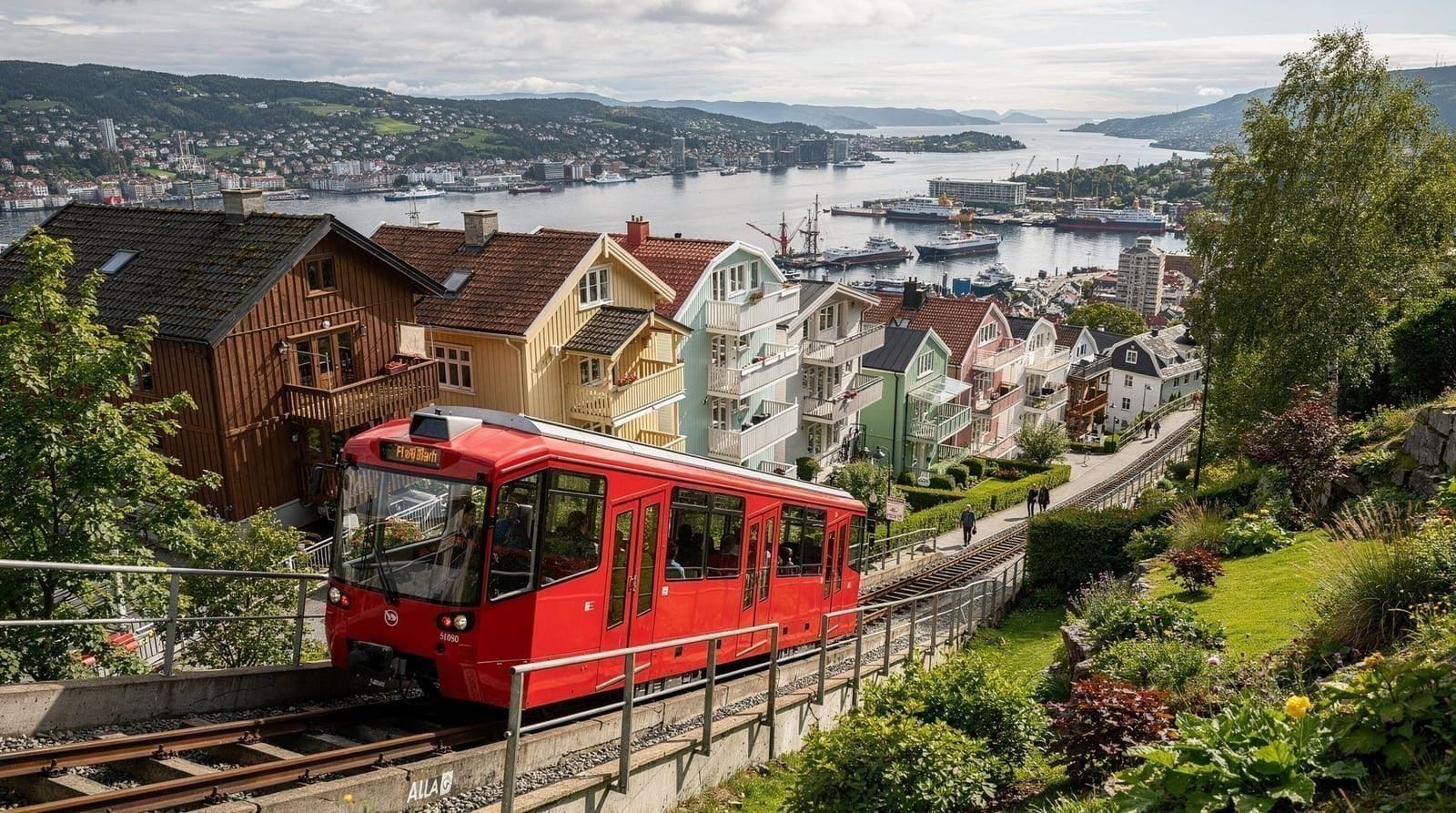
In 4 hours: Bryggen (walk the alleyways), Fish Market (30 min), and Fløibanen funicular (book in advance). In 8 hours: add KODE museums or a RIB fjord safari from the harbor. The cruise pier is 10–15 minutes' walk from Bryggen — no taxi needed. Pre-book the Fløibanen to avoid 30–60 min queues in summer.
Bergen is one of the most-visited cruise ports in Northern Europe. In 2024, the port received 590,944 cruise passengers across 328 ship arrivals — roughly 1,800 passengers per ship on average. Since June 2022, Bergen Port has capped arrivals at 4 ships and 8,000 passengers per day, but even at that volume, the concentration of visitors in a compact city center creates real crowd dynamics that affect the experience.
This guide is written specifically for cruise passengers. It covers where the piers are, what is realistically achievable with limited time, how to avoid the worst congestion, and what to prioritize with 4 or 8 hours ashore.
| Where | Jekteviken/Dokken, Skolten or Nøstet — all within 5–15 min walk of Bryggen |
| Cost | Around NOK 100–300 for a self-guided city stop, more with a fjord safari |
| Time needed | 4 hours (city core) or 8 hours (city + fjord/museum) |
| Getting there | On foot — no taxi or shuttle needed for the city sights |
| Best time to disembark | Before 9am to beat the 10am–3pm crowd peak |
Bergen’s cruise piers — where you land
Bergen has two main cruise terminals:
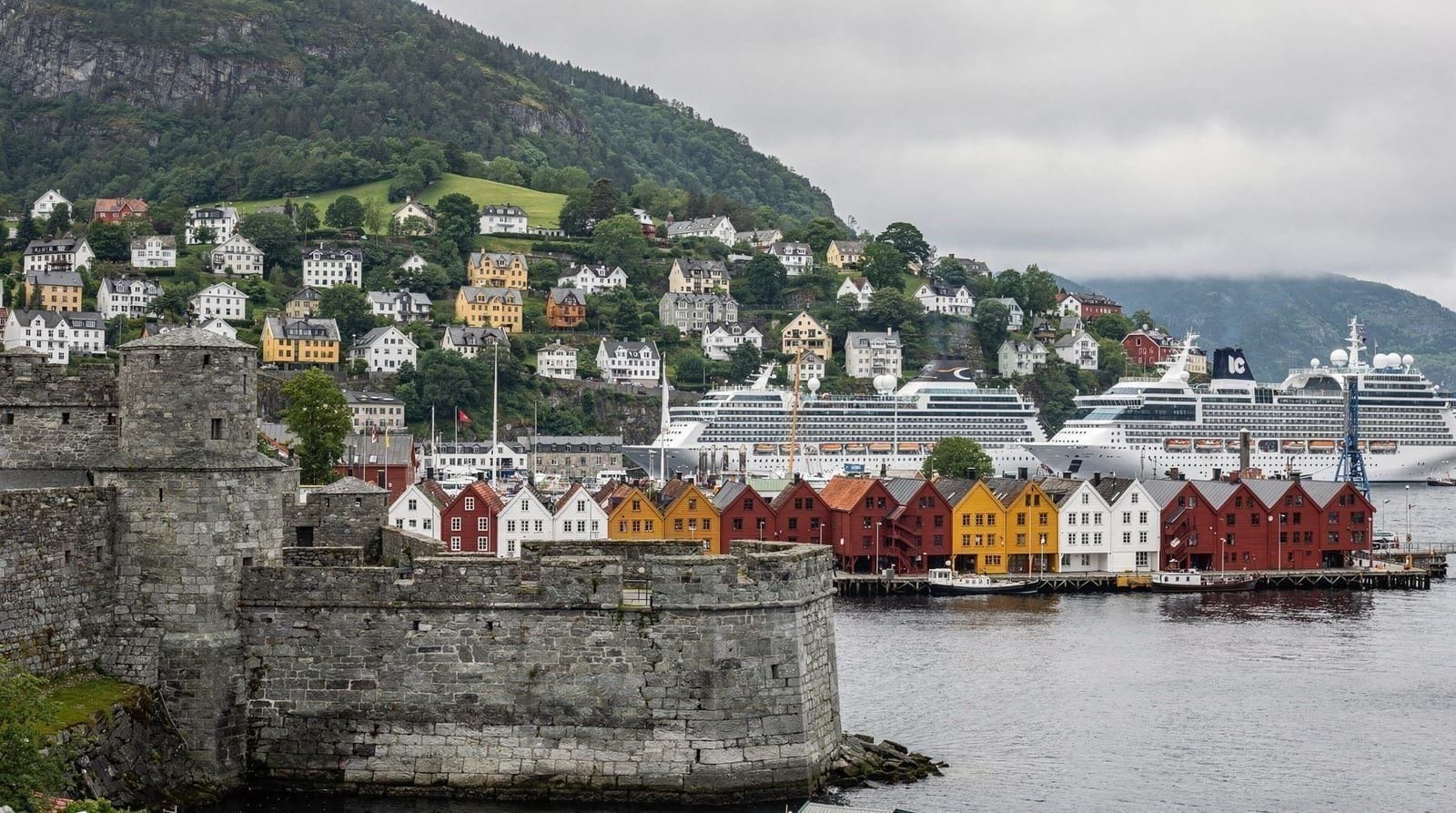
Jekteviken/Dokken terminal: Approximately 1.2 km from the city center (Bryggen). A 15-minute walk along the harbor promenade, or a short taxi/bus. This is the most common terminal for larger ships.
Skolten quay: At the north end of Bryggen, within the harbor area itself. Approximately 5–10 minutes’ walk to Bryggen’s frontage. Smaller ships and some expedition vessels dock here.
Nøstet/Festningskaien: Adjacent to Bergenhus Fortress, very close to Bryggen. Often used for smaller or expedition cruise vessels.
Check your ship’s docking location before you leave; it affects your walking time significantly. In all cases, Bergen’s city center is walkable from the cruise piers — you do not need to take a taxi or shuttle bus for the main sights.
Wayfinding from the pier: each terminal has clear English signage toward “Bryggen” and “Sentrum” (city center) — follow the harbor edge and you cannot meaningfully get lost. If you dock at Jekteviken and are unsure of the route, the promenade hugs the water the entire way, passing the Bergenhus Fortress grounds shortly before you reach Bryggen itself. There is no need to download offline maps solely for this walk, though it is worth having your ship’s exact berth number noted for the return.
If you want a ready-made plan to follow, our Bergen cruise stopover itinerary lays out a single day in port, and the Bergen city sightseeing guide gives more background on what the centre has to offer.
The crowd reality
When a cruise ship arrives in Bergen, several thousand passengers often head to the same three places: Bryggen, the Fish Market, and the Fløibanen funicular. The concentration between 10 am and 3 pm creates genuine congestion at all three sites.
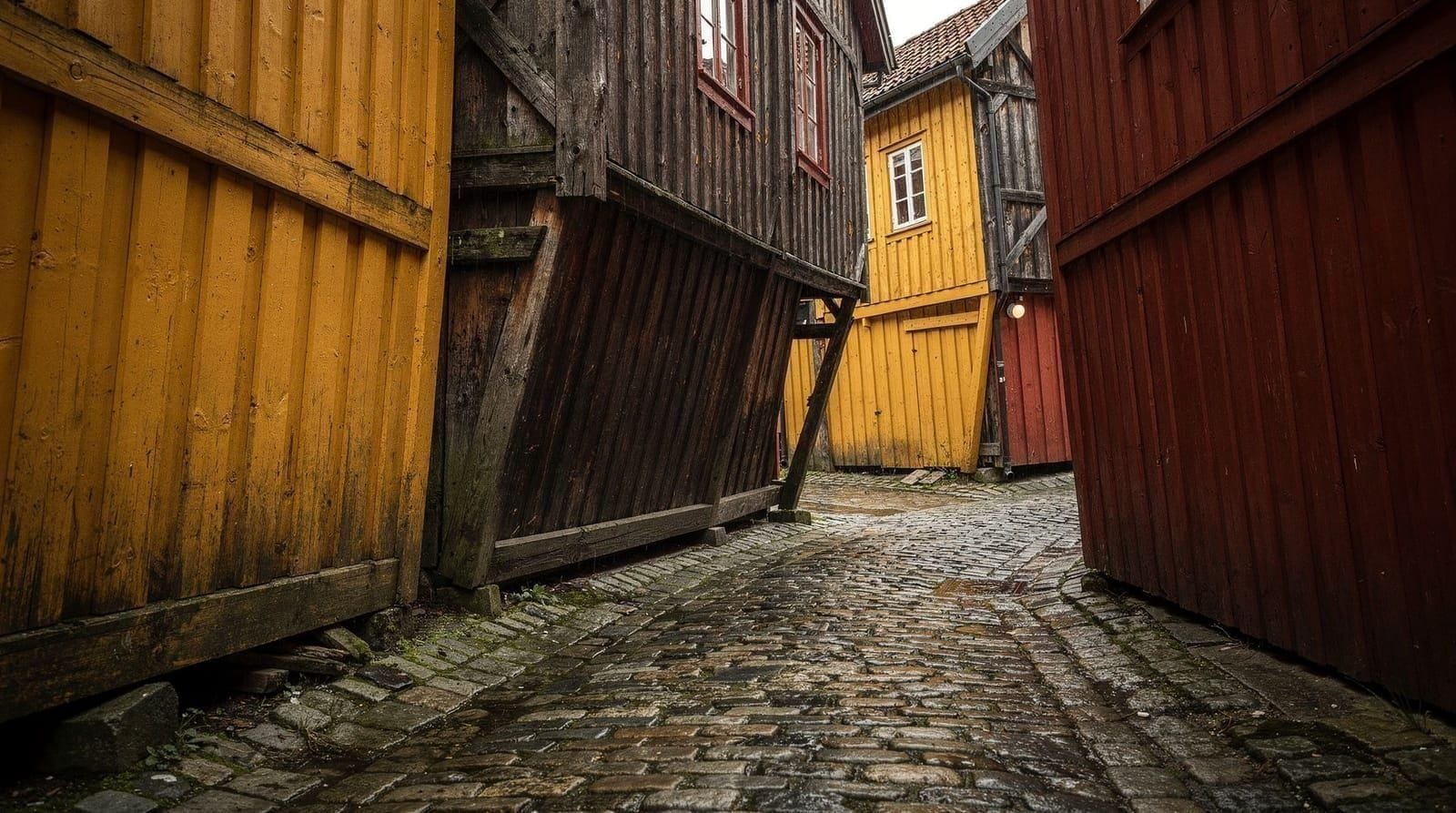
Bryggen’s alleyways, which are narrow passageways, become difficult to navigate with multiple large groups moving through simultaneously. The Fløibanen lower station can see queues of 30–60 minutes for walk-up tickets. The Fish Market outdoor stalls are elbow-to-elbow.
The solution is timing: If your ship arrives at 7 am, you can be at Bryggen at 8 am and experience it in near-peace. If your ship arrives at noon and departs at 5 pm, adjust expectations — the experience will be shared with thousands of other visitors, and the Fløibanen may consume a significant portion of your time.
The 4-hour itinerary (short port stop)
Assumption: Ship docks at 8–9 am, departs 1–2 pm. You have approximately 3.5–4 hours ashore.
8:00 am — Bryggen (45 minutes)
Walk directly from the pier to Bryggen. If docking at Jekteviken, walk along the harbor promenade northward — it is straightforward and signposted. The alleyways at 8 am are quiet; you can photograph the frontage without competition. Walk through 2–3 alleyways, look at the craft shops (most open by 9 am in summer), take in the historic structure. For the story behind the wooden wharf buildings, read our Bryggen Hanseatic Wharf guide before you go ashore.
8:45 am — Fish Market (20 minutes)
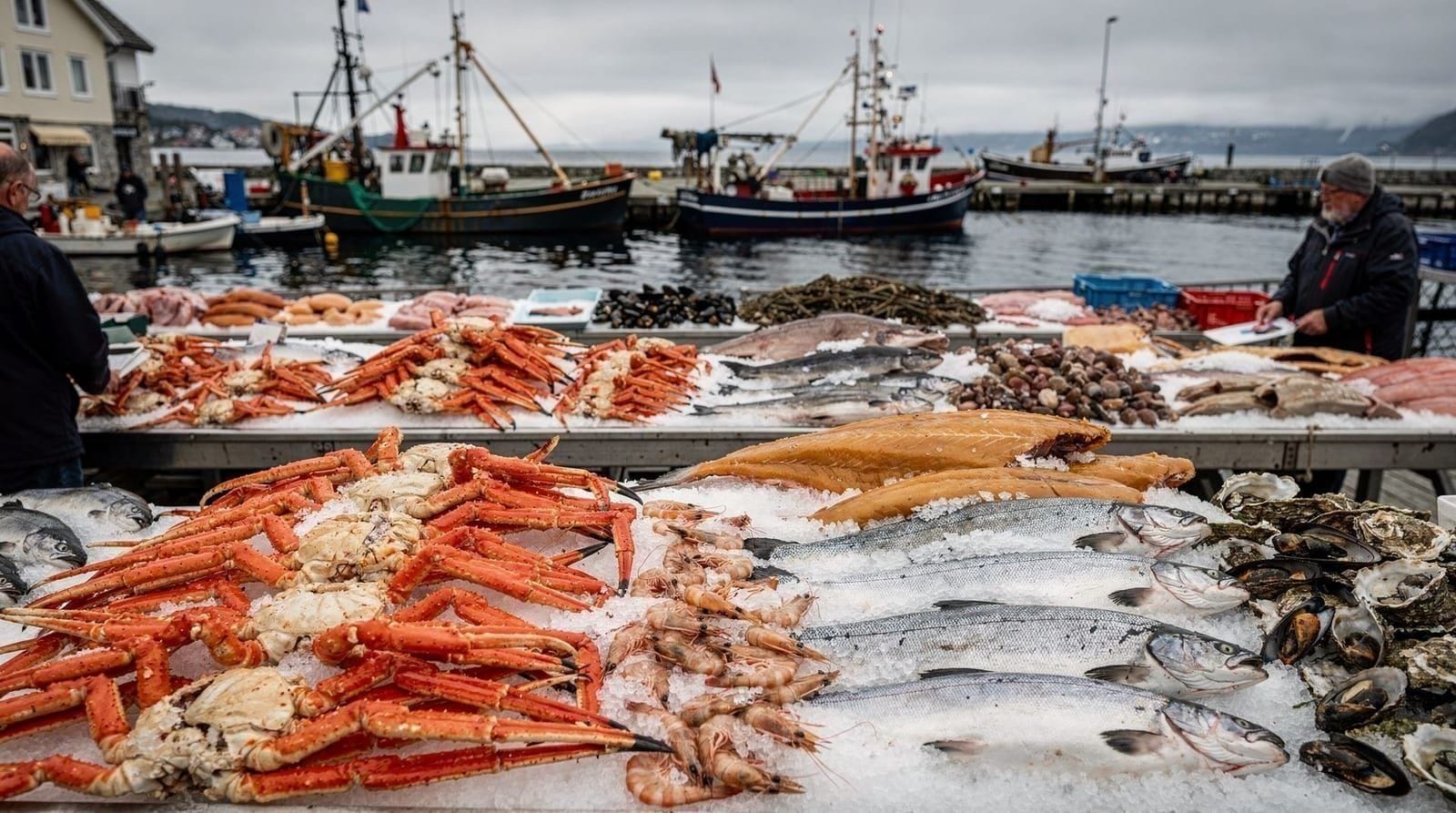
Walk south along the Bryggen frontage to Torget (2 minutes). The outdoor stalls open by 8 am. Buy shrimp by weight (NOK 80–100 for a generous portion) and eat it on the harborside. The scene is pleasant at this hour before the stalls get busy. Our Bergen Fish Market guide explains what is worth trying and what to pass on.
9:05 am — Fløibanen (1 hour including walk)
From the Fish Market, the Fløibanen lower station is a 3-minute walk behind Torget. With pre-booked departure tickets (book online at flibanen.no before departure), board your reserved departure. Return ticket: current price at floibanen.no. At the summit: 20–25 minutes for the view, photographs, and a quick look at the Troll Forest. Back down by 10:15 am.
10:15 am–12:00 pm — Free time
Options: explore Bergenhus Fortress grounds (free, 5-minute walk from the Fløibanen station area), browse the craft shops in Bryggen alleyways now that they are fully open, or find a café for a proper coffee (NOK 50–70 for an espresso or flat white).
12:00 pm — Return to ship
Allow 20–25 minutes to walk from Bryggen to Jekteviken. Do not cut it closer than 30 minutes before departure.
Critical detail: Pre-book the Fløibanen before your cruise leg. A walk-up queue can turn a 40-minute funicular stop into a 90-minute queue-plus-ride — which is fatal to a 4-hour itinerary. For more on the funicular itself, including the summit trail network, see our Fløibanen funicular guide.
The 8-hour itinerary (full day in port)
Assumption: Ship docks at 8 am, departs 4–5 pm. You have approximately 7–8 hours ashore.
8:00–9:00 am — Bryggen at dawn (60 minutes)
As above — the best window for Bryggen. Also time for Bryggens Museum, which opens at 9 am (NOK 130, or Bergen Card). The museum needs 60–90 minutes to see properly; you can split across morning and early afternoon if needed.
9:30 am — Fløibanen (pre-booked 9:30 am departure)
With 8 hours ashore, you can afford a slightly later funicular departure and avoid the early compression. Return by 10:45 am.
11:00 am — Fish Market (30 minutes)
The market is busy now, but you can browse, taste the shrimp, and move on without time pressure.
11:30 am–2:30 pm — KODE Museums (2–3 hours)
Bergen’s four KODE art museum buildings are a 10-minute walk from Bryggen along Rasmus Meyers Allé. Combined entry: NOK 180 (Bergen Card included). KODE 2 for Norwegian art history; KODE 4 for the Munch and Picasso holdings. The KODE 4 café serves good coffee and light lunch at reasonable prices (soup and bread: NOK 130). See our Bergen museums and culture guide for the full breakdown of all four buildings, plus Bryggens Museum and the Hanseatic Museum if you have extra time before returning to the ship.
2:30–3:30 pm — Bergen harbor promenade and craft shopping
Walk the harbor south from Bryggen to Nordnes if you want to see more of the city at water level, or spend the remaining time in the Bryggen alleyway shops (much quieter now at 2:30 pm than at 10 am).
3:30 pm — Return to ship
Allow 30 minutes from Bryggen to Jekteviken with buffer.
Alternative for the 8-hour stop — the RIB fjord safari
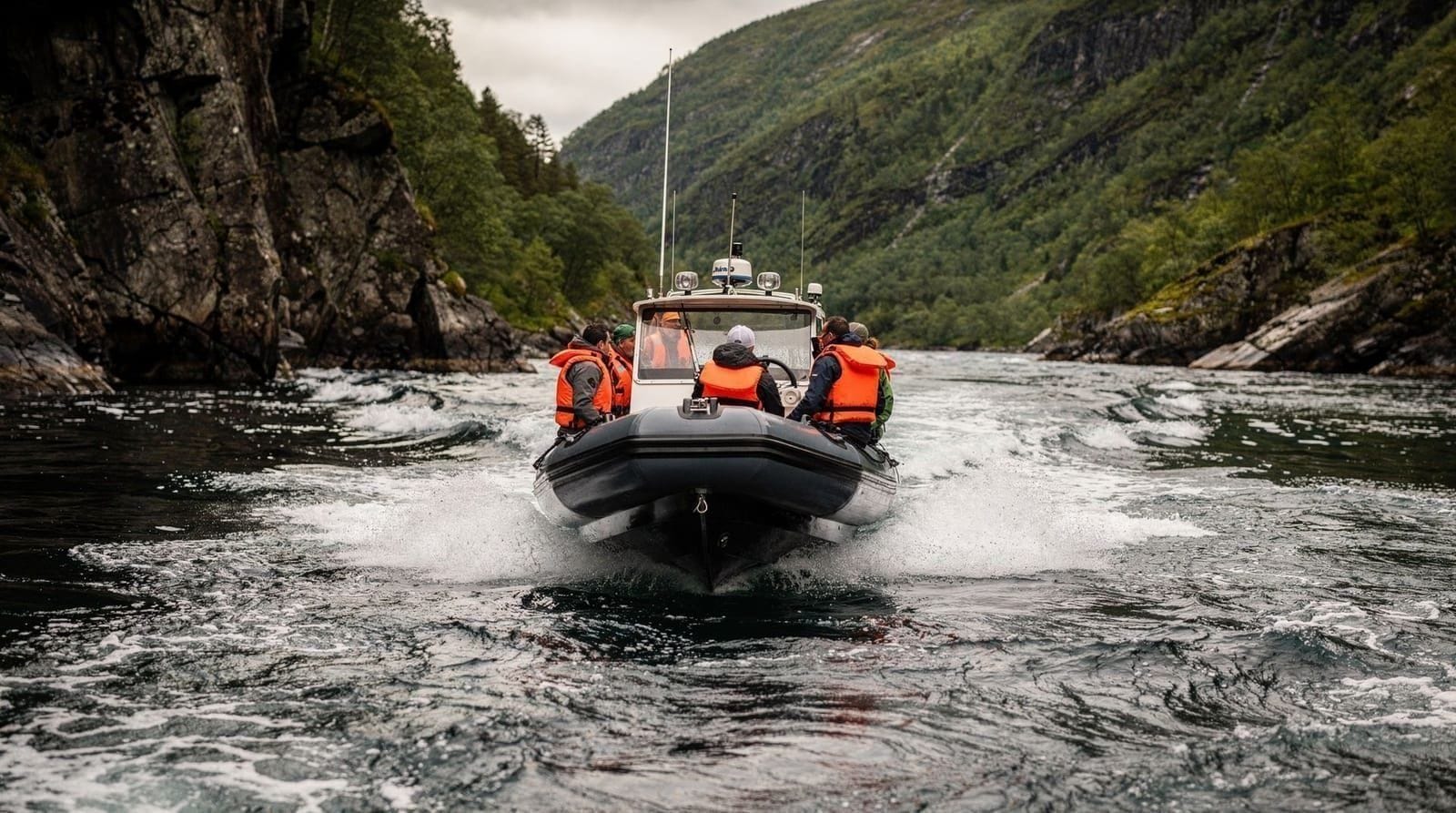
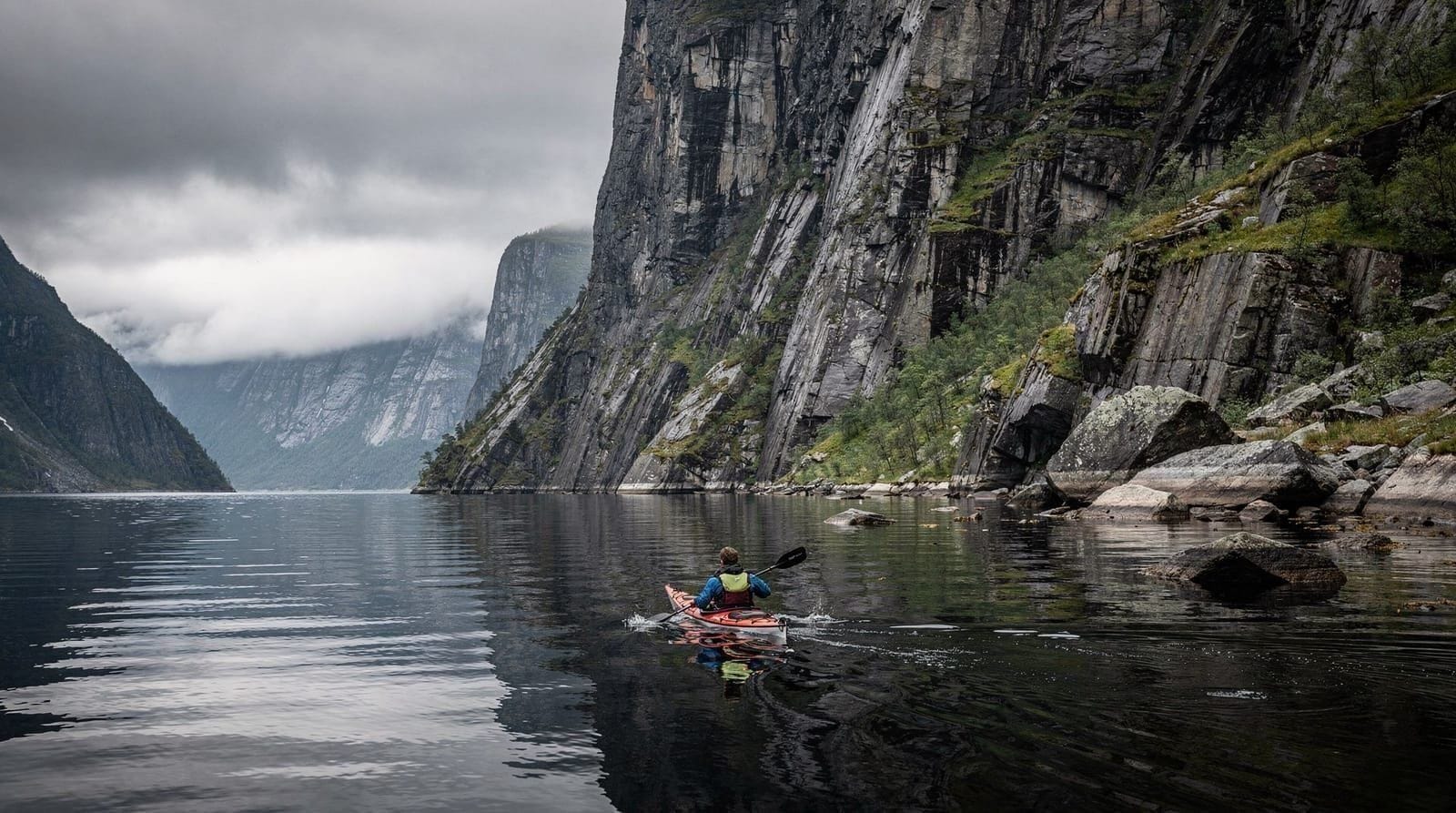
If museums are not your priority, Bergen’s harbor offers a 2-hour RIB (rigid inflatable boat) safari through the Osterfjord that departs directly from the city quay. This is a genuinely different experience from the standard city tour — fast, open-water, with views of Bergen from the fjord rather than from above.
Bergen Mostraumen RIB safariThe RIB safari takes approximately 2 hours and departs from the central harbor. Suitable for all fitness levels; waterproof gear is provided. Book in advance — departure times are fixed and slots fill in summer.
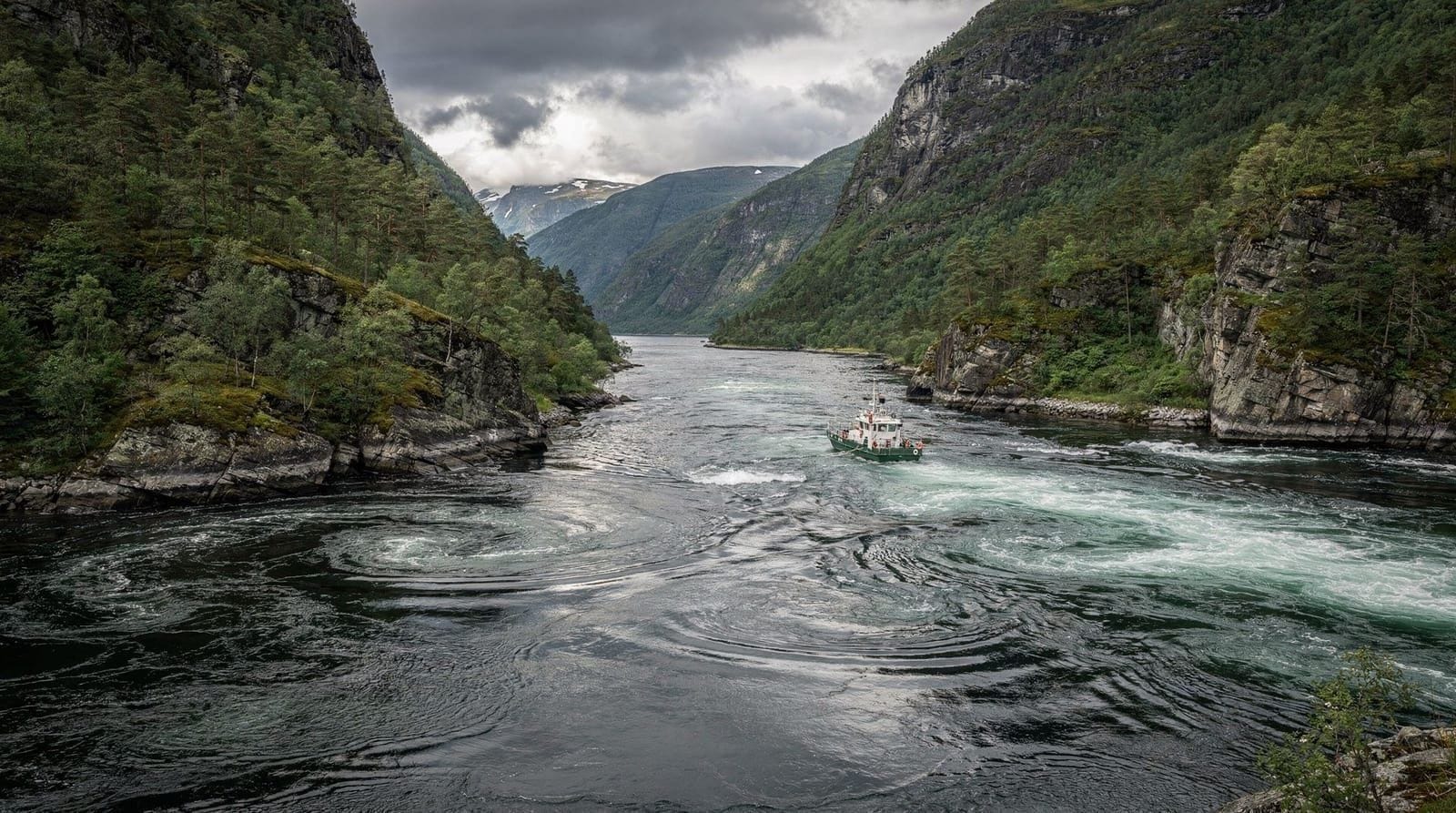
For a longer fjord experience that fits within 8 hours, the Mostraumen fjord cruise (4 hours round trip, approximately NOK 1,100) is theoretically possible if your ship has an 8-hour port stop — but timing is tight. The 4-hour cruise would leave roughly 4 hours for the city, which is workable but leaves no buffer. If your ship’s port stop is genuinely long (10+ hours) or you are staying overnight before rejoining a different sailing, our fjord cruises from Bergen guide covers the full range of options, including the Naeroyfjord.
Bergen Mostraumen fjord cruise with local guideCruise ships that call at Flåm rather than Bergen give passengers a half-day window and a village with one street: a Wonders of Flåm guided half-day shore excursion is what fills that window without risking the sailing time.
What to skip with limited time
Edvard Grieg’s Troldhaugen: Excellent if you have a full day, but requires a 30-minute bus journey each way plus 90 minutes at the site. Too time-consuming for a port stop — save it for a return visit, and see the Troldhaugen guide if you are planning one.
Mt. Ulriken cable car: Requires a bus to the lower station; better suited for multi-day Bergen visitors. The Ulriken cable car guide has the details for a longer visit.
Aquarium (Akvariet): Worth it for families with young children; the 20-minute walk to Nordnes peninsula and 2-hour visit eat into port time significantly.
Full Norway in a Nutshell circuit: The classic Bergen → Flåm → Nærøyfjord → Voss → Bergen day trip is 14 hours minimum. Not compatible with a port stop. If it appeals, keep it for a longer stay and read the Norway in a Nutshell guide then.
Eating and drinking during your Bergen port stop
Bergen’s main eating options for cruise passengers range from excellent to tourist-trap, and the distinction matters when time is limited.
Best value quick options:
- Shrimp (reker) by weight at the outdoor fish market: NOK 80–100 for a serving. Eat harborside.
- Coffee at a café near Bryggen: NOK 50–70. Kafé Kippers and Bryggen Tracteursted are solid choices without tourist-trap pricing.
- Godt Brød bakery (several locations): pastries and sandwiches at NOK 60–90. Good Norwegian sourdough.
Avoid (tourist-trap pricing):
- Full seafood platters at the outdoor fish market: NOK 400–900 for what should cost NOK 200 at a proper restaurant.
- Restaurant meals directly on Bryggen’s harbor frontage: most stalls target the cruise tourist premium specifically.
For more ideas beyond the port area, the Bergen food and drink guide covers local specialities and where locals eat.
If you have time for a sit-down lunch: The indoor Fisketorvet restaurant hall adjacent to the fish market serves fish soup (NOK 160–180) and grilled fish (NOK 230–260) at fair prices for Bergen. Allow 45 minutes including waiting for your food.
Currency reminder: Everything in Bergen accepts Visa and Mastercard — you do not need to exchange currency at the port. Norwegian Krone is the currency; as of mid-2026, approximately 1 EUR = 11.5 NOK and 1 USD = 10.5 NOK.
Shopping during a Bergen port stop
Bergen’s souvenir shopping is concentrated in the Bryggen alleyways and the shops along Torgallmenningen. The quality ranges considerably:
Worth buying: Hand-knit Norwegian knitwear (look for the Norges Husflidslag authenticity label — it indicates Norwegian production); silver jewelry from Bergen designers; Scandinavian design items from legitimate concept stores; smoked salmon vacuum-sealed for travel (5-day shelf life).
Not worth the money: Machine-knit knitwear labeled “Norway” but produced outside Norway; most troll figurines (identical regardless of where you buy them, production is centralized); overpriced “Bergen” branded goods at harbor-front tourist shops.
The best craft shopping in Bryggen is in the interior alleyways rather than the harbor-front shops. The shops immediately facing the harbor set prices for maximum-foot-traffic tourists; the alleyway shops serve a mix of visitors and local buyers and price accordingly.
Practical information for cruise passengers
Currency: Norwegian Krone (NOK). Cards accepted universally — you do not need to exchange cash. All outdoor market stalls and shops accept Visa and Mastercard.
Bergen Card: The Bergen Card (NOK 400 for 24h) includes museum entry and Fløibanen discount. For a 4-hour stop, it is unlikely to pay for itself — calculate your specific planned activities. For an 8-hour stop with KODE museums and Fløibanen, it is borderline.
Hop-on hop-off bus for cruise passengersThe hop-on hop-off bus departs from near the cruise terminals and covers the city center, Fantoft Stave Church, Troldhaugen, and Bergenhus. Useful if you want to cover more distance than walking allows, particularly for an 8-hour port stop.
Weather: Bergen averages 230 rainy days per year. A light rain jacket is not optional — it is required kit for any summer Bergen visit. Rain does not prevent any of the above activities; the Fløibanen runs in rain and the KODE museums are excellent wet-weather options. See Bergen in the rain for more on making the most of a wet day, and what to pack for Bergen for a sensible kit list.
Tipping: Not expected in Norway. Rounding up for good service is enough; a 10–15% tip is generous by local standards.
Mobile connectivity: Wi-Fi is patchy at the outdoor Fish Market and inside Bryggen’s alleyways but reliable at cafés and KODE. If you rely on maps or translation apps, activate roaming or an eSIM before disembarking rather than assuming free Wi-Fi will cover you the whole stop.
Restrooms: Public toilets near the Fish Market and at Bryggen require a small fee (NOK 10–20, card only in most). Cafés along the route are a reliable free alternative if you buy a coffee.
Bergen’s cruise port and the environment
Bergen has taken significant steps to reduce the environmental impact of cruise tourism since 2019. The port requires shore power connections (allowing ships to use electrical power from the grid rather than running engines in port) for an increasing proportion of vessels. The 2022 daily passenger cap was motivated partly by environmental carrying capacity concerns in addition to the practical crowd management rationale.
Several major cruise operators have deployed hybrid or fully electric vessels on Norwegian fjord itineraries. Hurtigruten (the Norwegian coastal express) operates some hybrid-electric vessels on the Bergen route. The trend toward cleaner cruise propulsion is relevant for visitors concerned about the environmental footprint of their travel choices — Norway has been an early adopter of regulations pushing cruise operators in this direction.
The Bergen fjord area is also subject to emission restrictions: from 2026, the Geirangerfjord and Nærøyfjord UNESCO zones require zero-emission vessels — a regulation that has accelerated the transition toward electric fjord cruise boats on these specific routes. When you book a Nærøyfjord cruise, the vessels are increasingly electric or hybrid-electric rather than diesel-powered.
Bergen compared to other Norwegian cruise ports
Bergen is often part of a Norwegian fjord cruise circuit that includes Flåm, Geiranger, and Ålesund. Understanding how Bergen compares to those stops helps prioritize your Bergen time:
Flåm (Aurlandsfjord): A small village at the end of the Aurlandsfjord arm. Bergen’s cultural depth far exceeds what Flåm offers — Flåm is primarily a trailhead and train departure point, with the Flåm Railway as its main attraction. Bergen is the more complete city experience.
Geiranger: One of the world’s most dramatic fjords; the Seven Sisters and Suitor waterfalls visible from the cruise ship. Geiranger is predominantly a fjord experience rather than a city stop — the village is small (fewer than 200 permanent residents). Bergen’s city content (Bryggen, KODE, Fløibanen) is not available in Geiranger.
Ålesund: A well-preserved Art Nouveau city at the entrance to the Geirangerfjord approach. More historically cohesive than Bergen (the entire city center was rebuilt in Art Nouveau style after a 1904 fire), but smaller and with fewer major attractions. Ålesund’s Jugendstilsenteret (Art Nouveau Center) is excellent; Bergen’s cultural depth is broader.
Of the four main Norwegian cruise stops, Bergen is the most complete city experience with the most to do in a limited port time.
The Bergen light rail (Bybanen) for cruise passengers
The Bybanen light rail Line 1 connects Bergen Airport Flesland through the suburbs to Byparken (city center). For cruise passengers, the relevant section is from the city center westward — the Bybanen does not serve the cruise terminals directly, but it provides:
- Access to residential Bergen neighborhoods for those wanting to escape the tourist zone
- Connection to the Fantoft Stave Church stop (alight at Fantoft station, 10-minute walk to the church)
- Connection to the Troldhaugen area (alight at Nesttun, then bus)
Bybanen tickets: NOK 51 single journey, valid 90 minutes. Available from platform machines and the Skyss Billett app. The Bybanen is not needed for the main city sights — it is purely for reaching outer-city destinations. Note this is the city-center Bybanen, separate from getting to and from the airport — see our Bergen airport transfer guide if you are extending your trip beyond the cruise.
If you decide to extend your stay
Some cruise passengers disembark in Bergen and continue independently rather than rejoining the ship, either to explore further or to connect onward into the fjords. If that is you, Bergen rewards a longer stay far beyond what a port stop reveals — see our Bergen first-timer guide for a proper multi-day orientation, and how many days in Bergen for planning beyond the port-stop constraints covered here.
Frequently asked questions about Bergen cruise port
Is Bergen good for a cruise stopover?
Yes, Bergen is one of the best cruise port cities in Northern Europe for day visitors. The city center is compact, walkable from the cruise piers, and has a genuine concentration of interesting things to do in a small area. The primary challenge is managing crowd timing on peak cruise days.
What is the walkable distance from the cruise pier to Bryggen?
From Jekteviken (main terminal): approximately 1.2 km, 15 minutes at a relaxed pace along the harbor promenade. From Skolten quay: 5–8 minutes. Both are flat, well-signposted waterfront walks.
Do I need to pre-book anything for a Bergen port stop?
Yes: the Fløibanen funicular. Walk-up queues in July reach 30–60 minutes. Book a specific departure slot at flibanen.no before your cruise arrives in Bergen. Everything else (Fish Market, Bryggen, KODE) is available without advance booking.
Can I book shore excursions independently vs. through the cruise line?
Yes. Independent booking for the Fløibanen, KODE museums, and RIB safaris is cheaper than cruise-line bundled excursions for comparable experiences. The savings are meaningful — cruise line excursion prices are typically 30–50% higher than direct booking for the same activity.
How many cruise ships arrive in Bergen on a peak day?
Bergen Port limits arrivals to 4 ships and a maximum of 8,000 passengers per day since June 2022. Before the cap, single days saw up to 20,000 cruise visitors. The current cap is an improvement but still creates significant crowd pressure when all four ships disembark simultaneously.
Is Bryggen worth visiting during a crowded cruise day?
Yes, with timing. The alleyways and UNESCO-listed buildings are worth seeing regardless of crowds. Adjust expectations: you will be sharing the space with many people, but the architecture and history are still visible and impressive. Early arrival (before 9 am) makes an enormous difference to the experience.
What is the exchange rate from euros or dollars to NOK?
As of mid-2026: approximately 1 EUR = 11.5 NOK and 1 USD = 10.5 NOK. Use the currency converter for live rates. Cards work everywhere in Bergen — no need to carry NOK cash.
Is it better to book a shore excursion or explore Bergen independently?
For Bergen specifically, independent exploration usually wins. The city center is compact, safe, well-signposted in English, and every main sight (Bryggen, Fish Market, Fløibanen) is walkable without a guide. A shore excursion makes more sense if you want a fjord safari or a trip to Troldhaugen, where transport logistics are harder to self-organize on a tight clock.
What happens if I miss the ship’s departure time in Bergen?
Bergen’s cruise piers are close enough to the city center that missing departure is rare if you respect the buffers in this guide (20–30 minutes before the gangway closes). If you do miss it, cruise lines are not obligated to wait or cover onward travel costs — this is exactly why the itineraries above build in return-time margin.
Top experiences
Bookable activities with verified prices and instant confirmation on GetYourGuide.