Bergen fish market guide — what it's actually like (and where locals eat seafood instead)
Bergen's Culinary Exploration: Food and Culture Walk
Is the Bergen fish market worth visiting?
Worth a 30-minute visit to see the outdoor stalls and atmosphere, but do not plan a proper meal here unless you are comfortable paying tourist prices — NOK 250–400 for a plate of king crab, NOK 150 for a shrimp cocktail. Bergen locals buy fish at Mathallen Bergen (indoor market hall, Lars Hilles gate) or Bontelabo market. For a sit-down seafood lunch, Enhjørningen or Fisketorvet indoor hall are better value.
Bergen’s Fish Market — Fisketorget — is one of those sights that appears on every “must-do in Bergen” list without much qualification. The honest version: the outdoor market is a genuine Bergen institution with more than 700 years of history, visually appealing, and lively on a summer morning. It is also consciously touristy, the prices reflect that fact, and the quality, while not bad, is not what Bergen locals turn to when they want good seafood. Both things are true simultaneously.
| Where | Torget, east end of Vågen harbor, next to Bryggen |
| Cost | Around NOK 80–100 for shrimp; NOK 350–500 for a crab plate |
| Time needed | 25–45 minutes for a browse-and-snack visit |
| Getting there | Walk — 2 min from Bryggen, 10 min from cruise piers |
| Best time | Before 10am, outdoor stalls open from 1 May through the summer |
The market works best as one stop in a wider day on the harbor rather than a destination on its own. If you are still deciding how it fits into your trip, the Bergen first-timer guide and the two-day Bergen itinerary show where a fish market visit sits naturally.
The outdoor market (summer only)
The outdoor stalls operate from 1 May through the summer, concentrated at Torget (the public square at the east end of Vågen harbor, adjacent to Bryggen). Stall operators sell:
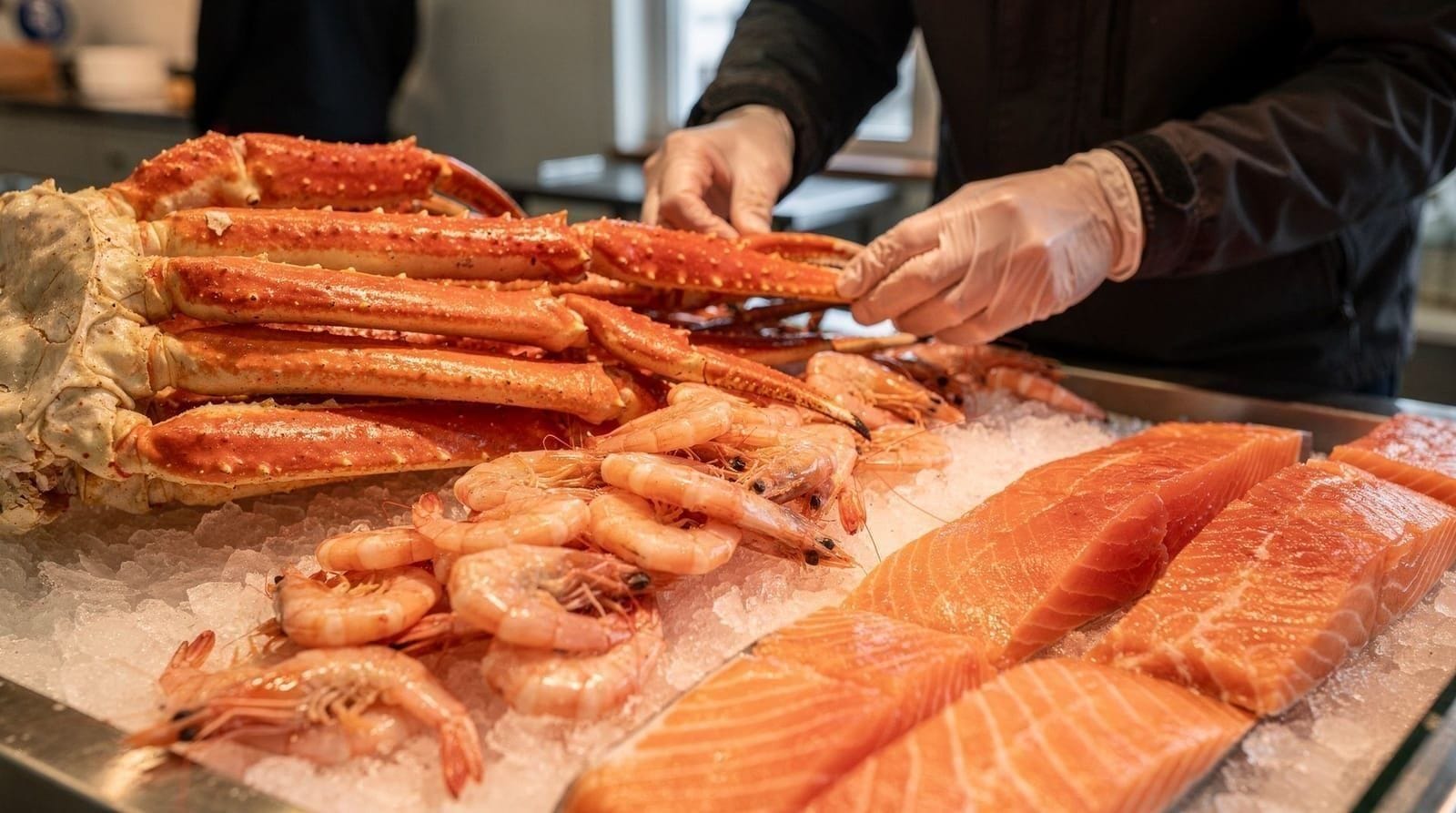
- Whole and dressed Atlantic salmon: NOK 120–160 per kilo for fresh fillet
- Shrimp (reker): Bergen’s famous cold-water shrimp, available by weight or as a cocktail. A shrimp cocktail with bread and mayonnaise runs NOK 150–200.
- King crab (kongekrabbe): Often the largest and most photogenic display. A single claw: NOK 150–250. A plate of crab legs: NOK 350–500. The crab is genuinely good; the price reflects its Norway-wide tourist-market premium.
- Smoked whale and seal: Sold at some stalls. Legal in Norway; the ethics are the visitor’s own assessment. Whale (minke) is farmed-adjacent; hval kjøtt has a dark, gamey taste that divides opinions.
- Stockfish (tørrfisk): Dried cod, culturally important and sold in various forms. Worth trying if you have kitchen access; it requires soaking before use.
- Reindeer and moose products: Jerky, sausages, smoked cuts. More novel than essential.
Prices versus local reality: A comparable shrimp dish at Mathallen Bergen (indoor market, Lars Hilles gate) costs NOK 100–120. The outdoor market prices are a tourist premium of approximately 30–50%. Not egregious by Norway standards, but worth knowing.
The outdoor stalls’ core opening hours in summer are 10 am to 6 pm. Mornings before the cruise ship crowds (before 10 am) are the best time to browse without being jostled.
The indoor market (year-round)
Fisketorvet, the permanent indoor market hall adjacent to the outdoor stalls, is open year-round and has a different character. Several fish merchants, a couple of sit-down counters, a bakery, and a general food hall. The prices are more reasonable than the outdoor stalls and the seafood is just as fresh.
The indoor hall remains open through winter when the outdoor market is closed. For a November or February visit to Bergen, this is the only version of the fish market that exists.
The honest tourist-trap assessment
There are two aspects to the “tourist trap” label that circulates about Fisketorget:
What is genuinely fine: The seafood is real, fresh, and Norwegian. Eating a shrimp cocktail at a waterside table looking at Bryggen is a legitimate Bergen experience even if you paid a tourist premium for it. Nobody is being cheated on quality — just on price.
What to avoid: The “complete seafood experience” meals some stalls offer at NOK 500–900 per person. You can eat at a proper Bergen seafood restaurant (Enhjørningen, Fisketorvet, To Kokker) for the same price with a better dining environment and a more considered menu.
The outdoor market is also a place where aggressive stall operators sometimes approach passersby directly. A polite decline works; engagement invites persistence.
Where Bergen locals actually buy fish
The honest answer: Bergen locals do not regularly shop at Fisketorget for their everyday fish purchases. They go to:
Mathallen Bergen (Lars Hilles gate, near Byparken): Bergen’s indoor food market hall, opened 2012. Multiple fish counters with competitive prices. A 400g salmon fillet here: NOK 60–80. Full range of local catch, shellfish, smoked products, and cured fish. There are also cheese stalls, a deli, a wine bar, and small food vendors. The atmosphere is Bergen-authentic rather than tourist-curated. This is where you get the best value fresh seafood in the city.
Bontelabo (Sydneshaugen Market area): A smaller neighborhood market with local producers. Worth visiting on market days (Saturday mornings in summer).
ICA Supermarkets: For everyday purchases, Bergen’s ICA and REMA 1000 stores sell Norwegian salmon, cod, mackerel, and shrimp at supermarket prices — roughly half the Fisketorget outdoor market rate.
Recommended seafood restaurants near the Fish Market
For a proper sit-down seafood meal rather than outdoor-stall grazing:
Enhjørningen (The Unicorn): One of Bergen’s best-regarded seafood restaurants, in a historic Bryggen building. Menu emphasizes Western Norwegian coastal catch. Main courses NOK 300–480. Reserve in advance for dinner.
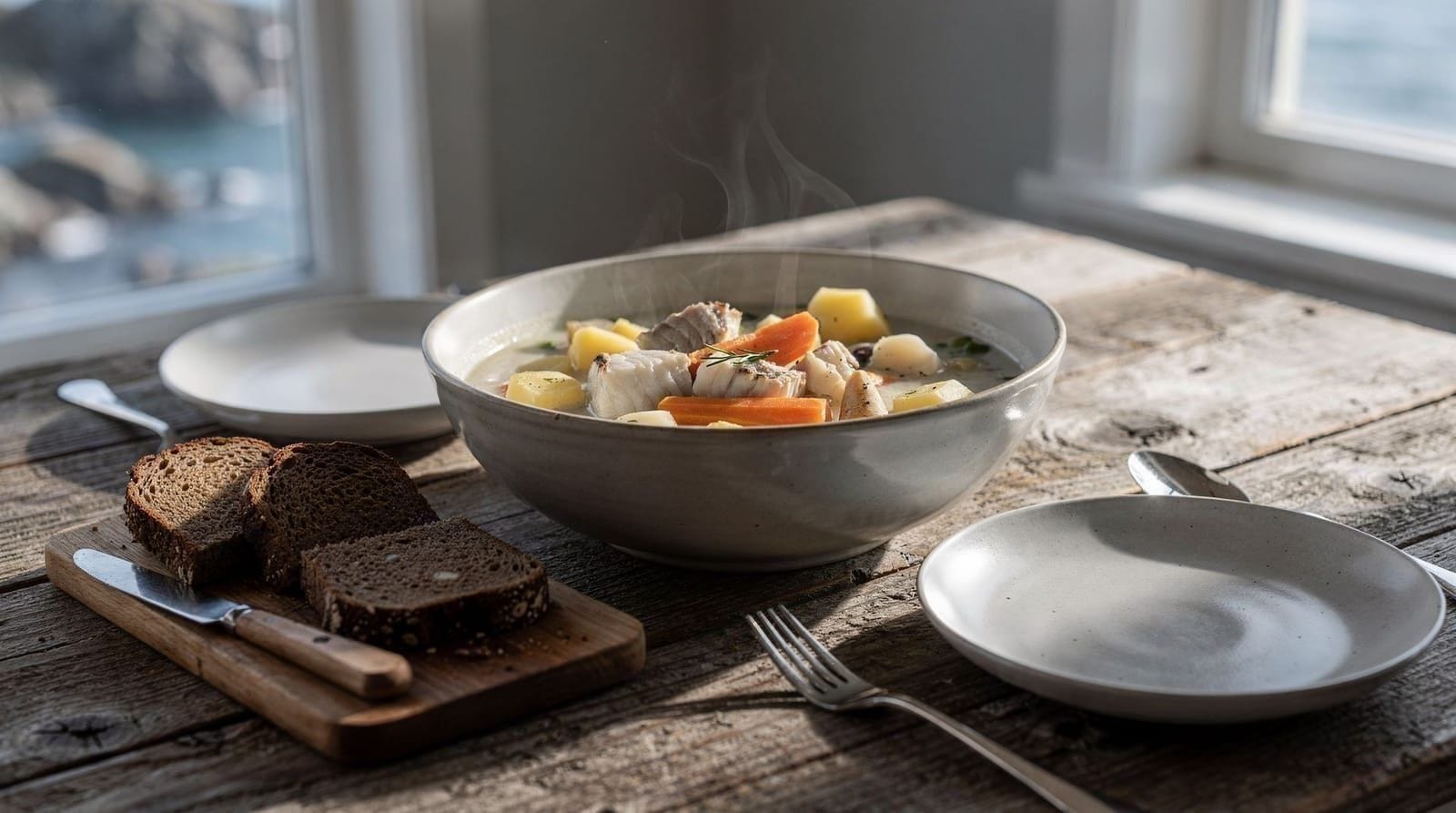
Fisketorvet indoor restaurant: The sit-down section of the indoor market hall is more affordable than Enhjørningen and good for a straightforward lunch. Fish soup: NOK 180. Grilled salmon plate: NOK 250.
Bryggeloftet & Stuene: Traditional Norwegian restaurant at the south end of Bryggen, running since 1910 in the same building. Reliable seafood classics; mains NOK 250–400.
Cornelius Sjømatrestaurant: A seafood restaurant on Holmen island, accessible only by boat (the boat departs from Bryggen; the restaurant runs its own shuttle). Spectacular location; booking essential; prices at the high end (NOK 500–700 mains). Not for a casual lunch stop.
Bergen culinary food and culture walkA guided food tour is the most efficient way to taste Bergen’s food scene properly, including the fish market in context alongside Mathallen and other local food spots. The standard format covers 4–6 venues over 2.5 hours.
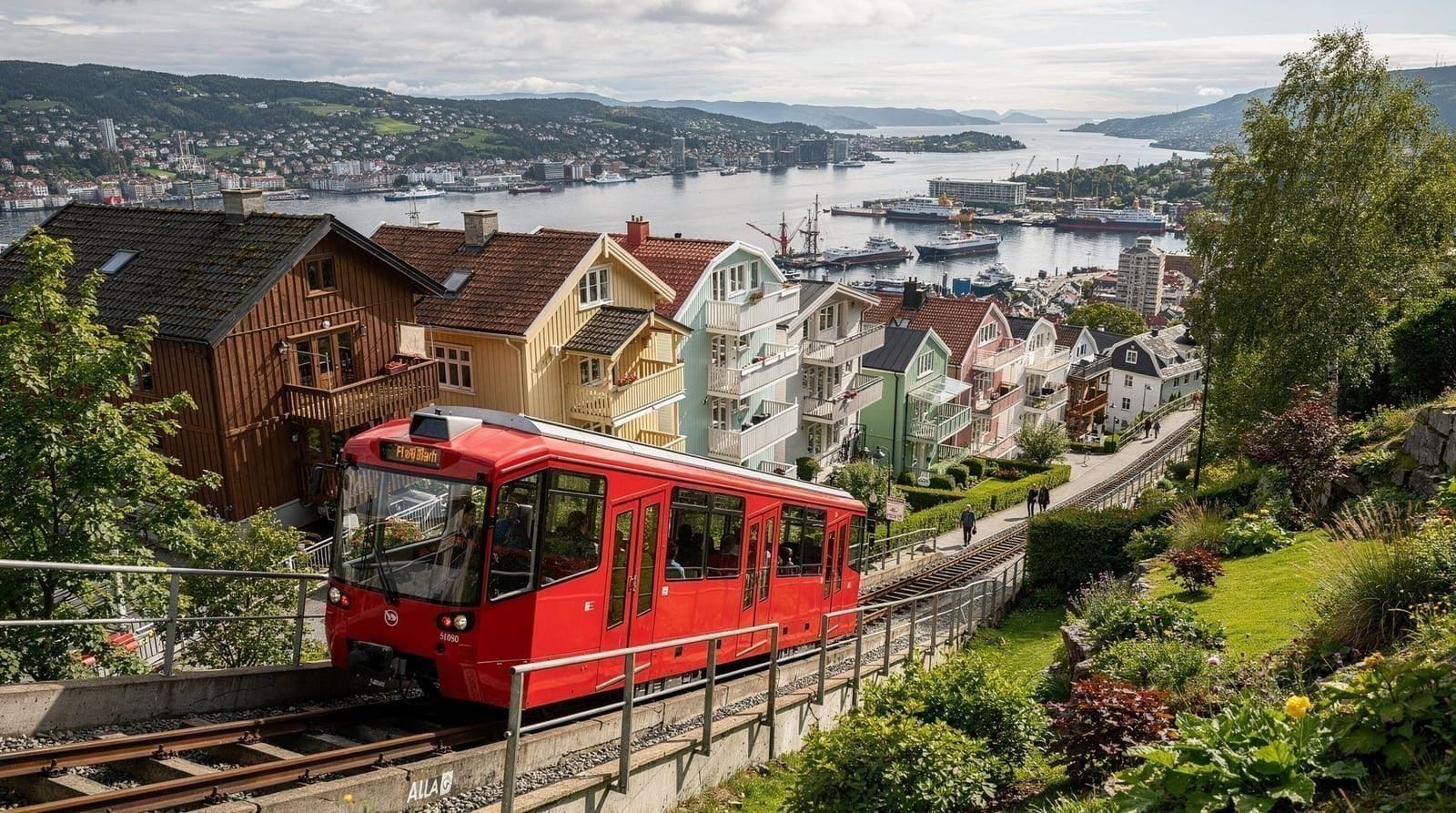
If you would rather combine tasting with a ride up the mountain, the food tour that finishes with the Fløibanen funicular pairs the harbor with the best view in town. It makes sense when you want one booking to cover both the food and the skyline. For the ride itself, see the Fløibanen funicular guide.
What to actually buy at the fish market
If you are visiting the outdoor market and want to buy something, the best value and quality items are:
- Cold-water shrimp (reker): Buy 200g by weight, eat with a piece of bread from a bakery — the classic Bergen harbor lunch. NOK 80–100 for a generous portion.
- Gravlaks (cured salmon): Good quality, vacuum-sealed for travel. Reasonable at NOK 100–150 per pack.
- Dried cod / klippfisk products: Worth buying if you cook Norwegian dishes at home.
- Smoked salmon slices: Quality is consistent; useful for a picnic.
Avoid the prepared dishes (crab platters, salmon steaks with sides) for price reasons — see above.
If the fish market leaves you wanting more of the harbor’s story, a guided walking tour of old and new Bergen is a good companion: the market, Bryggen and the surrounding lanes make much more sense with someone explaining how the trading town worked. Pair it with the Bergen food and drink guide to plan where to eat afterwards.
Bringing fish market purchases home
If you want to take Norwegian seafood home rather than just eat it in Bergen, vacuum-sealed products are the practical choice. Smoked salmon and gravlaks packed at the market or at Mathallen typically keep 4–5 days unopened in a cool bag or checked luggage; ask the vendor to double-vacuum-seal if you have a longer journey home.
Fresh (unsmoked) fish is a poor choice to transport unless you are flying home within hours and have proper ice packaging — most visitors are better served buying dried or smoked products for travel. Check your home country’s customs rules before packing fish products: the EU generally allows personal-quantity fish imports from Norway (EEA), but the US, UK (post-Brexit for some categories), Canada and Australia have their own restrictions on animal-product imports that are worth checking before you buy in quantity.
Fish market for cruise passengers
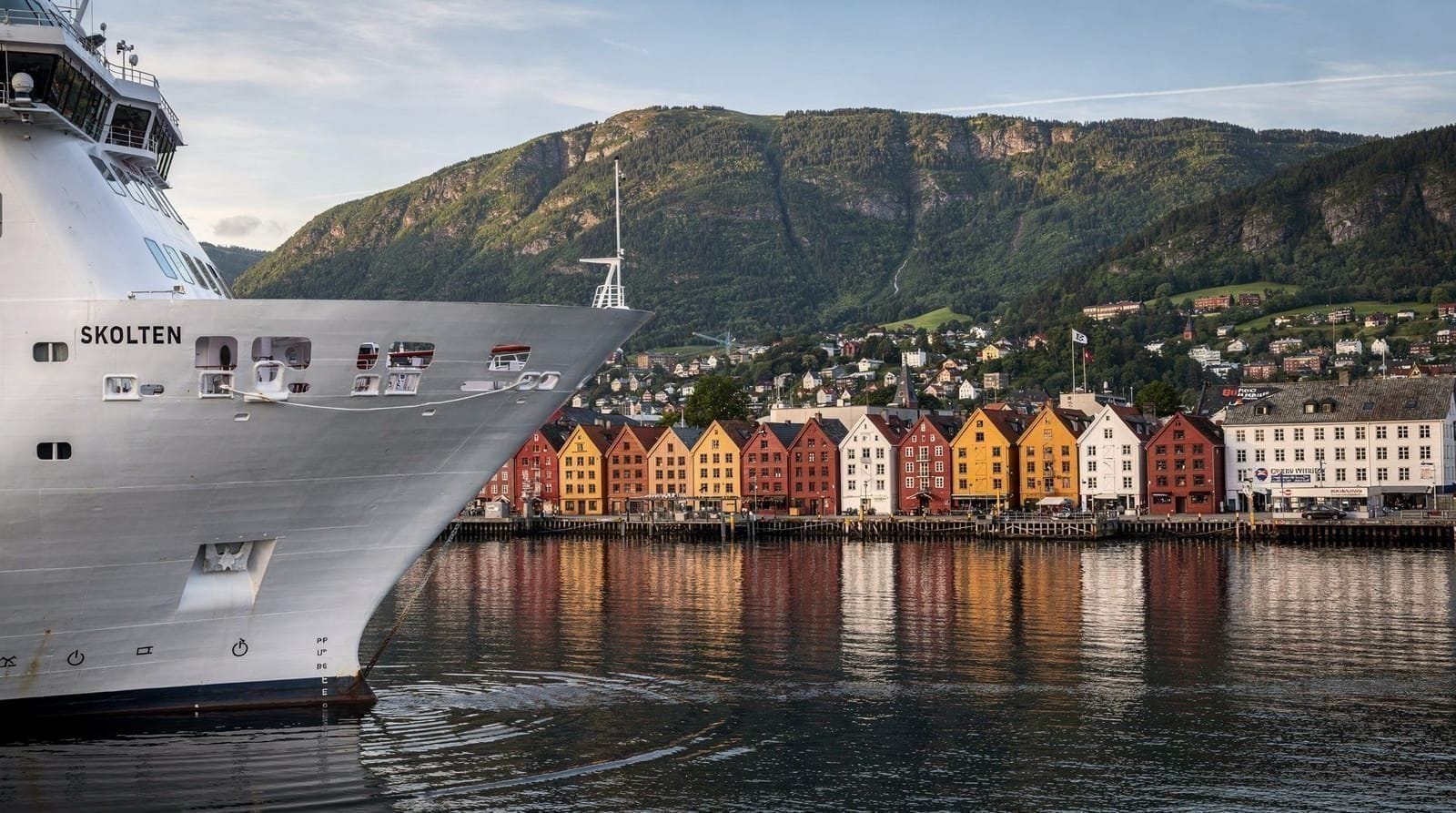
The fish market is a natural stop on any cruise port itinerary — it is a 10-minute walk from the Skolten and Jekteviken cruise piers via Bryggen, and the visual experience of the outdoor stalls is exactly what the photos promised. Allow 30–45 minutes, try the shrimp if you want, and move on. Attempting a full meal here on a tight port schedule is risky given variable service speed at outdoor stalls. See the Bergen cruise port guide for complete port-stop itineraries.
The fish market’s history — 700 years of trading
Bergen has operated a public fish market at or near the current Torget location since the 13th century. The Hanseatic League, which controlled Bergen’s trading economy from the 14th century, required that all dried fish (stockfish) trade pass through Bergen’s harbor — the fish market was the physical point of exchange for the most economically significant commodity in medieval Northern Europe.
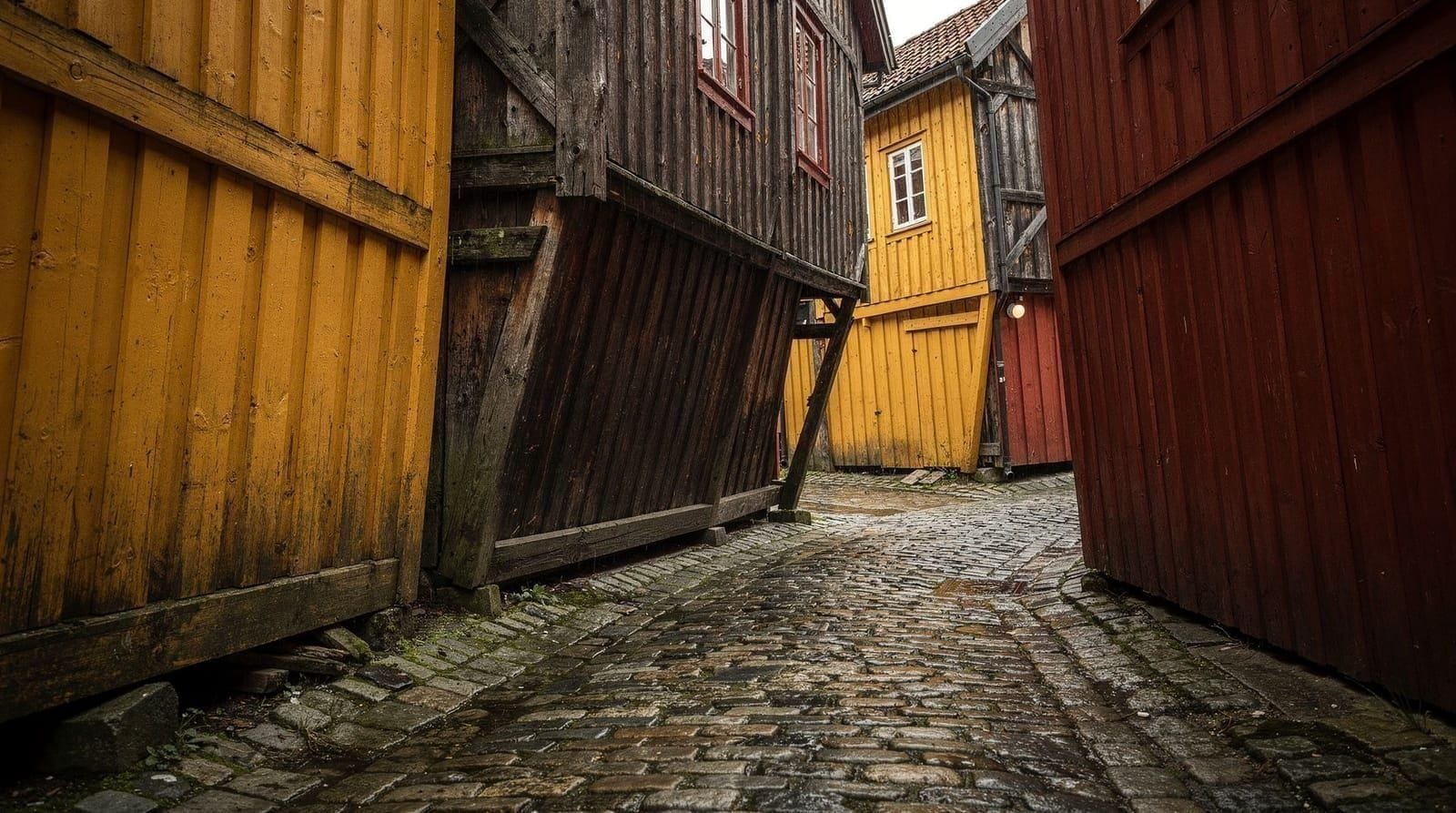
The dried cod trade between Bergen and the European markets (particularly Spain, Portugal, and Italy, where klippfisk remains a culinary staple) generated the wealth that built Bergen and sustained the Hanseatic Kontor at Bryggen. A walk from the fish market to Bryggen is, in a literal sense, a walk from the trading floor to the warehouse district of a medieval commodity exchange — see our Bryggen guide for the full history of the warehouse district itself.
The outdoor market’s current form — fresh fish and seafood for tourists — is a post-industrial development. For most of its history, the market sold dried, salted, and smoked fish to wholesale buyers rather than fresh catch to individuals. Fresh fish retail at the harbor only became a dominant activity as fishing technology and refrigeration made fresh catch available to urban markets.
Norwegian fish species you will find at the market
Understanding what you are looking at makes the fish market significantly more interesting:
Atlantic salmon (laks): Norway’s most commercially significant fish export. Wild caught and farmed; the farmed version dominates Bergen’s market. Norwegian salmon has a higher fat content than Pacific salmon, making it excellent for smoking and sashimi. When you see “Norwegian salmon” on a menu worldwide, it is farmed Atlantic salmon from Norwegian fjord aquaculture.
Cod (torsk): The historical foundation of Bergen’s wealth. Wild Atlantic cod is caught in the Barents Sea and Norwegian coastal waters. Skrei (migrating winter cod from the Barents Sea, January–April) is considered the finest eating cod in the world — leaner and firmer than year-round cod. Available fresh at the market when in season.
Cold-water shrimp (reker): Small, intensely sweet shrimp from the North Atlantic depths. Unlike warm-water prawns, Norwegian cold-water shrimp are always sold pre-cooked because they would lose quality if processed on the boat. Their small size concentrates the flavor — a plate of reker with bread and mayonnaise is the most authentically Bergen meal available at the market.
King crab (kongekrabbe): An invasive species from Soviet-era deliberate introduction in the Barents Sea that has spread south along the Norwegian coast. Ecologically controversial; commercially valuable. The legs sold at Bergen’s market are primarily from the Finnmark harvest (far northern Norway). The flavor is excellent; the price reflects both the size and the tourism premium.
Atlantic halibut (kveite): The most prized eating fish in Norwegian cuisine. Large flatfish from deep waters; expensive (NOK 200–400 per kilo fresh). Available at the market in season; typically presented as thick steaks.
Mackerel (makrell): A summer fish, available at Bergen markets July–September when schools move into coastal waters. Cheap, oily, and excellent grilled. One of the most sustainable and underpriced fish in Norway’s coastal waters.
Pollock and saithe (sei): Cheaper cod relatives, less prized but perfectly good eating fish, often overlooked by tourists chasing salmon and cod specifically. If you want a budget-friendly taste of Norwegian whitefish, sei is worth asking about — it is frequently 30–40% cheaper than cod for a similar eating experience.
Herring (sild): Historically as economically important as cod for parts of Norway’s coast. At the market, most commonly found pickled or cured rather than fresh, sold in jars — a good, transportable souvenir that keeps far longer than fresh fish.
Rain, wind and off-season visits
Bergen’s weather shapes any visit to an open-air market. On a wet day the stalls still run, but you will want a proper waterproof layer and a plan to duck indoors; the covered hall is the obvious refuge. Our Bergen in the rain guide and the what to pack for Bergen page cover how to dress so a drizzly harbor stroll stays enjoyable, and the rainy day Bergen blog post lists what to do when the weather turns for good.
Photographing the fish market well
The outdoor stalls are one of Bergen’s most photographed scenes, and a few practical notes help: morning light (before 10 am) is softer and avoids the harsh midday glare off the water; shoot from the Torget side facing the stalls with Bryggen in the background for the classic composition; and ask before photographing individual vendors close-up, as some appreciate a nod of acknowledgment even if photography itself is expected and welcomed at a public market. The king crab displays photograph particularly well due to their scale and color against the ice.
The sustainability question
Norwegian seafood is subject to strict fishing quotas and environmental regulation under Norwegian and EU fisheries frameworks. Atlantic salmon aquaculture has significant environmental complications (sea lice, escaped fish, use of wild fish for feed) that Norwegian authorities have been working to address since the 2000s; this is an active and contested policy area.
Wild-caught Norwegian fish (cod, mackerel, herring, halibut) is generally caught under sustainable quota management. The MSC (Marine Stewardship Council) certification applies to much of Norway’s wild-catch fishery. For visitors specifically concerned about sustainability, wild-caught Norwegian species are a significantly better choice than farmed salmon at the market.
Bergen fish market vs. other Norwegian city markets
Visitors to multiple Norwegian cities sometimes compare fish markets:
Oslo’s Aker Brygge and Mathallen Oslo: Oslo’s fish market scene has shifted primarily to permanent indoor halls. The waterfront at Aker Brygge has fish restaurants rather than a traditional market; Oslo’s best seafood retail is at Mathallen Oslo (Vulkanområdet, Grünerløkka). Less atmospheric than Bergen’s outdoor market but more competitive on price.
Ålesund: The coastal fishing city west of Bergen has its own fish market at Brogata with Atlantic cod, haddock, and saithe from the local fleet. Smaller and more working-fisherman than tourist-oriented; prices closer to wholesale. If you are visiting Ålesund as part of a Geirangerfjord trip, the Ålesund fish market is worth the comparison.
Stavanger: The Stavanger market (Torget) has a fish section alongside the general market, oriented toward local shoppers rather than tourists. The Stavanger harbor area’s fish restaurants are excellent; the market itself is smaller than Bergen’s.
By any measure, Bergen’s Fisketorget is the most established, most photogenic, and most tourist-developed fish market in Norway — which is both its strength (reliability, visual appeal, location) and its limitation (price, tourist-orientation).
Combining the fish market with other harbor sights
The fish market’s location makes it an efficient stop rather than a standalone destination. It sits directly between Bryggen and the Fløibanen lower station, so most visitors naturally pass through it while moving between the two — see our Bergen city sightseeing guide for how it fits into a full day.
If you are short on time and want the essentials of central Bergen, the fish market, Bryggen, and the Fløibanen can realistically be covered in under three hours, with the market itself taking the smallest slice of that time. For visitors staying near KODE or planning a museum-heavy day, see the Bergen museums and culture guide for how to sequence a day that includes both art and the harbor.
Making the most of 30 minutes at the fish market
If the fish market is a brief stop on a full Bergen itinerary rather than a destination in itself, here is the efficient 30-minute approach:
- Arrive from the Bryggen side at the south end of the square (Torget). This gives the best overview of the full outdoor market display from a single position.
- Walk the outdoor stall row once to see the full range and compare prices between operators. The differences between stalls for the same products are often small (NOK 20–50) but visible.
- Buy one item: the shrimp by weight is the best value and most characteristic. NOK 80–100 for a serving, eaten with bread from a nearby bakery (Godt Brød has a location near the harbor).
- Eat harborside looking at Bryggen — this combination of fresh local shrimp, the harbor view, and Bryggen’s frontage is the specific Bergen experience that tourist-targeted restaurant meals often fail to replicate.
- Enter the indoor hall for 5 minutes to see what year-round Bergen fish retail looks like.
Total time: 25–30 minutes, NOK 100–130 budget.
Bergen’s broader food market scene — beyond Fisketorget
Bergen’s food market ecosystem extends well beyond the Fisketorget. Understanding the full landscape:
Mathallen Bergen (Lars Hilles gate 3): The definitive alternative to Fisketorget for anyone who wants non-tourist prices and a local-facing environment. Multiple fish counters, cheese and charcuterie, a coffee roaster (Fjordkafferiet), a natural wine bar, a Vietnamese food stall, a Norwegian smørbrød counter, and seasonal producers. Open Tuesday–Saturday (check individual vendor hours; some open Monday). This is where Bergen residents actually shop. For more on Mathallen and the wider Bergen food scene, see the Bergen food and drink guide.
Bontelabo (Saturday market): A seasonal Saturday outdoor market at Bontelabo in Sandviken (summer months) with local producers bringing vegetables, small-batch preserves, honey, eggs, and artisan food products. Small but authentic.
ICA Maxi (multiple locations): Bergen’s largest supermarkets, with good fish and seafood counters at honest prices. The ICA Maxi at Åsane shopping center has an exceptionally good fish counter with the full range of Norwegian catch; it serves the local population rather than the tourist market.
Tesco and international food: Bergen has no Tesco. For international groceries (for visitors from the UK or US), the best option is a large ICA Maxi or REMA 1000. The selection is good for European staples; American or UK-specific brands are uncommon.
The outdoor fish market stalls — who they are and how they operate
The stalls at Fisketorget outdoor market are not independent fishermen selling their own catch — they are professional market operators who source from Bergen’s wholesale fish market (Fisktorget operates separately as a wholesale institution) and retail to consumers and tourists with an appropriate margin.
Understanding this changes the expectation: the fish is not uniquely fresh from a specific morning’s catch. It is commercially sourced, of reliable quality, handled professionally, and presented with theatrical flair suited to the tourist context.
The most consistent operators at the outdoor market have been working Torget for decades. The competitive pressure between stalls keeps the worst quality out; the tourist premium pricing is simply the market rate for waterside seafood in a tourist destination.
For equivalent quality fish at lower prices with less theater, Mathallen is the answer. For the specific experience of buying shrimp at a waterside market with Bryggen in the background, Fisketorget is not replaceable.
If budget is a deciding factor in how you eat in Bergen, the Bergen travel budget guide puts the market’s prices in the context of the whole trip, and the Bergen on a budget blog post has more ways to eat well without overspending. Visitors arriving by ship can also use the one-day cruise stopover itinerary to place the market within a tight schedule.
Frequently asked questions about the Bergen fish market
What are the Bergen fish market opening hours?
Outdoor stalls: from 1 May through the summer, core hours 10 am to 6 pm. Indoor Mathallen hall at the Fish Market: open all year, daily 9 am to 9:30 pm (from 10 am on Sundays); individual fishmongers inside set their own hours. The outdoor market may close if storms make it impractical.
What is the best thing to eat at Bergen fish market?
The cold-water shrimp (reker) are the best value and most authentically Bergen. A fresh shrimp portion with bread: NOK 80–100 by weight. If you want to splurge, the king crab is genuinely excellent.
Is the fish market open in winter?
The outdoor stalls operate summer only. The indoor Fisketorvet hall is open all year. The indoor hall’s fish counters and small restaurants remain a viable option November through April.
Are there vegetarian or vegan options at the fish market?
Limited. The market is almost entirely fish and seafood-focused. Nearby Mathallen Bergen has more varied options including vegetarian food stalls.
Is it safe to eat raw fish and shellfish from the outdoor stalls?
Yes. Norwegian food hygiene standards are high and the seafood is fresh daily catch. The shrimp are pre-cooked (cold-water shrimp are always sold cooked in Norway). Raw salmon is fresh-sliced and of commercial sashimi quality.
How do prices at Bergen fish market compare to supermarkets?
Outdoor market prices are roughly 50–80% higher than supermarket prices for comparable products. A 400g salmon fillet: NOK 60–80 at ICA vs. NOK 120–160 at the outdoor market. The premium buys the experience and location; the quality difference is minimal.
What currency is used at Bergen fish market?
Norwegian Krone (NOK). Cards (Visa, Mastercard) are accepted at virtually all stalls and the indoor hall. Bergen is a near-cashless city; you will not need cash here.
Can I visit the Bergen fish market on Sunday?
The outdoor market is open on Sundays in summer, and the indoor hall is open on Sundays from 10 am to 9:30 pm. Confirm the current schedule at visitbergen.com.
Do I need to book anything to visit the fish market?
No — it is a free, walk-up outdoor and indoor market with no entry requirement. The only reason to book ahead is a guided food tour if you want context and tastings across multiple venues rather than browsing alone.
Is the fish market worth visiting if I’m not buying anything?
Yes, briefly. Even without eating, the visual display of the outdoor stalls — king crab, salmon, shrimp — against the Bryggen backdrop is worth a 10-minute walk-through, and it costs nothing beyond your time.
Top experiences
Bookable activities with verified prices and instant confirmation on GetYourGuide.