Sognefjord
Norway's longest, deepest fjord: Nærøyfjord (UNESCO), Aurland, Gudvangen, Balestrand. Real access options from Bergen with prices in NOK.
Bergen: Viking Village, Nærøyfjorden Cruise and Flåm Railway
Quick facts
- Length
- 205 km — Norway's longest fjord
- Maximum depth
- 1,308 m
- Nærøyfjord width (narrowest)
- 250 m
- UNESCO status
- World Heritage since 2005
- Main access from Bergen
- 3–5.5 h by train/ferry/bus
The Sognefjord extends 205 km inland from the Atlantic coast, reaches depths of 1,308 m, and is flanked by walls that in places exceed 1,700 m. It is Norway’s longest fjord and the second longest in the world. The name “King of the Fjords” is marketing language, but it is not inaccurate — the scale here is categorically different from fjords closer to Bergen.
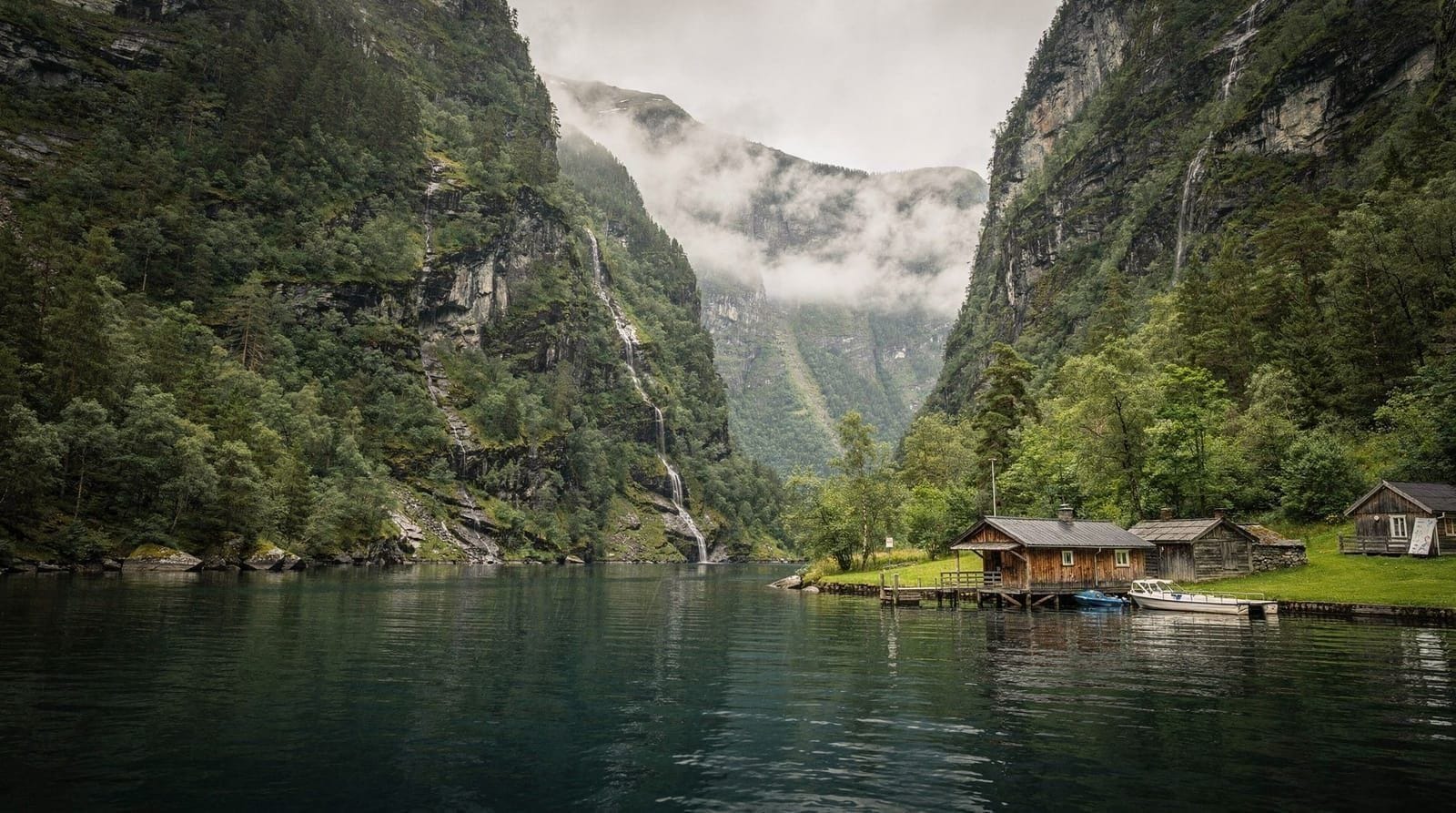
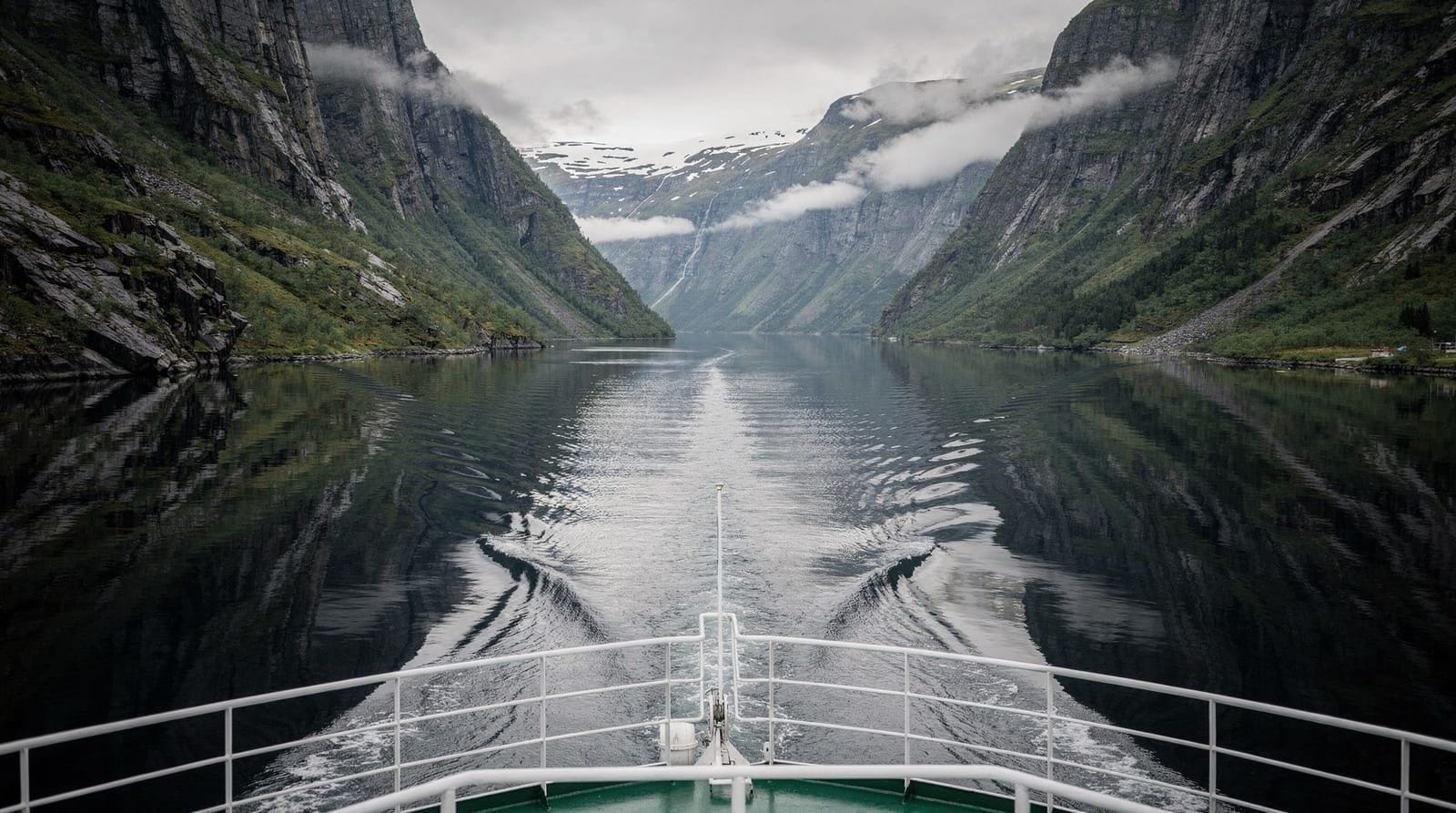
The fjord has multiple access points and branches. For visitors based in Bergen, the key branch is the Nærøyfjord — a 17 km arm at the southwest tip of the Sognefjord system, narrow enough that fjord walls tower overhead and waterfalls drop directly into the water beside the boat. The Nærøyfjord is UNESCO-listed and is the visual highlight of the entire region. Flåm village sits at the eastern end of Aurlandsfjord, adjacent to the Nærøyfjord, and is the departure point for most cruises.
| Where | Norway’s longest fjord, ~170 km from Bergen to Flåm |
| Time needed | 1 day for the highlights; 2+ nights for real depth |
| Cost | Around NOK 1,500–2,000/person for the Nutshell circuit |
| Getting there | Train + Flåm Railway, express boat, or car |
| Best time | May–September (Nærøyfjord cruise season) |
The Sognefjord system — what you are actually looking at
When people say “I want to see the Sognefjord,” they typically mean one of two things: the broad main arm (impressive but actually less dramatic than you expect from pictures — it is very wide and the walls are not always close) or the Nærøyfjord arm (genuinely spectacular, UNESCO-protected, the visual experience most photographs are taken of).
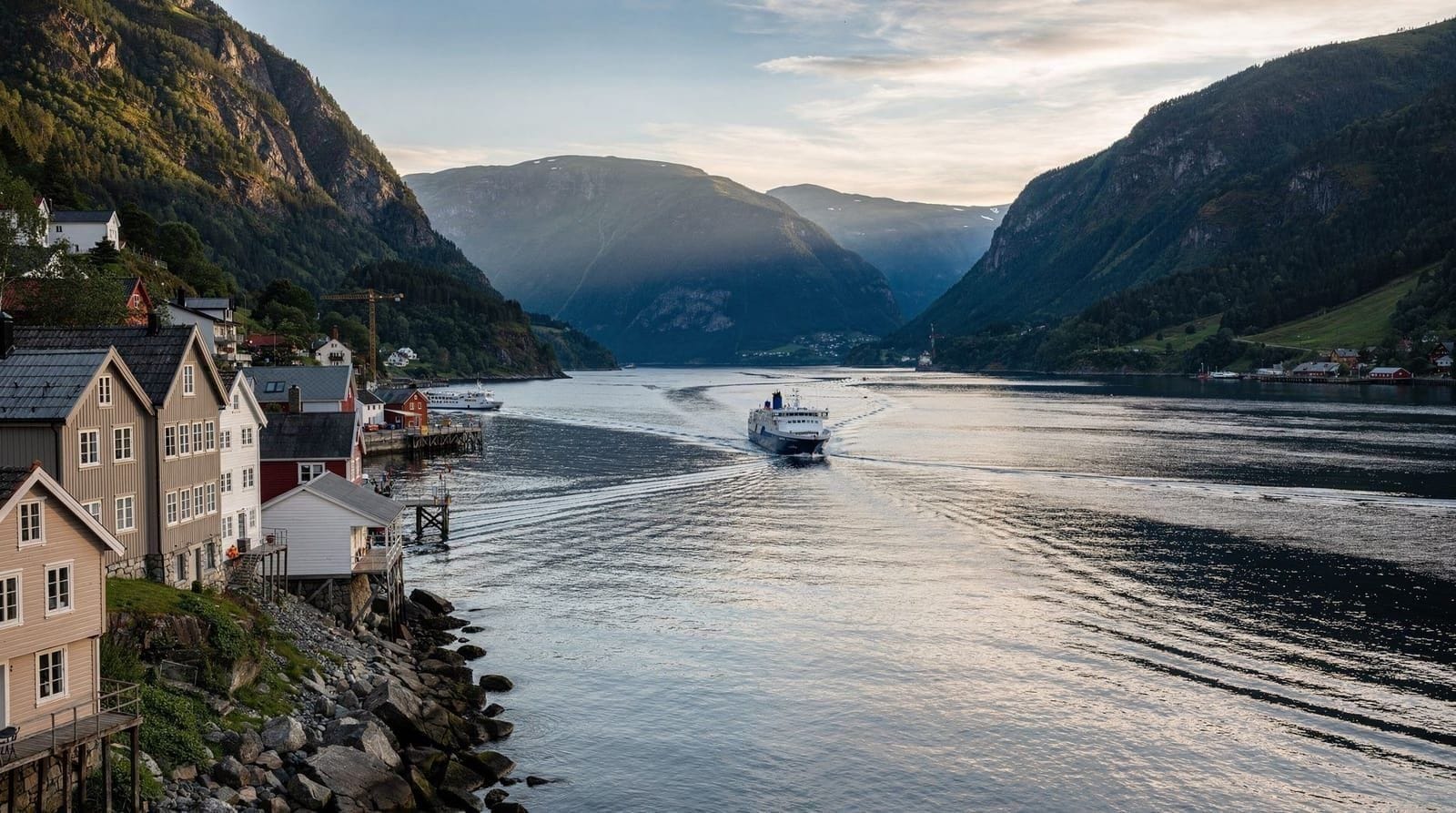
The main Sognefjord trunk is vast but relatively open. Villages dot the shoreline — Vik, Balestrand, Sogndal, Luster. The inner branch towards Fjærland is glacier-fed, with the Jostedalsbreen ice cap visible at the top of the valley. These are worth seeing for people spending multiple days in the region.
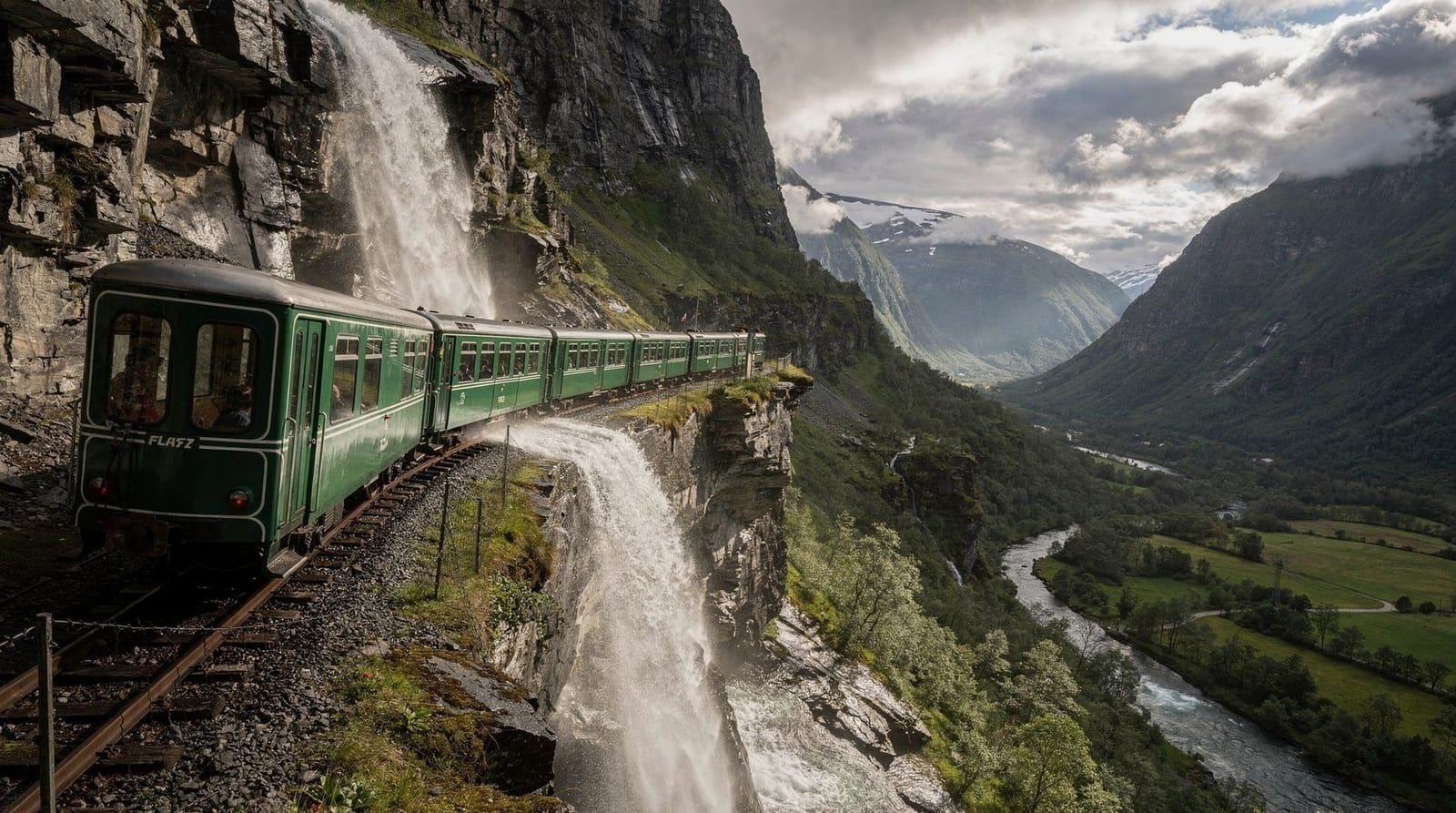
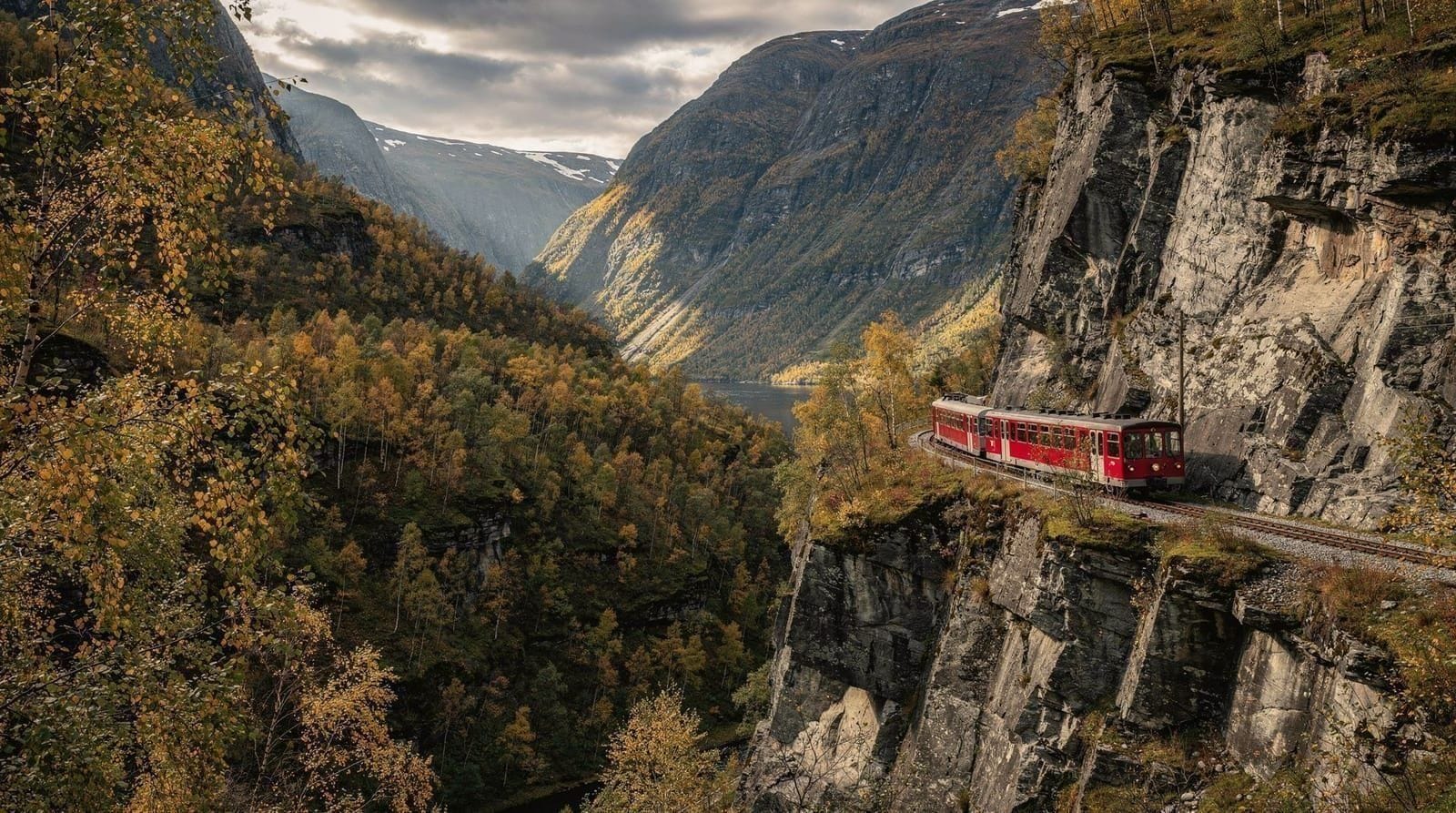
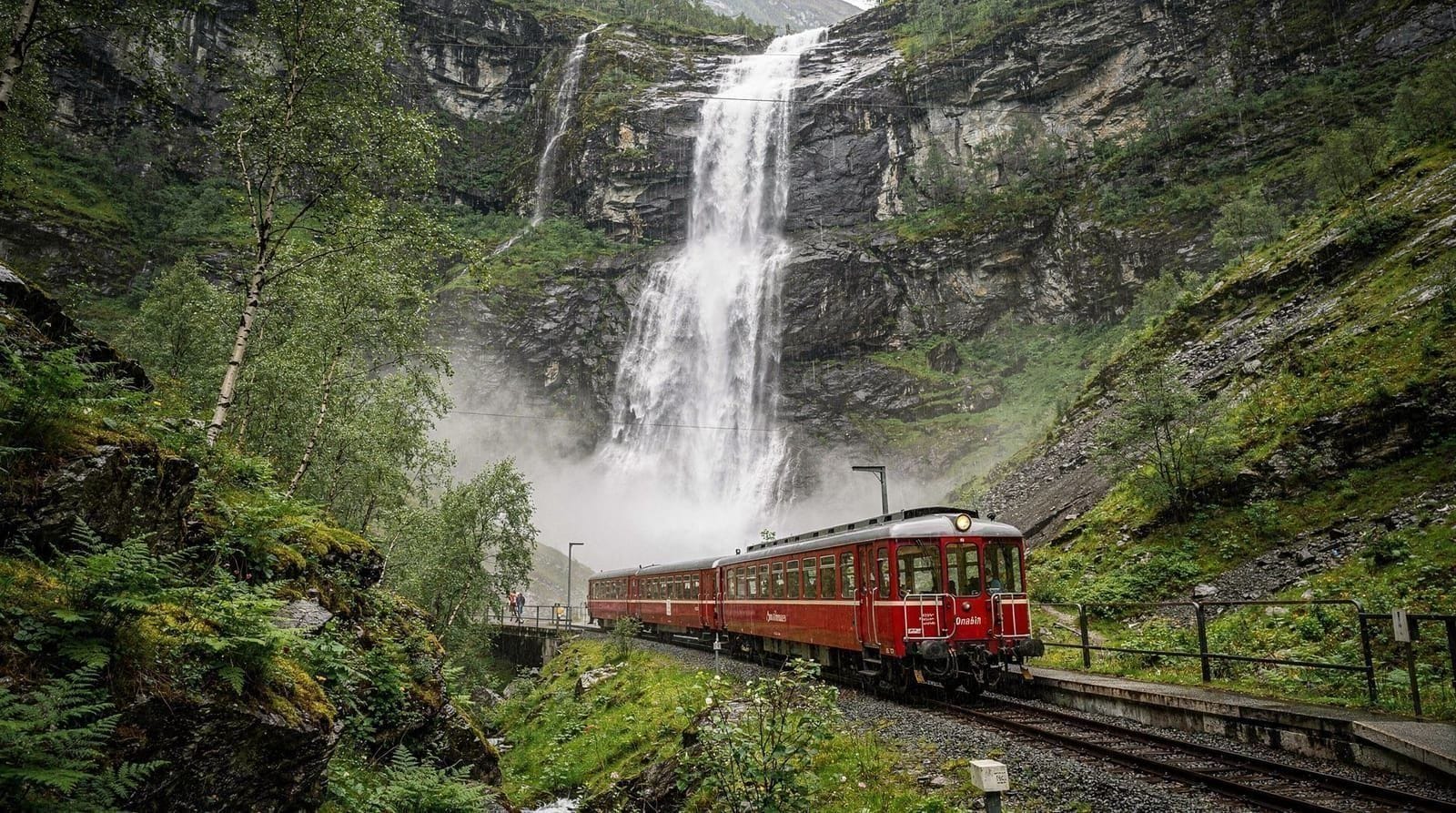
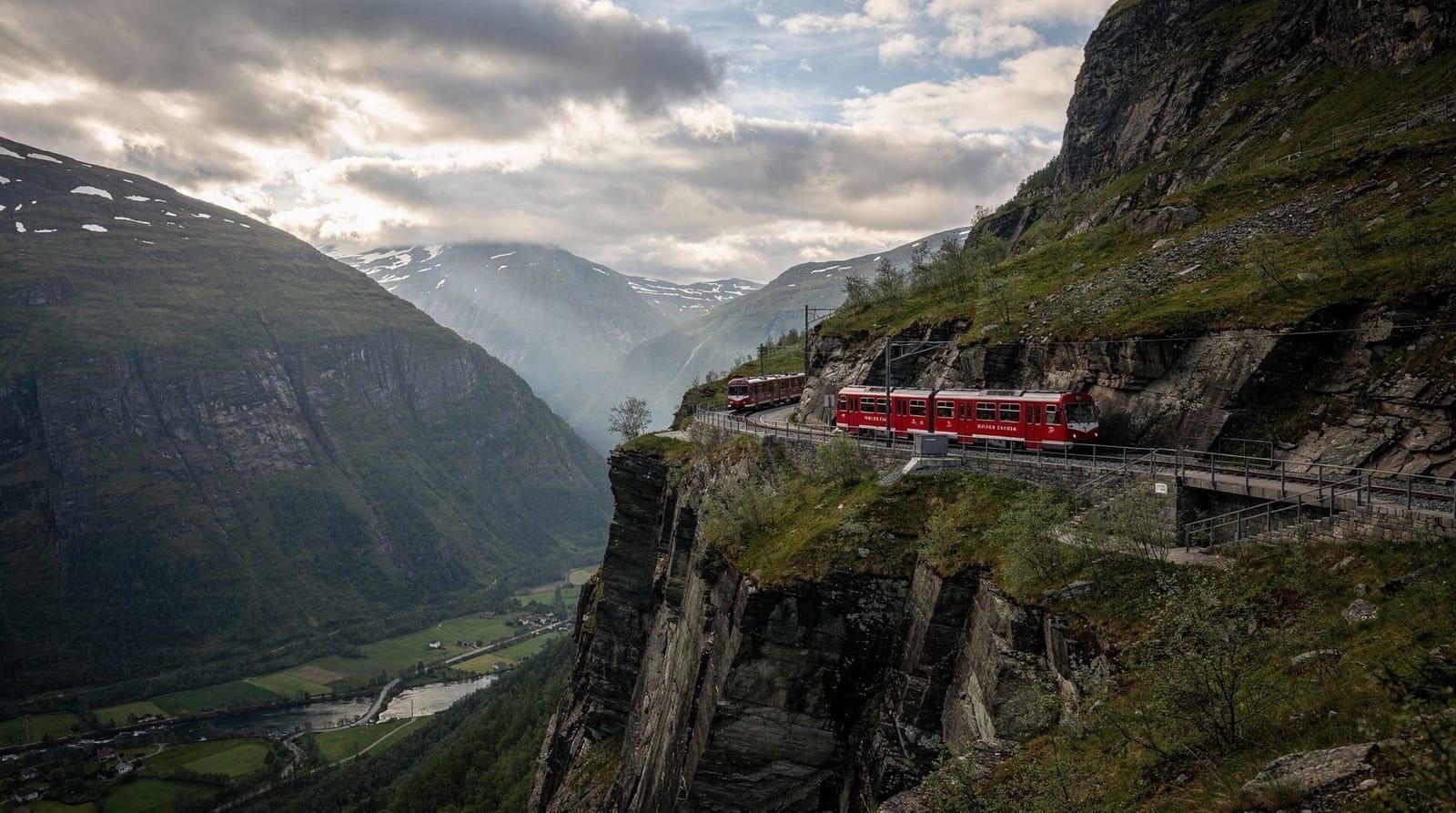
For a one-day visit from Bergen, the itinerary almost always resolves to: reach Flåm via the Flåm Railway, then take the Nærøyfjord cruise to Gudvangen, then return via bus to Voss and train to Bergen. This is the Norway in a Nutshell circuit. It is popular because it is genuinely the best single-day concentration of the Sognefjord’s highlights. If you want the boat leg explained in detail, the Nærøyfjord cruise guide covers it, and the Flåm Railway guide does the same for the train. For a timed version of the whole day, see the Norway in a Nutshell 1-day itinerary.
Nærøyfjord cruise (Flåm to Gudvangen)
The Nærøyfjord cruise departs from Flåm and follows Aurlandsfjord south before entering the Nærøyfjord proper. At its narrowest, the fjord walls close to 250 m apart. Peaks rise 1,400 m directly above the water. Several waterfalls — including Bakkanosi and smaller unnamed falls — drop hundreds of metres into the fjord.
The boats operated by FjordCruise are electric or hybrid-electric, running in near-silence. This is intentional and significant: the absence of diesel engine noise makes the scenery feel more immersive. You hear waterfalls from the deck.
Practical details:
- Season: May–September, typically 3–4 departures per day
- Duration: 2 hours one-way (Flåm to Gudvangen)
- Price: approximately NOK 400–600 per adult for the standalone cruise segment
- Children under 4: free; children 4–15: reduced fare
Gudvangen, at the far end, is a small fjordside community with a Viking village (Njardarheimr — entry NOK 200), a carpark, and a bus connection to Voss. There is limited reason to linger in Gudvangen unless you visit the Viking village. The Norway in a Nutshell bus to Voss departs from here. If you would rather stay in the mountains for a night or two, the Voss destination page and the Voss adventure guide show what the town offers beyond a transit stop.
The Bergen–Nærøyfjord cruise and Flåm Railway package covers the train from Myrdal, the fjord cruise, and all connecting transport in a single booking.
The Sognefjord runs 200 kilometres inland and the section worth seeing is the narrow branch at its far end, which is four hours from Bergen before anything begins: a private day tour with the Flåm Railway and a fjord cruise from Bergen makes that distance workable in a day.
Gudvangen and the Stalheimskleiva road
From Gudvangen, the road to Voss climbs Stalheimskleiva — a series of 14 hairpin bends with a gradient of 18%, one of the steepest public roads in Northern Europe. The coaches on the Norway in a Nutshell circuit take this route. It is dramatic and slightly alarming from a passenger seat. The Stalheim Hotel at the top of the climb has been serving mountain views since 1885 and the view from its terrace is one of the finest in the region.
Aurland and the Snow Road
Aurland is a small village on Aurlandsfjord, 6 km from Flåm by road. It is quieter than Flåm, has a medieval stave-church style attraction, and serves as a staging point for the Aurlandsvegen — the Snow Road — which climbs to 1,300 m and passes the Stegastein viewpoint before descending to Lærdal.
The Snow Road is closed by snow from approximately November through April/May. In summer, it is one of the most scenic mountain drives in Norway. Stegastein (see Flåm guide for details) is on this road, 650 m above Aurlandsfjord.
Balestrand — the quieter Sognefjord base
Balestrand is a village on the main Sognefjord trunk, about 1 hour by ferry from Flåm, 5.5 hours by express boat from Bergen. It is the most coherent overnight base in the Sognefjord system for visitors who want to slow down: smaller than Flåm, no railway crowds, surrounded by orchards and hiking trails. The Kviknes Hotel has been operating since 1877 and dominates the waterfront in a way that is either charming or overwhelming depending on your tolerance for Victorian scale.
From Balestrand: day hikes to viewpoints above the fjord, a 4 km walk to Dragsvik for the ferry to Vangsnes (where a Viking chieftain’s burial mound overlooks the fjord), and easy kayak access on the main fjord arm. The Sognefjorden Kystlag operates local boat tours.
Getting to Sognefjord from Bergen
Option 1: Norway in a Nutshell circuit (most popular) Bergen → train to Myrdal (~2h) → Flåm Railway to Flåm (55 min) → Nærøyfjord cruise to Gudvangen (2h) → bus to Voss (1.5h) → train to Bergen (1h20). Total day: 12–14 hours.
Cost breakdown (self-booked, 2024–2025):
- Bergen–Myrdal train: ~NOK 280–400
- Flåm Railway one-way: NOK 510 (peak)
- Nærøyfjord cruise: ~NOK 450
- Gudvangen–Voss bus: ~NOK 120
- Voss–Bergen train: ~NOK 180–350
- Total self-booked: approximately NOK 1,540–1,830
The Fjord Tours package runs ~NOK 2,200–2,800. DIY saves NOK 400–800+ per person. See the Norway in a Nutshell guide for the exact self-booking walkthrough.
Option 2: Sognefjordekspressen express boat Bergen → Flåm (via Vik, Balestrand): ~5.5 hours. Runs May–September. Expensive per minute but you see the lower Sognefjord trunk. Best for reaching Balestrand overnight rather than a one-day circuit.
Option 3: Bergen to Flåm by car Via E16 highway: approximately 180 km, 2.5 hours without detours (though road conditions, ferry crossings, and mountain passes can add time). Car access enables Stegastein, Aurland, Undredal, and the Lærdal tunnel (24.5 km, the world’s longest road tunnel).
The self-guided Nærøyfjord and Flåm Railway option provides all the transport tickets needed without a guided group — more flexibility, same scenery.
Undredal — Norway’s smallest active village with a stave church
Undredal is a cluster of fewer than 100 inhabitants on Aurlandsfjord, accessible only by boat or a very narrow mountain road. The stave church (Undredal Stave Church, 12th century, one of the smallest in Norway) is the main attraction, along with Undredal’s goat cheese dairy — the village produces Undredal goat cheese sold across Norway. A 20-minute stop by boat from Flåm or from the Snow Road.
Fjærland and the Jostedalsbreen glacier
At the northern tip of the Sognefjord, Fjærland sits below the Jostedalsbreen ice cap — mainland Europe’s largest glacier. The Norwegian Glacier Museum (Norsk Bremuseum) explains glaciology and climate with strong interactive exhibits (NOK 180 adult). The Bøyabreen and Supphellebreen glacier tongues are accessible by short walks from the valley road. Fjærland is 2 hours from Flåm by ferry or boat; a full day from Bergen including fjord travel. The Fjærland bookseller network (Bokbyen) has made the village a second-hand book destination — dozens of book stalls operate on the honour system outside buildings.
For more places to stop and look, the best fjord viewpoints in Western Norway is a useful companion, and fjord cruises from Bergen compares the boat options side by side.
See the Bergen and fjords 5-day itinerary for how to integrate Sognefjord with a broader Western Norway trip.
Kayaking on the Sognefjord and Nærøyfjord
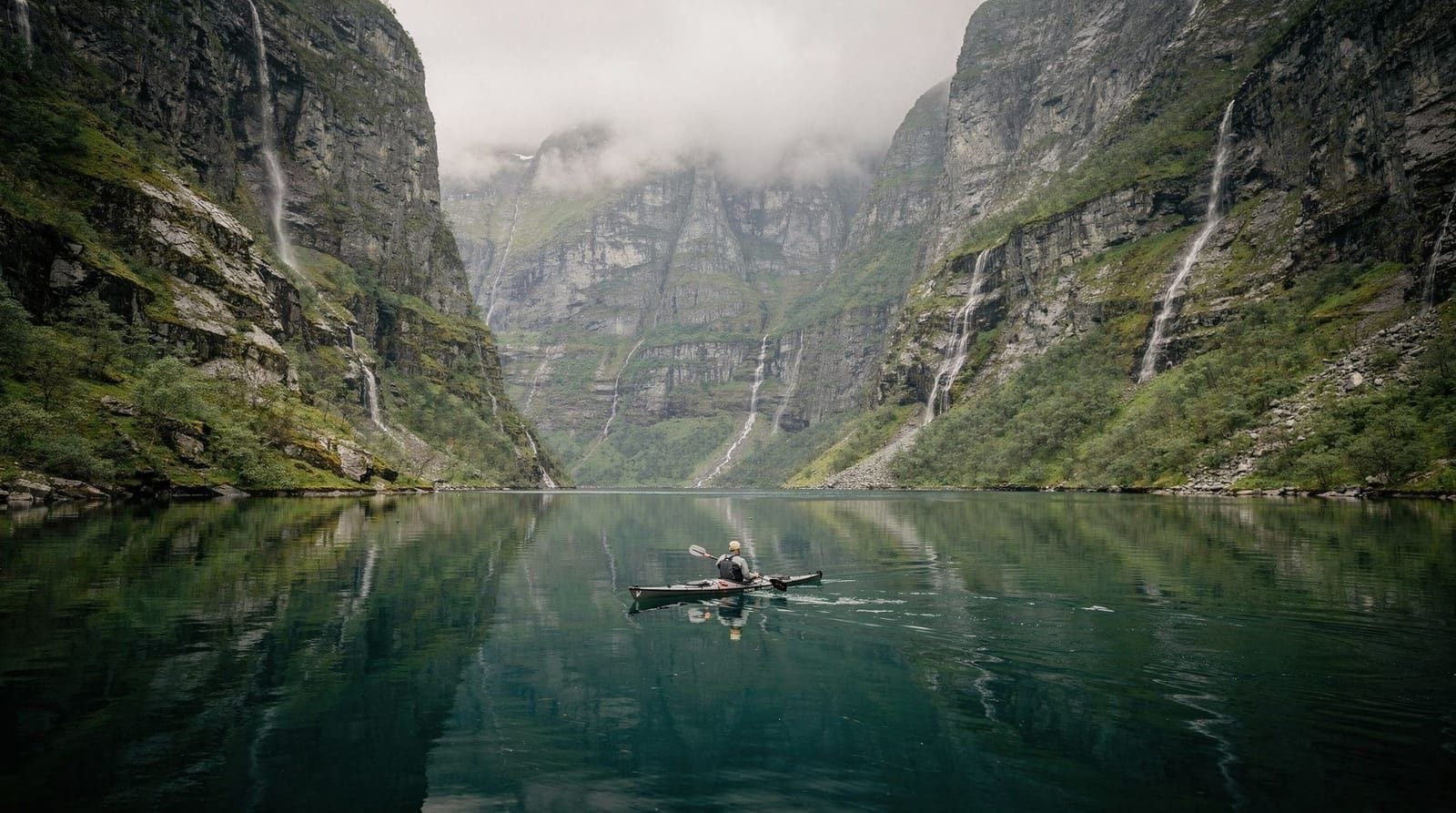
The inner fjord system is calm enough for kayak touring, and several operators in Flåm offer guided half-day and full-day kayak expeditions on Aurlandsfjord and the outer Nærøyfjord. Prices: NOK 600–900 per half-day guided session. Solo kayak rentals are also available for experienced paddlers who want to explore independently — the fjord walls and waterfall bases are accessible from the water in a way that no ferry route allows.
The Nærøyfjord itself is an approved kayak route; paddling its length (17 km one-way) requires planning around the ferry schedule, as the electric ferries have right-of-way. Most guided sessions stay in the calmer outer section. The combination of reflective water, vertical walls, and minimal motorised traffic in early morning makes kayaking one of the more rewarding activities in the Sognefjord basin.
Urnes Stave Church — Norway’s oldest
At the inner end of the Lustrafjord branch of Sognefjord, Urnes Stave Church (Urnes Stavkyrkje) is the oldest preserved stave church in Norway, built around 1130 CE. It received its own UNESCO World Heritage listing in 1979 as part of the broader Norwegian stave church designation. The church sits on a hillside above Lustrafjord, accessible by boat from Solvorn (across the fjord) or by car on a narrow mountain road.
Entry: NOK 120 adult. Open June–August (check urnes.no for current seasonal hours). The interior is small — the nave holds perhaps 50 people — with carved animal interlace portal decoration that is the best surviving example of the Urnes style. For visitors with any interest in medieval Norse art or architecture, it is a genuinely important site. It is a 3–4 hour detour from Flåm, requiring ferry across Lustrafjord and road transport.
Fortun and the inner Jotunheimen approach
The eastern arm of the Sognefjord, Fortunfjorden, provides access to the edge of the Jotunheimen mountain range — Norway’s highest peaks (Galdhøpiggen at 2,469 m is 80 km to the northeast). The village of Fortun sits at the innermost point of this branch, 60 km from Flåm by road along the Rv55 (one of Norway’s national scenic routes). From Fortun, mountain hiking trails extend into the edge of Jotunheimen.
For visitors on a Norway-wide circuit (Bergen → Sognefjord → Jotunheimen → Oslo), the Sognefjord serves as both a fjord destination and a transit gateway to the mountain plateau. The Rv55 over Sognefjellet (Norway’s highest mountain road pass) connects Sogndal to Lom in the Gudbrandsdalen valley — a spectacular alpine drive open June–October.
Sognefjord in winter
The Norway in a Nutshell circuit does not operate in its full form in winter — the Nærøyfjord cruise runs very limited departures November through April, and the Gudvangen bus may not connect. However:
- The Flåm Railway operates year-round (reduced winter timetable: check flamsbana.no)
- Flåm village and Aurland remain open
- The Sognefjordekspressen express boat has a reduced winter schedule
- Balestrand and the main fjord villages are accessible year-round by road
Winter Flåm (November–March) means near-empty streets, low accommodation prices (NOK 800–1,400 for hotels that charge 2,200+ in July), and the railway in frost and snow. The fjord does not freeze at this latitude. Some visitors find the off-season atmosphere — working village rather than tourist infrastructure — more rewarding than peak summer. For the wider seasonal picture, read Bergen in winter and the best time to visit Bergen.
What to realistically expect from one day on Sognefjord
A one-day Norway in a Nutshell circuit from Bergen gives you: 55 minutes on the Flåm Railway, 2 hours on the Nærøyfjord (the most scenic portion), brief time in Flåm village (1–2 hours maximum), and the Stalheimskleiva bus to Voss. You will not reach Balestrand, Fjærland, the main Sognefjord trunk, or any of the inner branches. This is a genuine highlight reel, not a comprehensive Sognefjord experience — which is fine, and worth being clear about before you go.
For genuine Sognefjord depth: 2 nights based in Flåm or Balestrand.
Practical costs on Sognefjord
Norway in a Nutshell circuit (self-booked, 2024–2025 per person):
- Bergen–Myrdal train: NOK 280–400
- Flåm Railway one-way: NOK 510 (peak season)
- Nærøyfjord cruise (Flåm–Gudvangen): NOK 400–600
- Gudvangen–Voss bus: NOK 120
- Voss–Bergen train: NOK 180–350
- Total: approximately NOK 1,490–1,980
Fjord Tours package (same circuit): NOK 2,200–2,800 in 2024. The difference is NOK 400–800 per person for the same transport segments with no added service or guide. The self-booking route is straightforward for anyone who can book a train ticket online.
Balestrand overnight:
- Kviknes Hotel double: NOK 2,000–3,200 per night in peak season
- B&B guesthouses in Balestrand: NOK 800–1,200
- Flåm Camping tent pitch: NOK 200/night
Food and drink:
- Ægir Bryggeri (Flåm): main course NOK 220–300; beer NOK 100–130
- Kviknes Hotel dinner: NOK 350–500 per main
- Station sandwich/coffee (Flåm): NOK 100–140
- Farm shop goat cheese (Undredal): NOK 80–130 per item
Guided vs. self-guided on Sognefjord
The Fjord Tours “Norway in a Nutshell” branded package is not a guided tour in the normal sense — there is no human guide explaining the landscape or answering questions. It is a bundled transport ticket with a fixed schedule. Self-booking each segment costs 20–40% less and allows the same flexibility (or more — you can choose your departure time and add segments like Stegastein or Undredal).
The only genuine advantage of the package: one booking transaction. For anyone willing to make three or four separate bookings (Vy trains, Flåmsbana, FjordCruise, bus), the DIY route is the better value.
For people who want a guide explaining the landscape, history, and ecology: look for small-group guided tours that include a licensed guide alongside the transport, typically NOK 300–600 more per person than the transport-only package.
Choosing a base: Flåm vs. Balestrand vs. Sogndal
| Base | Best for | Trade-off |
|---|---|---|
| Flåm | Activity density — railway, cruises, kayaking | Most crowded, especially midday |
| Balestrand | Quieter main-trunk fjord, historic hotel | Fewer big-ticket activities |
| Sogndal | Eastern branches, Urnes stave church | Furthest from the Nærøyfjord highlights |
Flåm is the default for most first-time visitors; Balestrand suits anyone actively trying to avoid the Nærøyfjord crowds. If you’re comparing Sognefjord against the other fjords accessible from Bergen, the Hardangerfjord guide and Lysefjord guide cover the other two main options, and getting around Bergen has the transport basics for reaching any of the departure points.
Frequently asked questions about Sognefjord
What is the difference between Sognefjord and Nærøyfjord?
Sognefjord is the main fjord system — 205 km long, very wide, with numerous branches. Nærøyfjord is a 17 km branch at the southwest end of the Sognefjord system. Nærøyfjord is UNESCO-listed and visually the most dramatic because it is very narrow (250 m at its narrowest) with high walls on both sides. Most visitors see Nærøyfjord and call it “Sognefjord” — that is not wrong, but the main trunk is a different experience.
Is the Nærøyfjord cruise worth doing?
Yes, for almost all visitors. The Nærøyfjord is the reference fjord experience in Western Norway — the one that matches what most people imagine when they picture a Norwegian fjord. The UNESCO listing is deserved. The electric boats add to the atmosphere. Two hours on the fjord in good weather is a striking experience. In rain or heavy cloud, visibility is reduced but the waterfalls increase in volume, which has its own appeal. The what to pack for a fjord cruise post and the what to pack for Bergen guide help you dress for either case.
Can you see Sognefjord without the Flåm Railway?
Yes. The Sognefjordekspressen express boat from Bergen to Flåm (5.5 hours) passes through the lower Sognefjord without using the railway. You can also reach Flåm by car (2.5 hours) and take just the Nærøyfjord cruise without the railway. The railway is spectacular but not the only way in.
What is the best base for exploring Sognefjord over multiple days?
Flåm for activity density (railway, cruises, hiking, kayaking); Balestrand for a quieter, more local experience on the main fjord; Sogndal for access to the eastern branches (Luster, Urnes stave church — Norway’s oldest, built around 1130). Flåm is the default for most visitors.
When does the Nærøyfjord cruise run?
May through September, typically 3–4 departures per day from Flåm. Outside these months, service is very limited or suspended. Check fjordcruise.no for current timetables.
How far is Sognefjord from Bergen?
Flåm is approximately 170 km from Bergen by road (about 2.5 hours driving). By train and Flåm Railway it is about 3 hours. The Sognefjordekspressen express boat takes 5.5 hours. The Norway in a Nutshell circuit turns it into a 12–14 hour day from Bergen.
Top experiences
Bookable activities with verified prices and instant confirmation on GetYourGuide.