Geirangerfjord
Geirangerfjord (UNESCO), Seven Sisters waterfalls, Mount Dalsnibba, and Art Nouveau Ålesund. Honest access guide from Bergen with real travel times.
Geiranger: Fjord & Waterfalls Sightseeing Cruise
Duration: 75 minutes
Quick facts
- Distance from Bergen
- ~4–5 h by car over mountain roads
- Fjord cruise Geiranger–Hellesylt
- ~NOK 350–500 adult (1 hour)
- Mount Dalsnibba elevation
- 1,476 m (toll road open Jun–Oct)
- Geirangerfjord length
- 15 km
- UNESCO status
- World Heritage 2005 (joint with Nærøyfjord)
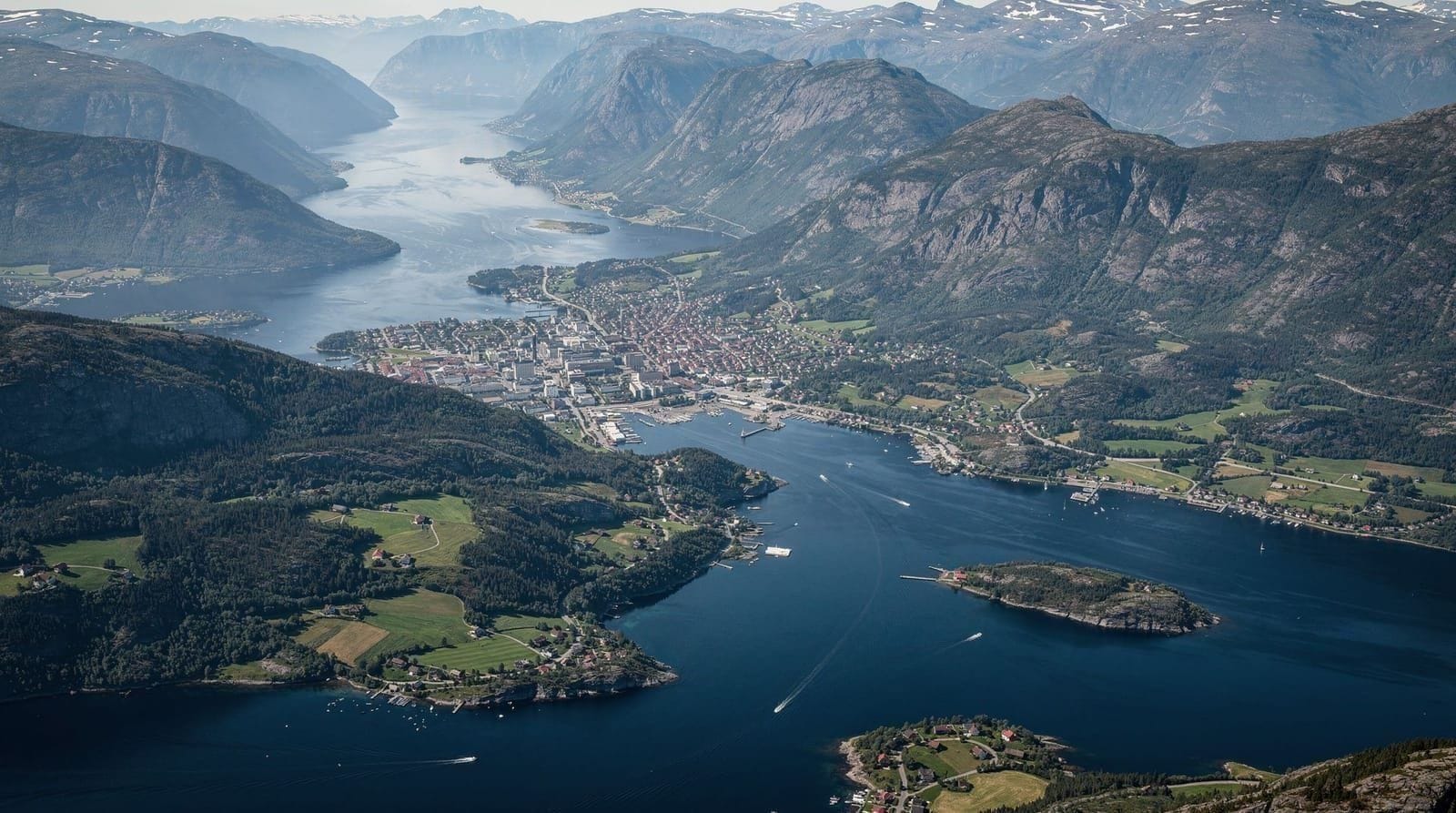
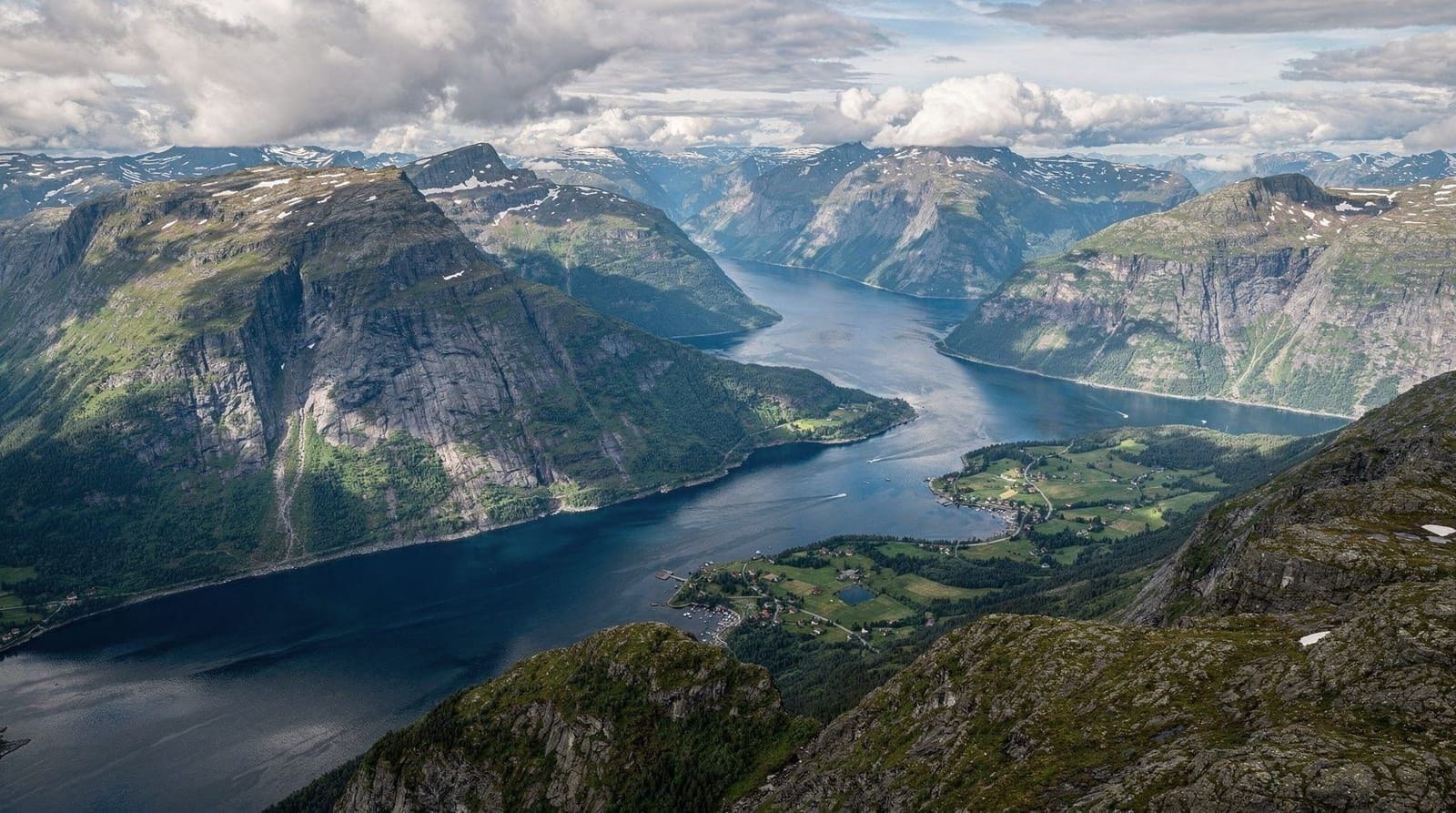
Geirangerfjord received UNESCO World Heritage status in 2005, alongside Nærøyfjord, as part of the West Norwegian Fjords designation. At 15 km long and surrounded by peaks rising to 1,500 m, it is the most dramatically concentrated fjord in Norway — every waterfall, viewpoint, and farm ruin falls within a very short stretch of water. The Seven Sisters and Suitor waterfalls cascade down near-vertical walls on opposite sides of the fjord simultaneously.
The first thing to say clearly: Geirangerfjord is not a Bergen day trip. The village of Geiranger is approximately 250 km from Bergen by the fastest road route — a four to five hour drive over mountain passes and through valleys, plus ferry crossings. Most travel guides frame it as a Bergen excursion; in practice it requires planning as a separate destination, typically via Ålesund (1.5 hours from Geiranger by ferry or bus) or as part of a longer coastal route.
| Where | Northwestern fjord region, ~250 km from Bergen |
| Time needed | 2 days minimum (not a Bergen day trip) |
| Cost | Around NOK 4,000–6,000/person for a full 2-day trip |
| Getting there | Fly or boat to Ålesund, then ferry/bus to Geiranger |
| Best time | June–August for full access; May for fewer crowds |
The honest access situation from Bergen
There is no single fast, direct route from Bergen to Geiranger. Your options:
By car: Bergen → E39 north → Rv15 east toward Stryn → Geiranger: approximately 250 km and 4–5 hours without stops, longer with mountain road conditions, ferry crossings (Hellesylt–Geiranger: 1 hour), and the Trollstigen scenic route if included. The road is spectacular. It is also demanding — single-lane mountain sections, sheer drop edges without guardrails, and altitude changes that can cause fog or ice outside summer.
Via Ålesund (recommended for 2+ days): Bergen → Ålesund by flight (35 minutes) or express boat/Hurtigruten → Ålesund → Geiranger by ferry or bus (~1.5 hours). Ålesund itself deserves a full day (Art Nouveau architecture, the mountain views from Aksla). This makes the most coherent 2-day itinerary.
Hurtigruten/Havila coastal route: Bergen → northward up the coast → Geiranger (in season, both Hurtigruten and Havila call at Geiranger between June and August). Departing Bergen in the late afternoon, you pass Geiranger approximately 30 hours later. This is a complete experience in itself rather than just transport. Not a budget option — prices from NOK 2,500+ per person for a cabin overnight.
The Bergen and fjords 5-day itinerary includes a Geirangerfjord section as a multi-day extension.
The Geiranger fjord cruise
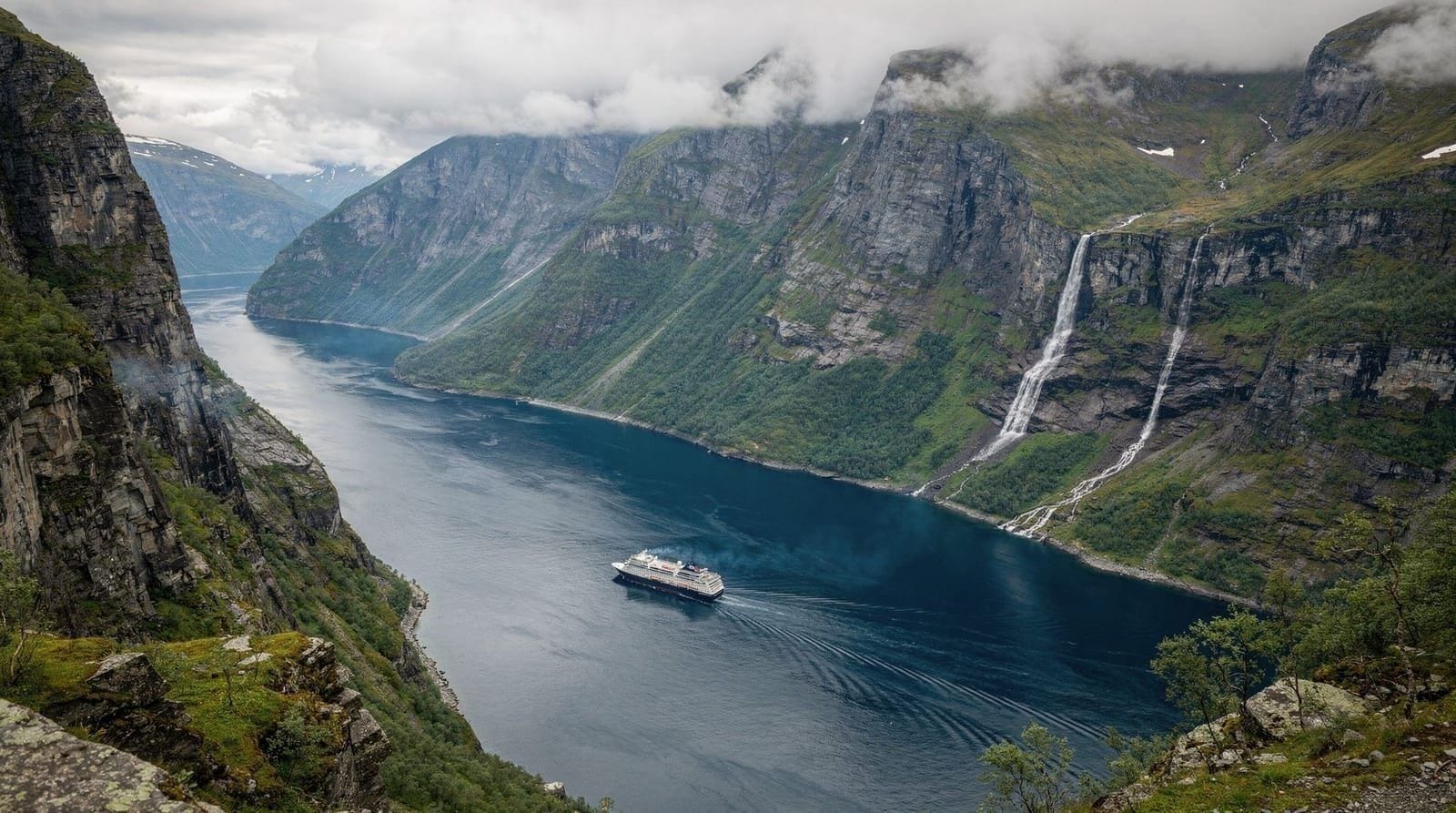
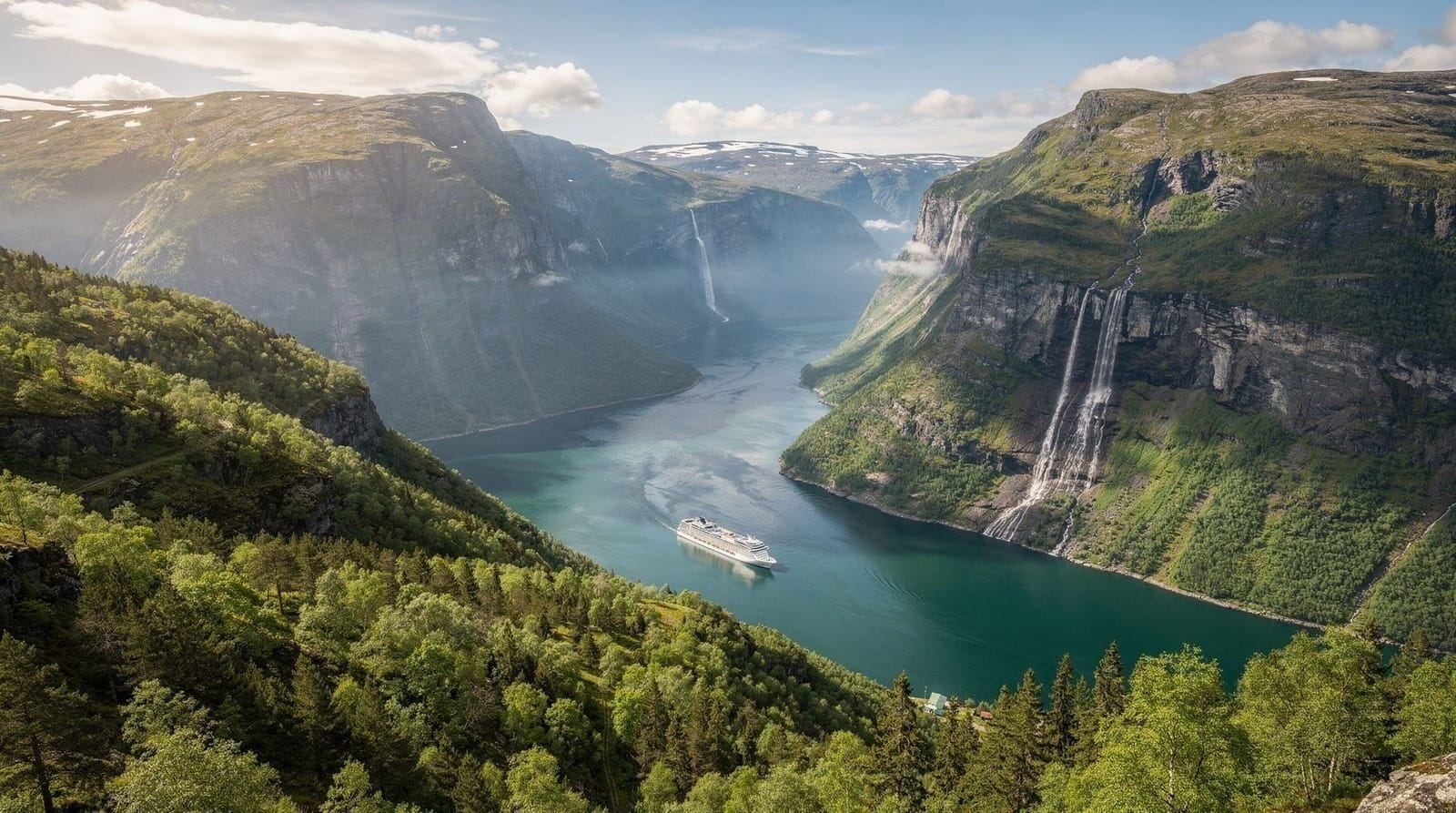
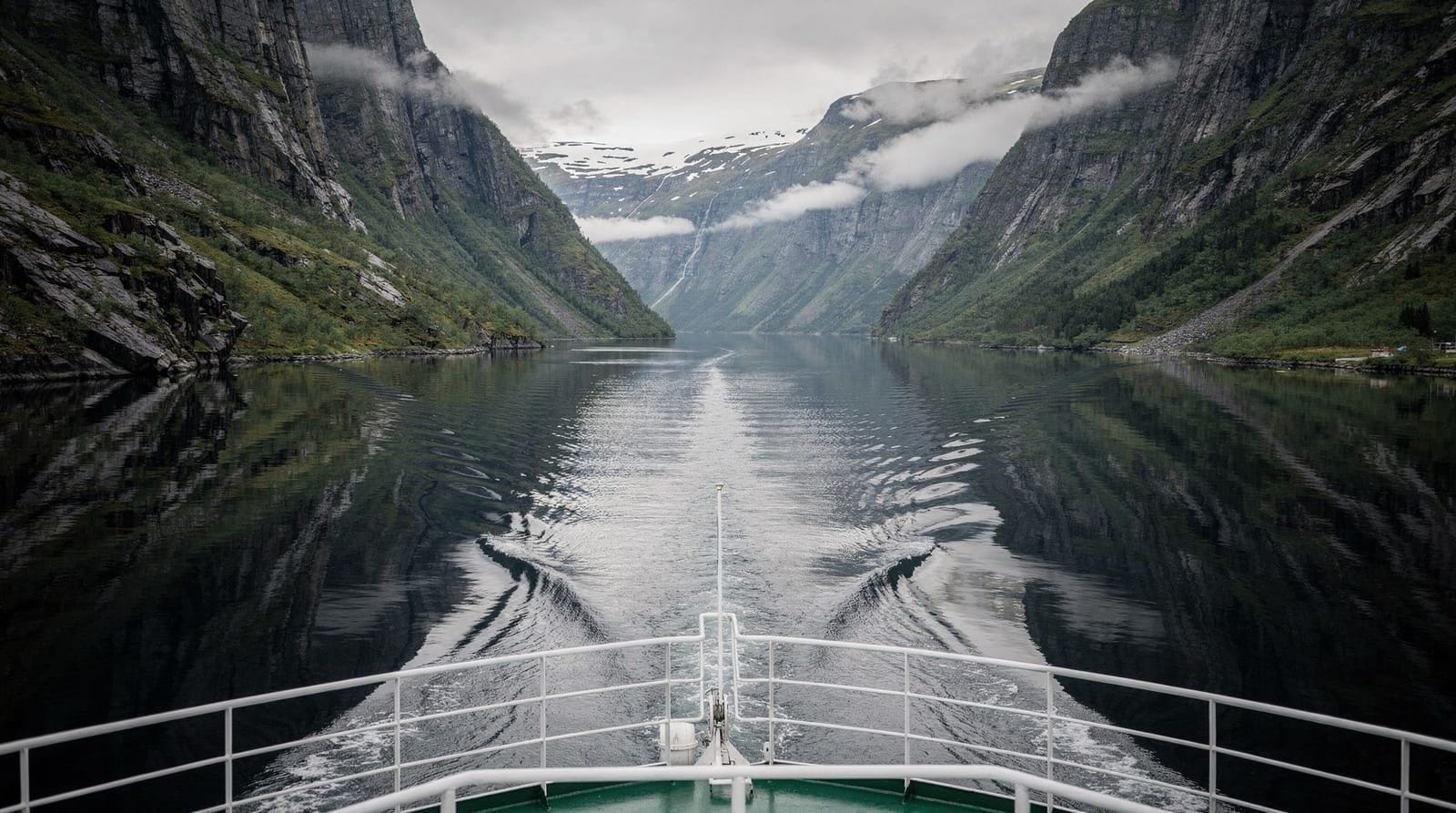
The cruise between Geiranger and Hellesylt (1 hour each way) is the core Geirangerfjord experience. The boat passes directly beneath the Seven Sisters waterfall (seven separate streams running in parallel, 250 m fall), the Suitor waterfall opposite, and the Bridal Veil waterfall at the entrance to the fjord. Abandoned farm ruins cling to the cliff walls — families were resettled from these inaccessible ledge farms in the 20th century.
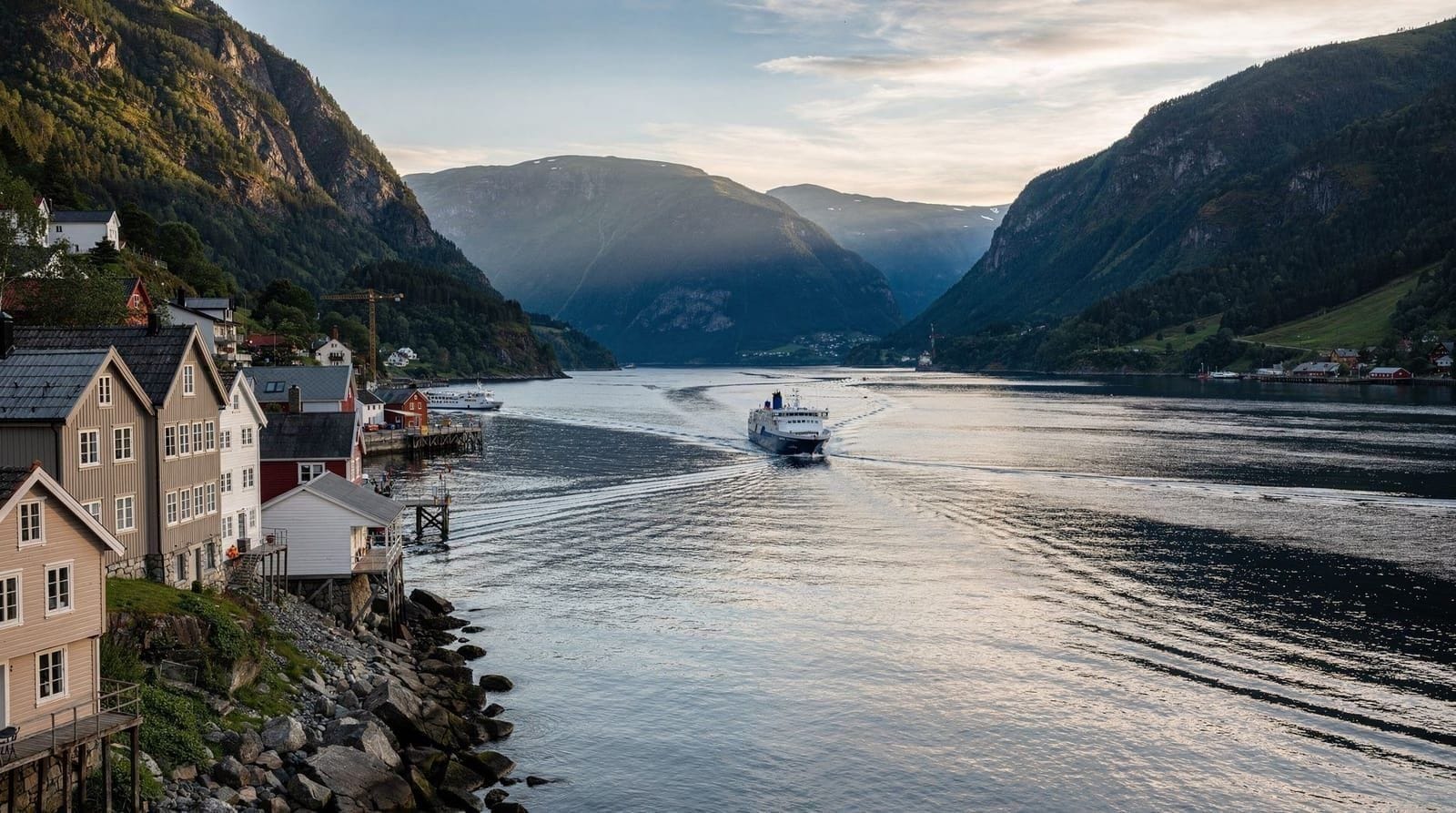
The cruise is operated by Fjord1. Prices: approximately NOK 350–500 per adult one-way (Geiranger to Hellesylt or return). Runs June–August only. Cars travel on the same ferry (car supplement required).
The fjord is not long — 15 km from Geiranger to Hellesylt — but the visual density is high. You pass the main waterfalls within the first 3 km of the fjord. The return trip covers the same sights from a different angle.
The Geiranger fjord sightseeing cruise passes the Seven Sisters and Suitor waterfalls and the abandoned mountain farms — the core one-hour experience on the water.
For a more intensive experience, a RIB boat safari brings you close enough to the waterfall bases to feel the spray.
A RIB safari on Geirangerfjord covers the waterfall bases and farm ruins at close range — better for photography and wildlife than the standard ferry cruise.
The Seven Sisters and the Suitor face each other across the fjord and cannot be seen from any road, which makes a boat the only way to view what Geiranger is famous for: a Geiranger Fjord sightseeing roundtrip covers the stretch between them.
Viewpoints above the fjord
Ørnesvingen (Eagle Road viewpoint): On the Rv63 road above Geiranger, a series of 11 hairpin bends with a viewpoint midway offering the most-photographed overview of the fjord. Free, accessible by car or bicycle, and on the road to Dalsnibba. Crowds: heavy from 10 am to 3 pm in July. Early morning (before 8 am) or evening light gives a quieter and more photogenic visit.
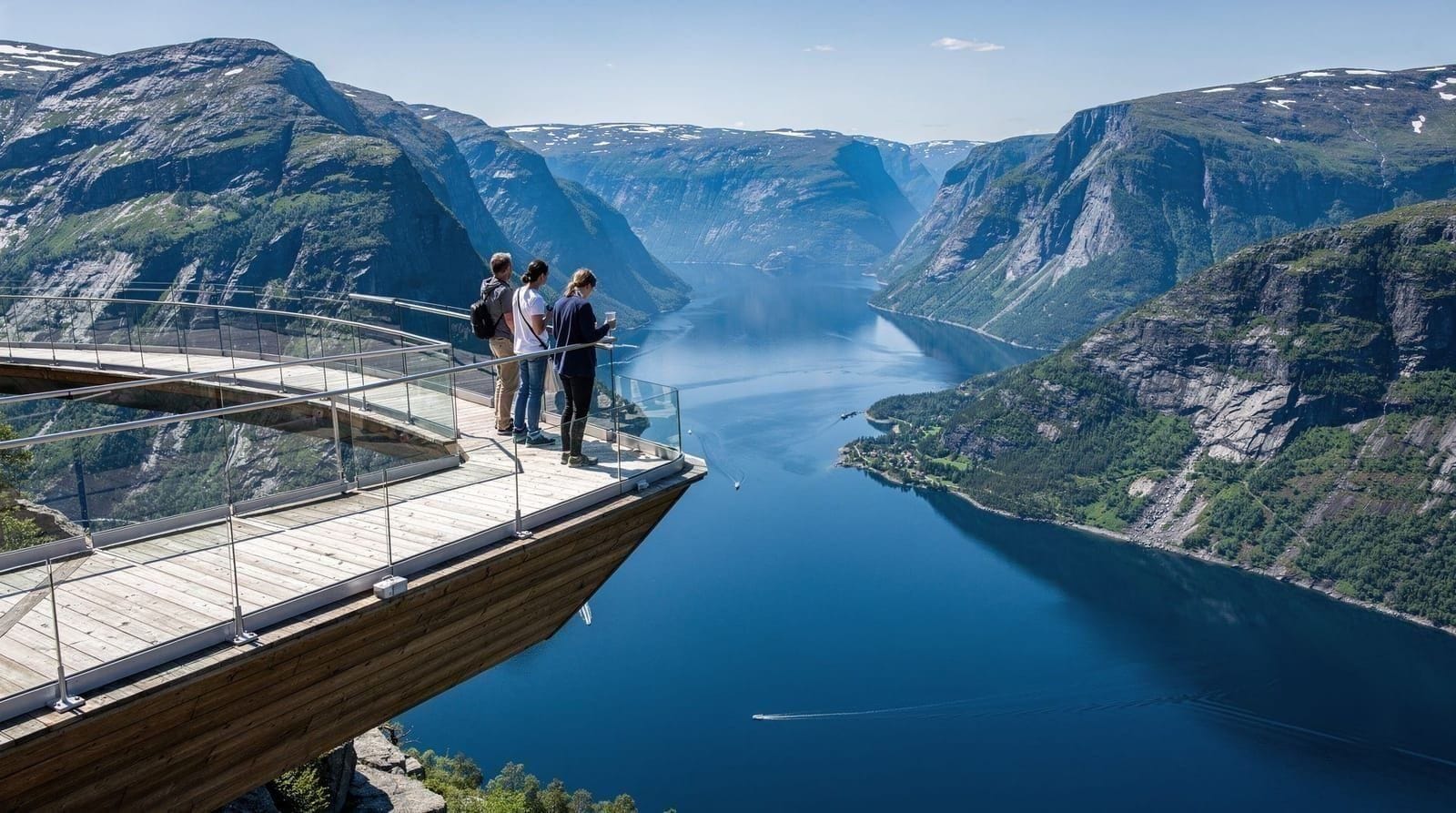
Flydalsjuvet: A rock outcrop with a view down into the fjord. 15-minute walk from the road above Geiranger. Free. The classic image of a person standing on the jutting rock with the fjord below was taken here. In 2024–2025 it is accessible year-round; trail conditions vary in winter.
Mount Dalsnibba (1,476 m): The highest car-accessible viewpoint on a paved road in Norway. The Nibbevegen toll road (NOK 130 per car) climbs from Geiranger to the Dalsnibba plateau, with a viewpoint 1,476 m above sea level and the Djupvatnet lake below. The scale from the top makes Geirangerfjord look like a thin blue thread in the landscape far below. Season: the toll road is typically open mid-June to mid-October, depending on snowpack. Check dalsnibba.no before going — the road can close at any point if snow conditions deteriorate.
For more viewpoints across the region, the best fjord viewpoints in Western Norway puts Geiranger’s lookouts in context alongside the options closer to Bergen.
Geiranger village
The village of Geiranger (population approximately 250 in winter, expanding massively in summer) is entirely oriented around tourism. There are hotels, cafes, a Union Hotel (open since 1891 — historically significant and well-maintained, NOK 1,800–2,800 per double in peak season), a kayak rental, and the Norwegian Fjord Centre (Norsk Fjordsenter — NOK 160 adult, covers fjord geology and history).
The village fills rapidly between 10 am and 2 pm when cruise ships anchor. In 2024, Geiranger received approximately 700,000 cruise passengers — a remarkable figure for a village of 250 people. The crowd pressure during cruise hours is significant; the village empties again by 4–5 pm. If you are staying overnight, the evening (5 pm onwards) and early morning are the best times on the water and in the village.
The Geirangerfjord area banned fossil-fuel cruise ships from 2026 as part of a Norwegian emissions policy for UNESCO fjord zones. Electric and hybrid vessels are exempt. This affects the type and quantity of cruise traffic but does not close the fjord.
Ålesund — the Art Nouveau city
Ålesund is 125 km from Geiranger by the ferry route (Hellesylt–Geiranger ferry, then Rv15 to Stranda, then ferry across Storfjorden, then road north — complex) or 1.5 hours by the direct Geiranger–Ålesund express boat in summer.
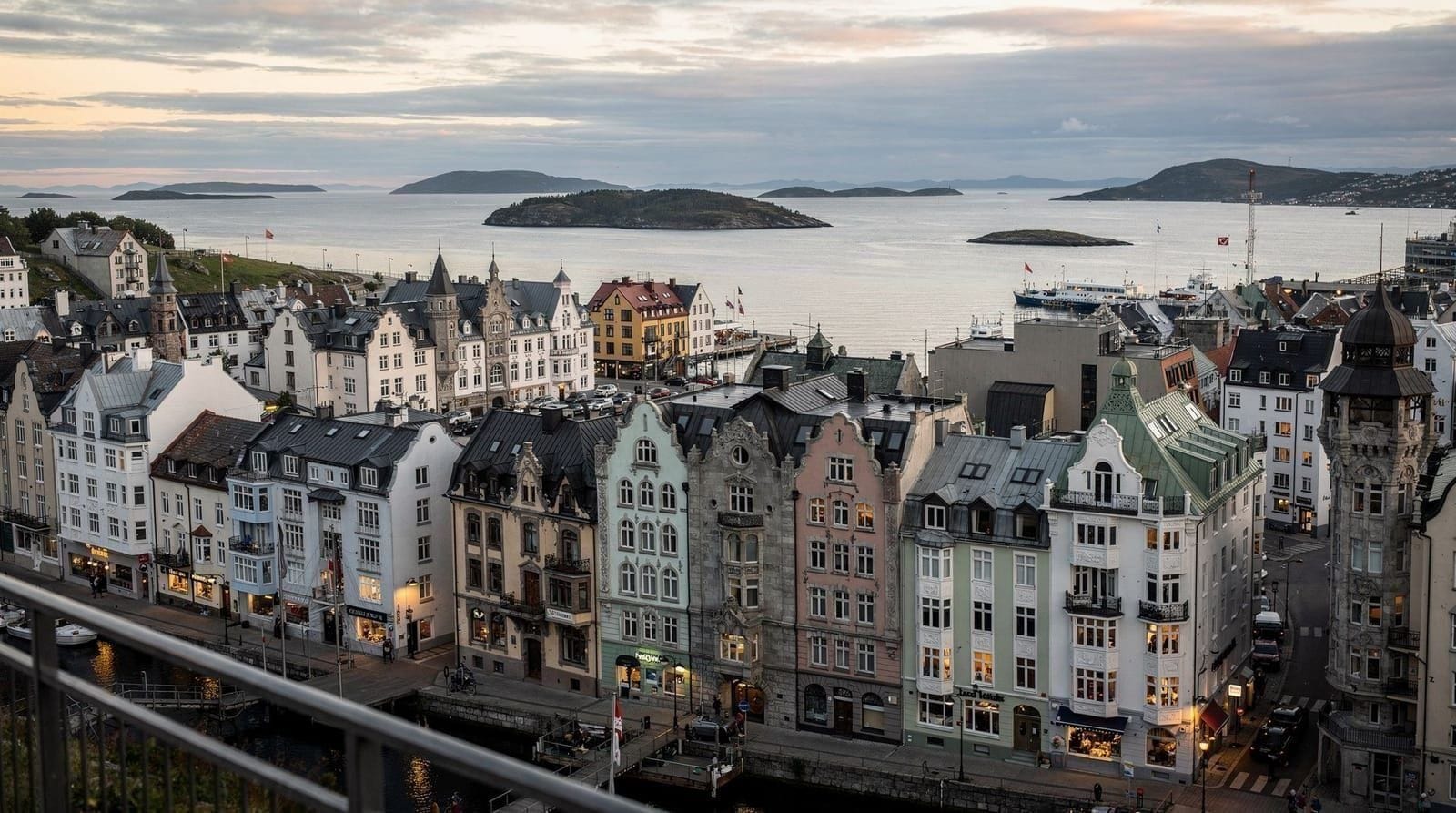
The city burned almost completely in 1904 and was rebuilt within 3 years in the Art Nouveau style then fashionable in Europe — which means the entire city centre is architectural coherent in a way that is unusual in Norway. Ålesund also sits on an archipelago of islands connected by bridges and tunnels; the geography gives it a particular quality of light and sea air.
Key Ålesund visits:
- Aksla viewpoint: 418 steps from the town centre to a panoramic view over the islands, the Atlantic, and on clear days the Sunnmøre Alps. Free. The defining Ålesund experience.
- Art Nouveau Centre (Jugendstilsenteret): NOK 135 adult. Covers the 1904 fire and the reconstruction in detail with period-accurate interiors. The building itself (the former pharmacy) is a good example of the style.
- Ålesund Aquarium (Atlantic Sea Park): One of the largest sea aquariums in Northern Europe. NOK 235 adult. Seals, marine life from the Norwegian coast, outdoor harbour pools.
A guided Art Nouveau walking tour of Ålesund covers the 1904 rebuilding history and the best-preserved facades with architectural context that the signage alone does not provide.
The Trollstigen detour
If you are driving between Geiranger and Ålesund (or between Geiranger and Bergen via the northern route), the Trollstigen national scenic road adds 1–1.5 hours to the drive but is worth it if road conditions permit. Eleven hairpin bends climbing 850 m on a 9% gradient road with Stigfossen waterfall (320 m) visible throughout the ascent. The national tourist route visitor centre at the top offers terrace views over the valley below.
Open approximately June to October; closed the rest of the year by snow. Check troll-stigen.no for current road status before planning the route.
Hiking from Geiranger
Beyond the viewpoint drives, the Geiranger area has marked hiking trails suitable for day visits:
Storseterfossen waterfall hike: 2.5 km from Geiranger village, climbing through forest to the Storseterfossen waterfall where a path leads behind the falls. Round trip approximately 2 hours. Moderate difficulty. Free. This is the most accessible waterfall hike from the village.
Blåbærhaugen (Blueberry Hill): A short 30-minute climb from the village to a viewpoint above Geiranger with good angles toward the Seven Sisters. Straightforward and good for those who want a viewpoint without the full Ørnesvingen drive.
Skageflå abandoned farm: A more demanding hike (3–4 hours round trip) to one of the cliff-face farms abandoned in the 20th century. The trail is steep and unmarked in places. The farm buildings, still standing, sit at 250 m above the fjord with direct views of the Seven Sisters on the opposite wall. Not suitable for those with limited hiking experience or a fear of heights — the traverse to the farm involves some exposed ledge walking.
Geiranger to Dalsnibba via trail: The full mountain hike from valley to the Dalsnibba plateau (900 m elevation gain, approximately 4–5 hours uphill) is possible for fit hikers and avoids the toll road. Most people drive; the hiking alternative gives a very different relationship to the landscape.
If you want to test your legs before committing to a long day here, the hiking around Bergen guide covers easier trails near the city, and the Preikestolen hike guide shows what a classic fjord-edge hike involves.
Kayaking on Geirangerfjord
Kayaking on Geirangerfjord puts you at the base of the Seven Sisters waterfall and under the Suitor on the opposite wall — perspectives unavailable from the standard cruise ferry. Several operators in Geiranger village offer guided 2–3 hour kayak sessions (NOK 600–850 per person) that position you within spray range of the main waterfalls. No prior experience required.
Solo kayak rental is available for experienced paddlers; the fjord has no significant currents and is sheltered by the surrounding walls. Early morning (before 8 am) is the quietest period on the water, before cruise ship tenders start ferrying passengers ashore.
Food and drink in Geiranger
The village has a handful of options but prices are high and quality variable. The Union Hotel restaurant is the most consistent (Norwegian fish and meat dishes, mains NOK 240–380). The Geiranger Sjokolade chocolate factory and café serves local products and coffee — legitimately good and a reasonable alternative to the hotel dining rooms.
For budget eating: the Olebuda grocery store stocks sandwiches, snacks, and some prepared food at standard supermarket prices (NOK 80–150 for a complete lunch). Buying food here rather than at the tourist-facing restaurants saves NOK 100–200 per meal.
What a realistic 2-day Geiranger itinerary looks like
Day 1: Fly or boat Bergen → Ålesund (morning). Spend afternoon in Ålesund: Aksla viewpoint, Art Nouveau Centre, lunch at Maki (Japanese-Norwegian fusion, mains NOK 250–380 — one of the better restaurants in Western Norway). Evening in Ålesund.
Day 2: Ålesund → Geiranger by express boat or bus (1.5 hours, morning departure). Geiranger fjord cruise. Ørnesvingen viewpoint drive. Mount Dalsnibba if road is open. Evening return to Ålesund or continue south toward Bergen by car or coastal boat.
The western Norway 7-day itinerary integrates Geirangerfjord and Ålesund as part of a full circuit.
Weather in this part of Norway changes quickly, so pack layers whatever the forecast says. The what to pack for a fjord cruise and what to pack for Bergen pages list what is worth carrying on the water and on the viewpoint roads. If you are still choosing between fjords, fjord cruises from Bergen compares the cruises you can reach more easily, and the Bergen budget guide helps you weigh the cost of this longer trip against them.
Practical costs for a Geiranger visit
Transport (from Bergen):
- Bergen → Ålesund flight: NOK 400–900 depending on advance booking (Norwegian/SAS)
- Ålesund → Geiranger express boat (1.5 h, summer only): NOK 350–550 per person
- Geiranger → Hellesylt ferry (1 h): NOK 350–500 per person; car supplement required if driving
- Bergen → Geiranger by car (4–5 h drive + possible ferry crossings): fuel NOK 300–500 + tolls NOK 100–200
Activities:
- Geiranger fjord cruise (return): NOK 350–500
- Dalsnibba toll road: NOK 130 per car
- RIB safari on the fjord: NOK 900–1,200 per person
- Kayak guided session: NOK 600–850 per person
- Ørnesvingen viewpoint drive: free (included in Rv63 driving)
- Ålesund Art Nouveau Centre: NOK 135 adult
Accommodation:
- Union Hotel Geiranger double (peak season): NOK 2,000–3,500
- Geiranger Camping: NOK 250–350 per tent pitch
- Ålesund mid-range hotel double: NOK 1,300–1,900
A realistic 2-day Geirangerfjord trip from Bergen (flight both ways + one night Ålesund + one night Geiranger + activities) costs NOK 4,000–6,000 per person. This is not a cheap excursion.
Geirangerfjord vs. Nærøyfjord
Both are UNESCO-listed. Both are stunning. They are genuinely different experiences:
| Nærøyfjord | Geirangerfjord | |
|---|---|---|
| Width at narrowest | ~250 m | Wider, more open |
| Access from Bergen | ~3 hours via Flåm Railway | 4–5 hours minimum |
| Signature feature | Near-silent electric boat, close walls | Seven Sisters & Suitor waterfalls together |
| Fits in | A single day (Norway in a Nutshell) | A dedicated 2-day trip |
| Best if | You have one day from Bergen | You have 5+ days in Western Norway |
Nærøyfjord: 250 m narrow, walls very close, electric boat cruise in near-silence, part of the Norway in a Nutshell circuit, directly accessible from Bergen via the Flåm Railway (3 hours total). The reference fjord cruise from Bergen.
Geirangerfjord: 15 km with concentrated waterfall scenery, the Seven Sisters and Suitor waterfalls visible simultaneously, higher peak elevations above the fjord, requires significantly more travel from Bergen (4–5 hours minimum) but justifies the effort as a dedicated 2-day trip.
If you have one day from Bergen: Nærøyfjord (Norway in a Nutshell) is the clear choice. If you have 5+ days in Western Norway: include both, and see the Sognefjord guide and Hardangerfjord guide for the other two fjord options worth weighing up.
Frequently asked questions about Geirangerfjord
Is Geirangerfjord accessible as a day trip from Bergen?
Technically possible but not practical. The drive is 4–5 hours each way on mountain roads. A more manageable approach: fly or take the coastal boat to Ålesund (1.5 hours from Geiranger by express boat) and treat it as a 2-day side trip. The best day trips from Bergen guide frames this honestly — Geirangerfjord is not a Bergen day trip.
When is the best time to visit Geirangerfjord?
June–August for full access: fjord cruises, Dalsnibba road, all viewpoints, express boats from Ålesund. May is excellent for smaller crowds but the Dalsnibba road may still be snow-closed. September: quieter, autumn colour, but fjord services begin to reduce. October–May: limited boat services, Dalsnibba closed.
Are the Seven Sisters waterfalls visible year-round?
The falls flow year-round as long as the snowpack above the fjord provides meltwater. They are most powerful in late May and June (snowmelt peak). In a dry August, some of the seven streams may reduce significantly. They are always visible from the cruise as separate streams — but flow volume varies by season and annual snowpack.
What is the best viewpoint above Geirangerfjord?
Dalsnibba (1,476 m) gives the most dramatic scale — the fjord appears as a thin blue line far below. Ørnesvingen is more accessible and provides the classic postcard view from roughly 500 m elevation. Flydalsjuvet is the least visited of the three and gives the closest overhanging view of the water below. Visit all three if you have a car and a full day.
How crowded is Geiranger in summer?
Very crowded between 10 am and 3 pm on cruise ship arrival days — which in peak season (June–August) is most days. The cruise ban on fossil-fuel ships from 2026 reduces large-ship traffic but electric/hybrid vessels still call. Stay overnight rather than arriving and leaving as a day visitor — the morning before 9 am and evening after 5 pm are a different experience.
Is the Ålesund Art Nouveau centre worth a detour?
Yes, particularly if you have any interest in early 20th-century architecture. Ålesund’s architectural coherence is rare — an entire city centre in a single style rebuilt over three years after a catastrophic fire. The Jugendstilsenteret museum provides the historical narrative. Aksla viewpoint is free and one of the finest city views in Norway. An afternoon and evening in Ålesund alongside a Geiranger visit is time well spent.
Top experiences
Bookable activities with verified prices and instant confirmation on GetYourGuide.