Bergen food and drink guide — where to eat, drink, and spend your NOK wisely
Bergen's Culinary Exploration: Food and Culture Walk
Where should I eat in Bergen?
For seafood, Enhjørningen (NOK 300–480 mains) and Fisketorvet indoor hall are the best bets near Bryggen. For local-price eating, Mathallen Bergen (Lars Hilles gate) has multiple food stalls at non-tourist prices. Budget travelers should use supermarkets (REMA 1000, ICA) for basics — Norway is expensive and grocery meals save significant money.
Bergen is not a cheap city for dining out. A sit-down restaurant main course starts at NOK 250 and reaches NOK 500 at mid-range establishments; dinner for two with wine is typically NOK 1,200–1,800. These are the real numbers — there is no frugal workaround for Norwegian restaurant prices except eating at Mathallen, buying from supermarkets, or choosing your restaurant visits carefully.
This guide covers where to eat at each price point, what Bergen’s food culture actually looks like beyond the tourist market, and how to spend your food budget effectively. Food is only one line in the overall bill, so it helps to read it alongside our Bergen travel budget and the practical Bergen on a budget tips. If this is your first visit, the Bergen first-timer guide puts the meals below into the wider shape of a trip.
| Where | Mathallen (budget) to Enhjørningen/Bryggen (upscale seafood) |
| Cost | NOK 100–150/meal budget, NOK 500–800/person mid-to-high |
| Time needed | Allow 45–90 min for a proper sit-down meal |
| Getting there | All main venues within 15 min walk of Bryggen |
| Best time | Lunch over dinner for lower prices on the same dishes |
Bergen’s food identity — fish, mountains, and price
Bergen’s cuisine is shaped by its geography: a coastal city with a fishing heritage, surrounded by mountains and accessible only by sea for most of its history. The local food identity is built around:
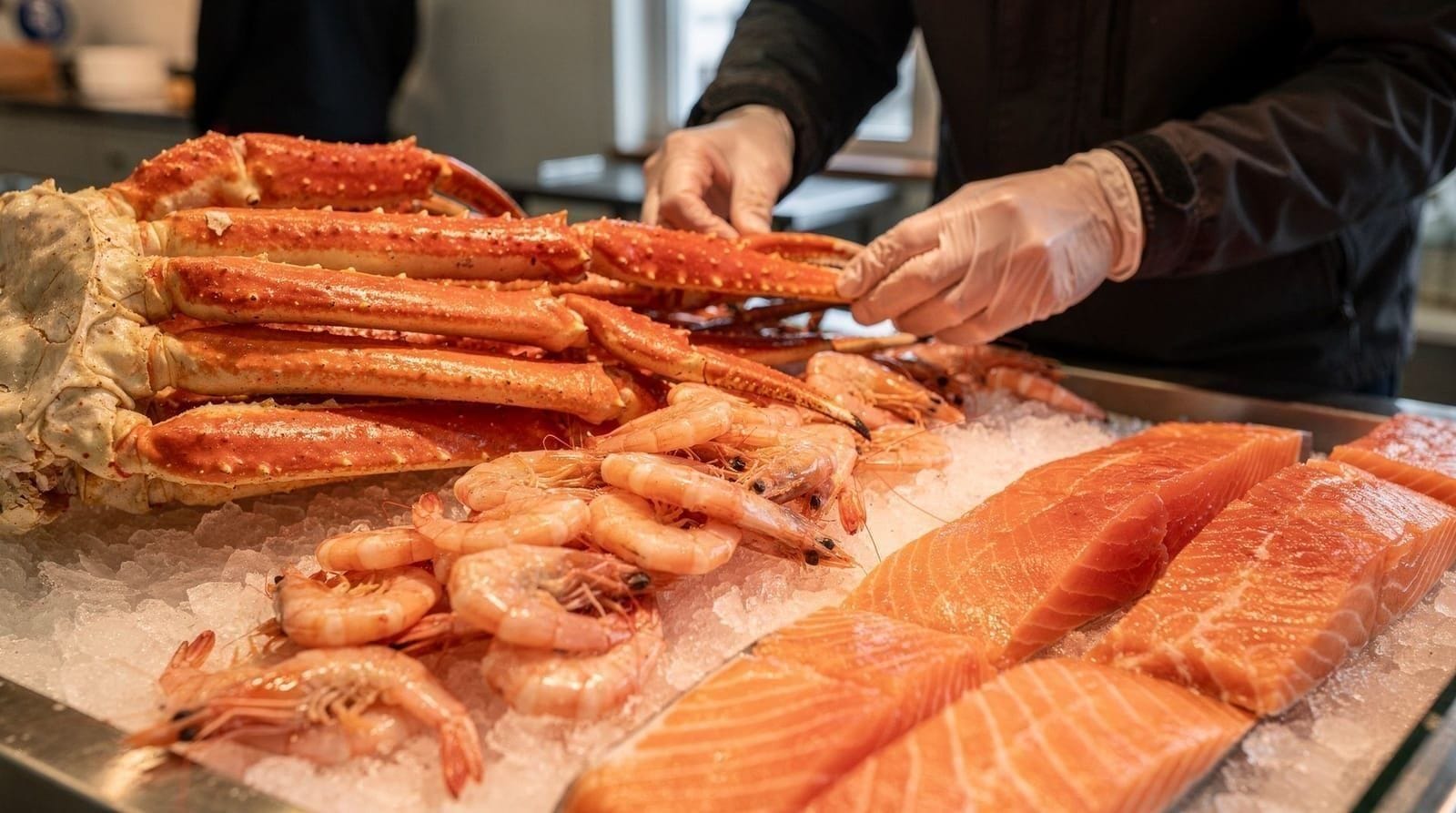
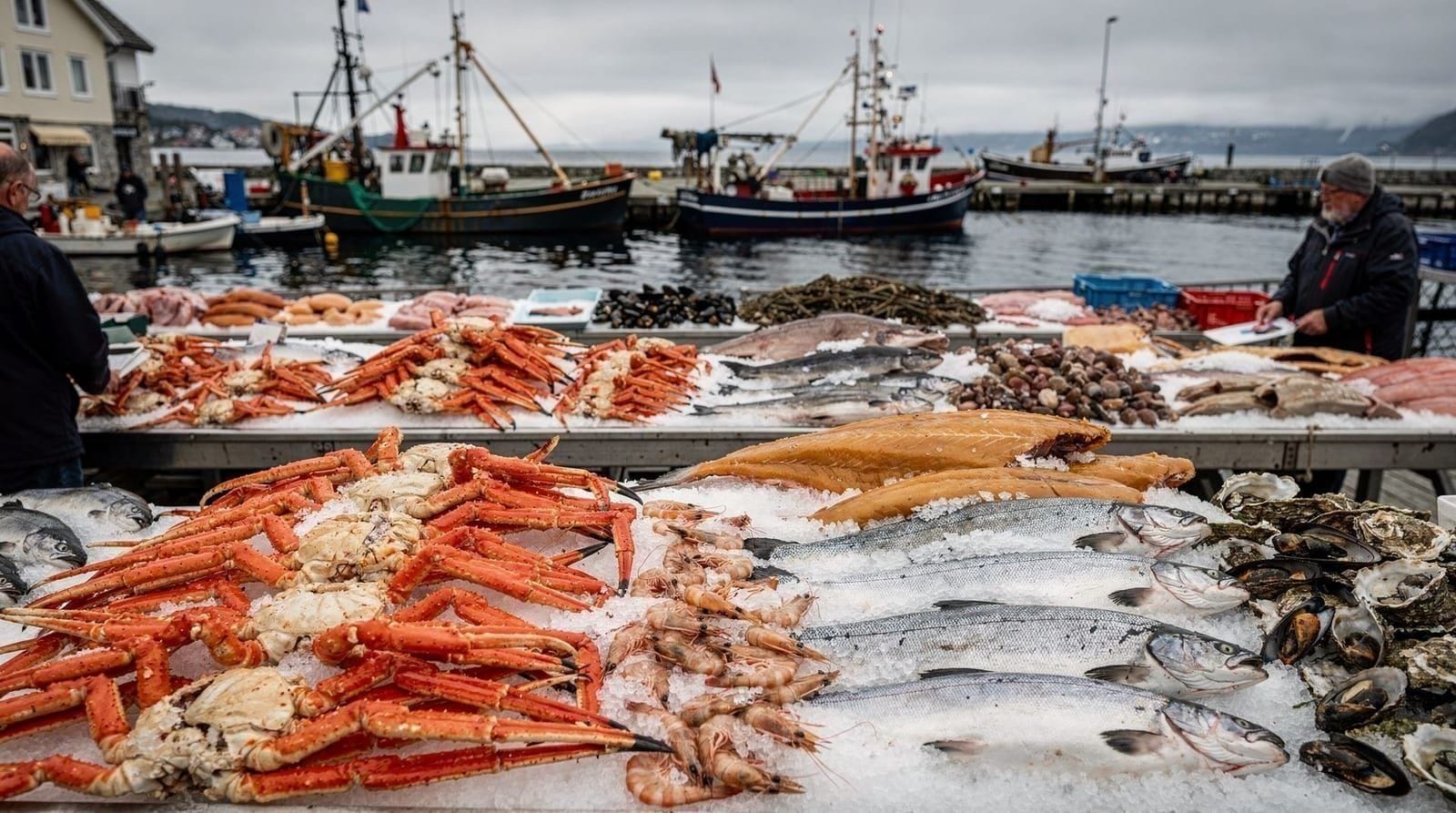
Atlantic fish and shellfish: Salmon, cod (torsk), skrei (winter cod), mackerel, halibut, cold-water shrimp, king crab, brown crab, and langoustine. Bergen’s fishing harbor has operated continuously for 700 years; the quality of the catch is not in question.
Stockfish (klippfisk, tørrfisk): Dried and salted cod, the preserved food that made Bergen wealthy during the Hanseatic period. Still eaten regularly in Norwegian homes; available at the fish market and specialty shops.
Game and mountain produce: Reindeer, elk (elg), and lamb from the mountain farms of Western Norway appear on menus throughout the city. Lamb is particularly good — Western Norwegian lamb is considered some of the finest in Europe.
Dairy and cheese: Brunost (brown cheese, a caramelized whey product) is the most distinctly Norwegian food item available at any supermarket. An acquired taste; try it on waffles or crispbread.
Norway’s coffee culture is strong — Bergen has several specialty coffee roasters and the standard for espresso is high. Beer culture has developed a significant craft brewing scene since the 2000s.
Much of what ends up on a Bergen plate comes from the wider region rather than the city itself. The orchards and farms around the Hardangerfjord feed the local larder, and a Hardangerfjord cruise is a good way to see where that produce grows. For the city as a whole, the Bergen destination page gives the wider picture beyond the dining table.
Mathallen Bergen — where to eat on a real budget
Mathallen Bergen, at Lars Hilles gate 3 near Byparken, is Bergen’s answer to Copenhagen’s Torvehallerne or London’s Borough Market: an indoor food hall with multiple independent vendors at non-tourist prices. Opened in 2015, it draws both locals and visitors.
What is available: fresh fish counters, a charcuterie and cheese stall, a Norwegian craft beer bar, a Vietnamese food stall, a Norwegian smørbrød (open-faced sandwich) bar, a bakery, a coffee roaster, and rotating market stalls. The fish counter here sells the same Norwegian salmon as the outdoor Fish Market for roughly 40–50% less.
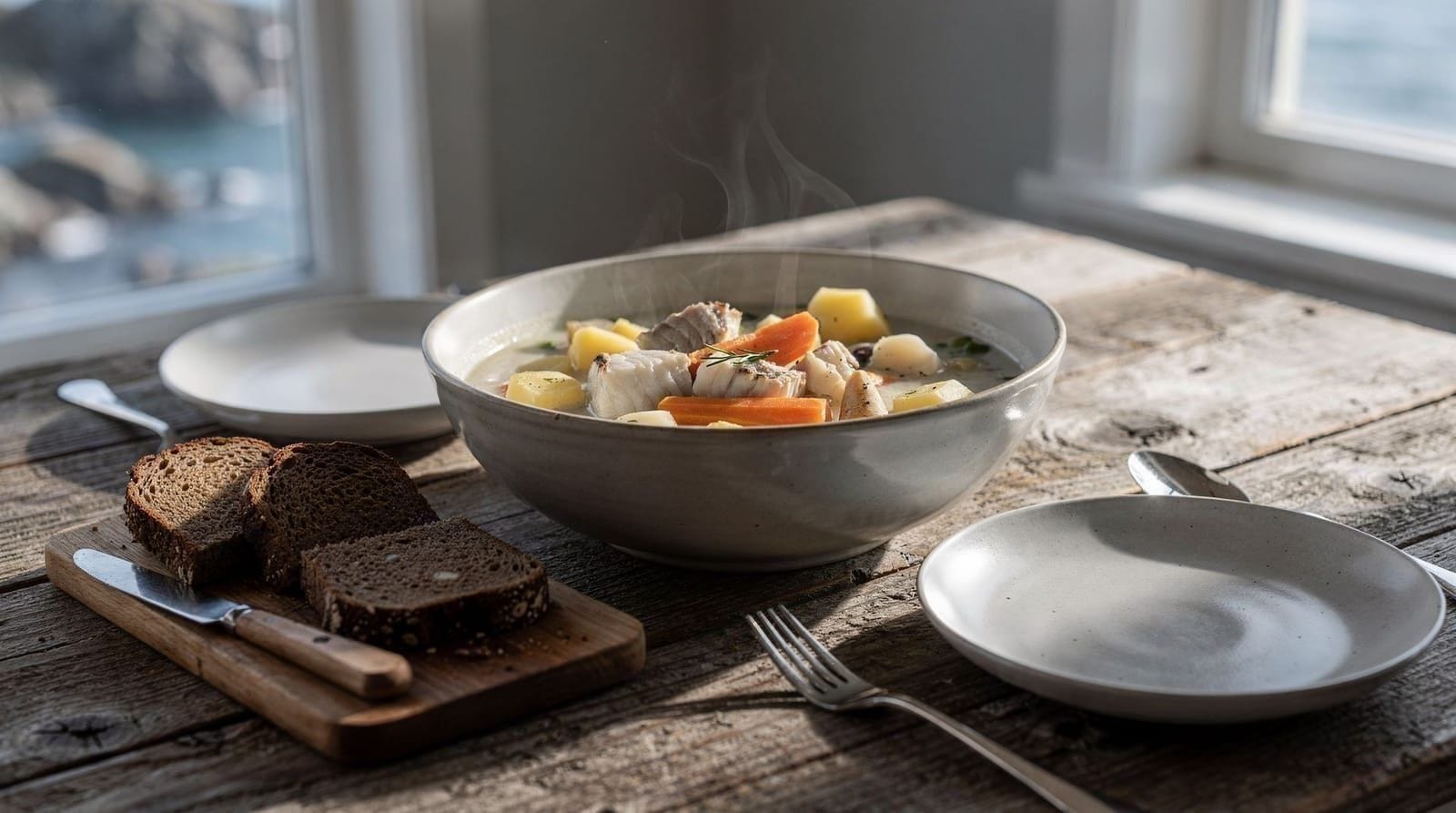
Price examples at Mathallen: Fish soup with bread NOK 120–140; open-faced salmon sandwich NOK 85–110; a plate of local shrimp NOK 90–110; craft beer NOK 90–115. For a direct comparison with the outdoor stalls at the harbor, see our Bergen fish market guide — the short version is that Mathallen wins on price for the same quality.
Open Tuesday–Saturday roughly 10 am–6 pm (some stalls open Monday; check individual vendor hours). Quieter and more genuinely local-feeling than the harbor tourist circuit.
Seafood restaurants — the honest ranking
Enhjørningen (The Unicorn): Located in a historic Bryggen building, Enhjørningen is consistently Bergen’s best-regarded upscale seafood restaurant. The menu changes seasonally and emphasizes whatever the local boats brought in — halibut, skrei (winter), langoustine, brown crab. Main courses NOK 320–480; three-course dinner NOK 700–850 without wine. Reserve 1–2 weeks ahead for weekend dinners; walk-ins are possible at lunch. Not casual, but not stuffy — the dining room is inside the Bryggen timberwork.
To Kokker: Also in a Bryggen building (17th century cellar), one of Bergen’s oldest restaurants. Similar price range to Enhjørningen; strong on traditional Norwegian recipes with local sourcing. Main courses NOK 290–450.
Fisketorvet (indoor hall restaurant): The sit-down section of the indoor fish market hall is the most affordable option in the Bryggen area for proper seafood. Fish soup NOK 160–180; grilled fish of the day NOK 230–270. Casual environment; good for lunch.
Cornelius Sjømatrestaurant: Worth mentioning for the experience — a seafood restaurant on Holmen island accessible only by the restaurant’s own boat from Bryggen. The seafood quality is high; the setting is one of Bergen’s most dramatic. Main courses NOK 450–650. Book well ahead; the boat schedule is fixed.
Bryggeloftet & Stuene: The most tourist-facing restaurant in the Bryggen area, but maintaining decent standards after decades of operation. Norwegian classics: fiskesuppe, baked cod, reindeer, lamb. Mains NOK 250–400. Good choice if you want reliable Norwegian cooking in a historic setting without waiting tables at Enhjørningen.
For carnivores — meat options
Bergen’s restaurant scene is not exclusively seafood-focused:
Bare Restaurant (Zander K hotel): Bergen’s most acclaimed contemporary dining, blending local meat and fish with a New Nordic sensibility. Five- and seven-course tasting menus from NOK 1,100. The best occasion restaurant in Bergen.
Lysverket: Located in KODE 4 (the art museum), Lysverket by chef Christopher Haatuft sources extremely local produce and has held Michelin Bib Gourmand status. Dinner menu NOK 900–1,200 for full tasting. Excellent for pairing with an afternoon at KODE and Bergen’s museums — book a dinner slot after your gallery visit rather than treating them as separate outings.
Pingvinen: A traditional Bergen restaurant near Lille Lungegårdsvannet, known for classics like raspeballer (potato dumplings), fårikål (lamb and cabbage stew), and kjøttkaker (Norwegian meatballs). Mains NOK 180–280. Genuinely beloved by locals; not touristy.
Bergen’s food scene for specific dietary needs
Norway is increasingly aware of dietary restrictions, but Bergen’s food scene is primarily centered on fish, meat, and dairy. Practical guidance for specific needs:
Vegetarian: Readily accommodated at KODE’s Lysverket café, Bare Restaurant, and most contemporary dining. The traditional Norwegian menu at Pingvinen is meat-heavy; indicate requirements in advance. Mathallen Bergen has a Vietnamese food stall (primarily vegetarian options), a Norwegian smørbrød bar (some vegetarian options), and rotating vegetarian vendors. ICA and REMA 1000 supermarkets have good vegetarian ready meals.
Vegan: More challenging in traditional Bergen restaurants; better at contemporary venues and Mathallen. Lysefjordkafeen at Kode 4 can accommodate vegan on request. Bergen’s health food shops (Sunkost chain) carry vegan products including dairy alternatives (oat milk is standard in Bergen’s specialty cafés).
Gluten-free: Norwegian bread culture is rye and wheat-focused; gluten-free options at bakeries are limited but available (Godt Brød and some cafés carry gluten-free alternatives). All Bergen restaurants can accommodate gluten-free requests with advance notice. Norwegian fish (naturally gluten-free) and potato-based traditional dishes are widely available alternatives.
Allergies (shellfish, fish): Bergen’s restaurant scene is heavily seafood-focused; notify restaurants on booking. Norwegian allergy labeling follows EU standards and is reliable. The inland-focused meat dishes (reindeer, lamb, elk) at traditional restaurants are the most reliable shellfish/fish-free options.
Eating well with kids
Bergen is generally an easy city for families at mealtimes. Most restaurants, including the mid-range seafood spots, offer children’s portions or a simplified menu (fish and chips, pasta, meatballs) at NOK 100–150. Mathallen is particularly good with children because of its food-hall format — everyone can choose something different without negotiating a single menu, and there is space to move around between ordering and eating. Supermarket self-catering is also a practical option for families managing Norway’s overall cost level across a longer stay; a well-stocked ICA Maxi covers breakfast and lunch needs easily, leaving restaurant budget for one proper dinner out.
A note on portion sizes and sharing
Norwegian restaurant portions, particularly at seafood restaurants, tend to be generous by continental European standards — a main course is usually a full meal without needing a starter. Sharing a starter between two and ordering individual mains is a reasonable strategy at the pricier restaurants (Enhjørningen, To Kokker) to manage the overall bill without feeling short-changed. At Mathallen and other food-hall settings, ordering two or three smaller dishes to share across a group is normal practice and lets you sample more of what is on offer.
Breakfast and café culture
Bergen’s café culture centers on specialty coffee. The best coffee in the city comes from:
Blom: Specialty coffee shop on Strandgaten; sourcing-focused single origin espresso and filter. Small food menu.
Kaffemisjonen: Bergen’s longest-established specialty roaster. Coffee culture enthusiasts visit specifically.
Godt Brød: Norwegian bakery chain with Bergen presence; good sourdough, pastries, and open-faced sandwiches at reasonable prices (NOK 60–90 for a sandwich). Several locations near the city center.
Hotel breakfast buffets run NOK 150–250 per person when not included with room rate — usually worth the cost in Norway where alternatives are expensive.
Craft beer in Bergen
Bergen’s craft beer scene developed significantly in the 2010s. Notable spots:
Bastant: Bar and bottle shop focusing on Norwegian and Nordic craft beers. Near Bryggen; around 20 taps. Beer NOK 95–130 per glass.
Ægir Brewery (Flåm): Not in Bergen itself, but if you are doing the Norway in a Nutshell circuit, the Viking-themed brewery in Flåm village is a genuine craft beer destination worth stopping for. See the Flåm destination page and the Norway in a Nutshell guide if you are weighing that route.
Mikkeller Bar Bergen: International craft beer bar with 20 rotating taps. More international focus than local; beer NOK 100–140.
Standard pub beer (Hansa, the local Bergen lager) is NOK 90–120 at most bars.
Bergen’s neighborhood food scene
Bergen’s most interesting everyday food exists in neighborhoods that most tourists do not reach:
Nøstet and Sydneshaugen: The residential areas south of the city center (a 10–15 minute walk from Bryggen) have neighborhood cafés and small restaurants at more reasonable prices than the tourist circuit. Café Kippers at Nøstet is a genuine Bergen local café with a water view and reasonable food prices (NOK 100–180 for a light lunch).
Møhlenpris: The neighborhood east of Lille Lungegårdsvannet lake has several small restaurants and takeaways serving the Bergen University population. Good coffee shops and international food at student-friendly prices.
Sandviken (north of Bryggen): The historic neighborhood north of Bergenhus Fortress is residential and largely tourist-free. A few good local cafés and the Sandviken Sjøbad waterfront area, which has a casual café operating in summer.
These neighborhoods are accessible on foot from the city center, and our getting around Bergen guide explains the easy options when your feet give out. They give a different perspective on Bergen than the Bryggen-to-KODE tourist corridor. For the full sightseeing context around Bryggen itself, our Bryggen guide covers the history alongside where to eat within the historic quarter.
Budget eating in Bergen
Norway’s restaurant prices are what they are. Budget strategies that actually work:
Supermarkets: ICA and REMA 1000 are the two most common chains. A prepared dinner from the supermarket deli (ready meals, salads, hot counter): NOK 80–120. Buying breakfast and picnic supplies: NOK 60–90 per person per meal.
Pizza and kebab: Bergen has the standard urban European offering of pizza restaurants and Turkish kebab shops, most within NOK 130–170 for a full meal. Not Norwegian but functional for budget days.
Lunch over dinner: Most restaurants offer the same dishes at lower prices at lunch. A NOK 450 dinner dish at Enhjørningen may appear as a NOK 280 lunch portion. Prioritize restaurant meals at lunch rather than dinner.
Lunch buffets: A few Bergen restaurants still offer lunch buffets (particularly pizza restaurants) at NOK 130–160. Excellent value by Norwegian standards.
Bergen culinary food and culture walkA food-focused walking tour covers Bergen’s food scene in a structured 2.5-hour format, typically visiting Mathallen, the fish market, and 3–4 other food stops. Good orientation for a first day, particularly if you want to understand what is local vs. tourist-oriented.
The harbour restaurants all face the same water and charge accordingly, while the fjord that starts twenty minutes out is empty by evening: a private evening yacht cruise with snacks and wine moves dinner onto the water instead.
Frequently asked questions about Bergen food and drink
What is the most typically Bergen food?
Bergen shrimp (reker) is the most iconic local food. Cold-water shrimp from the North Atlantic, eaten with bread and mayonnaise — the classic harbor lunch. Bergen fish soup (bergensfisksuppe) with its distinctive sweet-sour-cream broth is another local specialty appearing on menus throughout the city.
How expensive is eating out in Bergen?
A sit-down lunch at a mid-range restaurant: NOK 200–350 per person with a soft drink. Dinner at a good Bergen restaurant: NOK 500–800 per person with a glass of wine. Dinner for two at a top restaurant: NOK 1,500–2,500 with wine. Budget travelers eating from Mathallen and supermarkets: NOK 100–150 per meal.
Is there good vegetarian food in Bergen?
Yes, though it requires looking beyond the fish-focused tourist circuit. Mathallen Bergen has vegetarian vendors. The contemporary restaurants (Bare, Lysverket) accommodate vegetarian/vegan menus on request. Pingvinen’s traditional menu is meat-heavy; most Italian and Asian restaurants in the city serve vegetarian dishes.
What is brunost and should I try it?
Brunost is Norwegian brown cheese — a firm, caramelized whey product with a sweet, slightly salty, slightly funky taste. It is not a cured or aged cheese in the European tradition; it is genuinely unlike anything else. It is cheap (available at any supermarket), typically eaten on crispbread or waffles, and deeply embedded in Norwegian daily food culture. Worth trying; divisive but not unpleasant.
What time do Norwegians eat dinner?
Bergen restaurants typically fill between 6 pm and 8 pm. Lunch service runs 11 am–2 pm. Cafés are open through the day. Most kitchens close between 9:30 pm and 10:30 pm.
Is tipping expected in Bergen restaurants?
No. Norwegian restaurant workers earn a living wage and are not tip-dependent. Rounding up or leaving 10% for genuinely excellent service is appreciated but not expected. This applies at restaurants, cafés, and food stalls.
Where is Mathallen Bergen located?
Lars Hilles gate 3, near Byparken (City Park) in central Bergen. A 15-minute walk south from Bryggen or a short Bybanen light rail ride from the city center. Open Tuesday–Saturday; individual vendor hours vary.
Can I find Norwegian food at Bergen’s supermarkets worth eating?
Yes. Supermarket deli counters in ICA Maxi stores stock smoked salmon, gravlaks, cured meats, prepared fish dishes, and brunost at non-tourist prices. For self-catering accommodation, Norwegian supermarkets are genuinely well-stocked.
What’s the difference between eating at Bryggen and eating at Mathallen?
Bryggen’s frontage restaurants trade on location and history and price accordingly — expect to pay a genuine premium for the setting. Mathallen trades on ingredient quality at local prices with a more informal food-hall format. Both can be excellent; Bryggen suits an occasion dinner, Mathallen suits everyday eating.
Can I get good coffee in Bergen?
Yes — Bergen’s specialty coffee scene (Blom, Kaffemisjonen) is genuinely strong by European standards, not just adequate for a Nordic city. Expect NOK 45–65 for a well-made espresso-based drink at a specialty café, more at hotel cafés.
Bergen’s food calendar — when to visit for specific experiences
May (fisherman’s return season): The mackerel begin entering coastal waters; fresh mackerel at the fish market and on restaurant menus. The Hardangerfjord orchards are in blossom — the food connection is specific: Hardanger cider and apple products are available at Bergen’s specialty food shops.
June–July (peak seafood season): The outdoor fish market is at full operation. King crab from the north is available. Bergen’s harbor-side restaurant terraces are open; this is the most photographically appealing period for harbor dining.
August (berry and game season begins): Norwegian wild berries — cloudberries (multer), lingonberries, blueberries — appear at the Mathallen Bergen vendors and on restaurant menus. These are genuine seasonal specialties that disappear with the first frost. Cloudberries with cream (multekrem) is the most distinctly Norwegian dessert experience.
September (lamb season): Western Norwegian lamb (particularly from the Hardangerfjord farms) comes to market in September and October after the summer grazing season. “Fårikål” (lamb and cabbage stew, Norway’s national dish as declared by vote) appears on traditional restaurant menus. September is also when Bergen’s culinary scene is most local-focused and least tourist-oriented.
November–January (winter fare): Ribbe (cured pork belly, the traditional Christmas main dish) and pinnekjøtt (dried and salted lamb ribs, the Western Norwegian Christmas tradition) dominate restaurant specials from late November. Lutefisk (lye-treated dried cod) appears on menus for those curious about Norway’s most polarizing traditional food.
Bergen food calendar at a glance
| Season | What’s in season | Where to find it |
|---|---|---|
| May | Mackerel returns, Hardanger apple blossom | Fish market, specialty food shops |
| June–July | Peak shrimp, king crab, harbor dining | Fisketorget, Mathallen, terrace restaurants |
| August | Cloudberries, wild berries | Mathallen vendors, restaurant desserts |
| September | Western Norwegian lamb, fårikål | Traditional restaurants (Pingvinen) |
| Nov–Jan | Ribbe, pinnekjøtt, lutefisk | Christmas menus city-wide |
If your trip coincides with one of these windows, it is worth planning at least one meal specifically around it — cloudberries in particular disappear from menus within a few weeks of the first frost. For a fuller seasonal picture of what else changes in Bergen through the year, see best time to visit Bergen and Bergen in winter for the colder-month food and activity combination.
The Norwegian alcohol situation
Norway has strict alcohol regulations that affect how and where you buy drinks:
Vinmonopolet (the Wine Monopoly): All wine and spirits above 4.7% ABV can only be purchased at Vinmonopolet government-licensed stores. There are several in Bergen city center. Opening hours are shorter than supermarkets (closed Sundays; early closing on Saturdays). This affects self-catering visitors significantly: buy your wine on Friday before 3 pm if you need it for the weekend.
Beer in supermarkets: Beer and cider up to 4.7% ABV can be purchased at supermarkets, but not after 8 pm on weekdays or 6 pm on Saturdays. Supermarkets sell no alcohol on Sundays.
Restaurant and bar prices: A pint of beer at a Bergen bar costs NOK 90–130. A glass of house wine: NOK 90–130. A cocktail: NOK 150–200. These prices reflect Norway’s high alcohol taxation combined with restaurant margins. Budget accordingly.
Spirits: Available at Vinmonopolet or in restaurants/bars. Aquavit (Norwegian spirit, caraway-flavored, typically 40–42% ABV) is the national spirit and appears in both traditional celebrations and contemporary bartending. Linie Aquavit — the version that is aged in sherry casks transported by ship across the equator twice — is the internationally best-known Norwegian spirit.
The Bergen food tour option
A structured food tour is the most efficient way to understand Bergen’s food geography in a limited time — typically covering Mathallen, the fish market, one or two restaurants or producers, and providing context for the differences between tourist-facing and local-facing food.
Bergen culinary food and culture walkStandard format: 2.5–3 hours, 5–7 tasting stops, small group (8–12 people maximum), English-speaking guide. Price: NOK 900–1,200 per person including food. This is not a cheap option, but for a first visit where you want to understand the city’s food scene quickly, it is often better value than making individual restaurant choices without context.
Bergen’s food scene vs. Oslo
Oslo has more Michelin-starred restaurants (Bergen has none as of 2026) and a larger, more internationally diverse dining scene. Bergen’s food identity is more singular — it is fundamentally a fish and coastal produce city — which means the highest-quality expressions of that identity (Enhjørningen, Lysverket, Cornelius Sjømatrestaurant) are world-class within their specific register.
For a food-focused Norway visit, Oslo offers more breadth. Bergen offers more depth in Nordic seafood specifically. If the fjords and Western Norway landscape are the primary purpose of the trip, Bergen’s food scene is more than adequate for the context — and the specific quality of the cold-water shellfish (shrimp, langoustine, crab) is simply not available at this level in landlocked or less-coastal Norwegian cities.
Fitting good meals into your Bergen plan
Food works best when it is planned around what you are doing that day rather than squeezed in afterwards. A few ways to join the two:
- Short stay: with only a couple of days, the 2-day Bergen itinerary leaves natural gaps for a market lunch and one proper dinner.
- Cruise passengers: if you only have hours ashore, the Bergen cruise stopover itinerary and the cruise port guide help you choose one good meal instead of rushing several.
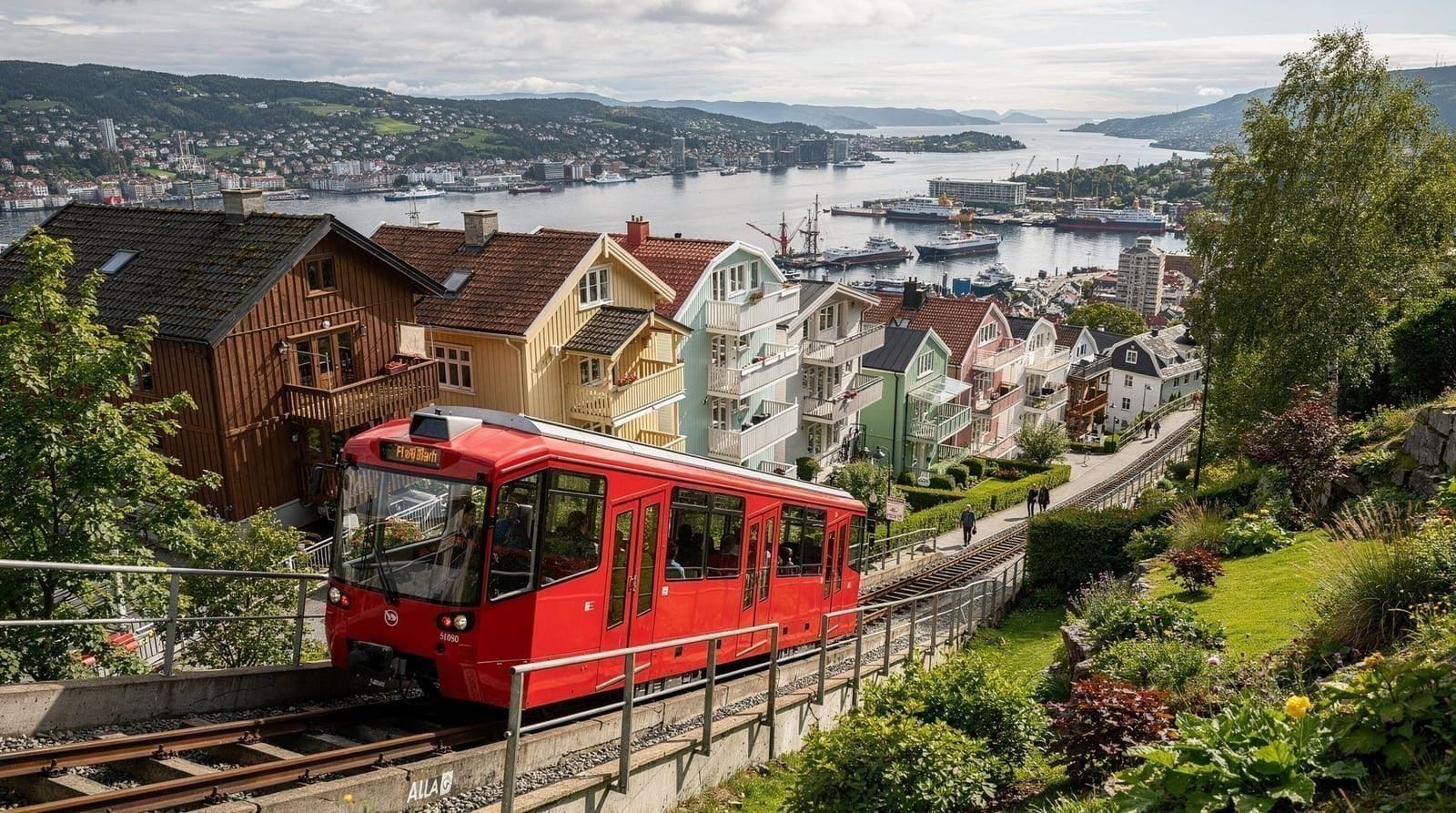
- Sightseeing days: the Bergen city sightseeing guide and the Fløibanen funicular guide both pair well with a lunch stop nearby.
- Wet weather: Bergen rain is a fact of life, and a long, unhurried meal is a sensible answer; see Bergen in the rain and the rainy day Bergen ideas for what to combine it with.
- Comparing cities: if you are deciding between Norwegian cities partly on food, Bergen vs Oslo covers the wider trade-offs.
Top experiences
Bookable activities with verified prices and instant confirmation on GetYourGuide.