What to pack for Bergen: a rain-first packing list
Bergen: City Sightseeing, Fjord Cruise & Mt Fløyen Funicular
What should I pack for Bergen, Norway?
Waterproof jacket and shoes are non-negotiable — Bergen rains roughly 230 days a year. Beyond that: layers for variable temperatures, comfortable walking shoes, a daypack for hikes, and a universal adapter (Type F plugs, 230V).
Packing for Bergen correctly can make the difference between a trip that feels damp and miserable and one that feels adventurous and manageable. The variable is almost always rain preparation. Most travelers who have a bad weather experience in Bergen were under-prepared for it — wearing cotton, carrying a flimsy umbrella, wearing flat-soled shoes on wet cobblestones.
This guide is organized by priority — the waterproofs come first, because in Bergen they are not optional.
| Non-negotiable | Waterproof jacket + waterproof shoes |
| Rain frequency | Around 230 days a year |
| Adapter | Type F (Schuko), 230V/50Hz |
| Best month for less rain | May (statistically driest) |
| Buy locally if needed | XXL, Intersport, Bergen (higher prices) |
The rain layer: your most important purchase
Bergen receives precipitation on approximately 230 days per year. No month is reliably dry, though May is statistically the driest. On most days the rain is persistent drizzle rather than heavy downpour — but it soaks through inadequate outerwear just as effectively.
Waterproof jacket: This is not negotiable. A jacket that is merely “water resistant” or “shower-proof” will not hold up to Bergen’s persistent rain. You need a jacket with taped seams and a proper waterproof membrane (Gore-Tex, eVent, or similar). Hoods matter — umbrellas are next to useless in any wind.
Waterproof trousers or over-trousers: Useful for hiking days and genuinely wet weather. Optional for city days if your jacket is long enough.
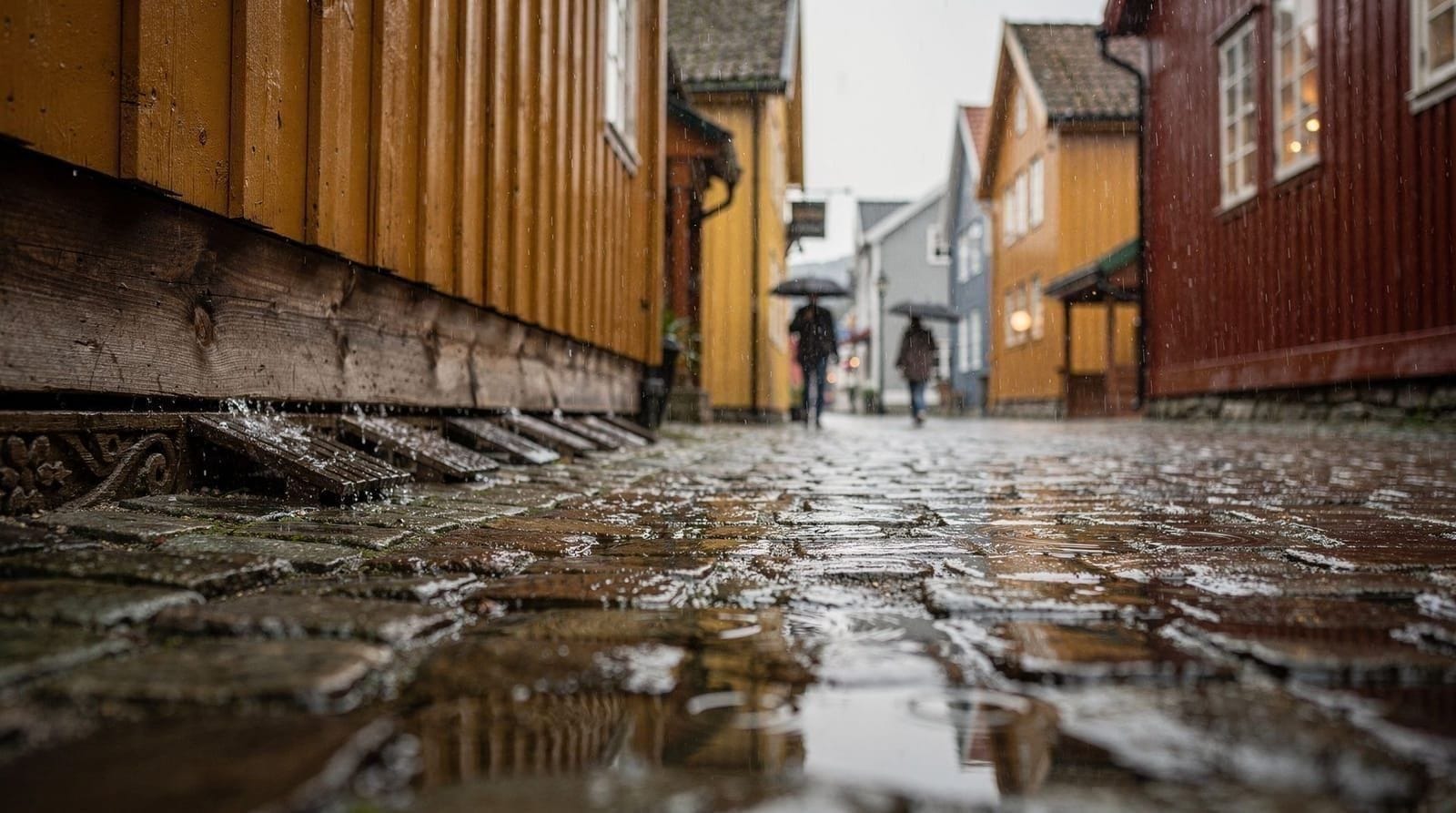
Waterproof footwear: The cobblestones at Bryggen and throughout Bergen’s old town are slippery when wet. Waterproof shoes or boots with grip are important both for comfort and safety. Branded trail shoes (Salomon, Merrell, Scarpa) with waterproof membranes are the most versatile option — they work for city walking, day hikes, and wet conditions. Flat canvas shoes or dress shoes are a problem on wet Bergen cobblestones.
Umbrella: Bergen’s wind makes umbrellas largely useless on exposed days. They work in sheltered spots but can be a liability in a gust. If you bring one, it is a bonus, not a replacement for a waterproof jacket.
Layering system for Bergen’s variable conditions
Bergen temperatures vary significantly by season and elevation:
- Summer (June–August): 14–21°C in the city; 8–14°C on mountain tops
- Shoulder (May, September): 9–15°C city; noticeably colder at altitude
- Winter: 0–5°C city; sub-zero on mountain trails
A three-layer system works well:
Base layer: Merino wool or synthetic moisture-wicking material. Avoid cotton — cotton holds moisture against your skin and makes you cold when wet. A merino t-shirt or long-sleeve shirt works for summer; a thicker merino layer for spring/autumn/winter.
Mid layer (insulating): A fleece, light down jacket, or synthetic insulated jacket. In summer, a light fleece or down jacket suffices for mountain excursions. In shoulder season, a proper down jacket is important for day trips.
Outer layer: The waterproof jacket described above. This is always in your bag regardless of the forecast.
Footwear
Waterproof trail shoes or hiking boots: The best all-around choice for Bergen. Waterproof leather or synthetic hiking shoes handle city cobblestones, light hikes to Fløyen, and comfortable walking.
If doing serious hikes (Trolltunga, Preikestolen, Ulriken): Ankle-supporting hiking boots are strongly recommended. Trolltunga is a 20–28 km hike with 700–1,200 m elevation — boot support matters.
Back-up shoes: A pair of compact packable shoes or sandals for indoor use, hostel common areas, or warm dry days.
Daypack for hikes and day trips
A 20–30 litre daypack is essential for any day trip in Western Norway. You need to carry:
- Water (1.5–2 litres minimum on a hike; Norway’s mountain tap water is excellent)
- Rain layers
- Snacks and a packed lunch (saves NOK 200–400 compared to buying at trail head)
- Sunscreen in summer (deceptive UV at altitude)
- First aid basics
The daypack also serves as your day bag in the city — Bergen’s streets are very walkable but rolling luggage on cobblestones is awkward.
Electronics and adapters
Power adapter: Norway uses Type F plugs (two round pins, European Schuko standard), 230V / 50 Hz. US devices (designed for 110V) need a voltage converter unless the device states “100–240V” on the charger — most modern electronics (laptops, phones, cameras) are already dual-voltage, so a plug adapter suffices.
Portable battery bank: Useful for long day trips where you will be using maps, taking photos and potentially navigating fjord timetables all day.
Camera: Bergen and the fjords are highly photogenic. If you have a dedicated camera, bring it. Rain protection for your camera (a simple rain cover or waterproof bag) is worthwhile.
Documents and money
Passport: Norway is Schengen Area. EU/EEA citizens can travel with a national ID card. US, UK, Canadian and Australian citizens need a valid passport.
ETIAS: Expected to launch in late 2026 — visa-exempt travelers (US, UK, CA, AU) will need a pre-registration. Check the current ETIAS status before travel.
Cards: Visa and Mastercard are accepted virtually everywhere. American Express has lower acceptance. Norway is essentially cashless — cards work at outdoor markets, mountain cafes, ferries and everywhere in between.
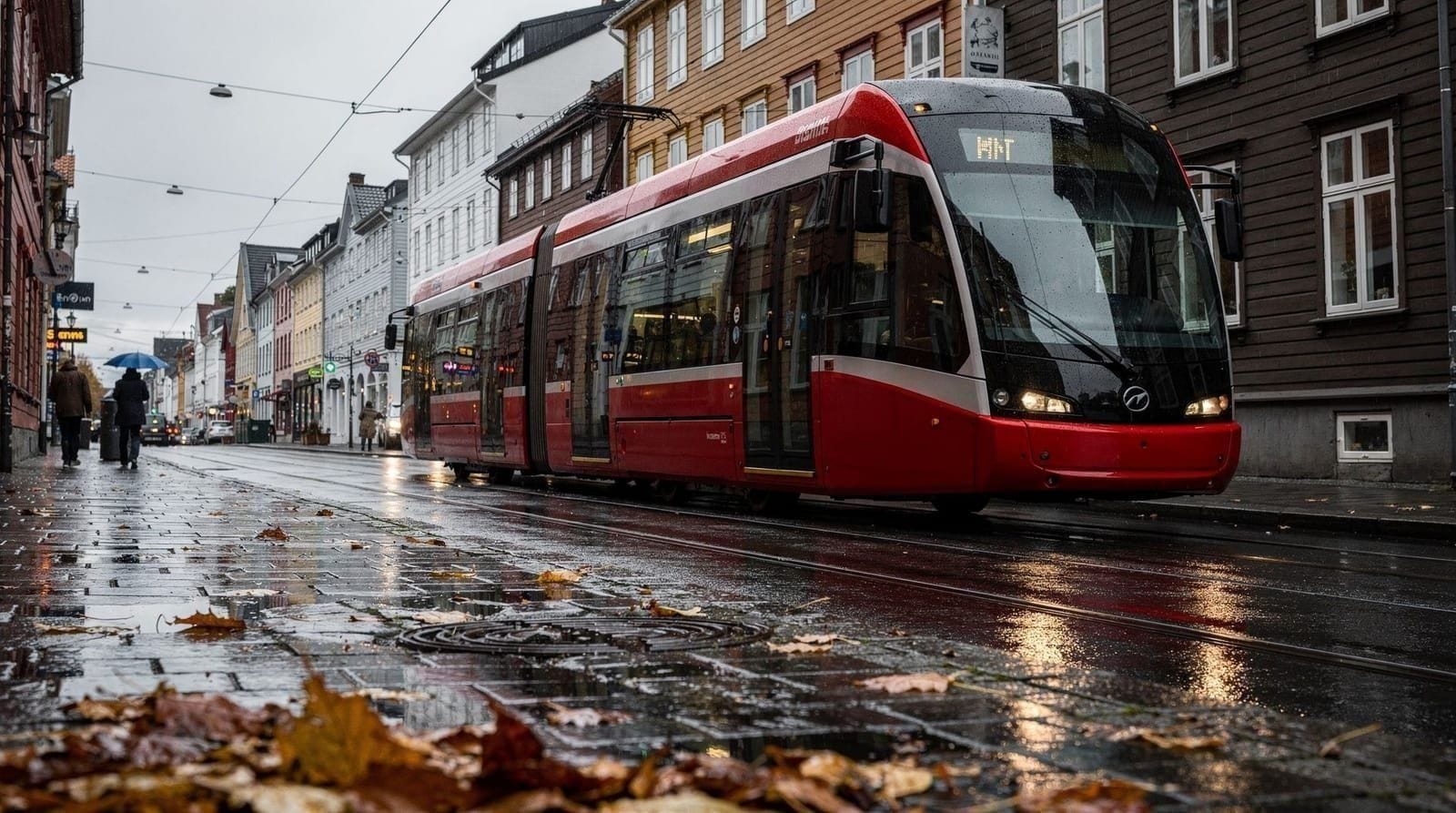
Skyss Billett app: Download before arrival. This app covers Bergen’s Bybanen light rail and local buses — buying through the app is cheaper than buying at machines or on board.
Vy app: For Bergen Line train tickets and timetables. Early booking unlocks promotional fares (from NOK 199 versus NOK 600+ for late booking).
What to pack for specific activities
City sightseeing (Bryggen, Fløibanen, markets)
- Waterproof jacket (essential)
- Comfortable waterproof walking shoes
- Layers for temperature variation
- Camera
- Small bag or backpack
Norway in a Nutshell day trip (see full guide at our Norway in a Nutshell guide)
- Full daypack with water, snacks, packed lunch
- Waterproofs (jacket + trousers if available)
- Warm mid-layer (Myrdal station at 866 m is cold even in summer)
- Sunscreen (for the fjord cruise in sun)
- Seasickness remedy if prone (the Nærøyfjord cruise is usually calm but some are sensitive)
Hiking to Fløyen or Ulriken
- Trail shoes (waterproof)
- Water (1.5L minimum)
- Snacks
- Map downloaded offline (Maps.me or Google Maps offline covers these trails)
- Rain jacket
Trolltunga or Preikestolen hike
These are serious mountain hikes and warrant specific preparation:
- Proper hiking boots (ankle support)
- Trekking poles (strongly recommended for descent)
- Full waterproofs
- 2L+ water (no reliable sources on Trolltunga for extended sections)
- Packed food for 8–12 hours
- Emergency foil blanket
- Headlamp (in case of a late return)
- Warm hat and gloves (Trolltunga sits above 1,000 m)
For a September or October Trolltunga hike, add crampons or microspikes if snow is possible. From October 1, a guide is legally required for Trolltunga.
Fjord cruise (Mostraumen, Nærøyfjord, Hardangerfjord)
- Wind-resistant jacket — the open deck of a fjord cruise boat in motion creates wind chill
- Warm mid-layer
- Something to sit on or a small cushion (boats have seating but a long deck journey gets cold)
- Camera with good zoom for waterfall shots
If you have not yet chosen a boat, the kit above works for all of them. A short outing such as a sightseeing cruise that combines the city and the fjord is easy on a packing list, while a full day on the water asks for the warmer mid-layer. Our fjord cruises from Bergen guide and the Mostraumen fjord cruise guide explain how the options differ.
Seasonal adjustments
May and September: Pack warmer than you think necessary. Temperatures in Bergen can feel mild in the city but drop significantly on mountain trails. A proper down jacket is justified, not optional.
June–July: Lightest packing works for city days, but keep the waterproofs. Mountain excursions still require layers. Pack a light scarf for open-boat fjord trips.
October–April: Winter packing — thermal base layers, waterproof insulated jacket, waterproof winter boots. Gaiters useful for slushy trail conditions in spring and autumn. Hand warmers are cheap at Norwegian outdoor stores (XXL, Intersport) if you underpack.
Avoid: heavy cotton jeans (slow to dry when wet), non-waterproof trainers/sneakers, packing light on the assumption Norway is warm.
Buying outdoor gear in Bergen
If you arrive under-equipped, Bergen has several good outdoor stores:
- XXL (multiple locations, including near Flesland airport): large selection, good prices by Norwegian standards
- Intersport (city center): mainstream outdoor brands
- Scandinavian Outdoor Store (near Bryggen): premium brands (Arc’teryx, Fjällräven, Norrøna — Norway’s own premium outdoor brand)
Norrøna in particular is worth knowing: it is a Norwegian brand with a flagship store in Bergen. Expensive, but if your rain jacket fails on arrival, Norwegian-made waterproofs at a Norwegian outdoor store is the most satisfying possible solution.
Frequently asked questions about packing for Bergen
Do I really need waterproof shoes in Bergen?
Yes. Bergen’s cobblestones are slippery when wet (which is most of the time), and wet feet within the first hour of walking will ruin your day. Waterproof hiking shoes or boots are the most practical option.
Is Bergen cold in summer?
Not cold, but fresh. Average July high is around 19–21°C in the city, lower on mountain tops. Evenings cool to 12–15°C. A light jacket or sweater is always worthwhile even in the height of summer.
Can I buy rain gear in Bergen if I forget it?
Yes — XXL and Intersport in Bergen sell jackets, waterproof trousers and boots. Prices are high by European standards but stock is good. Do not count on finding budget options locally; major outdoor brands dominate the market.
What should I pack for a fjord cruise in summer?
A wind-resistant jacket, warm mid-layer, and comfortable shoes. Even on a sunny July day, the wind chill on an open fjord cruise deck can make it feel significantly colder than the air temperature. People who pack only a t-shirt for a summer fjord cruise regret it.
Should I bring a reusable water bottle to Bergen?
Yes. Norway’s tap water is excellent — some of the best in Europe. Mountain streams and trail-side taps are safe to drink from. A 1-litre reusable bottle saves money on day hikes and reduces plastic waste.
Is an umbrella useful in Bergen?
Marginally. Bergen’s wind makes umbrellas difficult on exposed days. They work in sheltered streets and town areas. A waterproof jacket with a good hood is more reliable. Bring a compact umbrella as a secondary option, not a primary rain strategy.
What voltage adapter do I need for Bergen?
Norway uses Type F (European Schuko, two round pins), 230V / 50 Hz. US visitors need both a plug adapter and a voltage converter (unless their devices are dual-voltage, which most modern electronics are — check the power label).
Packing for specific Bergen itinerary types
Two days Bergen city only
Minimal packing. City shoes that handle wet cobblestones, waterproof jacket, layers for variable temperatures, small day bag. No hiking gear needed. The main risk is under-packing for rain.
- Waterproof jacket (essential)
- Waterproof shoes with grip
- 2–3 layers including a mid-layer
- Small backpack (10–15 litres is enough for a city day)
- Adapter and charger
Bergen city plus Norway in a Nutshell
Add proper layers for altitude. Myrdal station sits at 866 m — it can be 8–12°C colder than Bergen on a summer day. The Nærøyfjord cruise deck adds wind chill.
- Everything from the city list above
- Warm mid-layer (down jacket or fleece)
- Windproof jacket or use your waterproof as the outer layer
- Packed lunch (saves NOK 200–400 versus buying at Flåm)
- 20-litre daypack with water (1.5L minimum for the day)
Bergen with hiking days (Fløyen, Ulriken, Preikestolen)
For hikes like Mount Fløyen trails, Ulriken ridge, or the 8-km Preikestolen hike, gear up:
- Proper hiking boots (ankle support for Preikestolen, trail shoes for Fløyen)
- Trekking poles (useful for wet descents on Fløyen and essential for Preikestolen)
- 2L water minimum
- High-calorie snacks (nuts, energy bars)
- First aid basics (blister plasters are often needed)
- Sunscreen (UV at altitude in June–July is significant)
Bergen in autumn (September–October)
September is a strong travel month but temperature variation increases. Pack an extra layer:
- Warm hat and light gloves (mornings on Fløyen can be near 5°C)
- Thermal base layer for longer hikes
- Waterproof trousers (rain is more frequent in September than June)
- Waterproof hiking boots rather than trail shoes
What the locals actually wear in Bergen
Observation from walking Bergen’s streets in all seasons: the dominant outerwear brand visible on Bergen residents is Helly Hansen — a Bergen-founded company (1877) with deep roots in the city. The second most common is Norrøna, a Norwegian premium brand. Both are waterproof-first designs for exactly this climate.
The Bergen local version of “dressed for a city day” includes:
- A proper waterproof jacket with hood up when raining (not a hood down, waterproof-claimed jacket with the hood unused)
- Waterproof shoes or boots as the default (not just on rainy day hikes)
- Layers visible through the front zip — a fleece or down vest underneath the waterproof outer
Bergen does not have a fashion culture around suffering through bad weather. Practicality is standard, not a tourist habit.
Luggage practicalities
Carry-on only: Bergen is accessible for a 4–7 day trip with carry-on luggage only if you pack efficiently. The key is compression bags or packing cubes to fit bulky waterproofs. A 40-litre carry-on can hold a waterproof jacket, mid-layer, 3–4 day’s clothes, waterproof shoes (packed in a shoe bag at the bottom), toiletries, and electronics.
Luggage storage: Bergen station has luggage storage (Jernbanetorget). BGO airport has storage in arrivals. Most hotels have a luggage room for pre-check-in or post-checkout storage. No need to carry bags all day on arrival or departure day.
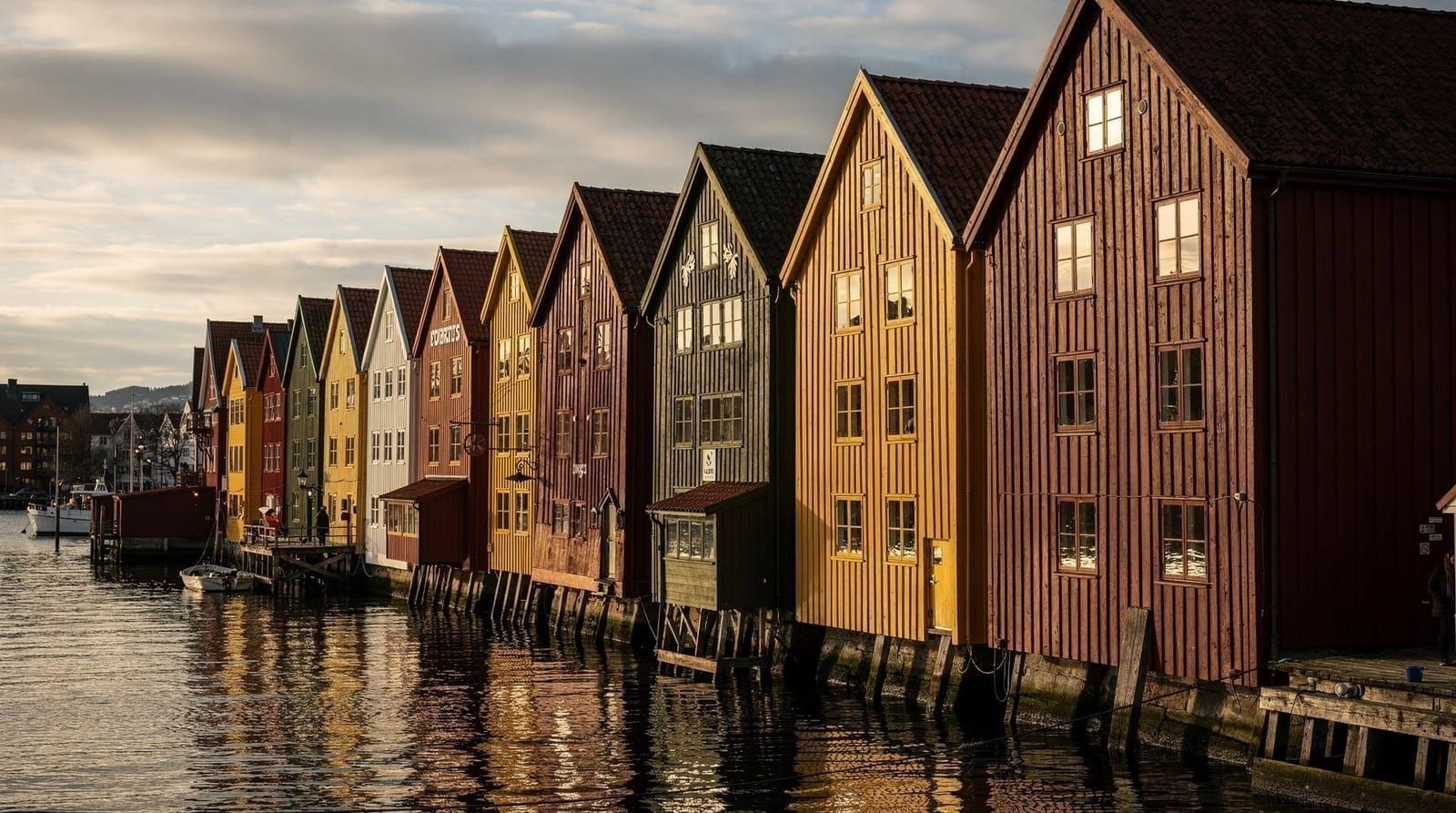
Rolling luggage on Bergen cobblestones: Not recommended for Bryggen. The cobblestones are rough and uneven — dragging rolling luggage over them is awkward and hard on the wheels. If arriving direct to a Bryggen-area hotel, a backpack or carry-on with grab handles works better.
Packing for a fjord day from Bergen
The day trips are where packing mistakes show up. Anyone heading to the Sognefjord side can look at a Sognefjord cruise toward the Boyabreen glacier arm, and visitors who want the railway and the boat in one go can read about a day combining the Flåm Railway with a Viking village and a fjord cruise. Either way, the packing logic is the same: waterproofs on top, a warm layer underneath, food and water in the daypack.
For route planning, see Norway in a Nutshell in one day, the best day trips from Bergen, the Flåm Railway guide and the Sognefjord destination page. If you are arriving by ship, the Bergen cruise port guide and the cruise stopover itinerary show what a short port day allows. Hikers can pair this list with the hiking around Bergen guide, the Trolltunga hike guide and the Preikestolen hike guide.
Norway-specific items worth packing
Reusable shopping bag: Norwegian supermarkets charge for bags (typically NOK 3–5). Having a tote or packable bag saves this each time you shop.
Headlamp or flashlight: Not needed in summer (nearly 19 hours of daylight in June). Useful for September–October evenings if hiking late, or for winter visitors where trails can be dark.
Hand warmers: Available cheaply at XXL in Bergen. Worth having for October visits and for any fjord cruise in shoulder season when deck wind is cold.
Sunscreen: More important than most Bergen visitors expect. In June–July, the long daylight hours mean extended UV exposure even on overcast days. At altitude (Fløyen summit, Preikestolen), UV is higher than at sea level.
For a full sense of what to plan for weather-wise, see best time to visit Bergen and Bergen in the rain.
Packing for extended Norway travel beyond Bergen
If Bergen is the start of a longer Western Norway trip — traveling to Flåm, Voss, Hardangerfjord or Geirangerfjord — your packing priorities shift slightly:
For Flåm and Nærøyfjord: Standard Bergen rain kit works. Add a light packable windbreaker if your main waterproof is very bulky for the fjord cruise deck. The Nærøyfjord cruise deck wind is real even in calm weather.
For Voss adventure sports: Add a swimsuit (some kayak/raft operators provide wetsuits but swimwear is worn underneath). Bring athletic clothes that can get wet. Leave valuables in your Bergen accommodation if spending a Voss adventure day.
For Trolltunga hike (from Odda/Tyssedal): This deserves its own checklist and is listed above under “serious hikes.” The additional item here is a change of clothes and towel in the car or at your accommodation — Trolltunga hikers are wet and muddy on return, and sitting in wet hiking clothes on the 3.5-hour drive back to Bergen is uncomfortable.
For Geirangerfjord via Ålesund: The flight Bergen → Ålesund (30 min, Widerøe) means carry-on only packing becomes essential. Ålesund and Geiranger have significantly more sunshine than Bergen statistically, but weather is Atlantic and variable. Keep your rain jacket in your carry-on, not in checked luggage.
What NOT to bring
Heavy tripod: Bergen’s cobblestones are a tripod-leg nightmare. A compact travel tripod (Joby GorillaPod or similar) is more practical. For fjord cruise photography, a tripod is useful on deck but bulky in luggage.
Formal dress: Bergen has no dress code culture at restaurants or events where casual smart is unusual. A pair of clean chinos and a mid-layer is overdressed for most Bergen occasions. Formal wear is dead weight.
European-format plug for UK visitors: UK plugs (Type G, 3-pin rectangular) do not fit Norwegian sockets without an adapter. This is not a problem specific to Bergen but UK visitors often forget that Norway’s Type F sockets require a specific adapter.
Multiple pairs of heavy shoes: One pair of waterproof trail shoes handles 95% of Bergen situations. A second pair of lighter shoes for evenings covers the remaining 5%. Three pairs of footwear for a Bergen trip is unnecessary weight.
US-format medication quantities: Norwegian customs follows EU-adjacent rules on medication quantities. For prescription medications, carry the original pharmacy labeling. For over-the-counter medications (pain relief, allergy, antihistamine), quantities for personal use are unrestricted. Bring enough medication for your trip — Norwegian pharmacies (Apotek) stock most common medications but under Norwegian brand names, which can be confusing.
A Bergen packing list (final summary)
Absolute essentials:
- Waterproof jacket (taped seams, hood)
- Waterproof shoes or boots
- Power adapter (Type F, two round pins)
- Skyss Billett app installed and card linked before arrival
Strong recommendations:
- Warm mid-layer (fleece or down)
- 20-litre daypack for hikes and day trips
- 1-litre reusable water bottle
- Trekking poles if planning mountain hikes
- Packed lunch supplies for any full-day fjord excursion
Useful additions:
- Compact umbrella (backup, not primary rain strategy)
- Reusable shopping bag
- Sunscreen (UV at altitude and in long summer days is higher than expected)
- Camera rain cover
Skip:
- Formal clothing
- Multiple pairs of shoes
- An umbrella as your only rain plan
Bring it or buy it in Bergen?
For visitors deciding what to pack versus what to buy on arrival, here is a rough comparison for the items travelers most often get wrong:
| Item | Bring from home | Buy in Bergen |
|---|---|---|
| Waterproof jacket | Cheaper, more choice, better fit | Convenient if yours fails; XXL/Intersport stock is good but pricier |
| Waterproof shoes | Usually cheaper and better broken-in | Norrøna/Fjällräven quality but premium prices |
| Trekking poles | Worth packing if you already own a pair | Rentable at outdoor shops in Bergen and Odda |
| Merino base layers | Bring — Norwegian prices are high for this category | Available but expensive |
| Adapter/converter | Bring — cheap and easy to forget | Available at the airport and electronics shops, marked up |
The general pattern: anything you already own is worth packing, since Norwegian outdoor gear prices run noticeably higher than most visitors’ home markets. Buying locally is a sensible backup, not a primary strategy.