Bergen first-timer guide: what you actually need to know
Bergen in a Nutshell: See It All in One Day
Duration: 8 hours
What do first-time visitors to Bergen need to know?
Bergen is a compact, walkable city best explored over 2–3 days. Budget NOK 2,500–3,500/day for mid-range travel. Rain is a given (~230 wet days/year) — pack waterproofs. The Bybanen light rail connects the airport to the city center for NOK 51.
Bergen is not a large city — the historic center fits within a comfortable 20-minute walk — but it rewards visitors who understand what they are walking into. This guide covers the practical essentials without the promotional gloss: what Bergen is actually like, what things cost in NOK, and how to spend your time sensibly.
| Where | Historic center around Bryggen — a 20-minute walk end to end |
| Cost | Around NOK 2,500–3,500/day mid-range |
| Time needed | 2–3 days for the city, 5 for city + fjords |
| Getting there | Bybanen light rail from Flesland airport, NOK 51 |
| Best time | May–September, with June–July driest overall |
The honest reality about Bergen
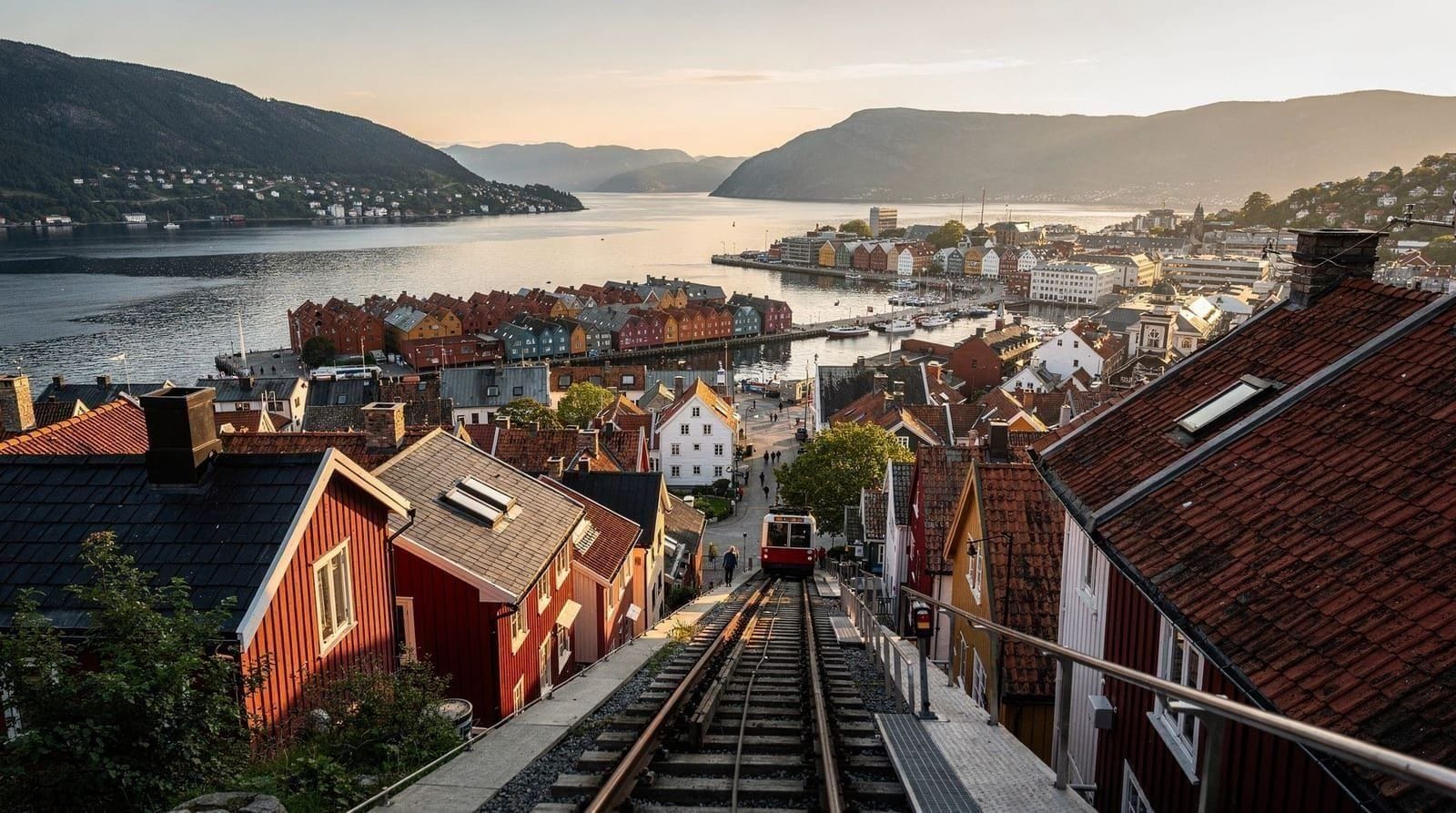
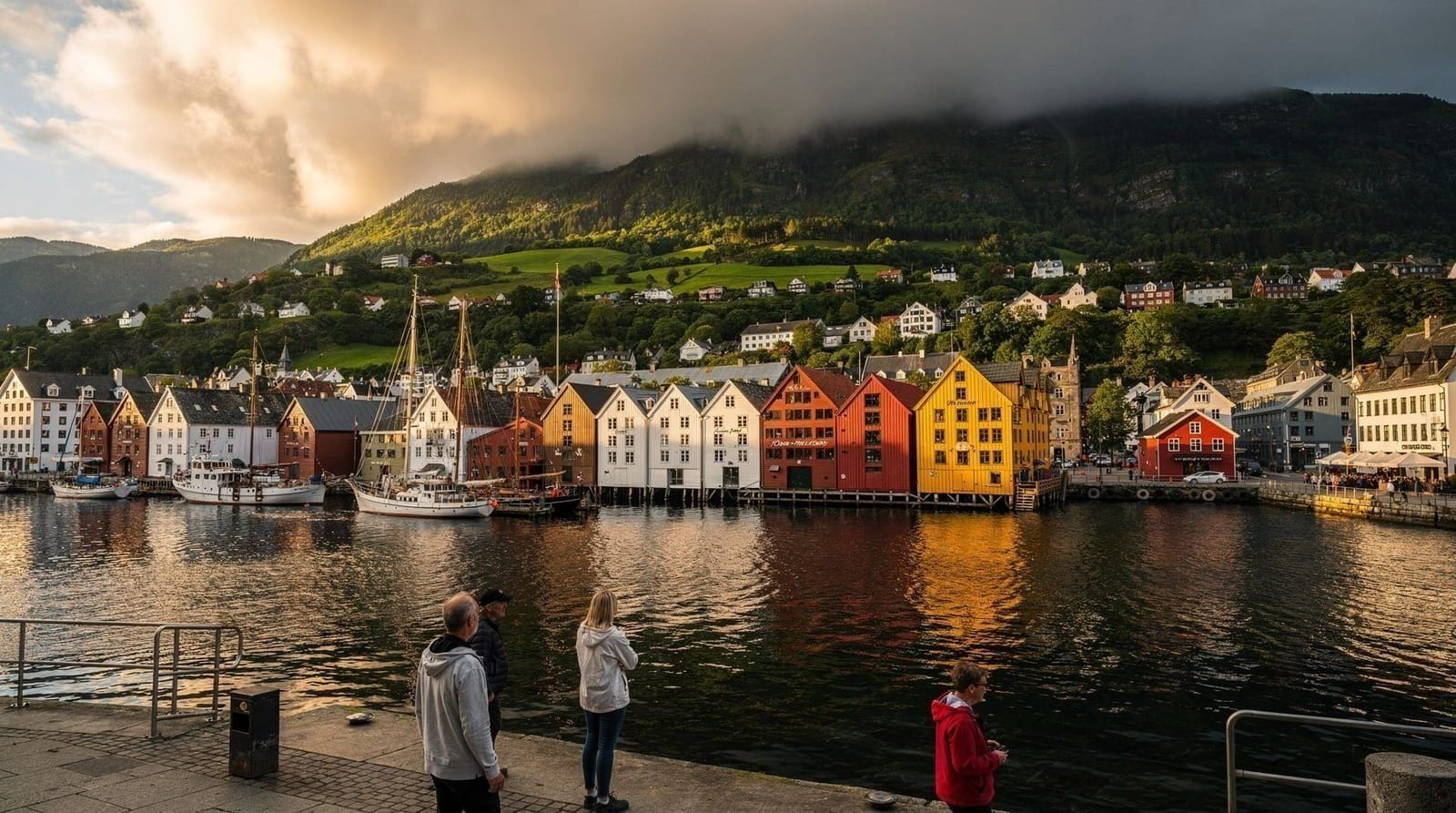
Bergen is a UNESCO-listed port city wedged between seven mountains and a network of fjords. The Hanseatic wharf at Bryggen is genuinely beautiful, the fish market is legitimately interesting, and the funicular ride to Mount Fløyen at 320 m gives the kind of panoramic view that justifies the trip entirely.
It also rains here more than almost anywhere in northern Europe. Bergen receives rain on roughly 230 days per year. In practical terms: you will likely encounter at least some rain during your visit. The city does not shut down when it rains — the funicular still runs, the museums stay open, the fish market stalls simply move indoors — but if you arrive in sandals and a windbreaker expecting Mediterranean skies, adjust expectations immediately.
Norway is expensive. A sit-down restaurant meal runs NOK 250–450 per main course. A beer in a bar costs NOK 90–120. Accommodation at a mid-range level starts around NOK 1,500–2,200 per night for a double room. None of this is unusual for Scandinavia; it simply needs to be in your budget from the start. Our Bergen travel budget guide breaks costs down by traveler tier if you want a fuller daily figure before booking.
What surprises most first-timers
A handful of things trip up visitors who arrive with assumptions from other European city breaks. First: Bergen’s weather changes fast and locally — it is entirely normal to have sun at Bryggen and rain 20 minutes later at the top of Fløyen, so dressing in layers matters more than checking a single forecast. Second: almost nothing closes for rain, including outdoor activities like the fjord cruises — operators run in light-to-moderate rain as standard, and cancellations are rare outside genuine storms.
Third: cash is essentially obsolete — some smaller vendors at the Fish Market do not accept it at all, so do not bother exchanging currency before you arrive. Fourth: Bergen’s “seven mountains” are not a metaphor — hiking trailheads genuinely start within city blocks, which surprises visitors expecting a gradual transition from urban to wild.
What to prioritize on a first visit
Bryggen — the UNESCO wharf
Bergen’s most recognizable landmark is free to walk. The row of timber-framed Hanseatic merchant houses along the wharf dates from the 14th century (the current buildings are mostly 18th-century reconstructions after fires). The real Bryggen experience is found in the narrow alleyways and courtyards behind the colourful frontages, where craft workshops, galleries and small cafes occupy spaces that feel largely unchanged in layout since medieval times.
Arrive before 9 am if cruise ships are in port. By 10 am on a July morning, the area in front of Bryggen can have several thousand people in it. Check the Bergen Port arrivals schedule before you go.
Fløibanen funicular and Mount Fløyen
The Fløibanen funicular departs from the city center (a 5-minute walk from Bryggen) and reaches Mount Fløyen at 320 m in about 6 minutes. The view from the top covers the city, the surrounding fjord arms and the mountain ridges beyond. Return ticket: current price at floibanen.no. Booking ahead via the Fløibanen website or app removes the need to queue, which in peak summer can run 30–60 minutes.
The mountaintop has walking trails (easy to moderate), a children’s troll playground, a café and a restaurant. Trails connect to neighboring peaks; the ridge walk to Ulriken cable car takes 3–4 hours and is straightforward in good conditions.
Bergen Fish Market (Fisketorget)
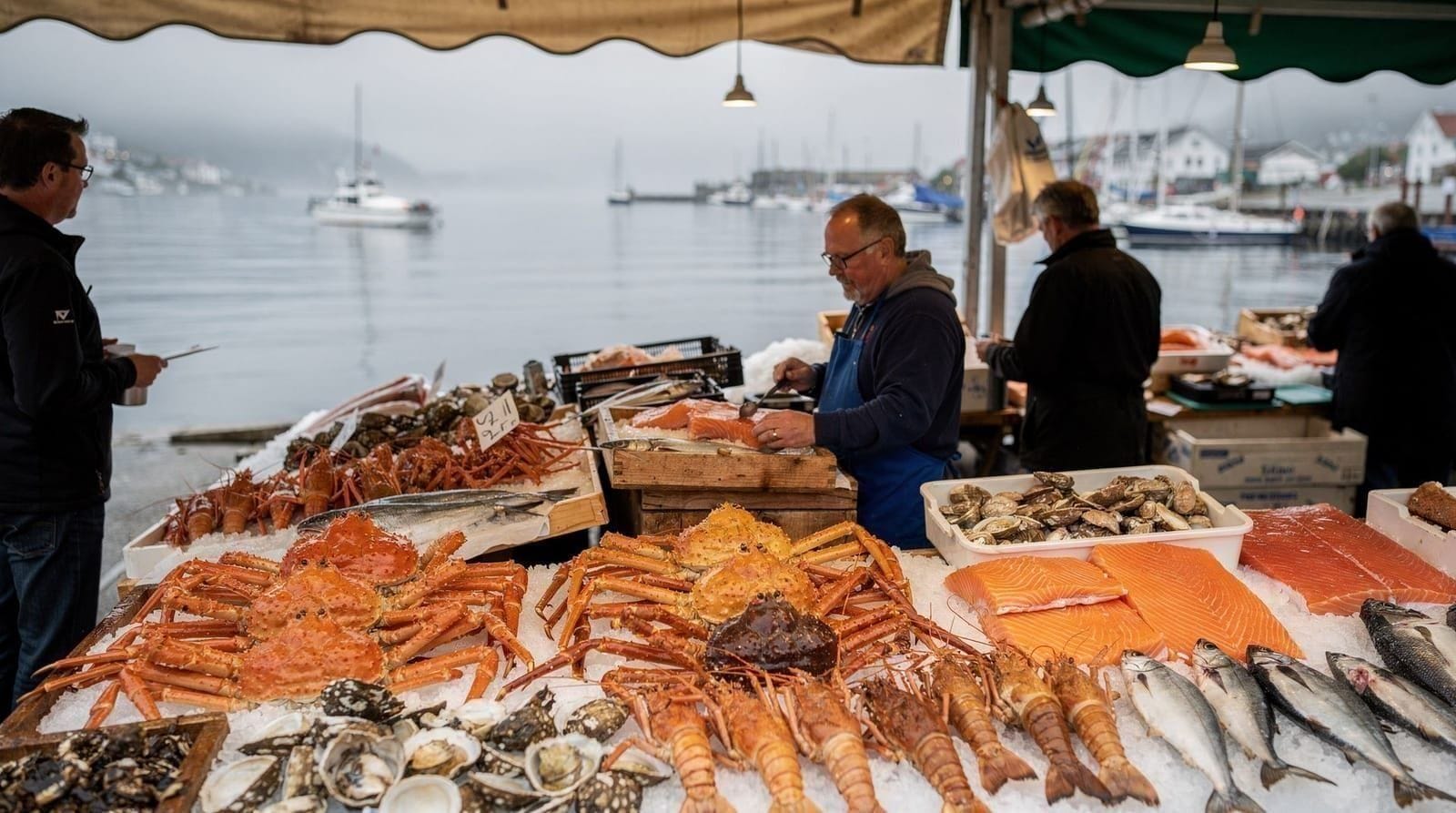
The outdoor fish market runs in summer (roughly May–September) along the waterfront beside Bryggen. Smoked salmon, fresh shrimp, fish cakes, and various seafood snacks are sold at stalls. Prices are elevated — a small smoked salmon plate runs NOK 150–250 — but the quality is usually good. The indoor Fisketorget hall operates year-round.
Haggling is not the norm. Expect market prices, not supermarket prices.
KODE art museums
Bergen’s KODE complex spans four buildings around the Lille Lungegårdsvann lake and holds collections of Norwegian and international art, including significant Edvard Munch works and a large Edvard Grieg collection. The Bergen Card covers entry to KODE buildings and saves meaningfully on the combined entry cost (individual buildings: NOK 120–180).
Getting oriented: the city layout
Bergen’s historic center is compact and walkable. The main areas:
- Bryggen/waterfront: the UNESCO wharf, fish market, ferry terminals
- Vågsbunnen: the old city center, pedestrian shopping street (Torgallmenningen)
- Nordnes: the western peninsula — quieter, local residential character, Nordnes Sjøbad (outdoor sea pool)
- Nygårdsparken and university area: 15 minutes east of Bryggen; Grieghallen concert hall
- Fløyen/Ulriken: the two most accessible peaks, reachable by funicular or cable car
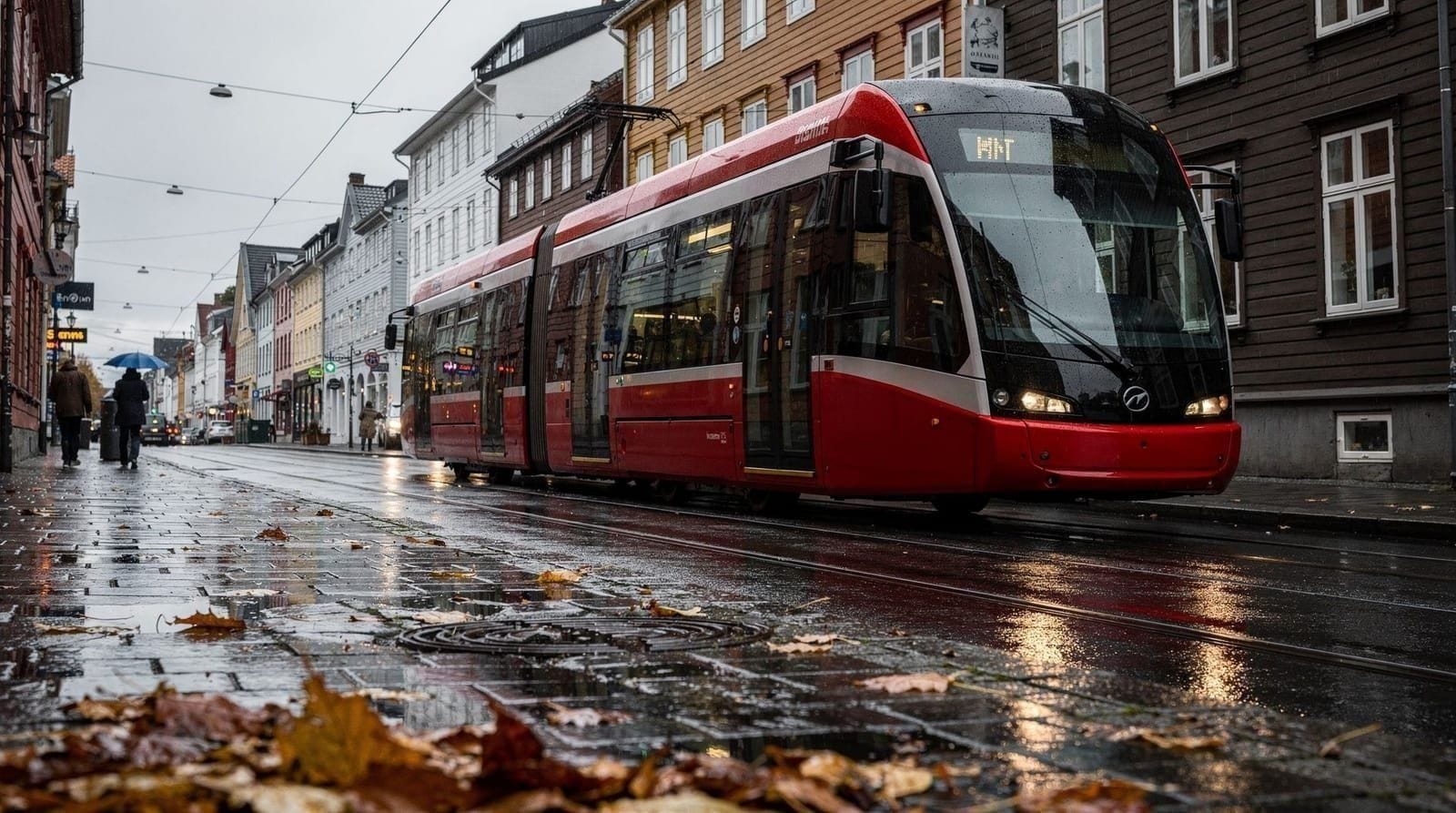
For getting around Bergen, the city is primarily a walking destination. The Bybanen light rail is useful for the airport and the southern neighborhoods. Taxis are available but expensive — NOK 400–600 for airport to center.
Day trips: the broader picture
Bergen is a base, not just a destination. The fjord system begins immediately outside the city. Most first-time visitors combine 2 nights in the city with at least one day-trip itinerary:
- Norway in a Nutshell: the Bergen → Myrdal → Flåm Railway → Nærøyfjord cruise → Voss circuit (full day, ~14 hours). See Norway in a Nutshell guide.
- Mostraumen fjord cruise: 3.5–4 hours from Bergen harbor, no logistics required, good intro to Western Norway fjords
- Hardangerfjord: express boat from Bergen’s Strandkaiterminalen to Rosendal (~2 hours); waterfalls, orchards and a baronial mansion
For planning how to split time between the city and day trips, see how many days in Bergen.
Booking in advance: what actually sells out
In June–August, book the following well ahead:
- Flåm Railway: sells out weeks in advance in peak season. Book direct at flamsbana.no or via GYG.
- Norway in a Nutshell packages: confirm availability 4–6 weeks out in July.
- Fløibanen: online pre-booking skips the queue; not strictly required but saves time.
- Hotels: mid-range Bergen accommodation is tight in July; book 8–12 weeks out.
A first visit spends most of its energy working out what is where, and that orientation is exactly what a guide compresses into ninety minutes: a private Bergen walking tour is the cheapest way to stop wasting the rest of the stay.
Practical basics for first-timers
Currency: Norwegian Krone (NOK). Norway is not in the Eurozone. Check current rates — 1 EUR ≈ 11.5 NOK, 1 USD ≈ 10.5 NOK approximately. Cards (Visa, Mastercard) are accepted virtually everywhere, including outdoor stalls. You do not need cash.
Language: Norwegian, but English is universally spoken, including in small villages and at ferry docks. There is no language barrier.
Tipping: not expected or required. Norwegian hospitality workers earn full wages. Rounding up for exceptional service is fine; no guilt if you do not.
Electricity: 230V / Type F (European two-pin) plugs. US and UK visitors need an adapter.
Visa: EU/EEA citizens — no visa. US, UK, Canada, Australia — visa-free up to 90 days. ETIAS (a new pre-travel registration system) is expected in late 2026 — check current status before travel.
Pharmacies: called Apotek in Norwegian. Several in central Bergen, including at the airport.
Bergen Card: worth it?
The Bergen Card (NOK 400/24h, NOK 500/48h, NOK 600/72h) gives free or discounted entry to most museums, 50% off Fløibanen, and use of some local bus lines. It does not cover Bybanen (light rail) or most of the major fjord day trips.
Whether it pays off depends on your itinerary. If you plan to visit 2–3 KODE buildings, use Fløibanen twice, and visit Bergenhus Fortress Museum in 24 hours, the card saves money. If you are mainly doing one day in the city and one day-trip, calculate your specific costs first.
Bergen: 24, 48, 72 or 96-Hour Bergen CardWhat to skip on a first visit
The overpriced fish market restaurants: the outdoor stalls sell solid snacks, but the sit-down restaurants attached to the market building charge tourist prices (NOK 400–700 for a fish dish). Walk three minutes inland to find comparable quality for less.
Guided hop-on-hop-off bus for the city itself: Bergen’s center is easily walkable; spending NOK 350–450 on a hop-on-hop-off bus for a city you can cover on foot in 90 minutes is not a strong use of budget. The hop-on-hop-off is more useful if it extends to fjord viewpoints, but verify the route before buying.
Souvenir shops on Bryggen frontage: these are uniformly tourist-grade merchandise at significant markup. The workshops in the back alleys behind Bryggen are more authentic and often sell work by local craftspeople.
Where to start your first morning
Walk to Bryggen before breakfast. If you are staying centrally, set an alarm for 7:30 am. The wharf before 9 am — before the tour groups arrive and certainly before any cruise ships begin disembarking — is genuinely peaceful. You can walk the alleyways without crowds, and the morning light on the wooden facades is the best photographic opportunity Bergen offers.
Have breakfast at one of the cafes near Torget (the main square) afterward. Colonialen Mathall (Nedre Korskirkeallmenning 4) is a solid food hall with coffee and fresh baked goods at reasonable (for Norway) prices. A coffee and pastry: NOK 90–130.
Then walk to Fløibanen and ride up to Fløyen. If you have time before the queue builds, you can do a 45-minute loop walk on the mountain before returning to the city.
That’s a first morning in Bergen done correctly — three of the four most significant experiences, before the city gets busy.
Frequently asked questions about Bergen for first-timers
How many days do I need in Bergen?
Two full days covers the city’s main attractions comfortably. Three days allows for a full fjord day trip plus the city. See the dedicated how many days in Bergen guide for a breakdown by itinerary type.
Is Bergen worth visiting?
Yes — the combination of a UNESCO waterfront, panoramic mountain access, and proximity to the Western Norway fjords makes it one of the most rewarding city-trip destinations in northern Europe. See the is Bergen worth visiting guide for an honest assessment.
When is the best time to visit Bergen?
May (driest month) and June–July (warmest, most daylight) are the peak periods. September is quieter and cheaper with autumn foliage. See best time to visit Bergen for a month-by-month breakdown.
How do I get from Bergen airport to the city?
The Bybanen light rail (Line 1) departs from the terminal basement and reaches the city center in about 45 minutes for NOK 51. It is by far the most cost-effective option. See Bergen airport to city for full details.
Is Bergen safe?
Bergen is one of the safest cities in Europe by any statistical measure. Standard city precautions apply (watch for pickpockets in the tourist waterfront area in peak season), but crime rates are very low.
Do I need to book Fløibanen in advance?
Not required, but in July and August the queue can be 30–60 minutes without a pre-booked ticket. Book via the Fløibanen website or app to skip the queue. In shoulder season (May, September) walk-up is generally fine.
Can I see the Northern Lights from Bergen?
Technically possible but Bergen is at 60.4°N — far south of the reliable aurora zone. On nights with high geomagnetic activity and clear skies, faint aurora may be visible from Mount Fløyen. For reliable northern lights, travel north to Tromsø (69°N).
How much does Bergen cost per day?
Budget traveler: NOK 1,200–1,500/day (hostel dorm, supermarket meals, free walking). Mid-range: NOK 2,500–3,500/day (hotel, restaurant lunches, paid attractions). See Bergen travel budget for tier-by-tier breakdowns.
Do I need a car to visit Bergen and the fjords?
No, not for a first visit. Bergen’s city center is entirely walkable, and the main fjord day trips (Mostraumen, Hardangerfjord, Norway in a Nutshell) run on public transport, boats, and organized tours with no driving required. A car becomes useful only if you plan to explore the fjords independently at a slower pace over many days.
What should I book before I arrive in Bergen?
At minimum: your accommodation (mid-range hotels sell out 8–12 weeks ahead in July) and any Flåm Railway or Norway in a Nutshell segment if you plan one. Fløibanen tickets and most museum entries can be bought same-day, though booking Fløibanen online avoids the queue.
Neighborhoods worth knowing
Bryggen and the waterfront
The area most first-timers spend their time, and rightly so. Bryggen, the Fish Market, the Fløibanen base station, and the main square (Torgallmenningen) are all within a few hundred metres of each other. This is Bergen’s tourist spine. Walk it early in the day to beat the crowds.
Nordnes peninsula
The western peninsula that juts into the fjord. Quieter, more local character than the main tourist zone. Nordnes Sjøbad — a public outdoor sea pool — is used by locals year-round and is a striking and affordable experience (NOK 80–120 entry). The walk around the peninsula perimeter gives harbor views from the western shore.
Sandviken
North of Bryggen along the harbor, Sandviken is an old neighborhood with preserved 18th and 19th century wooden houses. Bergen’s open-air museum (Bymuseet på Gamle Bergen) sits here — a reconstructed old Bergen town worth 90 minutes. Entry: NOK 130.
Nygårdsparken and the university area
East of the city center, Nygårdsparken is Bergen’s main city park — a good escape from the tourist areas, popular with locals and students. The park has a lake, walking paths, and the university buildings nearby. Not a tourist sight specifically, but worth a walk if you want a sense of local daily life.
Eating well in Bergen without overspending
Bergen’s restaurant scene ranges from excellent to tourist-trap-mediocre. A few honest recommendations:
Zupperia (Vaskerelven): soup bar, excellent value for lunch (NOK 140–180 for a full meal). Popular with locals.
Pingvinen (Vaskerelven 14): classic Norwegian home cooking. Kjøttkaker (meatballs), fårikål (lamb and cabbage stew), consistent quality, mid-range prices (NOK 220–350 for a main). No reservations; arrive before 6 pm or expect a queue.
Colonialen (Nedre Korskirkeallmenning 4): upscale food hall and restaurant. Quality ingredients, strong coffee. The food hall counter food (NOK 150–250) is better value than the sit-down restaurant (NOK 400–600 per main).
Bryggeloftet og Stuene (Bryggen): one of the few waterfront Bryggen restaurants that justifies its location. Fish dishes NOK 300–450. Touristy but not embarrassingly so, and the building interior — inside one of the Hanseatic warehouses — is genuinely atmospheric.
Fisketorget (indoor market): For a lunch of smoked salmon on bread, fresh shrimp or fish cakes, the indoor market hall is the most authentic and cost-effective option near the waterfront. NOK 120–200 for a solid meal.
What to avoid: The outdoor restaurants along Bryggen frontage that target cruise groups. The food is typically mediocre and the prices high — NOK 400–600 for dishes available nearby for half the price.
Getting to the fjords from Bergen: the quick overview
Bergen’s greatest asset for first-timers is what surrounds it. The fjords begin effectively at the city’s edge.
Nearest fjord experience: Mostraumen fjord cruise (departing Bergen harbor, 3.5–4 hours, ~NOK 1,100). No train travel required, no advance logistics beyond booking the cruise.
Most iconic day trip: Norway in a Nutshell circuit — Bergen to Myrdal (Vy train, ~2.5 h), Flåm Railway descent (55 min), Nærøyfjord cruise to Gudvangen (2 h), bus to Voss (75 min), return train to Bergen (1h18m). Approximately 14 hours total, NOK 1,600–2,200 if self-booked.
Hardangerfjord: Express boat from Bergen’s Strandkaiterminalen to Rosendal (~2 hours), then several hours exploring waterfalls and orchards. Return by the same express boat. Full day.
For planning your day trip choices: See Bergen and fjords 5-day itinerary for how to combine city time with the right excursions.
The Sognefjord destination
Many visitors use Bergen as a base but plan to spend significant time at Flåm and along the Sognefjord. Flåm is the principal base within the Sognefjord system — a small village with accommodation that works as an overnight stop for hikers and fjord explorers. The Nærøyfjord UNESCO arm of Sognefjord is accessible from Flåm. Sleeping in Flåm rather than day-tripping from Bergen allows earlier access to the fjord before tour groups arrive.
For Hardangerfjord, the express boat from Bergen makes a day trip feasible. For Voss, the Bergen Line train is a 1h18m ride — Voss is increasingly a destination in its own right for adventure sports (white-water rafting, paragliding).
Using the Bybanen from the airport on arrival
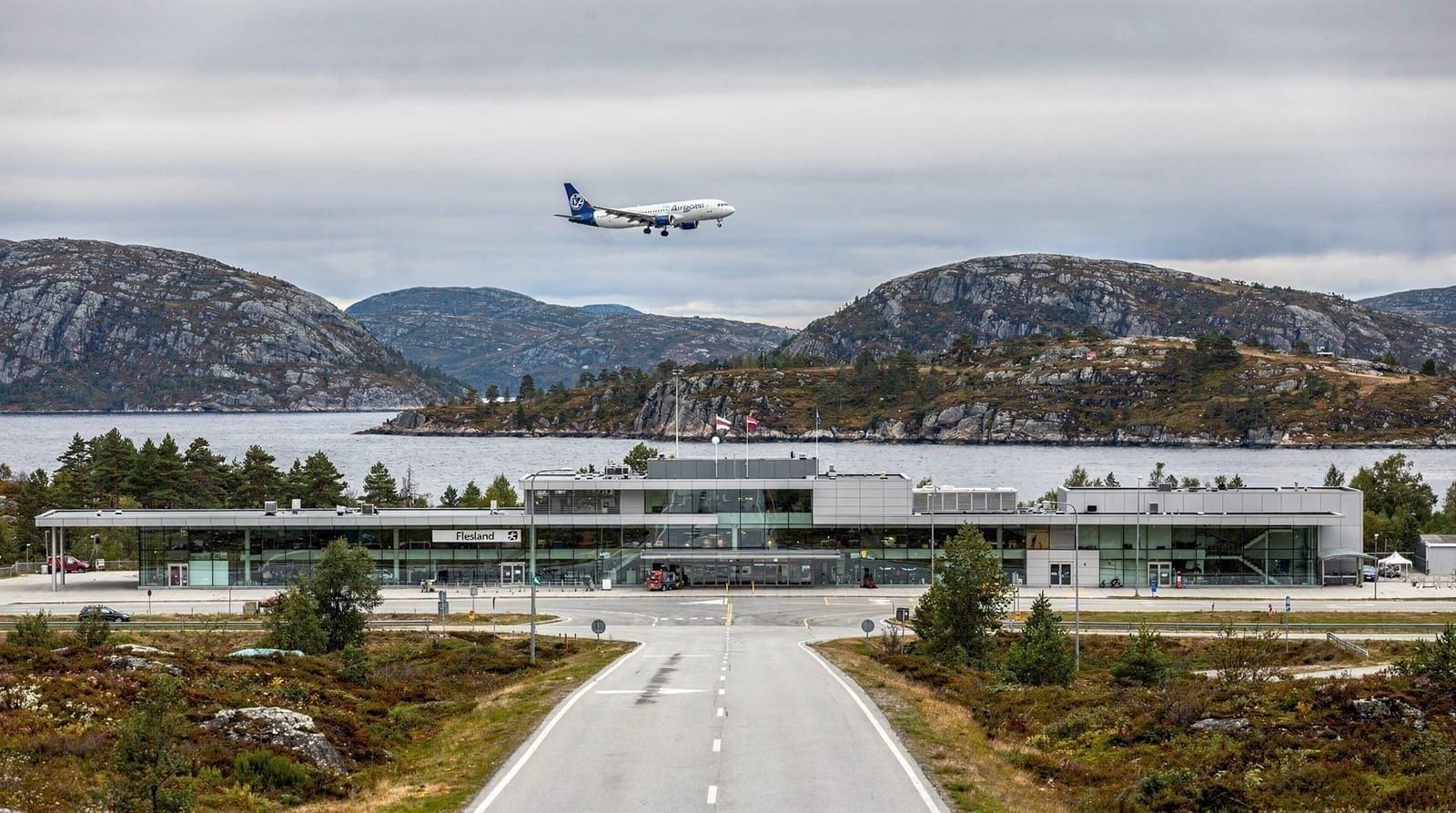
If this is your first time in Bergen, the arrival experience is worth preparing for. After collecting luggage at BGO, follow the “Bybanen” signs down to the terminal basement. The light rail platform is a minute or two from the baggage carousel.
Buy your ticket (NOK 51) on the Skyss Billett app before you board — it is faster than using the machines. Validate the ticket and board. The train runs every 5–10 minutes. Get off at Byparken (the last stop on Line 1 toward the city center). From Byparken, most central hotels are 5–15 minutes walk.
Do not take a taxi from the airport unless you have a compelling reason — the NOK 400–600 fare versus NOK 51 on the Bybanen is a significant difference, and the 45-minute Bybanen journey is comfortable. See Bergen airport to city guide for the full transfer breakdown.
Packing for a first Bergen trip
Given the rain reality above, packing right matters more here than in most European city destinations. A genuinely waterproof (not just water-resistant) jacket is the single most useful item — a windbreaker will soak through within an hour of real Bergen rain. Waterproof or quick-dry footwear helps on cobbled, often-wet streets around Bryggen. Layers work better than one heavy coat, since temperatures swing with the frequent weather changes described above. Our what to pack for Bergen guide has a full packing list broken down by season, including what to bring for a fjord day trip specifically.
A realistic first-timer mistake to avoid
The single most common planning mistake first-timers make is under-booking Bergen and over-booking the fjords, or the reverse — either treating Bergen as a one-night stopover before “the real trip” begins, or spending all their time in the city and running out of days for a fjord excursion. Both leave visitors feeling they missed half of what Western Norway offers. Two nights minimum in Bergen itself, plus at least one fjord day trip, is the realistic floor for a first visit that does not feel rushed.