Getting around Bergen: Bybanen, walking, and Bergen Card
Bergen: 24, 48, 72 or 96-Hour Bergen Card
How do you get around Bergen city?
Bergen's center is compact and best explored on foot — most main sights are within a 20-minute walk. The Bybanen light rail (NOK 51/ride) connects the airport and southern districts. Taxis exist but are expensive (NOK 150–300 within the city). The Bergen Card covers most city buses.
Bergen is a small city and an easy one to navigate. The historic center is compact, the main attractions cluster along the waterfront and around the funicular base, and the streets — while cobbled and occasionally steep — are all walkable. Most visitors covering Bryggen, the Fish Market, Fløibanen and the KODE museums never need public transport within the city center itself.
| Where | Bergen city center, harbor to KODE, is fully walkable |
| Cost | NOK 51/ride Bybanen or bus; NOK 400–700 for a Bergen Card |
| Time needed | 5–15 min for most central walks; 45 min airport to center |
| Getting there | Bybanen light rail, city buses, or on foot |
| Best time | Any season; cobblestones need care in rain |
Walking: the primary mode of transport
For the historic center, walking is the obvious choice. Key distances:
- Bryggen to Fløibanen funicular base: 5 minutes
- Bryggen to Fish Market: 3 minutes
- Bryggen to KODE museums: 12 minutes
- Bryggen to Torgallmenningen (main square): 4 minutes
- Bryggen to Bergen station (train): 12 minutes
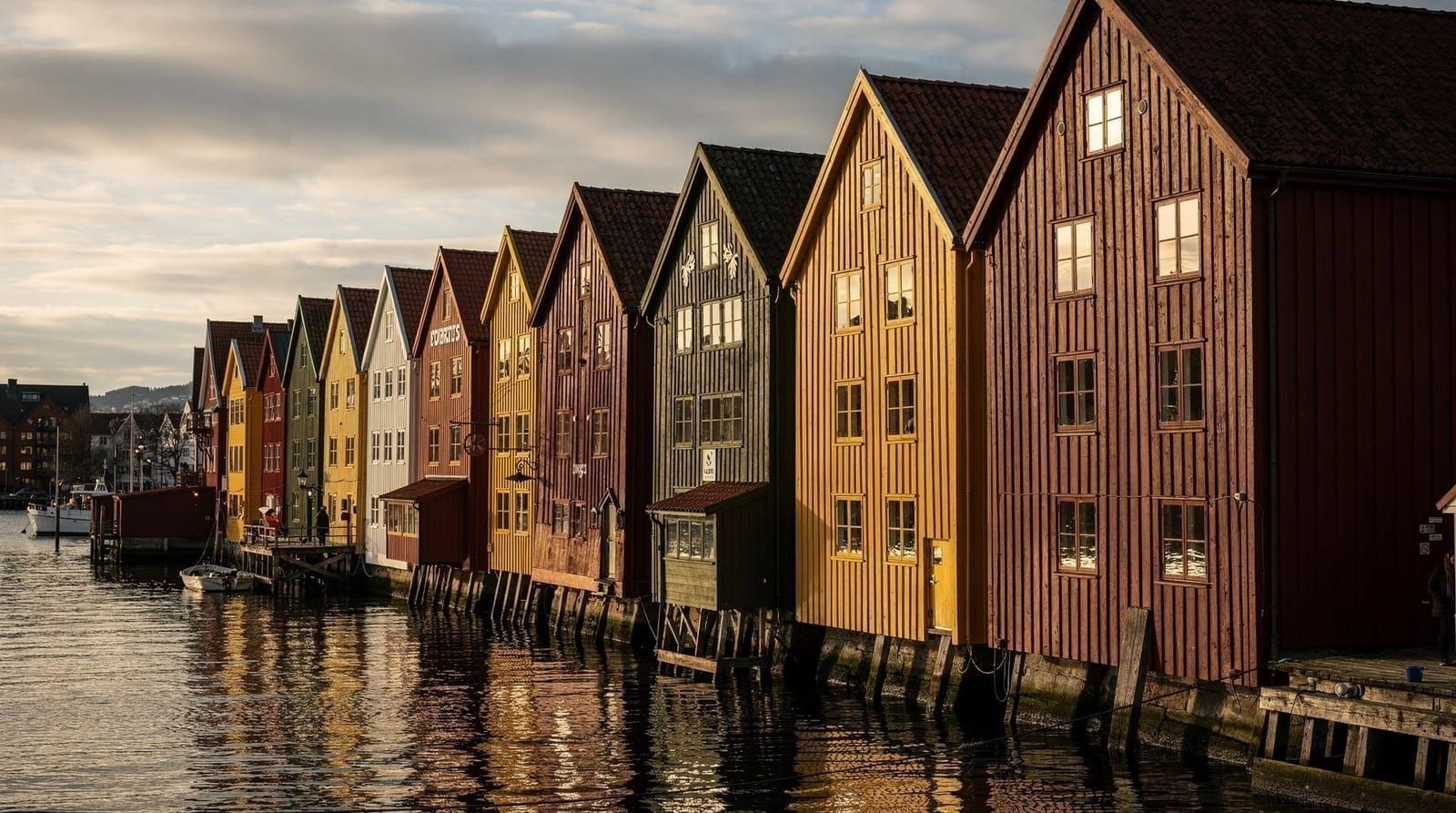
The cobblestone streets at Bryggen are uneven and slippery in rain. Comfortable waterproof shoes with grip are important — not just for comfort but to avoid falls. Flat-soled fashion shoes on wet Bergen cobblestones are a genuine hazard.
Bergen has moderate hills — the city is built between seven mountains. Walking from the waterfront toward KODE or the university area involves some incline. Nothing strenuous for healthy walkers, but worth noting if you have mobility limitations.
Bybanen light rail (Line 1)
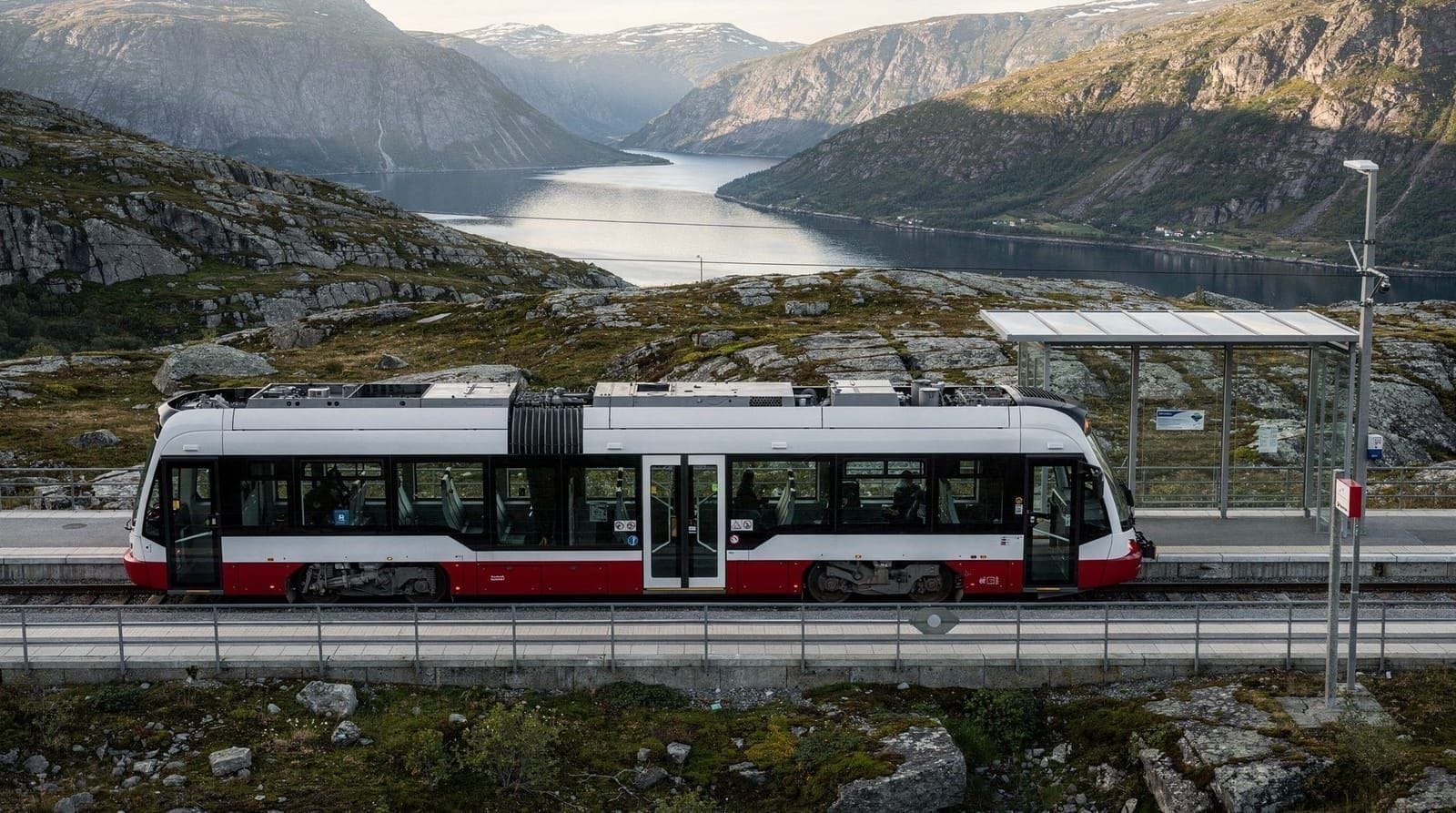
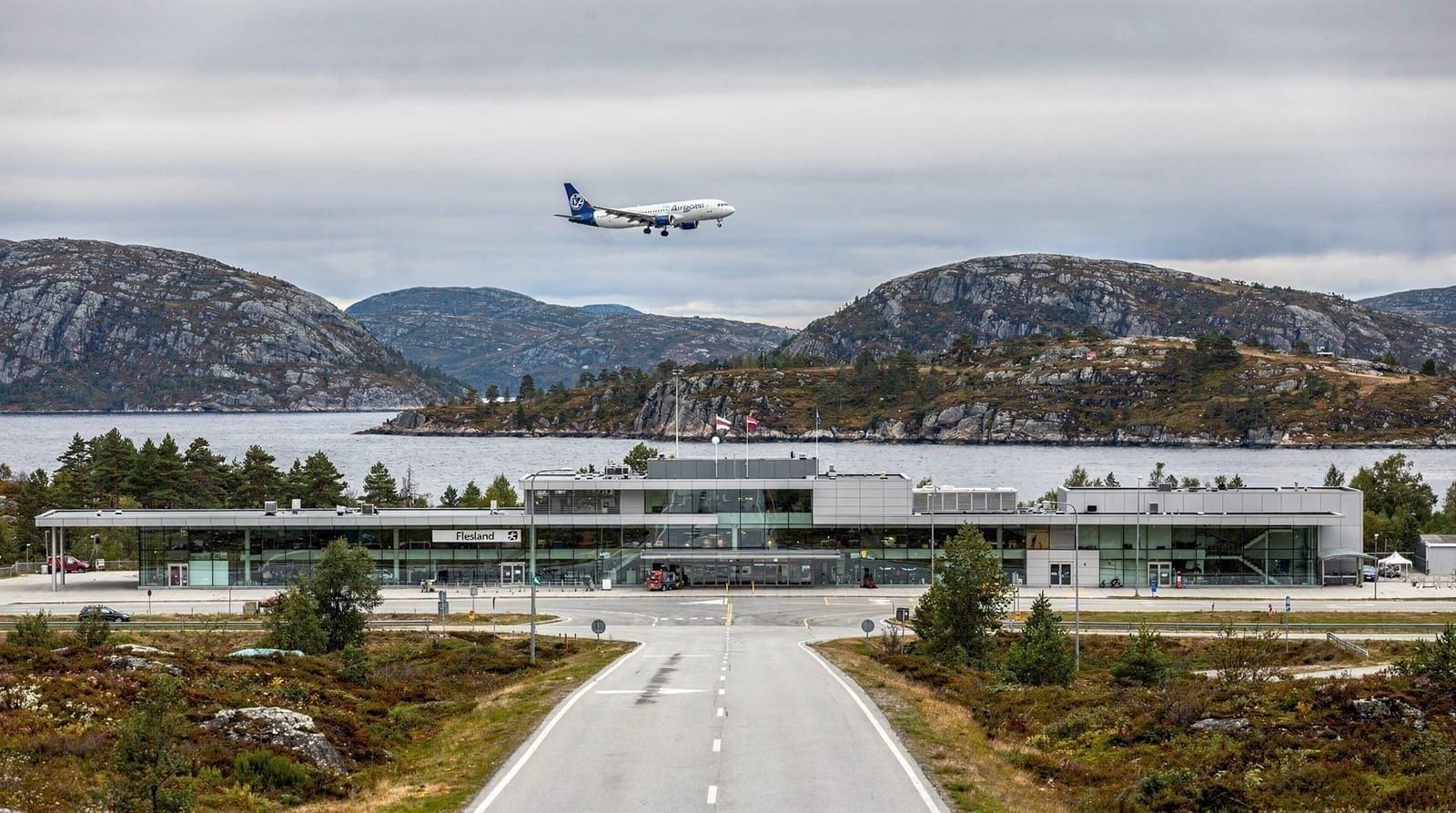
The Bybanen is Bergen’s light rail line, operated by Skyss (the regional transport authority). Line 1 runs from Byparken in the city center south to Bergen Airport Flesland (BGO) and east to Fyllingsdalen. It is the most important public transport link for most visitors — primarily because it is the cheapest and most reliable way to get between the airport and the city.
Ticket price: NOK 51 per single journey for adults. Up to 4 children ride free on the same ticket as a paying adult. The fare is flat regardless of how many stops.
Where to buy:
- Skyss Billett app (recommended): buy and activate before boarding, cheapest method
- Platform ticket machines: accept cards, slightly less convenient
- On board: not possible (ticket inspection onboard, not ticket sales)
Key stops along Line 1:
- Byparken: the city center terminus, near the Fish Market and walking distance to Bryggen
- Nonneseter: Bergen’s main bus station, good transfer point
- Paradis: residential suburb, not tourist-relevant
- Wergeland, Slettebakken, Kronstad: suburban stops
- Haukeland: university hospital
- Birkelundstoppen: transfer to eastern Line 2 extension (Fyllingsdalen)
- Nesttun: junction, several suburban stops
- Birkelandsskiftet, Råstølen, Airport/Flesland: the BGO airport terminus
Travel time airport to Byparken: approximately 45 minutes.
Hourly frequency: Every 5–8 minutes during peak hours (7–9 am, 3–5 pm), every 10–15 minutes off-peak.
Practical note: The Bybanen is the cleanest, most reliable way to reach the airport without paying taxi prices. It runs from early morning (first departure from Flesland around 5 am) to midnight most nights.
Bergen Card
The Bergen Card is a time-based pass sold in 24h (NOK 400), 48h (NOK 500), 72h (NOK 600) and 96h (NOK 700) versions. It covers:
- Free entry to KODE art museums, Bergenhus Fortress Museum, Aquarium (Akvariet) and most other Bergen museums
- 50% discount on Fløibanen funicular
- Free city bus travel (Skyss network within Bergen municipality)
- Various smaller discounts at restaurants and attractions
Does it save money? Run the arithmetic on your specific itinerary before buying. Example for a 24-hour period:
- Fløibanen return with 50% off: half the standard price (see floibanen.no)
- KODE building 3 + KODE building 4: free (saving NOK 280–360)
- Bergenhus Fortress Museum: free (saving NOK 120)
- City buses (2 journeys): free (saving NOK 102)
- Total saving: approximately NOK 612 on a NOK 400 card
If your plan includes 2+ KODE buildings, Fløibanen, and Bergenhus Fortress within 24 hours, the card pays off. If you plan only one attraction and mostly walk, it probably does not.
Bergen: 24, 48, 72 or 96-Hour Bergen CardThe light rail runs north-south and serves commuters rather than visitors, so the sights outside the centre need either a taxi or a route built for them: a 24-hour hop-on hop-off bus ticket covers the ones the tram misses.
City buses
Bergen’s city bus network, also operated by Skyss, covers the urban area beyond the Bybanen light rail. Most tourist destinations in the city center are walking distance from each other — the bus is most useful for reaching residential neighborhoods (Nordnes, Sandviken, Landås) or connecting between points that are not walking-adjacent.
Ticket price: same as Bybanen — NOK 51 per journey. Bergen Card covers unlimited city bus travel.
Buy via the Skyss Billett app. Buying on board is not standard on most routes.
Hop-on hop-off bus
Bergen has a hop-on hop-off sightseeing bus service that covers the main city attractions plus some outer neighborhoods. It includes audio commentary in multiple languages.
When is it worthwhile? For travelers who have mobility limitations and cannot walk the distances between city sights, the hop-on-hop-off bus fills a genuine need. For the average able-bodied traveler, Bergen is compact enough that walking is faster and more flexible.
Caveat: some hop-on-hop-off routes extend outside the walkable city center to locations like the Aquarium, Troldhaugen (Grieg’s home), or mountain viewpoints — in that case the bus provides genuine access to places you would otherwise need to taxi to.
Bergen: City Sightseeing Hop-On Hop-Off Bus TourFløibanen funicular
Our full Fløibanen funicular guide goes deeper on tickets and timing; what follows is the transport angle only.
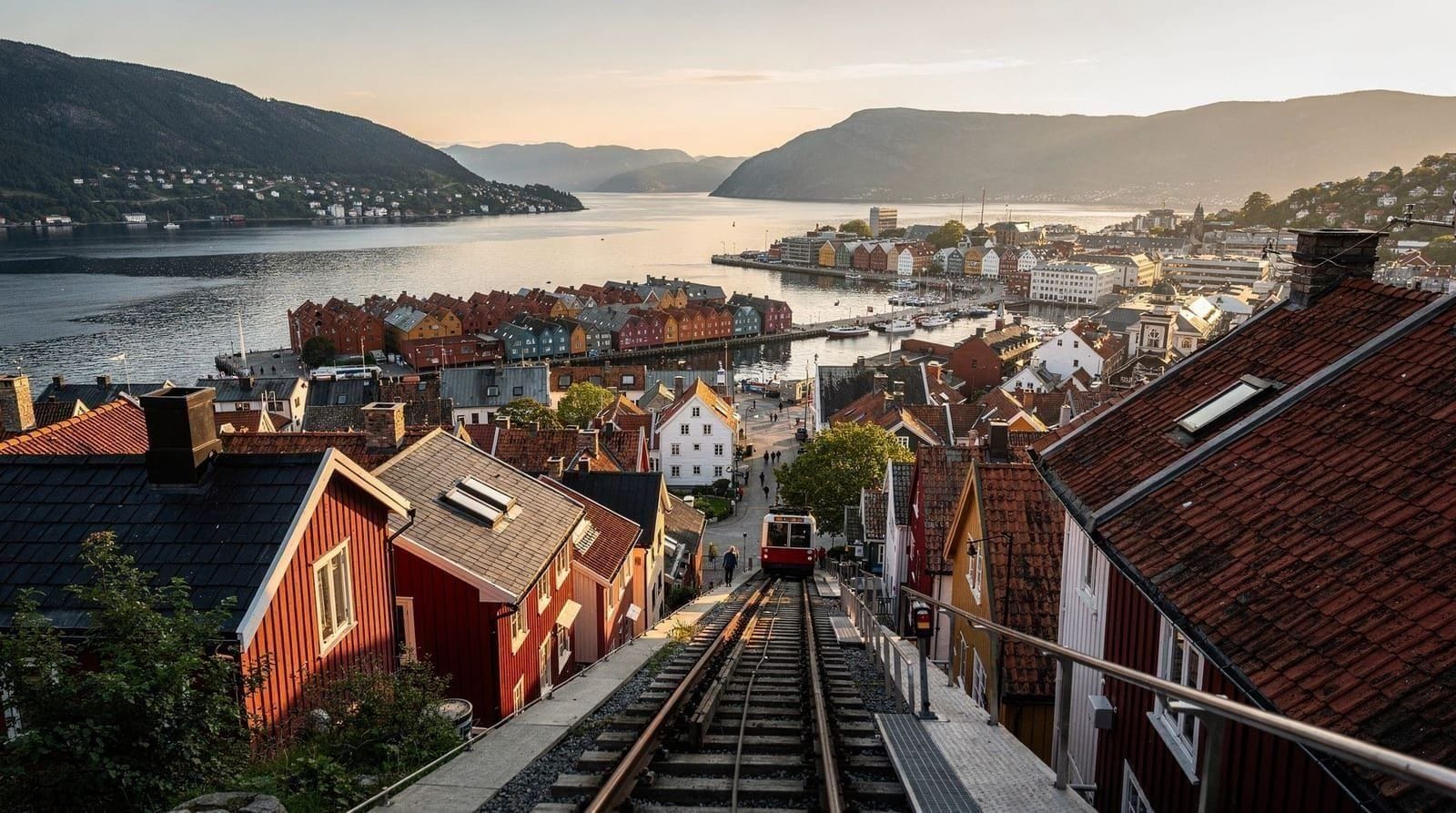
The Fløibanen is not general public transport — it exists to carry visitors (and some residents) to Mount Fløyen at 320 m. It departs from Vetrlidsallmenningen, a 5-minute walk from Bryggen, and takes 6 minutes to reach the summit.
Return ticket: NOK 220 (summer); NOK 110 with Bergen Card.
Pre-booking: Available via the Fløibanen website and app. Pre-booking does not save money (same price) but skips the physical queue, which in July can be 30–60 minutes.
Walking the return: Walking down from the summit to the city (or walking up in the first place) is free and takes about 40–45 minutes on a well-marked path. Many visitors take the funicular up and walk down.
Taxis in Bergen
Taxi companies in Bergen: Bergen Taxi (phone/app: 07000), Norgestaxi (08000). Taxi Bergen.
Pricing: Bergen taxis use a metered fare system with a start fee and per-kilometre rate. Within the city center, most journeys run NOK 100–200. Airport to city: NOK 400–600 depending on time of day and exact address. The taxi supplement for BGO airport pickups adds to the standard metered rate.
Ride-hailing: As of 2025, Uber operates in Bergen (uberX and Uber Comfort). Fares are broadly comparable to taxis and booking via the app is convenient.
When taxis are worth it: Late nights (Bybanen runs until midnight), traveling with heavy luggage to/from the airport as a group of 3–4 (split the NOK 500 fare), reaching distant neighborhoods not served by Bybanen.
Car rental in Bergen
Car rental is useful primarily for travelers planning to explore the fjords beyond what express boats and trains reach — particularly for road trips to Hardangerfjord, Voss, Geirangerfjord or the Lysefjord area.
Within Bergen city: Car rental is not recommended. Bergen has a toll ring that charges NOK 20–35 per entry into the city center (automatic plate recognition). Parking is expensive and limited in the historic center. Bergen is much easier to navigate on foot.
For fjord road trips: Major rental companies operate at BGO airport — Hertz, Avis, Europcar, Budget, Enterprise. A small car runs NOK 600–1,200/day including insurance, plus fuel (approximately NOK 18–20/litre). Western Norway also involves car ferry crossings — most are AutoPASS-compatible (the transponder in the rental car handles payment automatically, billed post-trip by the rental company). Crossings typically cost NOK 80–150 per car.
Road warning: Norwegian mountain roads deceive you with their map distances. A 100 km drive through fjord country with mountain passes, single-lane tunnels and switchbacks can take 3 hours. Add generous time buffers if driving toward day-trip destinations.
Cycling in Bergen
Bergen is not a flat city and the weather reduces the appeal of cycling for most visitors. That said:
- City bikes (Bergen Bysykkel): Shared electric bikes with stations around the city center. Day pass available via app. Useful for flat waterfront stretches and the harbor area.
- Cycling on mountain trails: Possible on certain marked trails; the bike lanes on roads in the city are reasonable.
For most visitors, cycling is not a primary transport mode. It is an option for physically confident riders and those who specifically want a cycling day.
A practical day-one transport plan
For visitors arriving without a fixed itinerary, a sensible transport sequence for the first 24 hours in Bergen looks like this: take the Bybanen from BGO airport straight to your accommodation (skip the taxi unless traveling with a group and heavy luggage), spend the rest of day one entirely on foot covering Bryggen, the Fish Market and the Fløibanen funicular — all within a 15-minute walking radius of each other — and only consider a bus, Bybanen extension, or taxi once you are heading somewhere genuinely outside the historic center, such as Troldhaugen or the KODE museums cluster.
This sequencing matters because Bergen rewards a slow, walking-based first impression more than a transport-hopping one. Visitors who default to buses or taxis for short central hops often end up with a less coherent mental map of the city than those who simply walk the waterfront axis on day one.
Getting to fjord day trips
Arriving in the city is a separate question from moving around it; for that, see getting to Bergen and the airport to city guide. For ideas on where to go once you are settled, the fjord cruises from Bergen guide is a good starting point.
For day trips from Bergen, the relevant transport options are:
Vy train (Bergen to Myrdal or Voss): Book via vy.no or the Vy app. Departs Bergen station (Jernbanetorget, a 12-minute walk from Bryggen or 5 minutes from central bus station).
Express boats (Bergen to Hardangerfjord, Sognefjord, Stavanger/Lysefjord): Depart from Strandkaiterminalen, Bergen’s main ferry terminal at the waterfront (a 10-minute walk from Bryggen). Buy tickets online from Norled or the relevant operator.
Organized tours: Various operators pick up from Bergen city center hotels. Norway in a Nutshell packages (Fjord Tours), fjord cruise day trips, and guided bus tours all typically include hotel pickup in central Bergen.
Frequently asked questions about getting around Bergen
Rain changes how you move around the city more than anything else, so Bergen in the rain is worth a read alongside this guide, and the what to pack for Bergen guide covers footwear for those cobblestones. For the wider budget picture, see the Bergen travel budget guide, and the 2-day Bergen itinerary shows how a short stay fits together on foot.
Is Bergen walkable?
Very. The historic center from Bryggen to the KODE museums is about 15 minutes on foot. Most first-time visitors cover the city center without using any public transport. The cobblestones require decent footwear but the distances are short.
How much does a bus or tram cost in Bergen?
NOK 51 per single journey for the Bybanen light rail or city bus, regardless of how many stops. Buy via the Skyss Billett app for easiest access.
Is the Bergen Card worth buying?
Depends on your itinerary. If you visit 2+ KODE museums, take Fløibanen, and visit Bergenhus Fortress Museum within 24 hours, the math favors it (saving approximately NOK 200–300 over the NOK 400 cost). If you are primarily doing outdoor walking, the free sights of Bryggen, and one paid attraction, the card probably does not save money.
How long does it take to walk from Bryggen to Fløibanen?
About 5 minutes. Bryggen is on the north side of the harbor; the Fløibanen base station is at Vetrlidsallmenningen, just behind the main KODE/Festplassen area, reached by walking south along the waterfront or through the old town streets.
Can I cycle in Bergen?
Yes, but Bergen’s hills and weather make it a moderate proposition. Bergen Bysykkel (city bike system) operates electric bikes via app. For flat waterfront areas the bikes are practical; for reaching Fløyen or Ulriken, less so.
Is there an Uber in Bergen?
Yes, Uber operates in Bergen (uberX and Uber Comfort). Prices are broadly comparable to taxi meters. Pre-booking a ride to the airport via Uber is a reasonable option.
How do I get from Bergen to the Flåm Railway?
Take the Vy Bergen Line train from Bergen station (Jernbanetorget) to Myrdal, then transfer to the Flåm Railway for the 55-minute descent to Flåm. Total Bergen to Flåm: approximately 3.5 hours. This is the start of the Norway in a Nutshell circuit. See Norway in a Nutshell guide for full details.
Navigating Bergen’s hills and terrain
If you are still shaping the length of your stay, the how many days in Bergen guide helps you decide how much of this terrain you will actually want to cover, and the Mount Fløyen guide covers the summit side of the funicular in more detail.
Bergen is built across seven mountains — or more precisely, in the valleys between them and along the harbor shore. The city center itself is relatively flat along the waterfront, but moving away from the harbor quickly involves inclines.
The waterfront axis (Bryggen → Fish Market → Strandkaiterminalen → Nordnes peninsula): essentially flat. This is where most first-day walking happens.
Moving toward Fløibanen: slight incline from Bryggen, then the funicular handles the steep section.
Walking toward KODE and the university area: gentle upward slope. Nothing strenuous.
Nordnes peninsula route: flat along the waterfront, with moderate hills in the interior of the peninsula.
Climbing Fløyen on foot: the trail from the city center gains 320 m in approximately 2–3 km. This is a genuine climb — moderate fitness required, and wet-weather care needed on slippery rocks. Many people take the funicular up and walk down; the downhill route takes 40–45 minutes.
Ulriken (643 m): see the Ulriken cable car guide for the full picture, and hiking around Bergen for routes that link the peaks. It is accessible by cable car from the Ulriken base (a short bus ride or 30-minute walk from Bryggen). The ridge walk from Ulriken to Fløyen is one of Bergen’s best half-day hikes but involves significant elevation.
Accessibility in Bergen
Bergen’s historic center is not uniformly accessible for wheelchair users and those with mobility limitations:
Cobblestones at Bryggen: the historic wharf’s characteristic uneven cobblestones are a challenge for wheelchairs, rollators, and anyone with balance concerns. There is no smooth surface alternative for the central Bryggen area — this is a genuine accessibility limitation.
Accessible alternatives: The Fish Market waterfront, Torgallmenningen square, KODE museum areas, and most modern hotel and restaurant spaces are on paved surfaces. The Bybanen platforms are step-free with level boarding. Most Bergen buses have low-floor access.
Fløibanen funicular: The Fløibanen is wheelchair accessible — there is a ramp to the boarding area and the cable cars accommodate wheelchairs. The summit area at Fløyen has paved paths from the top station.
Ferries and express boats: The Strandkaiterminalen express boats generally accommodate wheelchairs at the dock; contact the operator in advance for specific vessels.
Apps and tools for navigating Bergen
Skyss Billett (skyss.no): Essential. Buy all Bybanen and city bus tickets here. The app works offline once you have the ticket loaded.
Vy (vy.no): For Bergen Line intercity trains to Oslo, Voss, Myrdal. Book tickets and view timetables.
YR.no: Norway’s national weather service. The most accurate weather forecast available for Bergen. Gives hour-by-hour forecasts and cloud ceiling height — useful for deciding whether to take the funicular on a given morning.
Maps.me: Useful for offline maps if traveling in fjord areas without mobile signal. Download the Norway/Vestland map pack before arriving.
Ruter and Norled apps: For express boat bookings from Strandkaiterminalen. Norled operates most of the Hardangerfjord and Sognefjord routes from Bergen.
Transport for specific traveler types
Different visitor profiles have genuinely different transport needs in Bergen, and the generic advice above does not fit everyone equally well.
Cruise passengers with 4–8 hours in port: (the cruise port guide and the cruise stopover itinerary lay out a full day on foot.) Skip Bybanen and taxis almost entirely — Skolten cruise terminal is a 2–5 minute walk from Bryggen, and the Fish Market and Fløibanen are both within a further 5–10 minutes on foot. The only transport decision that matters is whether to pre-book a Fløibanen slot to avoid queues, since queue delays are the single biggest risk to a tight port schedule.
Families with young children: Prioritize the Bybanen over walking for anything beyond a 15-minute radius — strollers on Bryggen’s cobblestones are genuinely difficult, and a tired child mid-walk is harder to manage than a short tram ride. The Fløibanen and hop-on hop-off bus are both stroller-accommodating and worth the modest cost for the convenience.
Travelers with mobility limitations: Plan routes around the waterfront axis (Bryggen to the Fish Market to Strandkaiterminalen), which is largely flat and increasingly paved, and use the Bybanen’s level-boarding platforms rather than buses where possible. Avoid the interior Bryggen alleyways’ uneven cobblestone sections if balance is a concern, and use the Fløibanen — which is wheelchair accessible — rather than the walking trail for reaching Mount Fløyen. Contact operators directly ahead of your trip for specific fjord express boat or organized tour accessibility, since accommodations vary by vessel and company.
Budget travelers: Walking covers nearly everything of tourist interest in central Bergen for free. The only transport cost most budget travelers need to budget for is the one-off Bybanen fare from the airport (NOK 51) and perhaps a single Fløibanen ticket — skip the Bergen Card unless the specific museum math favors it. For day trips, the best day trips from Bergen guide breaks down real costs for the Mostraumen, Nærøyfjord and Hardangerfjord options in the same practical style.
Understanding Bergen’s toll ring
If you are driving in or around Bergen, the AutoPASS toll ring is automatic. Cameras read your license plate as you enter the city zone. For rental cars:
- The rental company fits an AutoPASS transponder or registers for post-trip billing
- Tolls are charged at NOK 20–35 per passage depending on time of day (some rings charge higher rates in peak hours)
- The rental company invoices you separately, often with an administrative fee (NOK 30–80 per trip) on top of the actual toll charges
For most visitors who are staying in Bergen’s center (near Bryggen) and taking day trips by train, boat or organized tour, the toll ring is irrelevant — you are not driving in and out of the city zone repeatedly. If you are using a rental car for fjord day trips, you typically drive out of Bergen in the morning and return in the evening — two toll passages per day plus the car ferry costs of any fjord route crossings.
Bergen Card vs. individual tickets: a worked example
For a 48-hour Bergen visit (2 full days):
Without Bergen Card — sample mid-range city itinerary:
- Fløibanen return x2: NOK 440
- KODE 3 + KODE 4: NOK 280–360
- Bergenhus Fortress Museum: NOK 120
- 4 bus/Bybanen journeys within Bergen: NOK 204
- Total: NOK 1,044–1,124
Bergen Card 48h: NOK 500
Saving: NOK 505–585
In this scenario, the Bergen Card saves significantly. The calculation changes if you skip paid museums, take the funicular only once, or mainly walk. For a budget traveler doing free sights (Bryggen walk, walking to Fløyen, waterfront walking), the card does not pay off.
The Bergen Card is sold at Visit Bergen’s tourist information offices (at BGO airport and in central Bergen), many hotels, and online at en.visitbergen.com.