Best time to visit Bergen: honest month-by-month guide
Bergen: Viking Village, Nærøyfjorden Cruise and Flåm Railway
When is the best time to visit Bergen?
May is the driest month with low crowds. June–July brings maximum daylight and warmth but peak prices and cruise crowds. September offers autumn foliage and 30–40% lower prices. There is no objectively 'bad' month — just different trade-offs.
Bergen’s reputation as one of the wettest cities in Europe is entirely earned. With rain on roughly 230 days per year, the question is not really “when is it dry?” — it is “when do the trade-offs of daylight, crowds, prices and attraction access work best for your trip?” This guide answers that question month by month, without promotional framing.
| Best overall | May (driest) or September (autumn light, fewer crowds) |
| Warmest | July, around 19–21°C average high |
| Cheapest | January–February and November, 40–50% below peak |
| Fjord services full | May–September |
| Book ahead for | Flåm Railway and Nærøyfjord cruise, 4–8 weeks for June–July |
Understanding Bergen’s climate
Bergen sits at 60.4°N on the west coast of Norway, where Atlantic weather systems roll in off the North Sea essentially year-round. Average annual rainfall: about 2,250 mm, concentrated in autumn and winter but spread across every month. The wettest months are October–December; May is consistently the driest.
Summer temperatures are pleasant rather than warm: July average high of around 19–21°C. Winters are mild for the latitude (rarely below -5°C in the city), but short days and persistent rain make winter a specific-purpose travel time.
Bergen does not experience polar night — the sun always rises — but in December the day is only about 6 hours long. In June around the solstice, there are nearly 19 hours of daylight, with blue twilight continuing through the night.
Month-by-month breakdown
January — Low season, short days
Daylight: ~6 hours. Temperature: 0–4°C average. Rain: frequent.
The quietest and cheapest month. Hotel prices can be 40–50% below peak summer rates. Bergen itself remains open — Fløibanen runs, museums operate, restaurants are busy with locals. The fish market outdoor stalls are suspended; the indoor hall operates.
High mountain trails (Trolltunga, Preikestolen above ~800 m) are snow-covered and require guide with crampons. The Flåm Railway runs on a reduced timetable. Nærøyfjord cruise boats operate very limited services.
Worth visiting if: you want Bergen city cheaply and are not dependent on fjord day trips. Dark, atmospheric evenings. Christmas decorations remain in early January.
February — Brightening slowly
Daylight: ~8 hours. Temperature: 0–5°C. Rain: frequent but lightening.
Similar to January in cost and crowd terms. Slightly more daylight. The Samefolkets Dag (Sami National Day, Feb 6) is sometimes celebrated in Bergen. Book in advance if you are targeting the ski season at Voss — February is when Norwegian schools take winter sports holidays (vinterferie), which fills Voss specifically.
Worth visiting if: you want cheap Bergen city time, or you plan to combine with skiing at Voss.
March — Spring approaching, high trails still closed
Daylight: ~12 hours (equinox). Temperature: 1–7°C. Rain: moderate.
Around the equinox, Bergen gets a reasonable amount of daylight. Snow at altitude begins to melt but high trails remain snow-covered. The Flåm Railway continues on a reduced schedule. Prices are still significantly below peak.
Worth visiting if: you want reasonable daylight without peak crowds or prices, and your plan is Bergen city plus lower-altitude walks.
April — Fjords waking up, Flåm Railway crowds grow
Daylight: ~15 hours. Temperature: 5–11°C. Rain: moderate.
The Flåm Railway moves to a fuller timetable in April and tourist numbers at Flåm begin to climb. The Nærøyfjord cruise operates limited services (check current timetable). Hardangerfjord express boats run year-round but with limited frequency.
Easter (Påske) in April brings Norwegian domestic tourism and higher hotel prices in Bergen for about a week. Prices are otherwise mid-range. Pre-book accommodations if traveling over Easter.
Worth visiting if: you want to do the Flåm Railway without July crowds, are flexible on exact travel dates, and can avoid the Easter peak.
May — The honest sweet spot
Daylight: ~18 hours. Temperature: 9–15°C. Rain: Bergen’s driest month.
May is consistently the driest month in Bergen’s rain calendar and offers exceptional value. All fjord services are ramping up: the Nærøyfjord cruise operates 3–4 departures per day from Flåm by late May, the Flåm Railway is busy but not overwhelmed, and Preikestolen (Pulpit Rock) opens for hiking from May 1. Trolltunga opens June 1.
Norwegian Constitution Day (May 17, Syttende Mai) is a major national celebration with processions and events in Bergen — hotels fill fast around this date, so book early. May 17 falls on a different day of the week each year; the surrounding weekend gets busy.
Hotel prices are noticeably below June–July rates. Most attractions open at full capacity. The landscape is strikingly green as snow retreats from lower elevations.
The honest verdict: May is the best single month for first-time visitors who can time their trip. More daylight than spring, fewer crowds than summer, lower prices, and Bergen’s driest weather window.
Bergen: Viking Village, Nærøyfjorden Cruise and Flåm RailwayJune — Near-solstice, peak building
Daylight: ~19 hours (maximum around June 21). Temperature: 13–19°C. Rain: moderate.
June is magnificent for daylight. Around the solstice, the sky never fully darkens — there is blue twilight until 11 pm and again from 2 am. This is Bergen’s most photogenic season.
Cruise ships begin arriving in volume; Bryggen gets crowded by late morning on cruise days (check Bergen Port’s published schedule). The Flåm Railway is busy and sells out days in advance. July-level prices begin in late June. Book 6–8 weeks ahead.
Trolltunga opens June 1. All fjord services operate at full timetable.
Worth visiting if: you want maximum daylight and warmth, can book well ahead, and have accepted peak prices.
July — Peak summer, maximum everything
Daylight: ~18 hours. Temperature: 14–21°C. Rain: moderate.
Bergen’s warmest month is also its most expensive and crowded. Up to 8,000 cruise passengers per day arrive at Bergens Strandkaiterminalen during peak cruise days; Bryggen, the fish market and Fløibanen queue times spike. Hotels at mid-range book out months ahead.
The Flåm Railway sells out weeks in advance. Plan Norway in a Nutshell-type itineraries with at least 4–6 weeks’ lead time.
Worth visiting if: school holidays dictate your travel window, or you specifically want the warmest possible temperatures. Understand that you are paying premium prices for the most crowded version of Bergen.
August — Still warm, shoulder beginning
Daylight: ~15 hours, declining noticeably. Temperature: 14–20°C. Rain: moderate.
Early August mirrors late July. From mid-August, the school holiday period ends in most European countries, and crowds begin to thin. Prices start softening from the third week of August onward. Light declines but evenings remain pleasant.
Trolltunga and Preikestolen are open. Fjord services remain at full timetable through August. A reasonable compromise month for families whose school calendars dictate August travel.
September — The underrated month
Daylight: ~12 hours (equinox). Temperature: 10–15°C. Rain: increasing toward month-end.
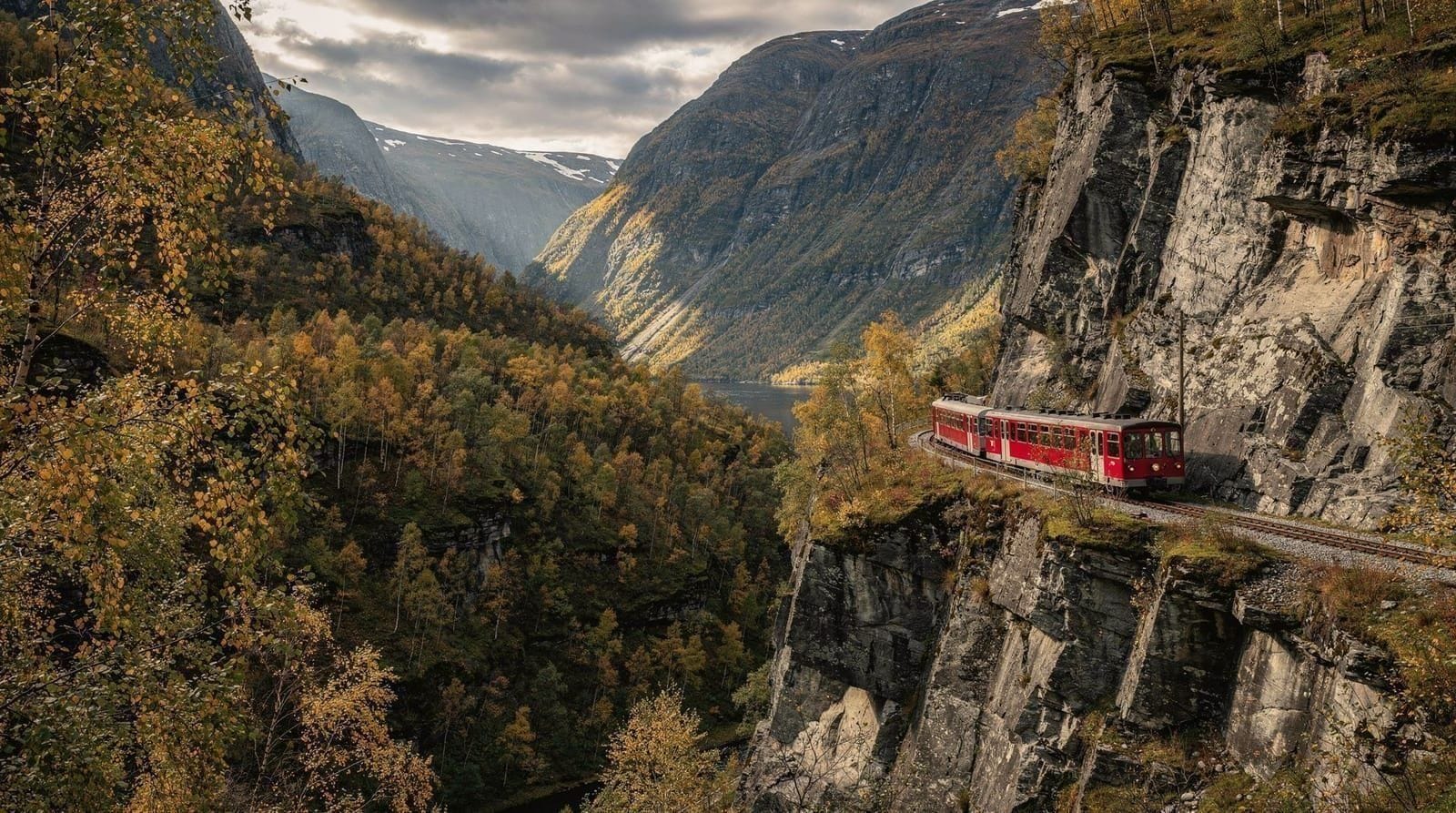
September is consistently underrated. Autumn foliage begins in the valleys and on the mountain slopes — photography is outstanding. Crowds drop significantly; Bryggen returns to something closer to its normal pace. Hotel prices fall 30–40% below July peaks.
Trolltunga is still open for self-guided hiking through September 30 (guide required from October). Preikestolen is accessible through October. Fjord cruises continue through September. The Nærøyfjord cruise reduces timetable toward the end of the month.
The aurora season begins: clear, dark nights from late September allow aurora sightings at higher geomagnetic activity, though Bergen is a marginal latitude for reliable viewing. September rain is more common than May rain.
The honest verdict: September is the best month for experienced travelers, hikers, and photographers willing to pack extra layers. Strong value, good access, beautiful autumn light.
October — Storm season arrives
Daylight: ~9 hours. Temperature: 7–11°C. Rain: heavier, stormy.
October brings Bergen’s stormier season. Rain increases, some ferry and fjord cruise services reduce or suspend. Trolltunga requires a guide and full winter equipment from October 1. Geirangerfjord cruises close at the end of the season (roughly October). Hotel prices at their lowest outside January–February.
Worth visiting if: you want very low prices and primarily want Bergen city. Not recommended as a first visit if fjord day trips are important.
November and December — Off-season and Christmas market
Daylight: 5–6 hours. Temperature: 2–7°C. Rain: heavy.
November is Bergen’s quietest month — very few tourists, lowest prices, difficult weather. December picks up slightly because Bergen has a respected Christmas market (Julemarked) at Festplassen and Bryggen, running through most of December. Short days (sunset around 3:30 pm) but Christmas decorations and the market atmosphere are genuine.
If your sole reason to visit is the Christmas market, book in early December before Norwegian school holidays (juleferie) begin around December 20, when domestic travel fills hotels.
Crowd and price summary
| Month | Crowds | Price level | Fjord access | Notes |
|---|---|---|---|---|
| Jan | Very low | Cheapest | Limited | Short days |
| Feb | Low | Very low | Limited | Ski season at Voss |
| Mar | Low | Low | Limited | Equinox daylight |
| Apr | Low–Medium | Medium | Partial | Easter spike |
| May | Medium | Medium | Good | Driest month |
| Jun | High | High | Full | Near-solstice light |
| Jul | Very high | Peak | Full | Most crowded |
| Aug | High → Medium | High → Medium | Full | Schools ending |
| Sep | Medium | Medium–Low | Good | Autumn foliage |
| Oct | Low | Low | Reduced | Stormier |
| Nov | Very low | Lowest | Limited | |
| Dec | Low | Low | Limited | Christmas market |
What Bergen’s rain means in practice
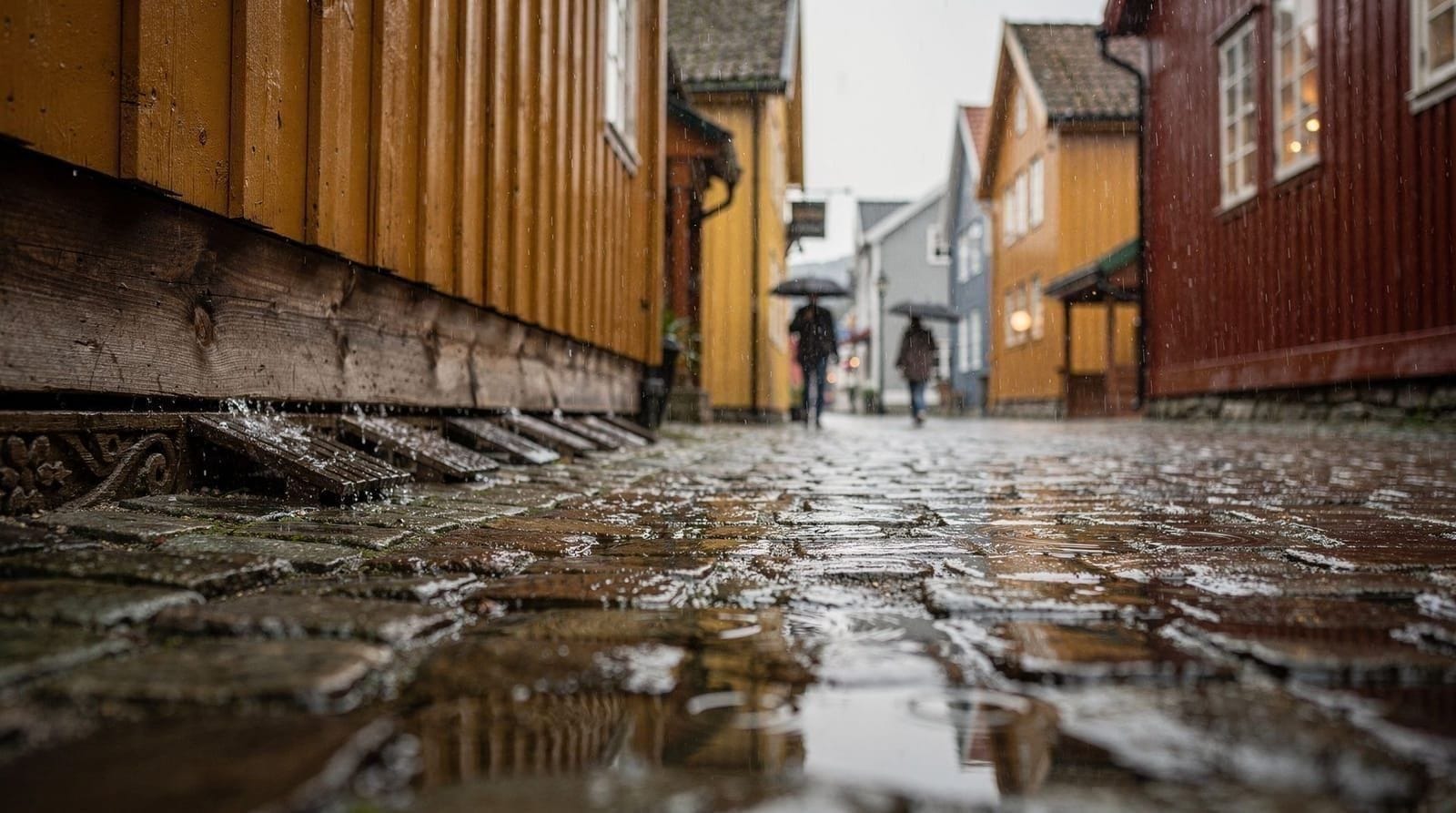
Understanding that Bergen rains roughly 230 days a year helps set realistic expectations without deterring travel. Most rain events in Bergen are grey drizzle, not heavy downpour. Walks, the funicular ride, and outdoor sightseeing remain viable in light rain. The fjord scenery — waterfall flow, mist over the mountains — is actually more dramatic on overcast days than in flat sunshine.
For rain-day planning, see Bergen in the rain, which covers indoor alternatives and the practical logistics of a wet day.
Bergen: City Sightseeing Hop-On Hop-Off Bus TourHow your chosen month affects your itinerary, not just the weather
The month you visit shapes more than temperature and rain totals — it determines which day trips are realistically available. This matters more in Bergen than in most European city breaks, because the headline excursions (Nærøyfjord, Norway in a Nutshell, Trolltunga, Preikestolen self-guided) are seasonal rather than year-round.
If your trip is May–September: All the major day trips from Bergen are running at full frequency. This is the only window where you can build a realistic multi-day plan around fjord cruises, the Flåm Railway, and self-guided high-altitude hikes without worrying about reduced timetables or guide requirements.
If your trip is October–April: Plan around Bergen city itself — Bryggen, the Fløibanen funicular, museums, and Edvard Grieg’s Troldhaugen — rather than assuming a fjord day trip will be straightforward. Some services still run (Mostraumen, Hardangerfjord express boats on a reduced schedule), but check current timetables before building a day trip into your plan, and budget more contingency time than you would in summer.
If you have a fixed one-week window regardless of season: Do not force a fjord day trip into an off-season visit just because it “should” be part of a Bergen trip. A well-planned winter city visit, centered on Bryggen, KODE, Fløibanen, and Troldhaugen, is a genuinely good trip on its own terms — it is simply a different trip from a summer fjord-focused one.
Frequently asked questions about Bergen’s best season
Which month has the best weather in Bergen?
May is statistically Bergen’s driest month. July is the warmest. No month guarantees dry weather — Bergen’s climate is Atlantic and variable. Pack waterproofs regardless of when you travel.
Is Bergen too crowded in July?
July sees Bergen’s heaviest cruise traffic (up to 8,000 passengers per day at peak), long queues at Fløibanen, and the Flåm Railway selling out weeks ahead. It is manageable with advance booking and early starts, but it is objectively the most crowded version of the city.
Can you hike Trolltunga in May?
Trolltunga is officially open for self-guided hiking from June 1. In May, you can hike with a guide and appropriate equipment, but conditions at 1,000+ m altitude can be snowy and icy. Most people plan Trolltunga for June–September.
Is it worth visiting Bergen in winter?
For the city itself — yes, especially if you want very low prices. Bergen operates normally in winter (museums, restaurants, Fløibanen). For fjord day trips, winter significantly limits your options. The Norway in a Nutshell circuit, for example, runs in a reduced form; the Nærøyfjord cruise has very limited winter timetables.
When is Bergen’s Christmas market?
Bergen’s Julemarked runs from late November through approximately December 22, with stalls at Festplassen and Bryggen. Peak market dates and exact opening times vary by year — check Visit Bergen’s current calendar.
Is September good for families with children?
September is suitable for families. The weather is cooler than summer but still manageable, queues are shorter, and family-friendly activities (Fløibanen, Akvariet aquarium, Flåm Railway) are all operating. Pack warm layers for the children — temperatures in the mountains drop quickly.
When do fjord cruises run from Bergen?
Most fjord cruise services run May–September at full frequency. The Nærøyfjord cruise from Flåm runs 3–4 times daily May–September. Winter cruises (Hardangerfjord express boats) run year-round but with reduced frequency. Check current timetables directly with operators.
What is the aurora forecast for Bergen?
Bergen is at 60.4°N — far south of the reliable aurora viewing zone. Aurora is possible during strong geomagnetic storms (Kp index 4+) on clear, dark nights between September and March. For reliable aurora, travel to Tromsø (69°N) or further north.
Specific events and timing worth knowing
Norwegian Constitution Day (May 17 — Syttende Mai): Bergen’s biggest annual celebration. The city center fills with processions, traditional dress, and festivity from morning. Hotels in Bergen book out quickly around this date; prices rise for the surrounding weekend. If you want to experience it, plan and book well in advance. If you are indifferent to local celebrations, time your visit to avoid the crowds by 2–3 days.
Bergen International Festival (Bergen Festspill): Norway’s largest music and arts festival, held annually over two weeks in May/June. Concerts at Grieghallen and venues across the city. Performance tickets sell out fast. If this aligns with your visit, check the program in advance — some performances include events outdoors and at Troldhaugen (Grieg’s home).
Natt jazz (Bergen Night Jazz Festival): Annual jazz festival, typically late May/early June. Free outdoor concerts at Bryggen and ticketed indoor events. Good for an evening in the city if you arrive in this window.
Ekstremsportveko at Voss: The world’s largest extreme sports event, held annually in late June at Voss (1h18m from Bergen by Vy train). White-water kayaking, paragliding, base jumping — a credible reason to add a Voss day to a Bergen trip in late June.
Bergen Light Festival (Lys i Lygten): February, when installations of light art are displayed across the city to combat winter darkness. Unusual and underrated as a winter visit reason — Bergen lit up in February when snow is possible is visually striking.
Weather tools for planning in Bergen
YR.no: The Norwegian Meteorological Institute’s weather service. The most accurate forecast available for Bergen, especially the detailed hourly breakdown and cloud ceiling information. Knowing that cloud sits at 400 m means Fløibanen will have views; cloud at 150 m means the summit will be in fog. Use YR.no rather than generic international weather apps for Bergen trip planning.
Historic Bergen weather data: Bergen’s rain pattern shows that morning rain often clears by early afternoon in summer — rain totals can be high but the timing favors morning indoor activities followed by afternoon outdoor activities. This is not guaranteed but it is a pattern worth building a flexible schedule around.
Month-by-month trade-off summary
For readers who want the honest short version rather than the full month-by-month breakdown, here is how the year splits into four practical bands:
Peak (June–August): Maximum daylight, all fjord services running, but also maximum crowds, prices, and the risk of the Flåm Railway or Nærøyfjord cruise selling out if you have not booked weeks ahead. Choose this band if school holidays dictate your dates or you specifically want the warmest possible temperatures — around 19–21°C in July — and accept the trade-offs that come with it.
Shoulder (May and September): The two months this guide repeatedly flags as the honest sweet spot. Fjord services are running close to full frequency, prices sit 30–40% below July, and crowds are noticeably thinner. The difference between May and September is mostly aesthetic — May gives green spring landscapes and blossom in the wider region, September gives autumn color and slightly cooler evenings.
Transitional (April and October): A step down in fjord access — some services run on reduced schedules — but a genuine step up in value, particularly October, which is Bergen’s cheapest month outside deep winter. Good for travelers prioritizing budget and Bergen city itself over guaranteed fjord day trips.
Deep off-season (November–March): Bergen city works fine — Bryggen, museums, and Fløibanen all operate — but fjord day trips are limited or absent. This band suits travelers with a specific reason to be in Bergen in winter (the Christmas market, a work trip extended into leisure time, or simply wanting to see the city without crowds) rather than those building a trip primarily around fjord scenery.
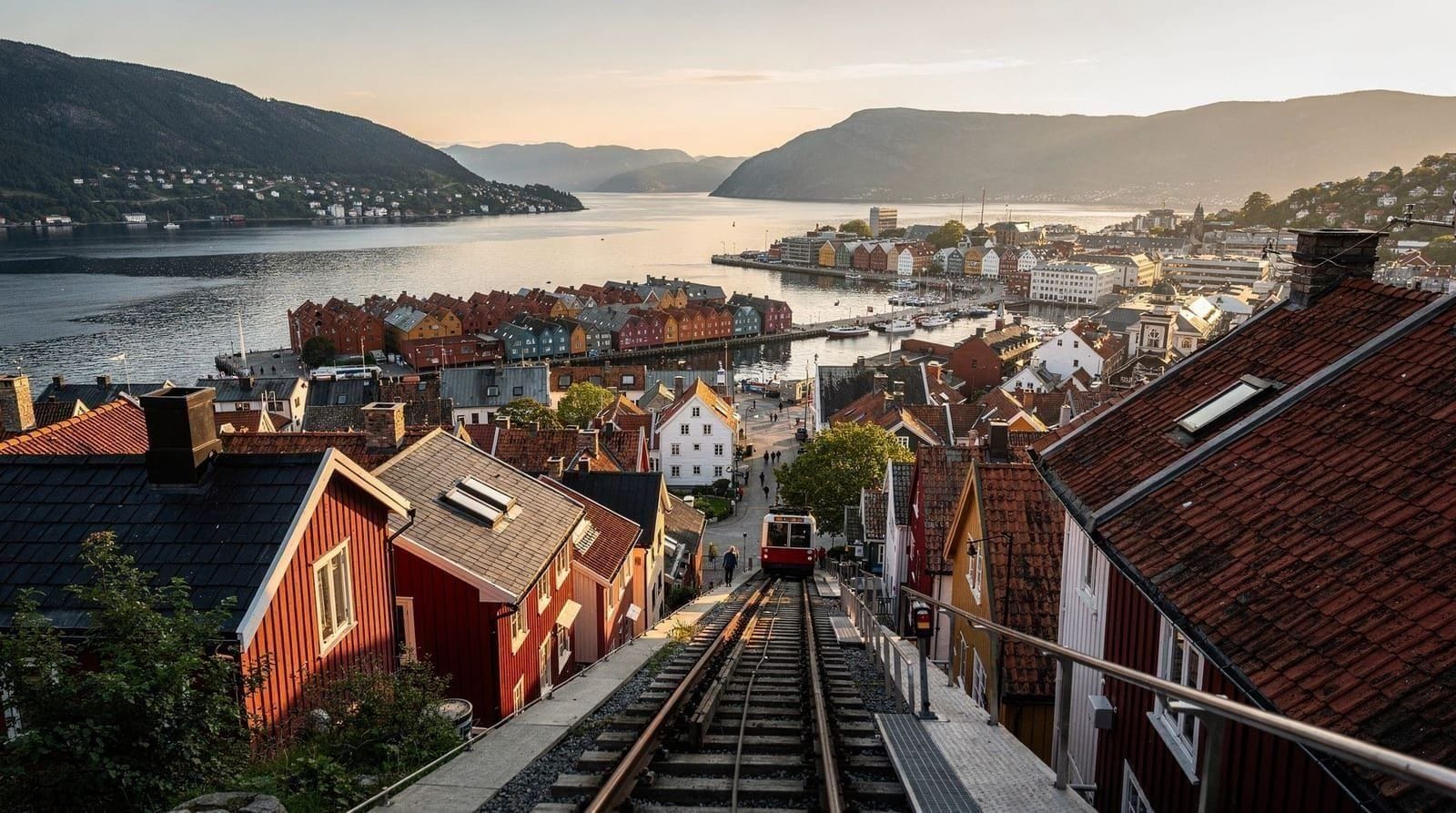
If you do land in Bergen during these months, prioritize the indoor and near-city attractions — Troldhaugen runs on reduced winter hours but is still open, and a clear cold day at the Fløibanen summit is one of the city’s most underrated experiences precisely because so few visitors bother in January.
Timing your booking around Bergen accommodation
Bergen’s accommodation market has a clear price structure by season:
Book 8–12 weeks ahead for July: mid-range hotels in July are often sold out at comfortable prices beyond this window. The very best-located hotels near Bryggen can sell out earlier.
Book 4–6 weeks ahead for June: slightly more flexible than July but still competitive.
Book 2–4 weeks ahead for May and September: good availability and significantly lower prices than peak season. The 30–40% price differential from July is real and substantial — the same hotel room that costs NOK 2,200 in July often costs NOK 1,400–1,600 in May or September.
Walk-in or last-minute for October–April: Bergen’s off-season hotels often have good room availability and promotional pricing. For travelers with flexible schedules, the off-season spontaneous trip to Bergen has genuine accommodation-cost advantages.
What to look forward to in each season
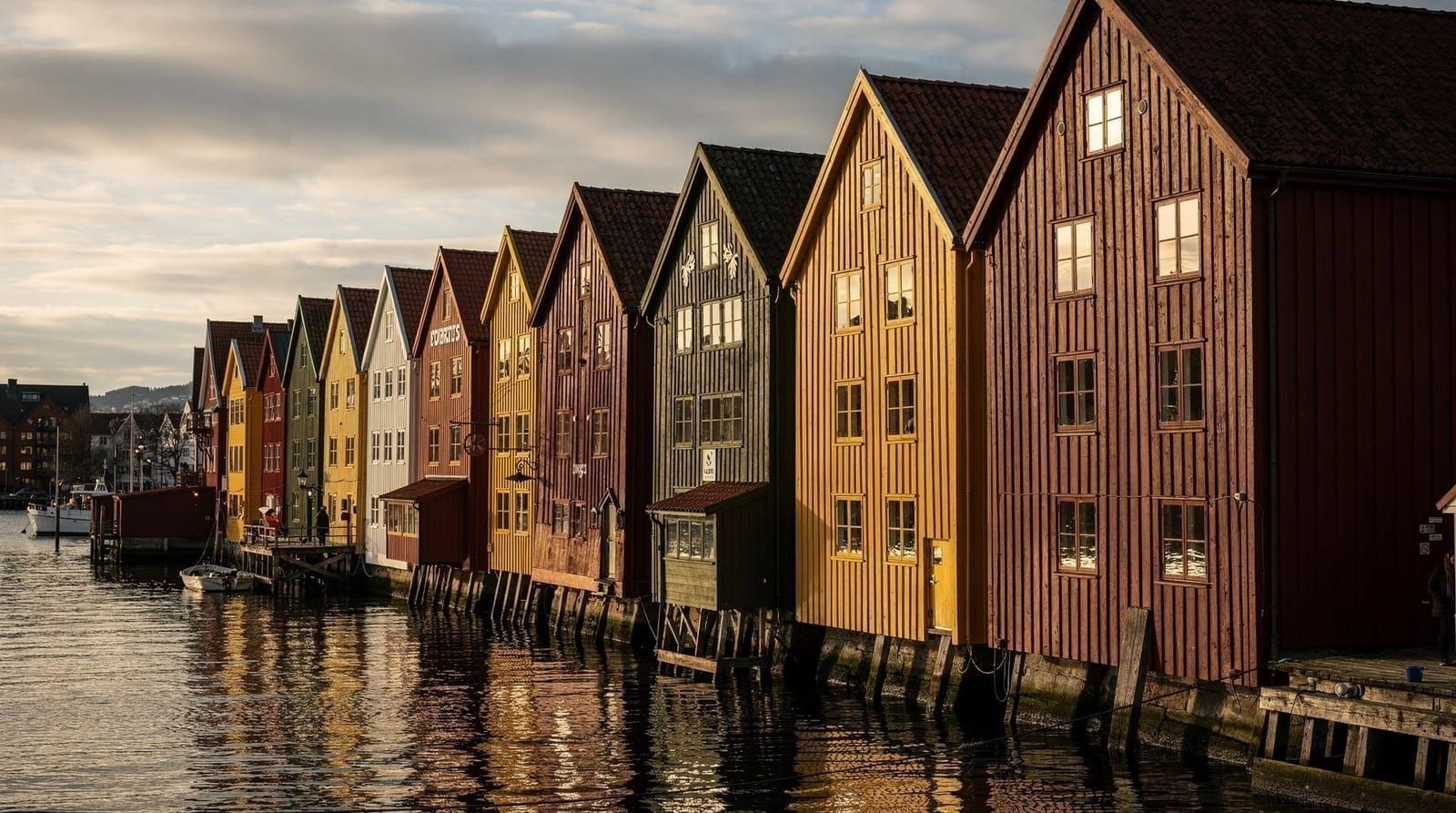
Summer (June–August): Almost endless daylight — the kind of evening where you go out for dinner at 7 pm and come back at 11 pm and it is still bright outside. This is experientially unusual for visitors from lower latitudes and is one of Bergen’s most distinctive characteristics. The light at 9 pm in June on Bryggen’s wooden facades, when the day-trippers have gone and the evening light is warm and extended, is something that does not exist in most of Europe.
May: Bergen in late May is the closest the city comes to perfect: green mountain slopes, full fjord services beginning, comfortable temperatures (10–15°C), the smell of spring in the mountain air, fewer crowds. The landscape is particularly lush because the winter snowmelt has been feeding the fjord waterfalls for weeks.
September: The least promoted and most underrated time to visit. Early September has the warmth and light of late summer; mid to late September brings the first autumn color. The mountain slopes above Bergen change in a way that is visible from the city — a reddening and bronzing of the heath that provides a completely different visual context for Fløibanen views than the summer greenery.
Winter: Bergen in December with Christmas decorations is unexpectedly cozy — the city’s compact center, the lit-up Bryggen facades, the Christmas market (Julemarked) on Festplassen, and the smell of mulled wine (gløgg) from outdoor stalls combine into something more characterful than many larger European Christmas markets. The city is quiet, prices are low, and the experience is distinctly Norwegian rather than generic. If weather and short days are manageable for you, winter Bergen is worth considering as an alternative to summer’s crowds.