Getting to Bergen: flights, train from Oslo, and cruise
Bergen: City Sightseeing, Fjord Cruise & Mt Fløyen Funicular
How do you get to Bergen, Norway?
Most international visitors fly into Bergen Airport Flesland (BGO), 18 km from the city. The Bergen Line train from Oslo takes ~7 hours (from NOK 199 promo fare, NOK 600–800 last-minute). Cruise ships dock at Skolten cruise terminal, a 5-minute walk from Bryggen.
Bergen is accessible by air, train, sea, and car. The right option depends on your origin point, budget, and whether you want the journey to be part of the experience.
| Where | Bergen Airport Flesland (BGO), 18 km south of the city |
| Cost | Train from NOK 199 (promo); flights NOK 400–900 domestic |
| Time needed | 50 min flight from Oslo; ~7 hours by Bergen Line train |
| Getting there | Air, Bergen Line train, cruise ship, express boat, or car |
| Best time | Book Minipris train fares 1–3 months ahead for summer |
Flying to Bergen Airport Flesland (BGO)
Bergen Airport Flesland (IATA: BGO) is located 18 km south of the city center. It is Norway’s second-busiest airport after Oslo Gardermoen and handles both domestic and international routes.
International routes from Bergen BGO
As of 2025–2026, direct international flights operate from:
- London Heathrow (LHR): British Airways and Norwegian operate this route year-round
- Amsterdam Schiphol (AMS): KLM and Norwegian
- Frankfurt (FRA): Lufthansa and SAS
- Copenhagen (CPH): SAS and Norwegian (high frequency — often the most competitive fare to connect through)
- Paris CDG: SAS and Air France
- Zurich, Munich, Brussels, Madrid: seasonal or connecting via Copenhagen/Amsterdam
Principal carriers for Bergen: SAS (Scandinavian Airlines), Norwegian Air Shuttle, and Widerøe for domestic connections. For UK travelers, British Airways and Norwegian both operate BGO directly from Heathrow.
Booking strategy: SAS and Norwegian both have flexible pricing models. BGO fares from London, Amsterdam and Frankfurt can be extremely competitive when booked 6–10 weeks in advance. Last-minute international fares are expensive. Connecting via Copenhagen often yields the lowest fares from most of Europe.
Domestic routes (Oslo → Bergen)
Norwegian and Widerøe fly Oslo Gardermoen to Bergen in approximately 50 minutes. SAS also operates this route. In fair-weather conditions, the flight gives aerial views of the Hardangervidda plateau (mountains, lakes, snow). Fares: NOK 400–900 one-way depending on timing. The flight is useful if you are time-constrained; for first-timers with more flexibility, the Bergen Line train is a far superior experience.
Widerøe is Norway’s regional carrier and serves smaller airports connecting to Bergen from destinations like Stavanger (BGO–SVG, 35 min), Ålesund (BGO–AES, 30 min) and others. Useful for combining Bergen with other western Norway destinations.
Getting from BGO airport to the city
See the full Bergen airport to city guide for options in detail. Short version:
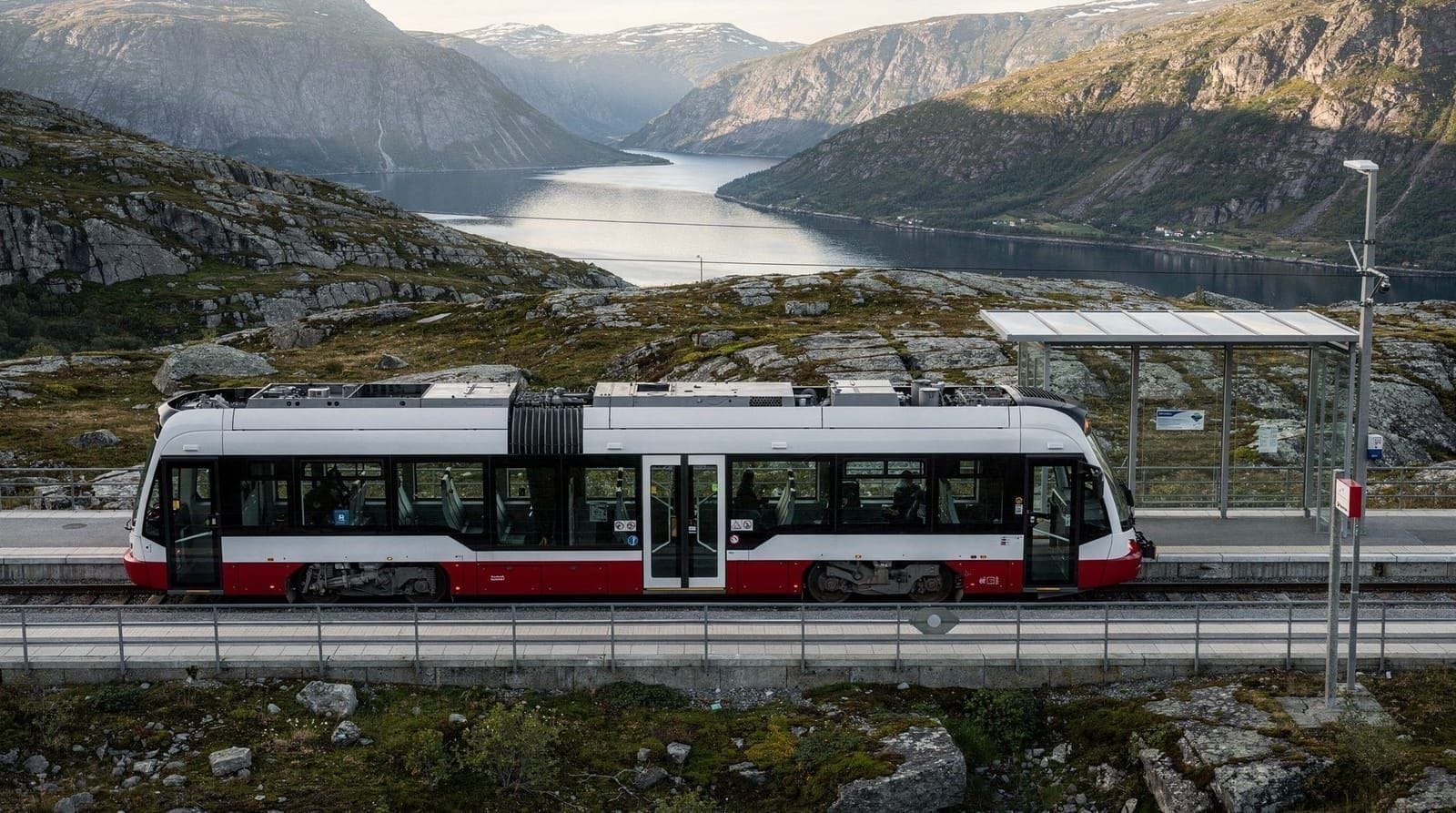
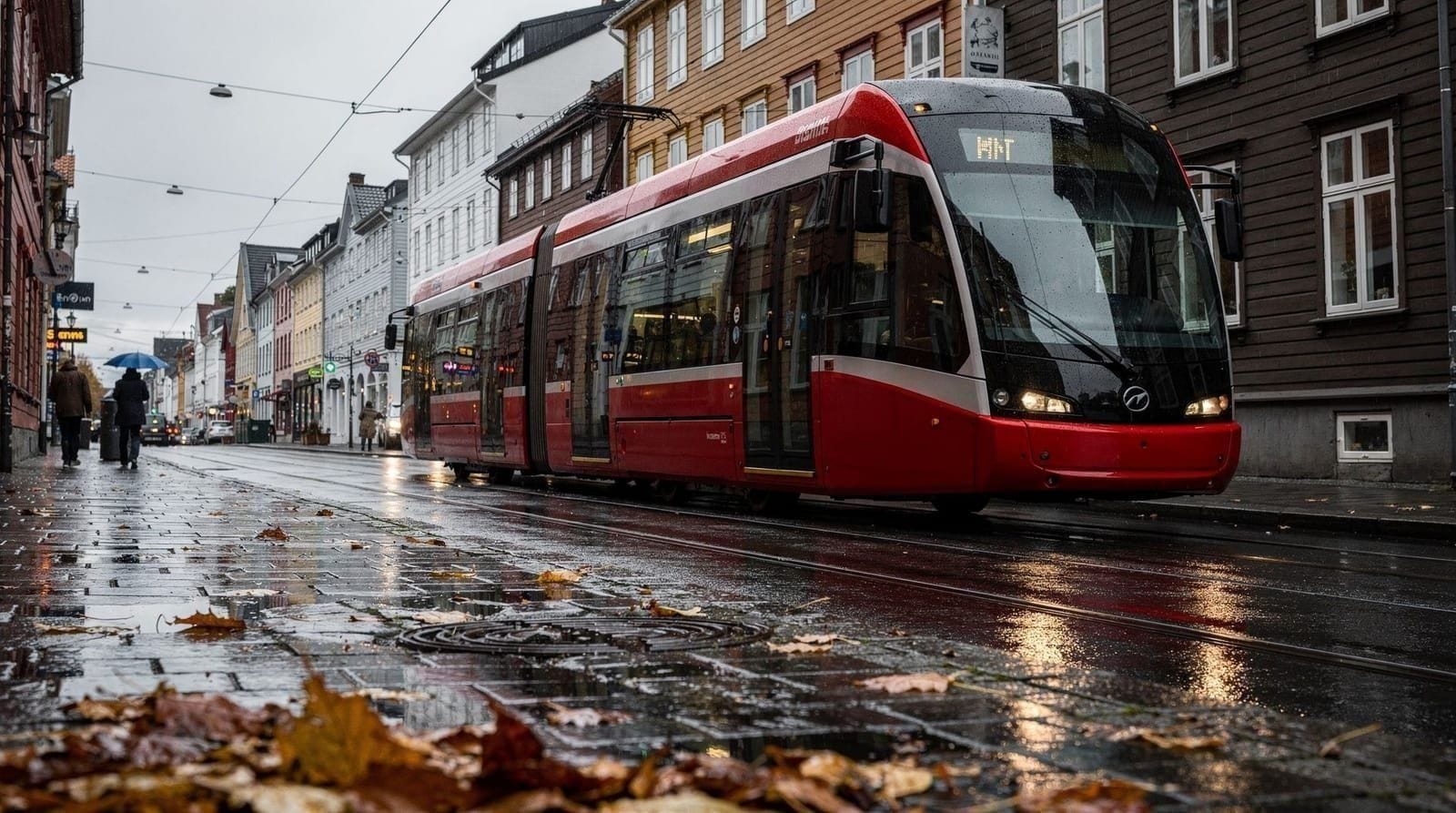
- Bybanen light rail (Line 1): NOK 51, ~45 minutes, departs from the terminal basement. Cheapest and most practical option.
- Flybussen airport bus: ~30 minutes, current fares at flybussen.no, stops at hotels.
- Taxi: NOK 400–600, 25–35 minutes depending on traffic.
The Bergen Line train from Oslo (Bergensbanen)
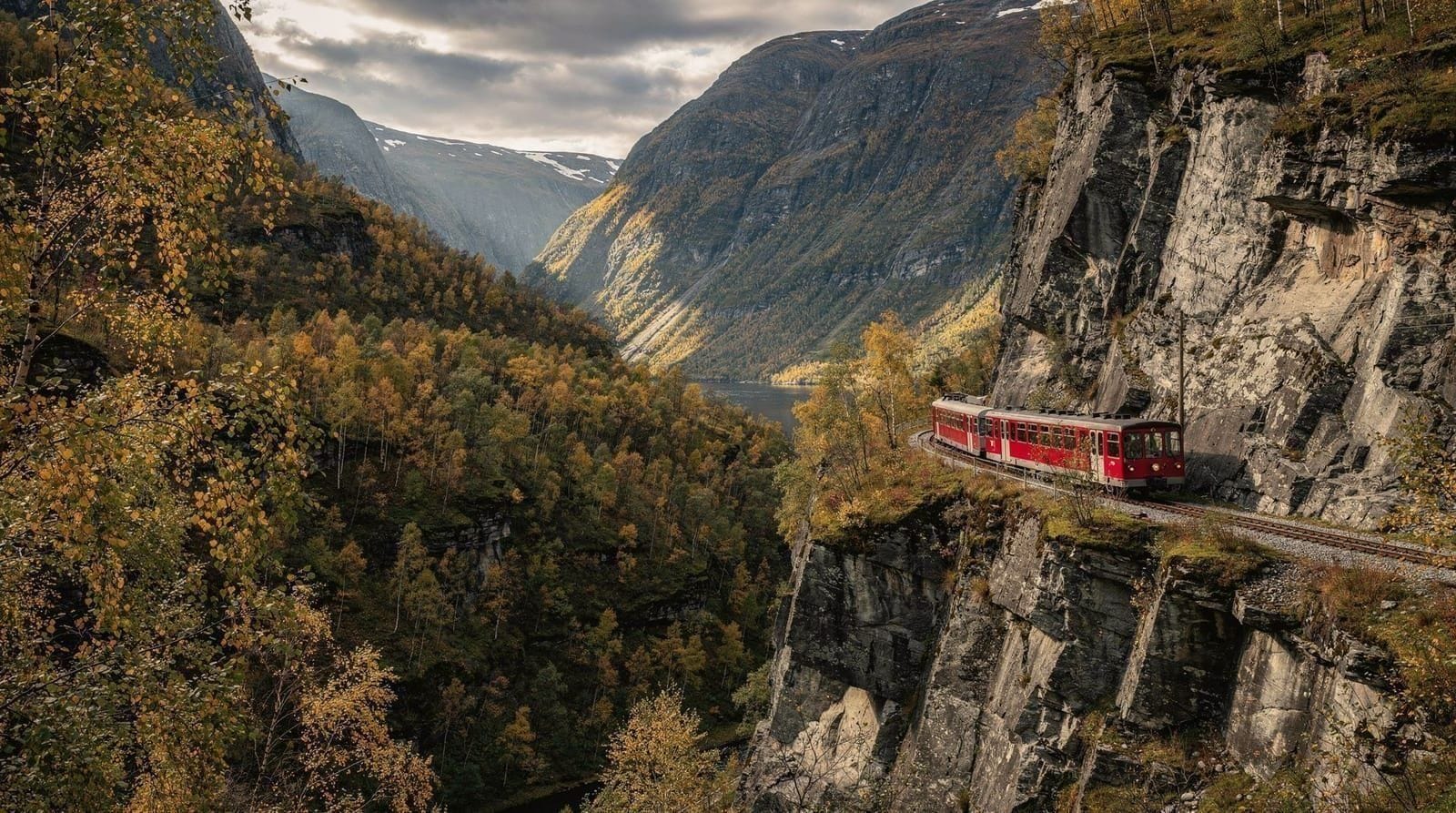
The Bergen Line is one of the classic train journeys of Europe and the most scenic way to arrive in Bergen from Oslo. Operated by Vy (the Norwegian national rail operator), the journey covers 496 km and takes approximately 6 hours 45 minutes to 7 hours 30 minutes depending on the service.
What the journey includes
The Bergen Line crosses the Hardangervidda plateau, the highest railway plateau in northern Europe, reaching 1,237 m at its highest point (Finse station). The train passes through:
- Oslo (central station, Oslo S)
- Drammen, Kongsberg (early hours, not dramatic)
- Geilo: ski resort, gateway to Hardangervidda. The plateau section begins here.
- Finse: the highest point (1,222 m). Year-round snow. The starting point for summer glacier hikes and winter cross-country skiing. No road access — only accessible by train or on skis.
- Myrdal: the junction for the Flåm Railway. Many passengers doing Norway in a Nutshell transfer here to descend to Flåm.
- Voss: the last major town before Bergen. About 1 hour 18 minutes from Bergen.
- Dale, Arna and then into Bergen through a long tunnel.
The mountain plateau section (roughly Geilo to Voss) is the most dramatic part of the journey: open tundra, frozen lakes, snow-covered peaks even in summer, and an otherworldly emptiness that is unlike any other train experience in western Europe.
Fares and booking
Vy operates a tiered fare system:
- Minipris (promotional): from NOK 199 one-way when booked well in advance (1–3 months). Very limited availability per train; disappears fast for summer travel.
- Standard fares: NOK 400–700 one-way, booked 1–4 weeks ahead.
- Flex fares: NOK 700–900+, fully refundable, available until departure.
Book at vy.no or the Vy app. The Vy app gives access to the same fares as the website. Avoid third-party booking sites — they add markup and the same inventory is available directly.
Practical booking advice: For summer travel (June–August) on the Bergen Line, book 6–8 weeks ahead if you want Minipris fares. The trains are popular; popular departure times (Bergen departures around 8–9 am, Oslo departures around 8–9 am) sell out in peak season.
Journey time and schedule
The Bergen Line runs multiple services per day. Journey time is approximately 6h45m–7h30m. There are early morning and mid-morning departures from both Oslo S and Bergen station. A typical schedule: depart Oslo ~8 am, arrive Bergen ~3 pm. Or depart Bergen ~8 am, arrive Oslo ~3 pm.
There is a dining car on most services with hot food, snacks, and coffee. The food is standard Norwegian train fare — a hot lunch (fish or meat dish): NOK 130–180, coffee: NOK 50–60. Not a gastronomic experience but functional.
Oslo to Bergen by car
The E134 and Rv7 are the two main road routes from Oslo to Bergen. Both take approximately 6.5–8 hours by car depending on route and season. The mountain passes (Haukelifjell on E134, Hardangervidda on Rv7) may be closed or require chains in winter and early spring. Norway’s roads are generally in excellent condition, but mountain-pass driving requires experience with steep, winding roads and in shoulder season, potential for ice.
The road journey includes some very scenic sections (Hardangerfjord crossing at Norheimsund, if taking the Rv7 route). It is not the same as the train through Finse, but it is a credible alternative for travelers renting cars. Norway’s fuel prices (approximately NOK 18–20/litre) and inevitable toll charges along the route add cost that is easy to underestimate when comparing a self-drive option against the train fare alone — factor in fuel, tolls, and any ferry crossings before assuming driving is cheaper for a solo or two-person trip.
Arriving by cruise ship
Bergen is one of Norway’s busiest cruise ports. In 2024, the city received 328 cruise ship arrivals with over 590,000 passenger days. Since June 2022, Bergen Port has capped arrivals at 4 ships and 8,000 passengers per day.
Cruise terminals in Bergen
Bergen has three main cruise berths:
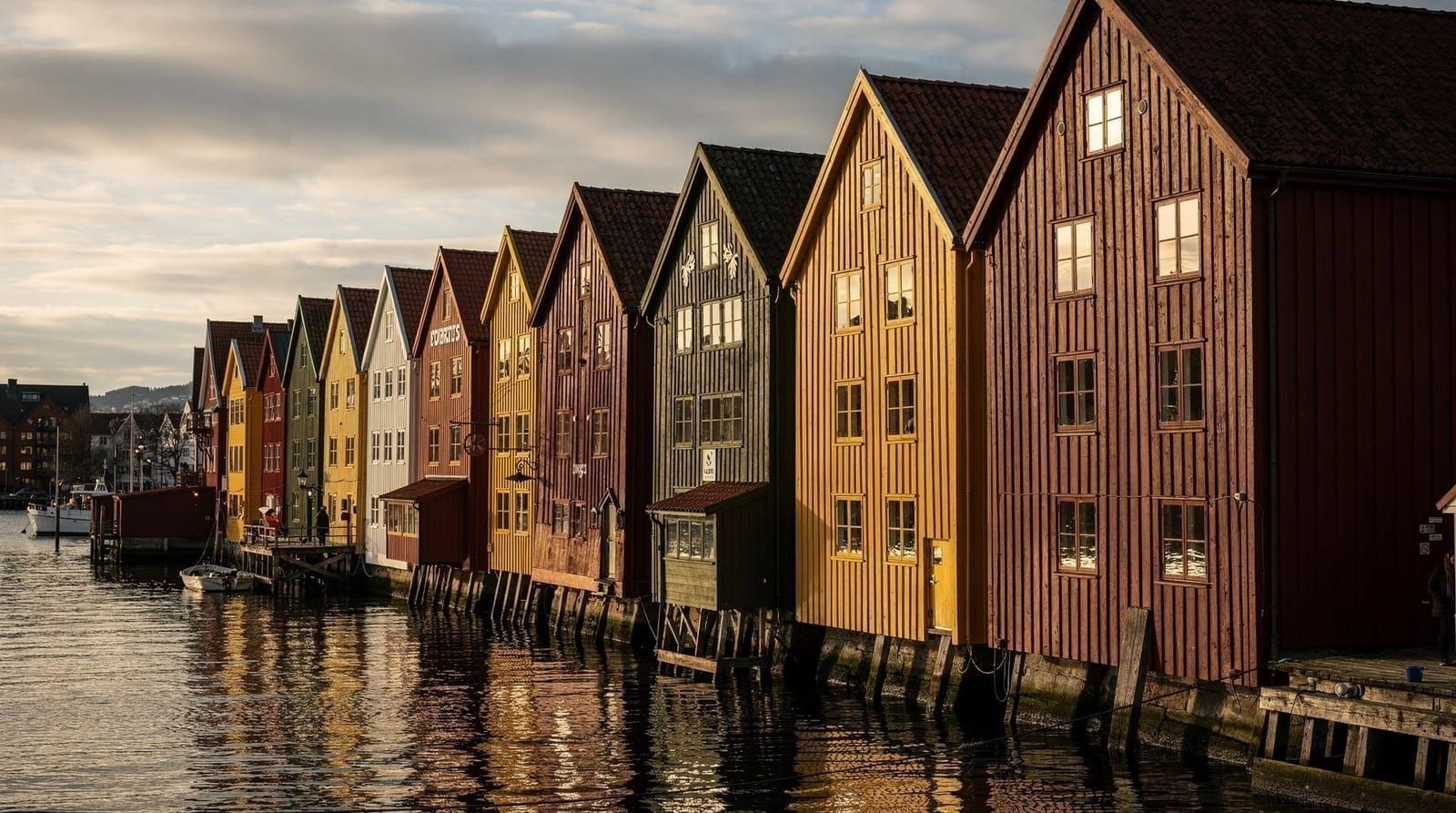
- Skolten (Pier 1–4): the primary cruise terminal, immediately north of Bryggen. A 2–5 minute walk to the Bryggen UNESCO wharf.
- Jekteviken/Dokken (Pier 5–6): south of the city center, about 15 minutes walk to Bryggen or a short taxi/bus ride.
- Bontelabo: used for overflow, slightly further.
The Skolten terminal’s proximity to Bryggen is excellent — you step off the ship and the UNESCO wharf is in front of you. This is the most convenient cruise port position of any major Norwegian city.
Cruise stopover planning
With 4–8 hours in port, the realistic Bergen cruise itinerary:
- Walk Bryggen and the alleyways (1 h)
- Fish Market outdoor stalls or indoor Fisketorget (30 min)
- Fløibanen funicular to Fløyen — pre-book online to skip the queue (1.5–2 h)
- Lunch in the city center (1 h)
- Return to Bryggen area or walk the harbor
That fills 5–6 hours comfortably. There is no time for a fjord day trip from a cruise port stop. See the Bergen cruise stopover 1-day itinerary for a timed plan.
If you want a taste of the water without leaving the city, a short option is a city sightseeing cruise that pairs the harbour with a visit to Fløyen. Check the departure time against your ship’s all-aboard time before booking, and keep a generous margin for the walk back to the berth. The Bergen cruise port guide covers the terminals, the walk into town and the practicalities of a day ashore, and the city sightseeing guide helps you choose what to prioritise when the clock is running.
Getting to Bergen by express boat from other fjord destinations
For travelers already in the Western Norway fjord region, Bergen is connected by express boat services operated from Strandkaiterminalen (Bergen’s main ferry terminal on the harbor):
- Sognefjordekspressen from Flåm (via Vik, Balestrand, Sogndal): 5h30m journey through Sognefjord — a legitimate fjord experience in itself, not just transport.
- Hardangerfjordekspressen from Rosendal, Lofthus, Utne, Kvanndal: approximately 2 hours each way.
- Stavanger/Ryfylke routes from Stavanger: approximately 4 hours.
These express boats provide scenic approaches to Bergen from the fjord system that no road or flight can replicate. If your itinerary includes time at Flåm or Aurland, arriving in Bergen by Sognefjordekspressen is one of the most beautiful arrivals possible. Booking ahead in summer is worth the small effort — popular routes have limited capacity and, unlike the Bergen Line trains, do not run frequently enough to simply catch the next departure if you miss one.
If you arrive by train or plane and would still like a fjord experience close to the city, you do not need to travel far: a guided cruise through the narrow Mostraumen strait starts from the city harbour, and a cruise towards Rosendal on the Hardangerfjord gives a different, gentler landscape. Our guides to the Mostraumen fjord cruise, the Hardangerfjord cruise and fjord cruises from Bergen compare the options so you can pick one that fits the weather and your energy level.
Frequently asked questions about getting to Bergen
What airport serves Bergen?
Bergen Airport Flesland (IATA: BGO), located 18 km south of the city center. Served by SAS, Norwegian, British Airways, KLM, Lufthansa, Air France, and Widerøe for domestic routes.
How long is the train from Oslo to Bergen?
Approximately 6 hours 45 minutes to 7 hours 30 minutes on the Bergen Line, operated by Vy. The route crosses the Hardangervidda mountain plateau and is widely regarded as one of Europe’s most scenic rail journeys.
How much is the train from Oslo to Bergen?
Vy’s promotional Minipris fares start from NOK 199 one-way, available when booked 1–3 months in advance. Standard fares run NOK 400–700; fully flexible fares NOK 700–900+. Book at vy.no or the Vy app for the best prices.
Is it better to fly or take the train from Oslo to Bergen?
The flight is 50 minutes; the train is 7 hours. However, the Bergen Line is one of the most scenic train journeys in Europe and the train station is central in both cities (unlike airports). If you have the time and the train fits your schedule, the Bergen Line is a better overall experience than flying — particularly for first-time Norway visitors. The train also connects to the Norway in a Nutshell circuit (transferring at Myrdal for the Flåm Railway).
Can cruise passengers do a fjord day trip from Bergen?
Not practically. A fjord day trip (Norway in a Nutshell, Mostraumen cruise, Hardangerfjord) takes a minimum of 4–14 hours and most cruise stops are 4–8 hours. Focus your cruise stop on Bergen city — Bryggen, Fish Market, Fløibanen — and save the fjords for a longer visit.
How do I get from BGO airport to central Bergen?
Take the Bybanen light rail (Line 1) from the terminal basement: NOK 51, ~45 minutes to Byparken in the city center. The cheapest and most practical option. See Bergen airport to city for full details including the Flybussen and taxi options.
Is there a direct train from Bergen to the fjords?
The Vy Bergen Line train stops at Voss (1h18m from Bergen, useful for white-water rafting and the Voss area) and at Myrdal (2h30m from Bergen, transfer point for the Flåm Railway). From Bergen station you can reach Flåm in approximately 3.5 hours by train (Vy Bergen Line to Myrdal, then Flåm Railway to Flåm). This is the train portion of the Norway in a Nutshell circuit.
Practical Bergen arrival logistics
Combining a flight in and a train out (or vice versa)
Some travelers deliberately mix arrival methods — flying into Bergen for speed, then taking the Bergen Line out toward Oslo (or the reverse) so the mountain crossing becomes part of the departure rather than a dedicated round trip. This pattern works particularly well if you are also doing the Norway in a Nutshell circuit, since the Voss–Oslo Bergen Line segment naturally continues past where the Nutshell circuit would otherwise loop back to Bergen. It avoids retracing the same route twice and turns transport into content rather than a pure logistics cost — see the Norway in a Nutshell guide for how the segments connect.
Bergen station (Jernbanetorget)
Bergen’s central railway station is located about 12 minutes walk from Bryggen, and adjacent to the central bus station (Bystasjonen). It is a compact, functional station with facilities including luggage storage, an ATM, a Narvesen convenience store, and connections to city buses and the Bybanen light rail (which connects the station to the rest of the network, including BGO airport to the south).
From Bergen station to central Bergen hotels, the walk takes 10–15 minutes. Taxis queue outside the main entrance. The city’s most central neighborhoods — Sentrum, Bryggen, Nordnes — are all reachable on foot within 15 minutes.
Bergen’s Strandkaiterminalen (ferry terminal)
Express boats from Hardangerfjord, Sognefjord, and Stavanger arrive at Strandkaiterminalen on the waterfront. This terminal is centrally located, approximately 10 minutes walk from Bryggen and 7 minutes from the Fish Market. If you are arriving by express boat from the fjords, you step directly into the heart of the city.
Timetables and booking for fjord express boats: Norled (norled.no) is the primary operator for most routes. Book in advance in summer — popular summer routes can sell out.
Arriving by car from Oslo or Southern Norway
If driving to Bergen from Oslo or southern Norway, you approach the city through the Arna tunnel (5.7 km, long but direct). Note that Bergen has an AutoPASS toll ring with automatic plate recognition — if driving a rental car, the rental company will charge the toll (NOK 20–35 per entry into the city center zone) separately, often as a post-trip invoice. Plan your accommodation and parking accordingly — Bergen’s historic center has very limited public street parking, and hotel parking is typically NOK 200–400 per night extra.
For fjord road trips using Bergen as a base, see getting around Bergen for car rental considerations.
Combining arrivals and departures with the Norway in a Nutshell
A popular pattern for first-time Norway visitors is to fly into Bergen (BGO), spend 2–3 nights, then do the Norway in a Nutshell circuit one-way, finishing in Oslo — and flying home from Oslo Gardermoen.
This eliminates one flight (no need to return to Bergen) and uses the Vy Bergen Line’s spectacular mountain crossing as part of the experience. The circuit adds approximately 14 hours of travel but includes the Flåm Railway, Nærøyfjord cruise, and full Bergen Line mountain plateau crossing — the most scenically concentrated day trip in Western Norway.
For flight booking logic: Bergen (BGO) to Oslo Gardermoen (OSL) flights are so frequent (SAS, Norwegian, Widerøe fly this route dozens of times daily) that doing it one-way is no more expensive than a return. Book a one-way inbound to Bergen + one-way outbound from Oslo.
See the Norway in a Nutshell guide for the full circuit breakdown including costs, segment-by-segment booking, and practical tips.
Accessibility and assisted travel at BGO
Bergen Airport Flesland is fully accessible. Wheelchair assistance at the airport: request through your airline at booking. The Bybanen light rail platforms at BGO are level-boarding. The Flybussen has low-floor buses with ramp access.
For travelers with mobility limitations, the Flybussen stopping at central hotels may be preferable to the Bybanen’s walk from Byparken to your specific accommodation. The extra cost over Bybanen is justified for passengers who need door-closer service.
Within Bergen city, the main tourist areas have significant cobblestone sections (Bryggen especially) that are challenging for wheelchairs and difficult for rollator users. The Fish Market waterfront, Torgallmenningen square and KODE museum areas are more accessible on paved surfaces. The Fløibanen funicular is wheelchair accessible.
Transport comparison: what each arrival method actually feels like
Understanding the experiential difference between arrival options helps you choose correctly:
Flying into BGO: Efficient and fast if you are traveling from London, Amsterdam, Frankfurt or Copenhagen. The approach to BGO over the fjord arms and the mountain ridges is one of the more spectacular commercial flight arrivals in Europe — on a clear day the mountains frame the descent in a way that sets the visual tone for the trip. The airport itself is modern and stress-free, though BGO has fewer international flight connections than Oslo Gardermoen, which means connecting via Copenhagen or Amsterdam for flights from the US, Asia or the Middle East.
Bergen Line train from Oslo: The seven-hour journey is genuinely experienced as more than transport. The Hardangervidda plateau section — crossing open mountain tundra at 1,237 m above sea level, passing reindeer herds in early summer and snow drifts even in June, stopping at Finse where no road reaches — is a landscape experience that the 50-minute flight does not come close to replicating. Travelers who want to understand Norway’s geography before they arrive in Bergen should take the train. The cost, if booked ahead, is competitive with flights once airport transfers and check-in time are accounted for.
Arriving by express boat from the fjords: Coming to Bergen by Sognefjordekspressen from Flåm or by Hardangerfjordekspressen from Rosendal gives an approach through the fjord system itself. You sail through the heart of Western Norway’s most dramatic scenery and arrive at Bergen’s Strandkaiterminalen with the fjords already experienced. This is particularly effective as the final leg of a multi-day Western Norway 7-day itinerary — arriving in Bergen having already traveled the fjords is a completely different arrival from flying in cold and orienting by map.
Multi-city Norway routing through Bergen
Bergen functions as one node in several coherent multi-city Norway itineraries:
Oslo → Bergen → return: The classic two-city Norway break. 2–3 nights Bergen + 2 nights Oslo. Bergen Line or flight for the connection. Both cities are compact; neither requires more than 2–3 nights for a solid first visit.
Bergen → Flåm → Voss → Oslo (one-way Norway in a Nutshell to Oslo): Bergen first, then the fjord circuit across to Oslo. The train from Voss to Oslo on the Bergen Line is itself a spectacular experience — you see the full Hardangervidda crossing rather than retracing your Bergen approach. This pattern avoids the round-trip sense and is the most efficient way to see Bergen, the fjords, and Oslo in one trip.
Bergen → Ålesund → Trondheim (coastal north): For travelers doing a longer Norway tour, the Hurtigruten or Havila coastal ferry from Bergen can reach Ålesund (pass Geirangerfjord) and Trondheim over 1–2 days. This is the classic Norwegian coastal route — significant in its own right.
Bergen → Stavanger via express boat: The Stavanger-bound express boat from Bergen’s Strandkaiterminalen takes approximately 4 hours. Stavanger is the gateway to Lysefjord and Preikestolen. If Lysefjord is a priority, building in this leg creates an efficient coastal Norway route without backtracking to Bergen for the southbound connection.
Arrival timing and what to do on landing day
How you spend the hours right after arrival matters more than most guides admit. Flying in gives you a full day to acclimatize immediately — most flights land by early afternoon, leaving time for a gentle first walk to Bryggen or the fish market rather than anything demanding. The Bergen Line train, by contrast, is itself a full day of travel — arriving at 3 pm after seven hours on a train is not the moment to plan an ambitious evening; treat arrival day as a wind-down day with dinner and an early night rather than trying to pack in sightseeing.
If you still have energy once you have dropped your bags, a relaxed walking tour combined with a short ferry ride is an easy way to get your bearings without committing to anything strenuous. Our Bergen first-timer guide and the 2-day Bergen itinerary show how to build the following days, while getting around Bergen explains how to move about once you are settled.
Weather matters on arrival day too. Bergen is famously wet, so keep a rain layer within reach rather than at the bottom of your suitcase; the what to pack for Bergen guide and the Bergen in the rain guide help you plan for it, and the rainy day in Bergen article lists indoor options if the first afternoon is a washout.
If you are still deciding how long to stay, how many days in Bergen and best time to visit Bergen will shape whether you fly in, take the train, or combine both. Budget-minded travellers can also check Bergen on a budget and the Bergen travel budget guide before comparing transport fares.
Cruise arrivals are different again: you typically have only the port hours themselves, so arrival IS the sightseeing day, with no separate acclimatization period. For cruise passengers, front-loading the Fløibanen funicular booking before your ship even docks removes the single biggest source of wasted port time — a booked slot means you are not gambling on queue length once ashore.
Cost comparison: flying vs. the Bergen Line train
The headline “50 minutes vs. 7 hours” framing understates how close the real costs and total door-to-door times can be once airport transfers are factored in:
| Factor | Flight (Oslo–Bergen) | Bergen Line train |
|---|---|---|
| In-transit time | ~50 minutes | ~7 hours |
| Airport/station transfer time (each end) | 60–90 min (check-in, security, transfer) | 10–15 min (city-center stations) |
| Total door-to-door | 3–4 hours realistically | 7.5–8 hours |
| Typical cost | NOK 400–900 one-way | NOK 199–900 one-way |
| Experience value | Functional; some aerial fjord views | The journey is itself a headline Norway experience |
For travelers with limited time, flying wins clearly. For travelers who want the Hardangervidda plateau crossing as part of their Norway story — and who are not purely optimizing for speed — the train’s extra hours buy something the flight cannot replicate.