Is Bergen worth visiting? An honest assessment
Bergen: Past & Present Small Group Guided Walking Tour
Is Bergen worth visiting?
Yes — for most travelers who value fjord scenery, UNESCO heritage, and outdoor access over guaranteed sunshine and cheap prices. Bergen is expensive and it rains a lot, but the Bryggen waterfront, Fløibanen views and fjord day trips are genuinely compelling. Manage expectations on weather and cost.
“Is Bergen worth it?” is a question that implies two real concerns: whether the experience justifies the cost (Norway is expensive), and whether the weather ruins the trip. Both deserve a direct answer rather than a tourist-board sales pitch.
| Verdict | Yes, for fjord-scenery and heritage travelers with realistic budget/weather expectations |
| Cost | NOK 2,500–3,500/day mid-range per person |
| Rain | ~230 days/year — plan for it, don’t fight it |
| Minimum stay | 2 days city; 3+ days to include a fjord day trip |
| Best months | May and September for value and lower crowds |
What Bergen genuinely offers
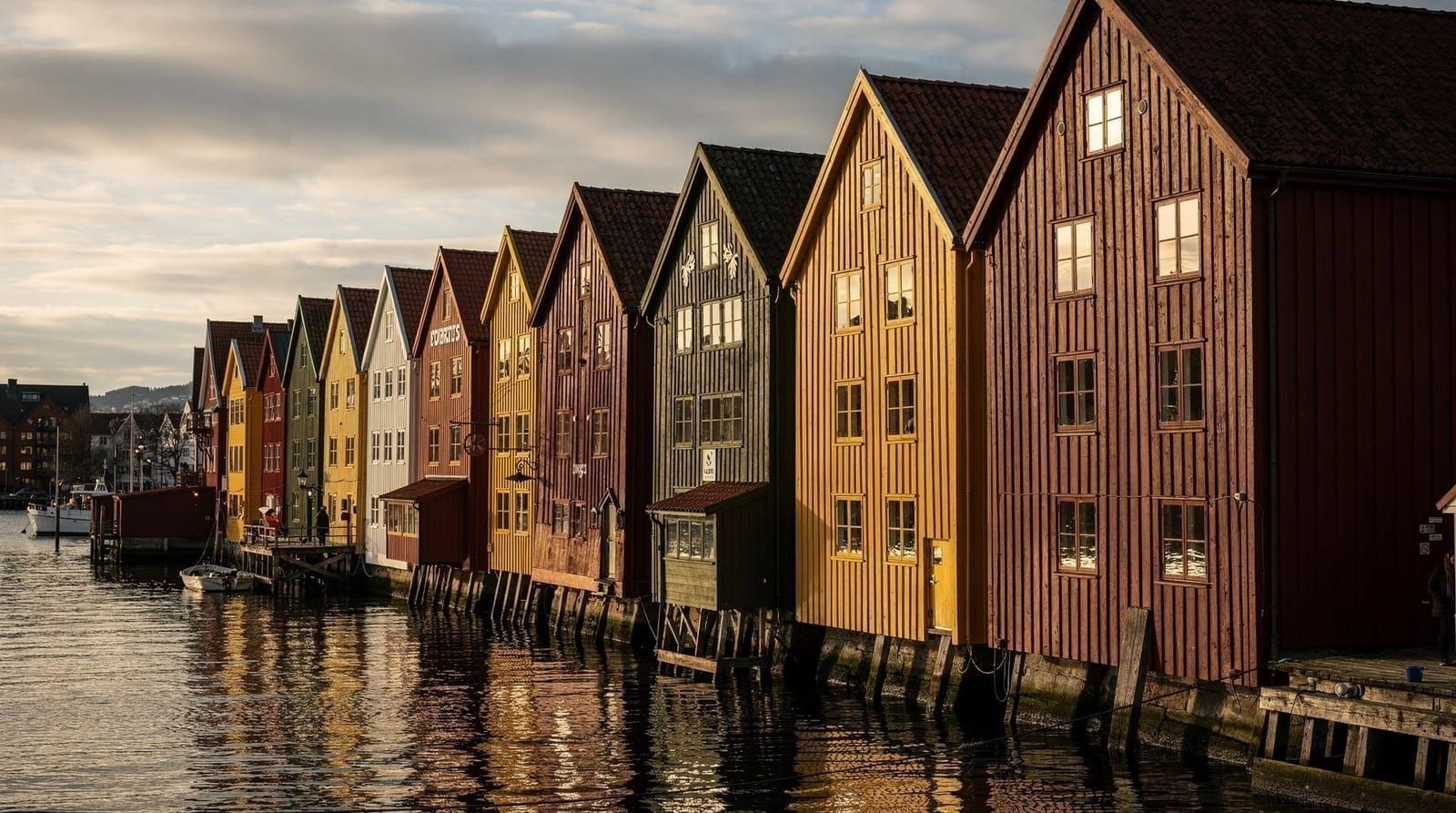
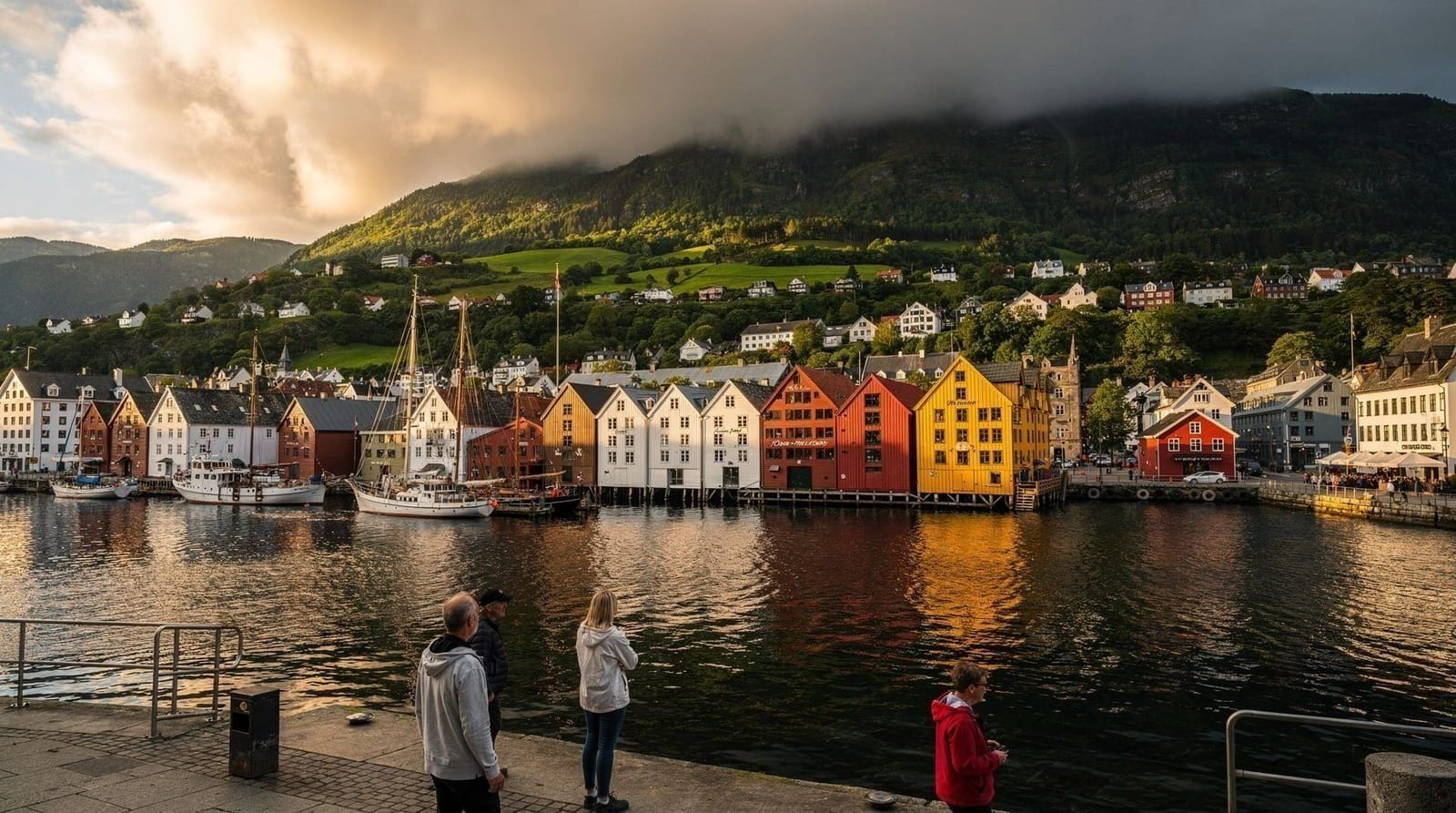
Bergen is a city of about 290,000 people on the Norwegian west coast, at the junction of the Byfjord and seven surrounding mountains. Its historic waterfront — the UNESCO-listed Bryggen Hanseatic wharf — is one of northern Europe’s most architecturally distinctive city landscapes. It is also the primary gateway to the Western Norway fjords: Sognefjord (Europe’s longest), Nærøyfjord (the narrowest, UNESCO-listed), Hardangerfjord, and the Flåm Railway, which connects by train to the fjord system.
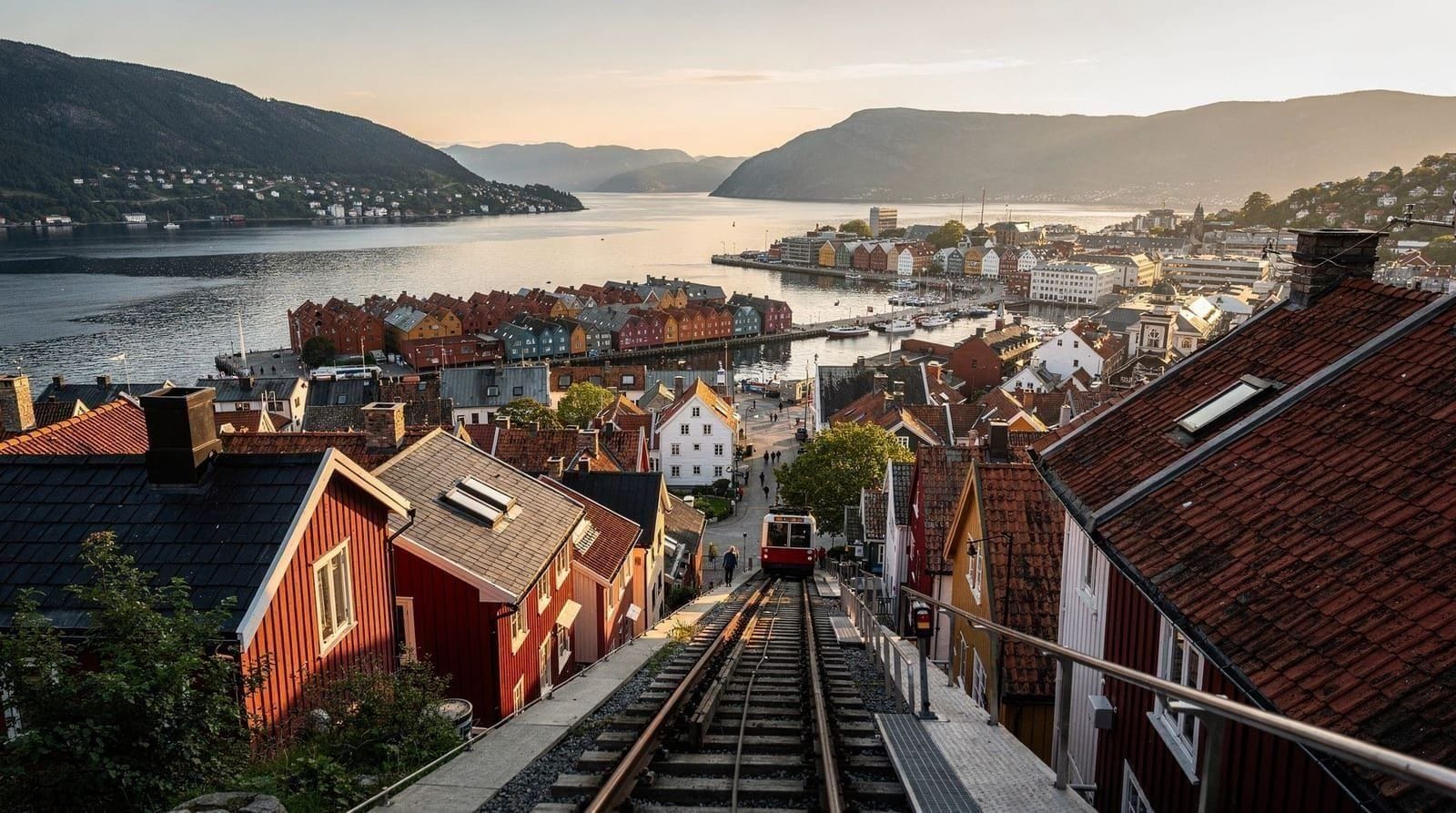
The city itself is compact. You can walk from Bryggen to the Fløibanen base station in 5 minutes and reach the mountain summit in 11 minutes by funicular. From that summit at 320 m, you see the whole city, the surrounding fjord arms, and the mountain ridges at once. It is a view that is difficult to find fault with.
What Bergen offers that almost nowhere else does: a UNESCO-listed medieval waterfront, immediate panoramic mountain access from the city center, and same-day access to the world’s most dramatic fjord scenery. That combination is genuinely rare.
The honest case against Bergen
Norway is expensive. A mid-range coffee is NOK 55–70 (around €5–6). A restaurant main course is NOK 280–450 (€24–39). A mid-range hotel double room runs NOK 1,500–2,200 per night in peak season. A family of four spending a week in Bergen will spend significantly more than the same family would spend in Portugal, Spain, or even Switzerland on an equivalent holiday.
The question is whether the experience justifies the cost. For travelers who are specifically drawn to fjord scenery, outdoor activities and Scandinavian character, it usually does. For travelers who primarily value warm weather, cheap restaurants and beaches, Bergen is not the right destination regardless of how impressive the fjords are.
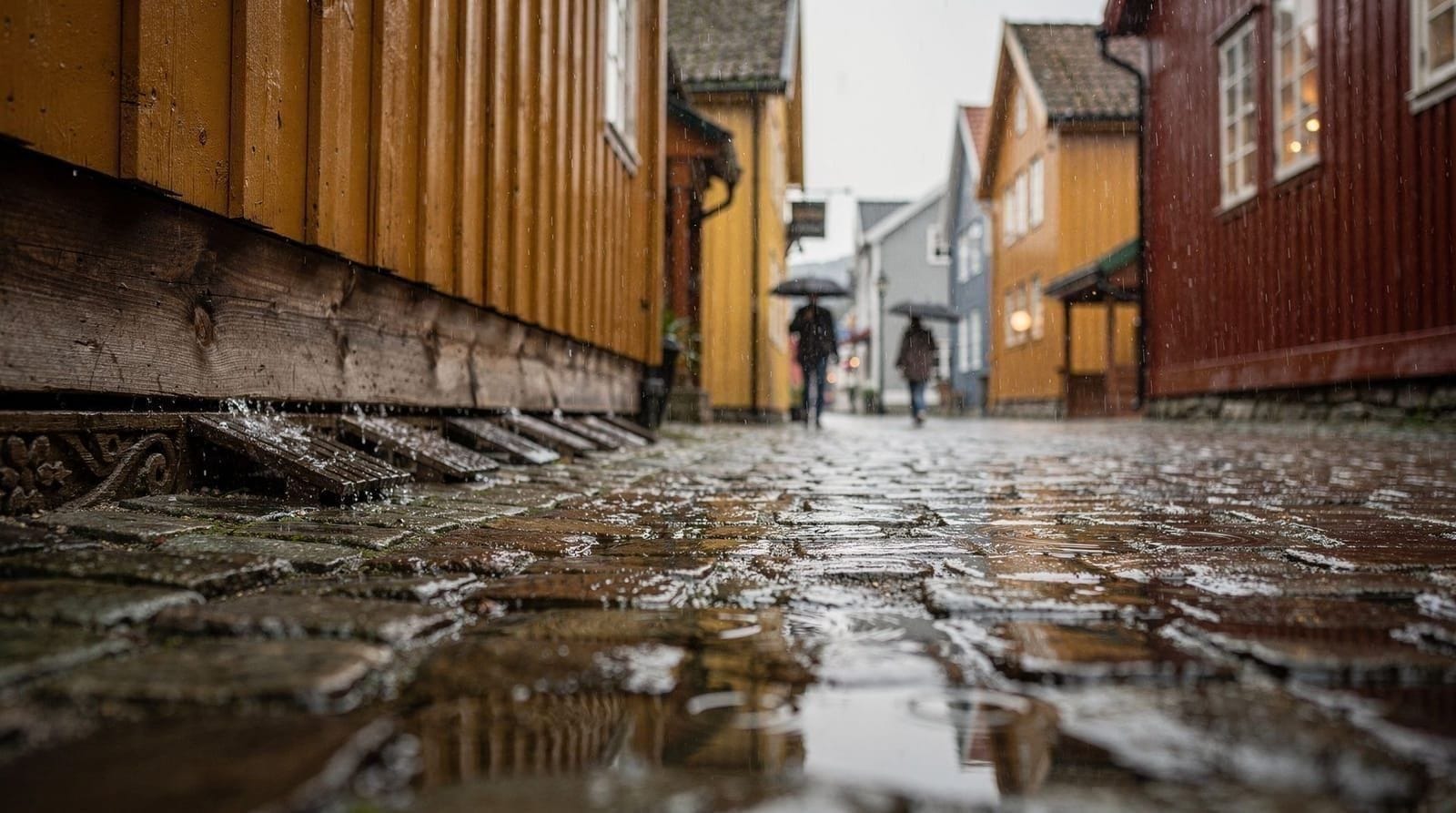
Bergen rains roughly 230 days per year. This is not occasional inconvenient showers — it is a genuine climate reality. Bergen is one of the wettest cities in Europe. Rain is a constant backdrop to most visits. Most of the rain is drizzle rather than downpour, and the city continues functioning normally through all of it. But if your idea of a good holiday is sitting outside at a café in warm sunshine, Bergen will disappoint you.
The city center is small. Two days covers the main sights without rushing. A third city day starts to feel repetitive for travelers who have already done Bryggen, Fløibanen, the fish market and KODE. Bergen is excellent as a base for fjord exploration; less compelling as a standalone week-long city destination.
Bergen vs. other alternatives
Bergen vs. Oslo: Oslo is Norway’s capital, with excellent museums (Viking Ship Museum, Munch Museum, National Gallery), but it is further from the dramatic fjord landscapes. Bergen has quicker access to the fjords and a more characterful old town. If you have one chance at Norway, Bergen wins for scenery access; Oslo wins for cultural depth and museum quality.
Bergen vs. Reykjavik: Both are expensive northern city-trip destinations with extreme weather variability. Reykjavik offers more geothermal activity, midnight sun in summer, and aurora in winter — a different kind of natural theater. Bergen offers fjords, hiking and a more obviously European historic city. They serve different travel appetites.
Bergen vs. Stavanger: Stavanger is the gateway to Preikestolen (Pulpit Rock) and Lysefjord — stunning destinations in their own right. But Stavanger has less city character than Bergen, and the fjords around it are spectacular rather than the iconic Nærøyfjord/Sognefjord system. Bergen wins on overall range.
Bergen vs. Ålesund: Ålesund has perhaps the most beautiful city center in Norway (Art Nouveau architecture after an 1904 fire), and is the closest access point for Geirangerfjord. Bergen is more internationally accessible (BGO airport) and has more developed tourist infrastructure.
Who Bergen is genuinely for
Bergen is a strong choice if you:
- Are primarily visiting for fjord scenery and access to Norway’s iconic landscapes
- Can accept and plan around rain rather than resenting it
- Have a realistic Norway budget (NOK 2,500–3,500/day mid-range per person)
- Want a city that combines walkable historic character with immediate outdoor access
- Have 3–5 days and want to combine city time with day trips into the fjord system
Bergen may disappoint you if you:
- Are expecting warm, dry weather as a baseline
- Want a budget holiday (Norway is not that)
- Are primarily interested in urban nightlife, large museums, or warm-climate activities
- Have only one day (it can be done, but it is not Bergen at its best).
The fjords tilt the verdict
The most important context for “is Bergen worth it” is the fjord access. Bergen is not just a city — it is the launch point for the most scenically dramatic fjord country in Western Norway.
The Norway in a Nutshell circuit — Bergen to Myrdal by train, Flåm Railway descent, Nærøyfjord cruise, bus to Voss, return to Bergen — is one of the most genuinely spectacular day trips available from any European city. The Nærøyfjord, at 250 m wide in its narrowest section with fjord walls rising 1,400 m, is not describable without sounding hyperbolic. It simply has to be seen.
If your trip includes even one fjord day trip from Bergen — the Norway in a Nutshell circuit, a Mostraumen cruise, or a Hardangerfjord excursion — the question “was Bergen worth it” almost always gets a yes.
If your trip is purely urban (Bryggen walks, museums, restaurant evenings) without any fjord excursion, the answer is more conditional: it depends on how much you value Hanseatic architecture and rain-soaked mountain walks over other European city alternatives.
What makes Bergen worth it specifically
Bryggen in the early morning: The UNESCO-listed wharf before 9 am, before cruise ships disgorge thousands of passengers, is genuinely peaceful and architecturally beautiful. The medieval alleyways behind the colorful facades are easy to miss if you only see the frontage from across the harbor.
Fløibanen to Mount Fløyen: A 6-minute funicular ride to a 320-meter summit with panoramic city and fjord views. On a clear day, you can see the mountain ridges extending northwest toward the open sea. The trails from the summit (including a 45-minute return loop and a 3-hour ridge walk toward Ulriken) are well-maintained and genuinely good walking.
The Flåm Railway: Even as a component of the Norway in a Nutshell circuit rather than a standalone trip, the 20-km descent from Myrdal at 866 m to Flåm at sea level — past waterfalls, mountain villages and dramatic cliff faces — takes about 55 minutes and is one of the most scenic train journeys in the world. This is not marketing language; it regularly appears in credible lists of the world’s great rail experiences.
September light: Bergen in September — autumn foliage on the mountain slopes, lower crowds, 30–40% lower prices — is underrated as a travel experience. The light is good for photography, the city is less crowded, and all major attractions remain fully operational through the month.
The verdict
Bergen is worth visiting for most travelers who come with realistic expectations about weather and cost. The UNESCO waterfront, immediate mountain access, fjord day trips and compact city character make it one of the genuinely distinctive city-trip destinations in northern Europe.
It is not worth visiting if you expect Mediterranean weather, are working with a tight budget without flexibility, or are looking for a large-scale urban experience. But as a base for Western Norway fjord exploration combined with a characterful historic city, it is hard to fault.
Read the Bergen first-timer guide for practical setup, and Bergen travel budget for realistic cost planning.
Bergen: City Sightseeing, Fjord Cruise & Mt Fløyen FunicularFrequently asked questions about whether Bergen is worth visiting
Is Bergen better than Oslo?
For scenery and fjord access, Bergen. For museums and urban scale, Oslo. They are genuinely different experiences. Most travelers doing a first trip to Norway visit both — Bergen first by train on the Bergen Line, for the scenic approach.
Is Bergen expensive compared to other Scandinavian cities?
Bergen is comparable to Oslo and slightly less expensive than central Oslo. Both are among the most expensive cities in Europe. Stockholm and Copenhagen are roughly 20–30% cheaper. Reykjavik is similarly expensive.
Is Bergen worth it for a weekend?
Two full days (a weekend) covers Bergen city’s main attractions and is a credible visit. You will not have time for a full fjord day trip, which is a limitation. A long weekend (3 nights) allows for one proper day trip.
Is Bergen good for families?
Yes — Fløibanen, the troll forest on Mount Fløyen, Akvariet (Bergen Aquarium), and the Flåm Railway are all family-friendly. The city is compact and very safe. Norway’s family-friendly culture means cafes and restaurants are generally accommodating. Budget for children’s attraction entry, which adds up at Norwegian prices.
What do people dislike about Bergen?
Most complaints center on the weather (predictable), the cost (genuine), and the size (Bergen’s center is small — some travelers feel they have seen everything in 2 days and are at a loss for more). A minority of visitors are disappointed that the fjords require day trips rather than being immediately visible from the city center.
Is Bryggen in Bergen really UNESCO-listed?
Yes. Bryggen was inscribed on the UNESCO World Heritage List in 1979. The wooden buildings represent the surviving portion of a settlement established by German Hanseatic League merchants in the 14th century. The buildings have burned down and been rebuilt multiple times (fire was a constant danger); the current buildings date mostly from after the 1702 fire.
Is Bergen worth visiting if I only care about the fjords, not the city?
Largely yes, but the city is not something to skip past. Bergen’s compactness means the city core (Bryggen, Fløibanen, Fish Market) adds only 1–2 days to a fjord-focused trip, and skipping it to save time is a poor trade — you gain almost nothing in schedule flexibility while losing an easy, high-value part of the visit. If fjords truly are the only priority, Bergen is still the most practical gateway city to reach them from.
Is Bergen worth visiting in shoulder season versus peak summer?
For value, shoulder season (May or September) is arguably the better “worth it” answer. Prices drop 20–30%, crowds thin at Fløibanen and Bryggen, and most fjord day trips still run a full schedule. The trade-off is slightly cooler temperatures and a shorter window of long daylight. For most travelers without fixed summer holiday dates, May or September delivers a stronger worth-it verdict than July.
The honest case for first-timers vs. returning visitors
For first-time Norway visitors: Bergen is almost certainly the right choice over Oslo as a primary destination. It offers the fjords, a more visually distinctive city center, and a manageable scale that does not feel overwhelming. Oslo’s museums — the Viking Ship Museum, the Munch Museum — are excellent, but the city landscape itself is less immediately striking than Bergen. Go to Bergen first.
For returning Norway visitors: Bergen has less obvious replay value on a second visit if you have already done the Fløibanen, KODE, Bryggen, and a fjord day trip. A second Bergen visit justifies itself primarily if you are expanding into the fjord region — spending nights at Flåm or along the Hardangerfjord, hiking Trolltunga or Preikestolen, or reaching Geirangerfjord as part of a wider itinerary.
Specific worthwhile experiences with honest caveats
Edvard Grieg’s home at Troldhaugen: 20 minutes from Bergen city center by Bybanen light rail to Nesttun, then a short bus or 20-minute walk. The composer’s villa, garden, and studio (where he wrote many of his major works) are preserved and well-presented. Summer concerts are held in the on-site concert hall. Entry: NOK 130. Worth it for music-interested visitors; less compelling if you have no particular Grieg interest.
Mt. Ulriken cable car: At 643 m, Ulriken is the highest of Bergen’s seven mountains reachable by cable car (NOK 435 return). The view exceeds Fløyen in elevation and on a clear day extends significantly further. The ridge walk from Ulriken to Fløyen (3–4 hours, moderate) is one of Bergen’s best half-day hikes. Honest caveat: the cable car is frequently closed in high wind, which is common in Bergen. Check the Ulriken website before planning your day around it.
Fish Market (Fisketorget): The outdoor stalls are genuinely worth visiting for a shrimp sandwich or fresh salmon. The indoor hall year-round. Honest caveat: the sit-down restaurants inside the market building charge premium tourist prices. Stick to the stalls or walk three minutes inland for restaurant dining.
Aquarium (Akvariet): Bergen’s aquarium at the tip of Nordnes peninsula is one of the better Norwegian aquariums — penguins, seals, fjord fish species, and a children’s touch pool. Entry: NOK 320 adult, NOK 200 child. Worth it for families; borderline for adults without children.
Bergen worth-it, by traveler budget
The “worth it” answer shifts depending on how much flexibility you have with money, which is worth being explicit about:
| Budget style | Verdict | Notes |
|---|---|---|
| Backpacker / tight budget | Marginal | Norway’s baseline costs (transport, food) are high regardless of accommodation choices; hostels and self-catering help but do not fully offset it |
| Mid-range (NOK 2,500–3,500/day) | Strong yes | This is where Bergen’s value case is clearest — a comfortable hotel, restaurant meals, and one fjord day trip fit comfortably |
| Splurge / no tight limit | Yes, with more options | Premium hotels at Bryggen, private guided fjord tours, and Michelin-adjacent dining become available, though the core experience does not change much |
For genuinely budget-constrained travelers, Bergen on a budget covers the concrete ways to reduce costs without missing the highlights.
What Bergen delivers that photographs do not capture
The photographs of Bryggen that circulate widely — bright red, yellow and ochre wooden facades reflected in calm harbor water — are accurate but incomplete. What they do not show is the depth behind the frontage: the maze of narrow alleyways, the wooden galleries connecting buildings at different heights, the medieval urban structure of goods-storage lanes and merchant quarters that still organizes the layout behind the photogenic face.
Walking into those alleyways — especially before the crowds arrive — gives Bergen’s UNESCO listing a felt sense rather than an abstract one. Most cities with UNESCO heritage sites have the heritage behind glass or accessible only as museum exhibits. Bryggen lets you walk through it, touch the weathered wood, look into workshop windows, and buy from craftspeople working in exactly the spaces that Hanseatic merchants worked in centuries earlier. That experience is legitimately rare.
Similarly, the Fløibanen to Fløyen view is a case where a photograph captures the factual content (city, fjord, mountains) but cannot replicate the orientation effect of standing at 320 m looking down at Bergen’s red-tile rooftops and out to the fjord beyond. It is worth the ticket price and the queue.
The rain: a final honest assessment
If you asked a Bergen resident “is Bergen worth visiting?” they would likely point out that they live there voluntarily, which says something. But more usefully: no Bergen resident finds the rain a deterrent to doing things they want to do. The city functions at full capacity in rain. The culture adapts to it. The gear exists to handle it.
The travelers who find Bergen a disappointment due to weather are almost always travelers who treated Bergen’s rain as an exception to plan around rather than a given to plan for. Showing up with inadequate rain gear and expecting dry days is a setup for frustration.
Pack properly for Bergen in the rain, treat the drizzle as atmospheric rather than disqualifying, and Bergen’s weather is genuinely manageable. The experiences that make Bergen worth visiting — Bryggen at dawn, Fløibanen in mist, Nærøyfjord walls disappearing into cloud — do not require sunshine to work. Some of them are enhanced by grey weather.
The bottom line: Bergen is worth visiting for the right traveler, with the right expectations, packed for the right conditions. For travelers who check those boxes, it routinely exceeds expectations. For those who show up expecting Mediterranean conditions at northern prices, the disappointment is predictable and avoidable.
What tips the “worth it” answer to no
For completeness, a few traveler profiles for whom Bergen is genuinely the wrong choice, not just a compromise:
- Anyone with fewer than 2 days available and a tight budget. A rushed, expensive one-day Bergen stop delivers a worse impression than the city deserves. Better to skip it and spend that day and budget somewhere it goes further.
- Travelers seeking guaranteed sunshine or beach time. No amount of expectation-management fixes a fundamental mismatch between what Bergen offers and what you actually want from the trip.
- Anyone unwilling to spend on outdoor gear or a rain jacket. Bergen without proper waterproofs is a genuinely miserable experience; the city itself is not the problem, unpreparedness is.
- Value-focused travelers comparing against Southern Europe. If cost-per-day is the primary decision factor, Portugal, Spain, or the Balkans deliver more for less. Bergen’s case rests on the fjords and heritage, not on being a budget destination.