Best photo spots in Bergen — 12 locations worth your memory card
Bergen photographs well in almost any weather. Rain adds reflection and mist; sun illuminates the painted timber of Bryggen against a bright harbor; overcast skies produce the even, flattering light that portrait photographers prefer. What the city rewards above all is timing — arriving at Bryggen before 8 am is the difference between a composition you are proud of and a background of yellow ponchos and selfie sticks.
Below are Bergen’s 12 most productive photography locations, organized by practicality and honest difficulty.
| Best single shot | Bryggen waterfront, 5–7 am |
| Best elevated view | Fløyen (dawn) or Ulriken (sunset) |
| Gear needed | Wide angle + 50–85mm; tripod optional |
| Golden hour reliability | Morning (6–8 am) more reliable than sunset |
| Best month overall | September — light, foliage, low crowds |
1. Bryggen waterfront (Tyskebryggen) — the essential shot
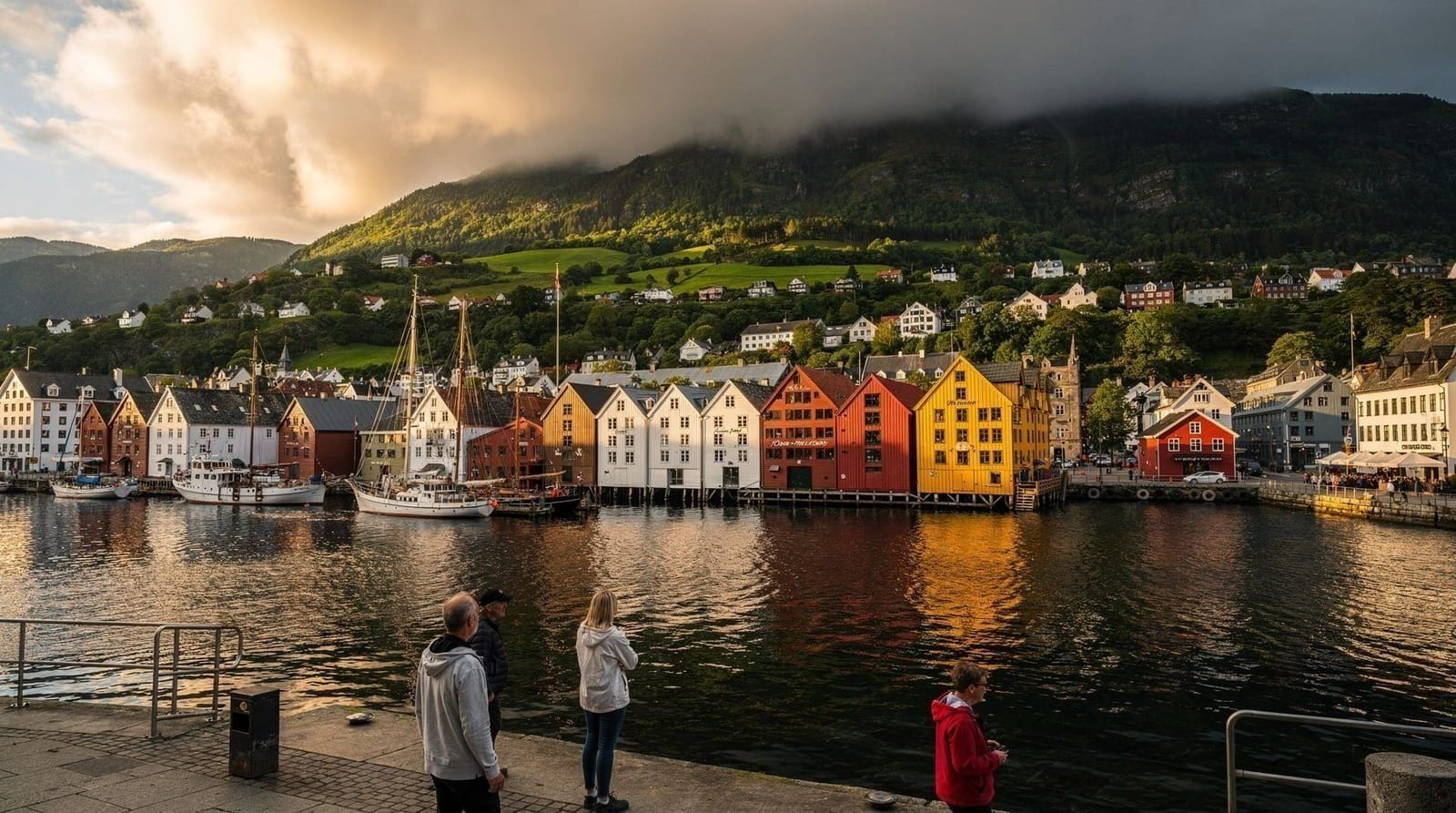
The UNESCO-listed row of painted timber buildings reflected in the harbor is Bergen’s most reproduced image and still worth shooting because the reality matches the photograph. The buildings lean at slight angles due to centuries of subsidence; photographing from the western end of the waterfront gives a perspective-flattening effect that emphasizes the irregularity.
Best timing: 5–7 am in June–July. The sun comes over the Fløyen mountains early and hits the front facades in warm directional light before 8 am. By 9:30 am, cruise passengers fill the frame. In September, 6–8 am works well with softer autumn light.
Exact position: Stand at the junction of Bryggen street and Torget (the square), facing west along the waterfront. Alternatively, the narrow footbridge at Kjøttbasaren to the north gives a slightly elevated angle.
Lens: Wide angle (24mm equivalent) to fit the full row, or 50–85mm to isolate individual buildings.
Crowds: Zero before 7:30 am. Tourist density peaks 10 am–2 pm.
If the weather is poor on your first morning, do not write the shot off. Wet stone and low cloud suit the waterfront, and the same spot often looks completely different an hour later. The Bryggen guide explains the history behind the buildings, which helps you decide which facades deserve a closer frame.
2. Bryggen alleyways — behind the facades
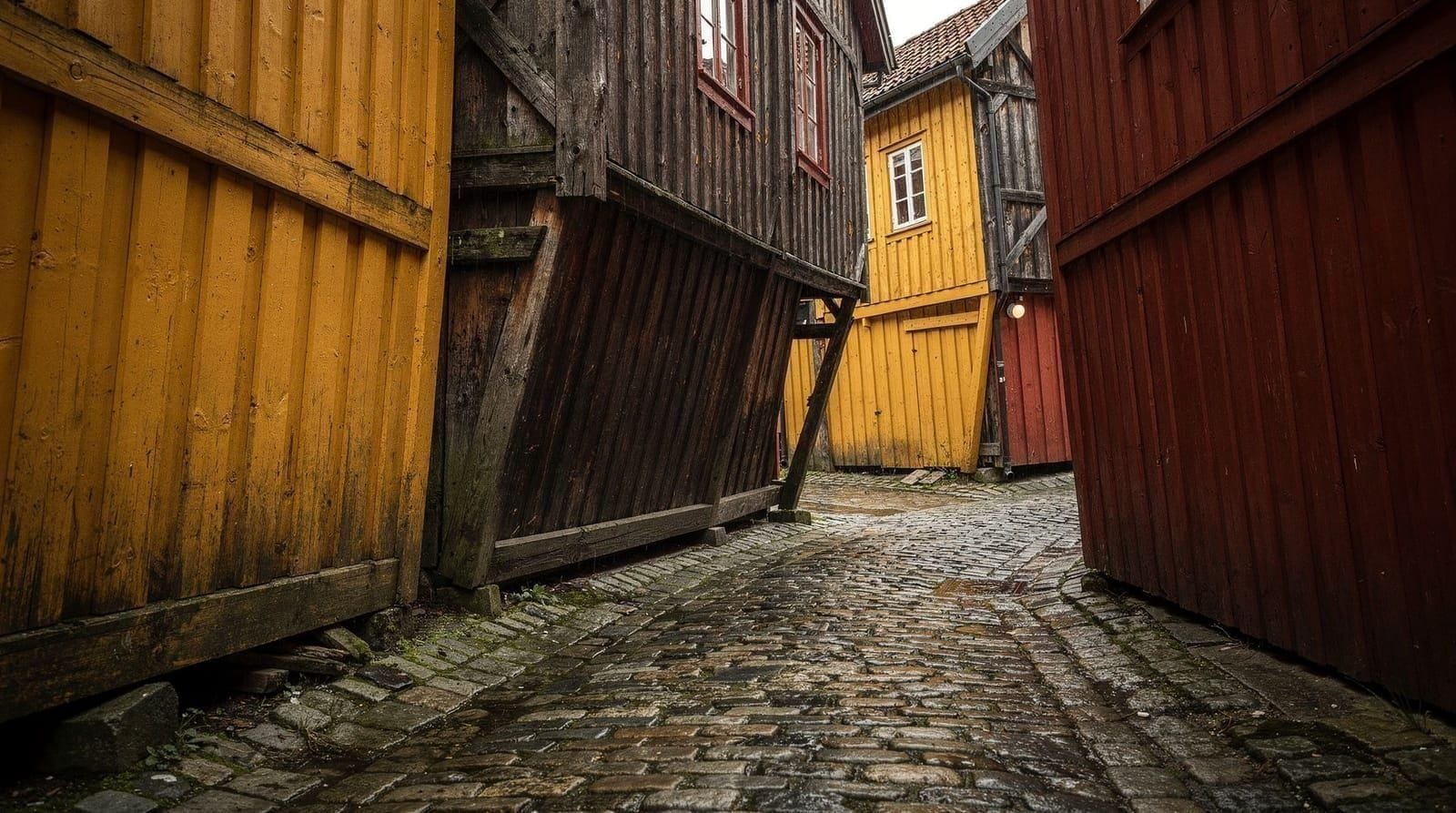
The alleyways behind Bryggen’s main frontage are actually the more architecturally interesting subject: timber stairs, hanging wooden balconies, narrow passages where buildings lean together overhead. Morning light enters these east-west passages from about 8 am.
Strandsiden and Bredsgårdsalmenningen are the two main passage systems. Strandsiden is narrower and more photogenic; Bredsgårdsalmenningen is wider and better for detail shots of the architecture.
Practical: These passages are free to enter 24 hours. Night photography is possible using a tripod on the stone floors.
3. Mount Fløyen — city panorama
The panoramic view from Fløyen (320 m) shows Bergen’s entire geography at once: the harbor, Bryggen, the surrounding six mountains, and — on clear days — glimpses of the Osterfjord to the north. The Fløibanen funicular reaches the summit in 6 minutes.
Best timing: Shortly after sunrise for directional light on the city below. Late afternoon in summer (5–7 pm) gives warm side-lighting on Bryggen from the funicular platform. Sunset from Fløyen is rare because Bergen’s clouds usually close in by evening, but when it clears, the view is spectacular.
Access: Fløibanen return ticket (current price at floibanen.no). Book timed slot online for summer visits to avoid queuing. See the Fløibanen funicular guide for full detail.
Walking alternative: The mountain path from the funicular station connects to 80 km of marked trails. The ridge toward Rundemanen (30 minutes’ walk, 568 m) gives elevated views looking back down onto Fløyen and the city.
4. Mount Ulriken — aerial perspective and sunset
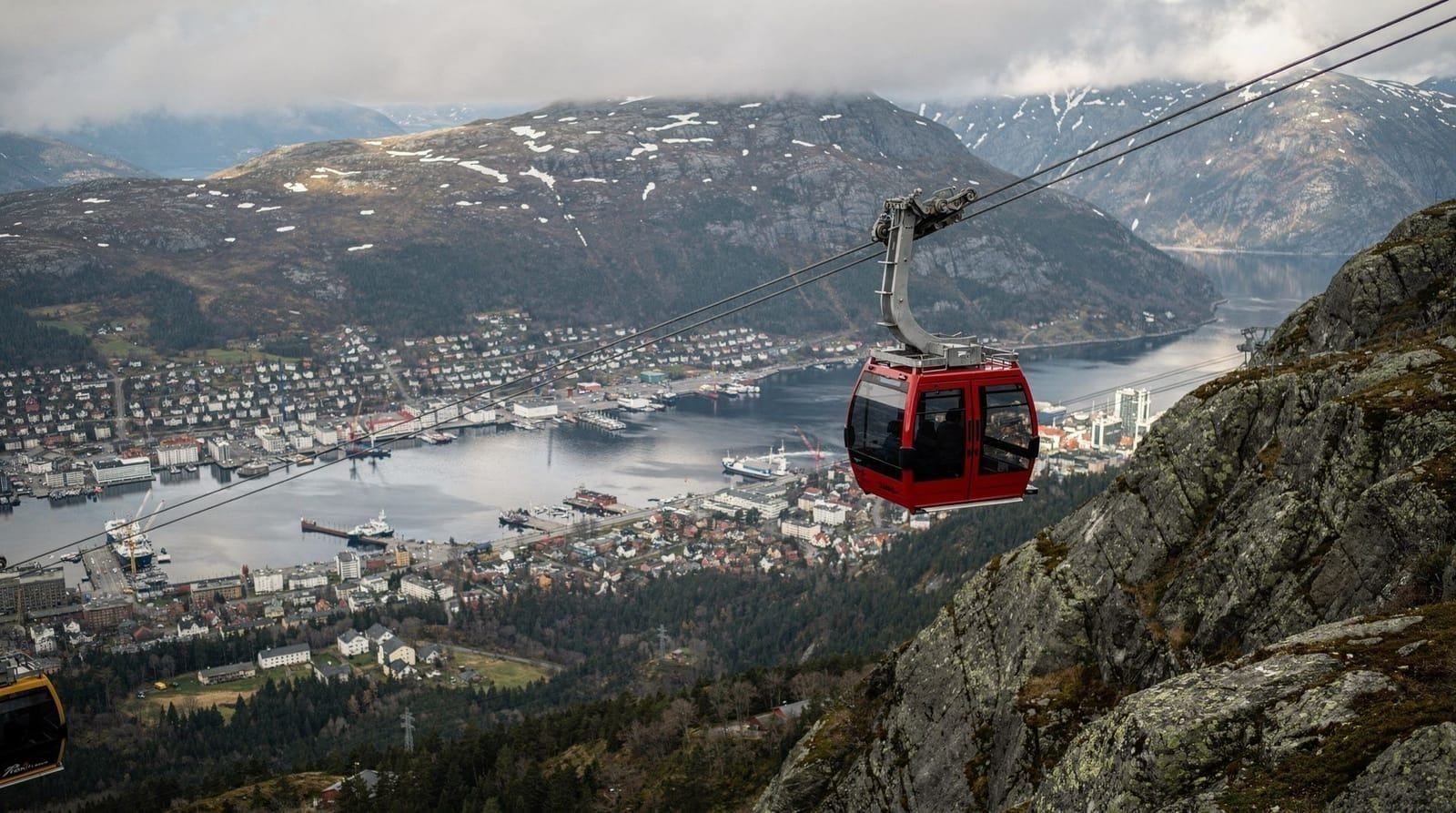
Ulriken is Bergen’s highest mountain (643 m) and gives a wider, more aerial view than Fløyen. The cable car (Ulriksbanen) ascends from Haukeland in 7 minutes. On clear days the view reaches Hardangerfjord to the south and the outer islands to the west.
Best timing: Sunset. Ulriken faces west and the late afternoon light illuminates the coastal skerries beyond Bergen in gold. The cable car runs until 10 pm in summer. Bring warm clothing — the summit is typically 5–8°C cooler than the city.
Access: NOK 249 return adult. The cable car base station is 30 minutes’ walk from the city center or 10 minutes by bus (route 2 from Torget). See the Ulriken cable car guide for access details.
Ridge walk: The marked ridge trail connects Ulriken to Fløyen in approximately 2 hours (one-way). Good light conditions for photography throughout, but no trail lighting — allow time to return before dark in autumn.
5. Torget and the harbor — wide-angle city life
The main harbor square (Torget) at the junction of the fish market, the Bybanen stop, and the waterfront ferries is Bergen’s most visually busy public space. It photographs well from a distance — the KODE museums’ classical frontage on one side, the colorful Bryggen roofline on the other, boats in between.
Best timing: Late afternoon when outdoor fish market stalls are still active and the light is warm. Avoid the 11 am–1 pm peak when visibility is reduced by crowd density.
Position: The small bridge over the harbor mouth to the south (near the Zachariasbryggen pier) gives a slightly elevated view looking north toward Bryggen.
6. Fløibanen alley view at the top
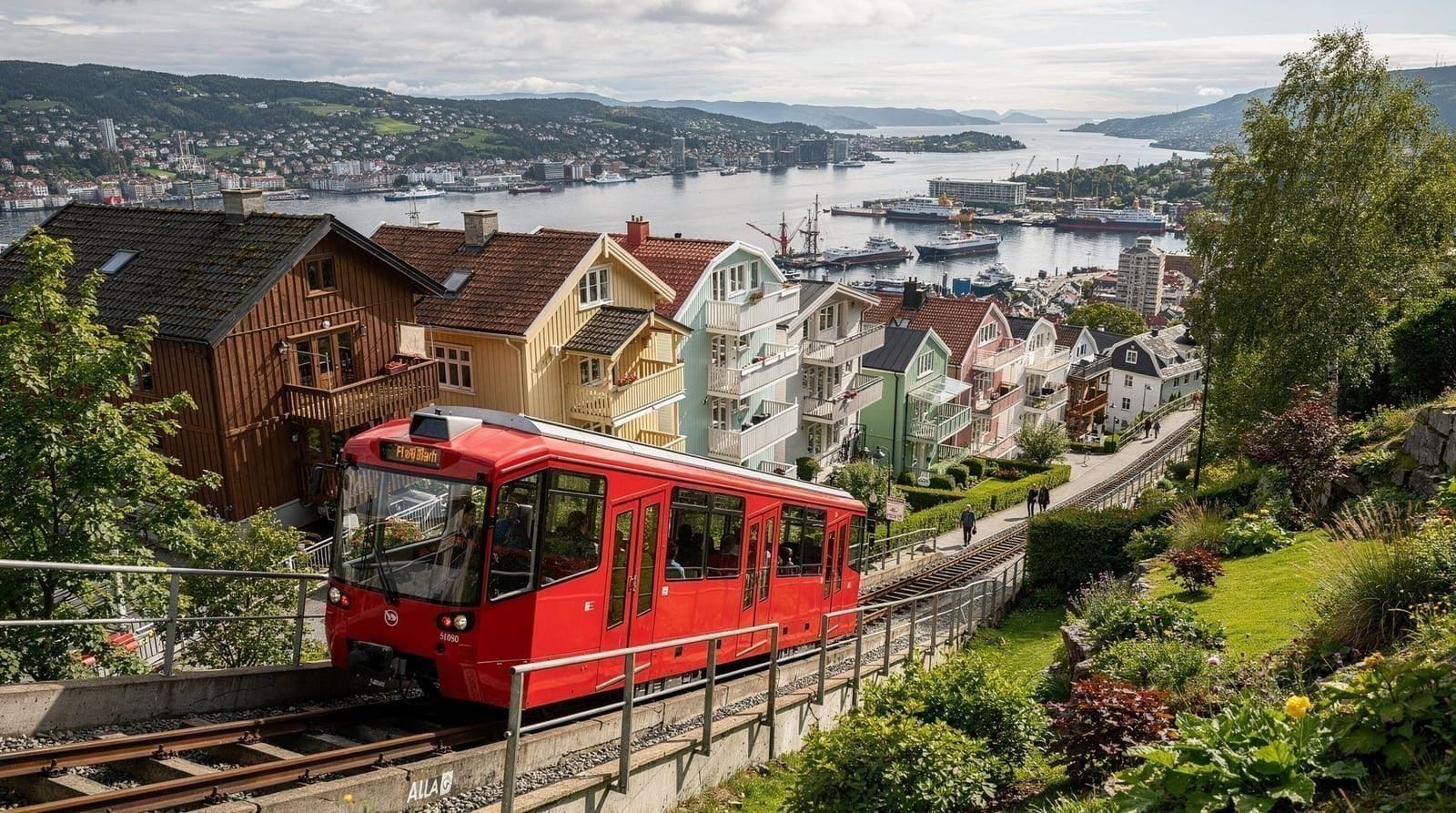
A detail many photographers miss: the view from the funicular car window as you climb through Bergen’s residential streets. The narrow wooden buildings of the Nordnes neighborhood, balconies with planted gardens, and domestic Bergen life pass by at close range. Shoot from the right side of the car (as you ascend).
7. Bergenhus Fortress and harbor
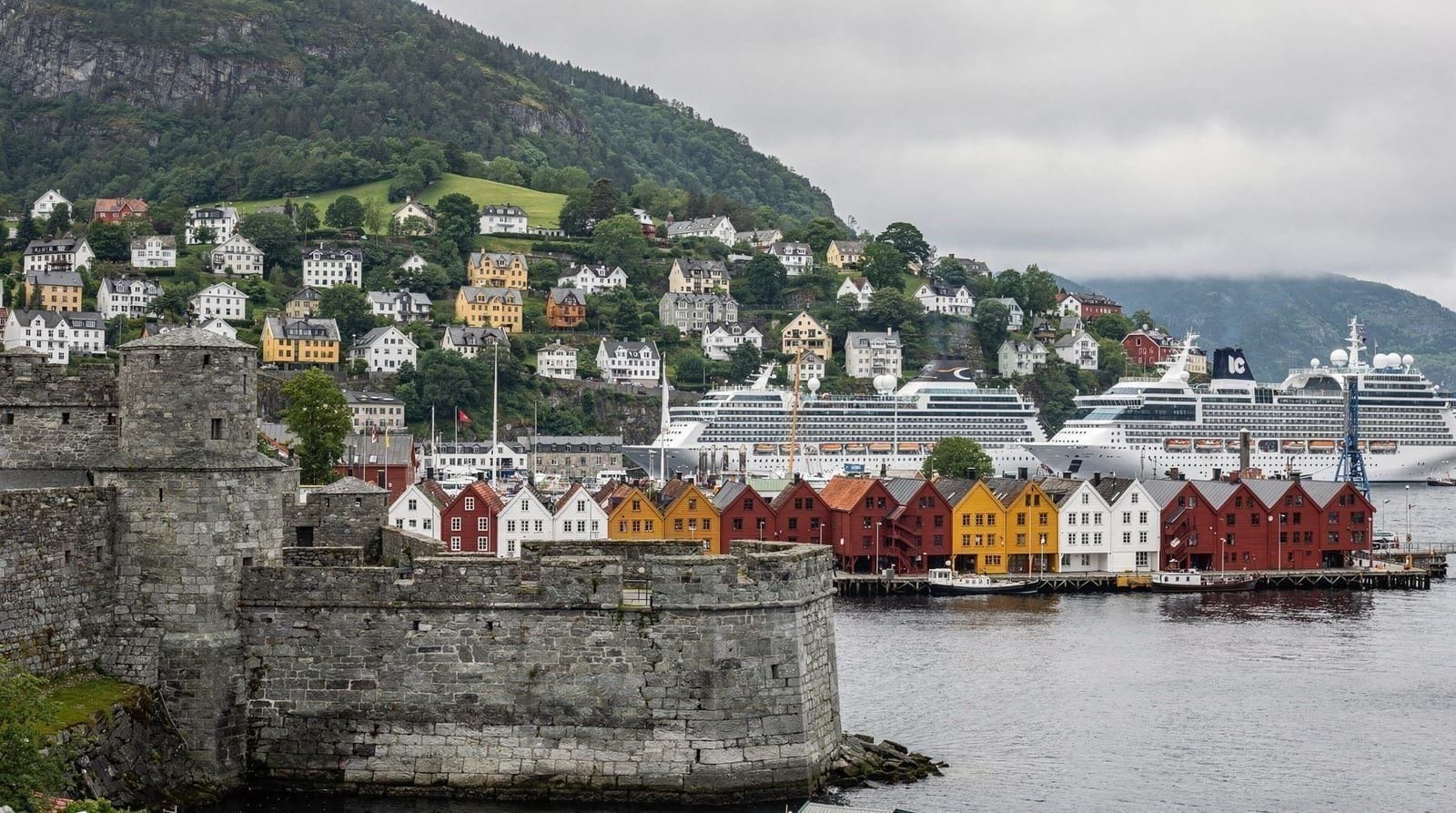
The stone walls and towers of Bergenhus Fortress photograph well with the harbor and Bryggen in the background. The northeast corner of the fortress walls, looking south toward the city center, is a strong composition.
Best timing: Mid-morning when the stone is lit from the southeast. The fortress grounds are free and open year-round. The inner courtyard of Håkonshallen gives framed architecture shots.
For the stories behind the fortress and the wharf, the Bergen city sightseeing guide helps you link several of these viewpoints into one walk, and the museums and culture guide covers what is worth entering when the light turns flat.
8. Fisketorget at dawn
The fish market before it opens (before 8 am) is a strange and beautiful scene: empty stalls, the wooden frames set up, the harbor quiet. In midsummer, this is already in full sunlight by 5:30 am.
The indoor Mathallen hall has good interior light in late morning when natural light enters through the roof panels.
If the market is your main interest, the Bergen fish market guide explains how it works, and the food and drink guide points to places where you can photograph the dishes as well as the stalls.
9. Nordnes peninsula — residential Bergen
The Nordnes neighborhood (the western peninsula) is where actual Bergeners live. Wooden houses painted in yellow, red, and white, steep alley stairways, neighborhood gardens. Walk from the aquarium along Nordnesbakken and follow the small streets uphill.
Best timing: Any morning. The afternoon western sun hits the Nordnes facades well from 2–5 pm.
How to get there: 20 minutes’ walk from Bryggen along the harbor, or take the harbor ferry from Torget (short hop, cheap).
10. Nærøyfjord from the cruise boat
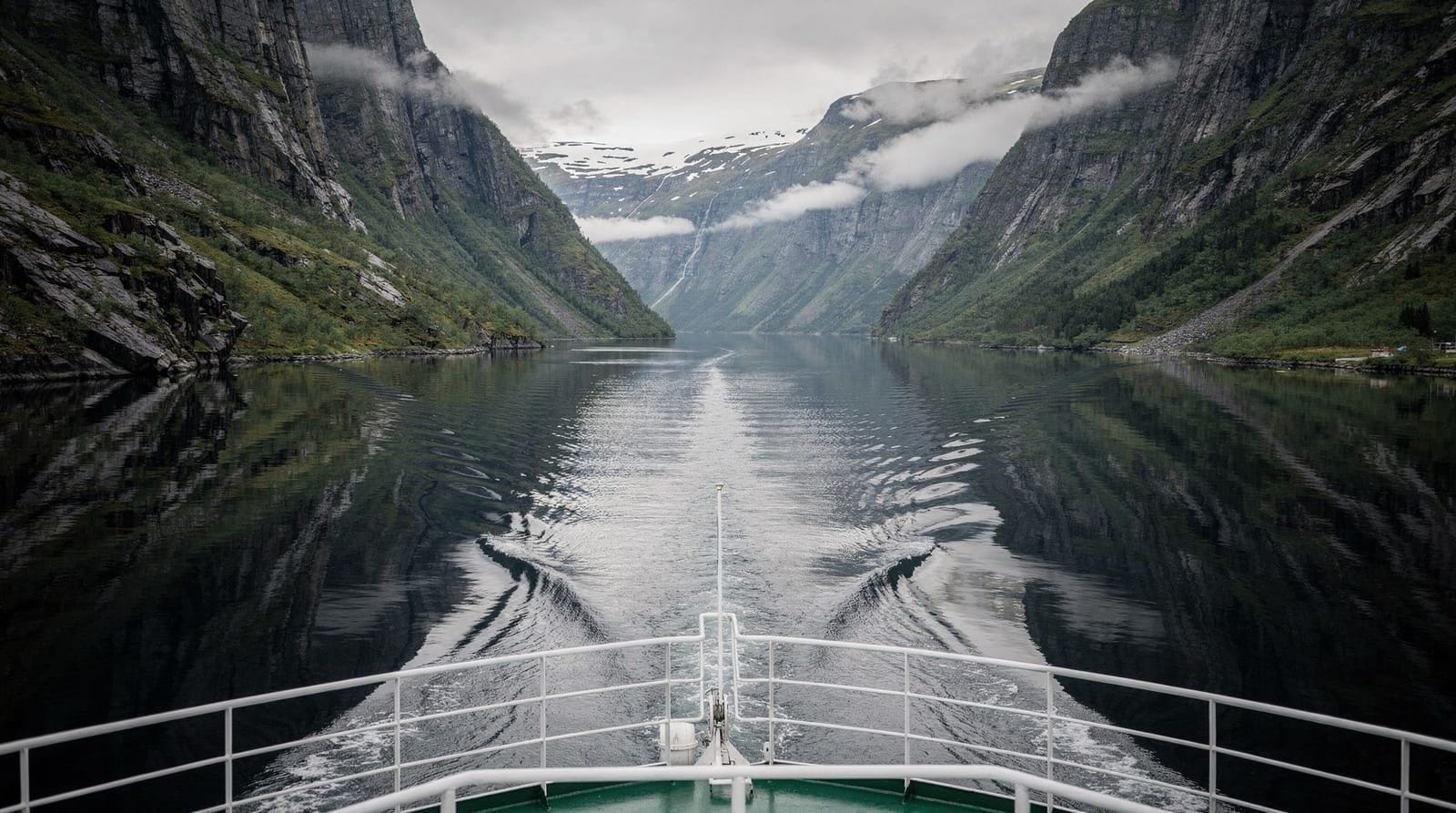
If you are doing the Norway in a Nutshell circuit or a Nærøyfjord cruise, the fjord itself is a major photography location. The vertical walls rising 1,400 meters, the narrow (250m) channel, the abandoned clifftop farms, and the waterfalls are all photographable from the boat.
Best timing for photography: Morning departures from Flåm (10 am–12 pm) when the eastern wall is lit and shadows are still mild. Afternoon (1–3 pm) can work in June when light is still high.
Practical: The boat deck is cold and windy; use a lens hood to control wind. Rain is frequent but the mist on fjord walls is itself photogenic. See fjord cruises from Bergen for departure times.
Book a Nærøyfjord cruise for fjord photography11. Øvregaten street — the mountain-side alley
Øvregaten runs parallel to Bryggen above the main tourist level, up the slope of the Fløyen foothills. It has a quieter, more residential character — the houses here are older Bergen domestic architecture, and the narrow street creates leading lines toward the mountains.
Kaffemisjonen (Bergen’s best coffee) is on this street; it is a good base from which to photograph the alley in the soft morning light before the café opens at 8 am.
12. Vøringsfossen (Hardangerfjord day trip)
Not in Bergen proper, but reachable as a day trip: Vøringsfossen waterfall in Eidfjord, where the Bjoreio river drops 182 meters in free fall into the Måbødalen gorge below. The new viewing platform opened in 2021 allows you to stand directly above the main drop. Morning light (before noon) enters the gorge and illuminates the spray cloud.
Access: approximately 3 hours from Bergen by car via the Hardangerfjord area. The Hardangerfjord cruise guide covers transport options.
Gear and settings for Bergen’s specific light
Bergen’s weather changes fast enough that packing for one condition is a mistake (see also what to pack for Bergen and Bergen in the rain). A lens hood and a microfiber cloth matter more here than anywhere else in Norway — spray off the harbor and fine rain both coat a lens invisibly within minutes on the fjord cruises. For the Bryggen shot, a wide 24mm equivalent captures the full row; for isolating individual timber buildings or people on the alleyways, 50–85mm compresses the scene nicely. Overcast days (common in Bergen) are genuinely good for photography — flat, even light removes the harsh shadows that plague midday sun, and it particularly suits portraits against Bryggen’s colored facades.
A realistic one-day photography route through Bergen
For visitors with a single day, this order minimizes backtracking and uses the light well: Bryggen waterfront at dawn (5–7 am) → Bryggen alleyways as the morning light enters (8–9 am) → Fløibanen up to Fløyen for the city panorama (9–11 am) → Torget and the fish market for city-life shots (midday) → Nordnes peninsula in the afternoon light (2–5 pm) → Ulriken cable car for sunset if the sky is clearing. This route covers roughly 6 of the 12 locations above without needing a car, and it front-loads the light-sensitive shots. See a combined Bergen city and Fløyen sightseeing option ---
Photography in Bergen: honest seasonal guide
May: Driest month, but light is still harsh at midday. Best for flower photographs (cherry orchards in the Hardangerfjord, spring blooms on Fløyen). Moderate crowds.
June–July: Long days (near 19 hours of daylight on June 21). The city barely gets dark. Ideal for all-day shooting but crowds are dense. Bryggen at 5 am is the way to get it without crowds.
August: Daylight shortens noticeably. More golden light at golden hour. Foliage not yet changed; moderate crowds.
September: Best photography month overall. Lower crowds, golden autumn foliage on the mountains (mid-September onward), lower sun angles for warm all-day light, first aurora possible (though Bergen is not a reliable aurora destination — see northern lights from Bergen guide).
October–April: Very low tourist crowds. Bergenhus and Bryggen without a single tourist in frame. Rain and dramatic cloud formations. Short days limit the shooting window, but what you get is uncluttered.
Frequently asked questions about photo spots in Bergen
What is the best time of day to photograph Bryggen?
5–7 am in June–July, when warm morning light hits the facades directly and the quay is empty. In September, 6–8 am works well. The worst time is 10 am–2 pm on any day when cruise ships are in port.
Can you photograph inside the Bryggen buildings?
The alleyways and passages are fully open for photography. The Bryggens Museum interior allows photography (no flash); the Hanseatic Museum has restrictions on photography of some artifacts — check on arrival.
Is Fløyen or Ulriken better for photography?
Fløyen is closer to the city and more easily reached (funicular). Ulriken is higher and gives a wider aerial perspective with better western views for sunset. Fløyen for dawn and city panorama; Ulriken for sunset and coastal views.
Do you need a tripod in Bergen?
Only for night photography and long-exposure waterfall shots (Vøringsfossen). The city’s bright summer days and the funicular’s views all work hand-held. A tripod is useful in Bryggen’s darker alleyways or for Bergenhus interiors.
Is the Bergen Aquarium worth photographing?
The aquarium (Akvariet) has excellent underwater viewing tunnels and active seal pools. Photography is permitted throughout. Best for families and wildlife photographers. Entry NOK 320 adult.
Which Bergen neighborhoods are most photogenic beyond Bryggen?
Nordnes (wooden residential houses, harbor views), Møhlenpris (local neighborhood, less touristy), and the Sandviken area north of Bryggen (historic Bergen beyond the tourist circuit) are all rewarding for street photography.
When does Bergen get true golden hour?
In summer, golden hour in Bergen is fleeting — the sun sets late but often behind clouds. The best golden light reliably occurs 6–8 am in June–July (morning). Sunset golden hour is unpredictable due to Bergen’s famous cloud cover. September and October give more reliable sunset light when skies clear.
Is drone photography allowed in Bergen?
Drone use in Norway requires registration and is restricted in populated areas, near the airport, and around Bergenhus Fortress. Bryggen and central Bergen are effectively off-limits for casual drone flying due to population density rules. Check Luftfartstilsynet (Norwegian CAA) regulations before bringing a drone, and do not assume open fjord scenery outside the city is automatically unrestricted.
What is the best photo spot for a first-time visitor with only two hours?
Bryggen waterfront combined with the Fløibanen ride up to Fløyen covers the two most essential Bergen images in about two hours total, including funicular queue time. It is the highest-value combination in the city for a short visit.