Hardangerfjord day trip from Bergen: the orchard fjord guide
Bergen: Cruise to Beautiful Rosendal by the Hardangerfjord
Duration: 7 hours
Is Hardangerfjord worth visiting from Bergen?
Yes — especially in late April and May when the fruit orchards are in blossom. It is a different fjord character from Nærøyfjord: wider, pastoral, rich in waterfalls and cultural stops. If you have two fjord days, Hardangerfjord makes an excellent complement to a Nærøyfjord or Mostraumen day.
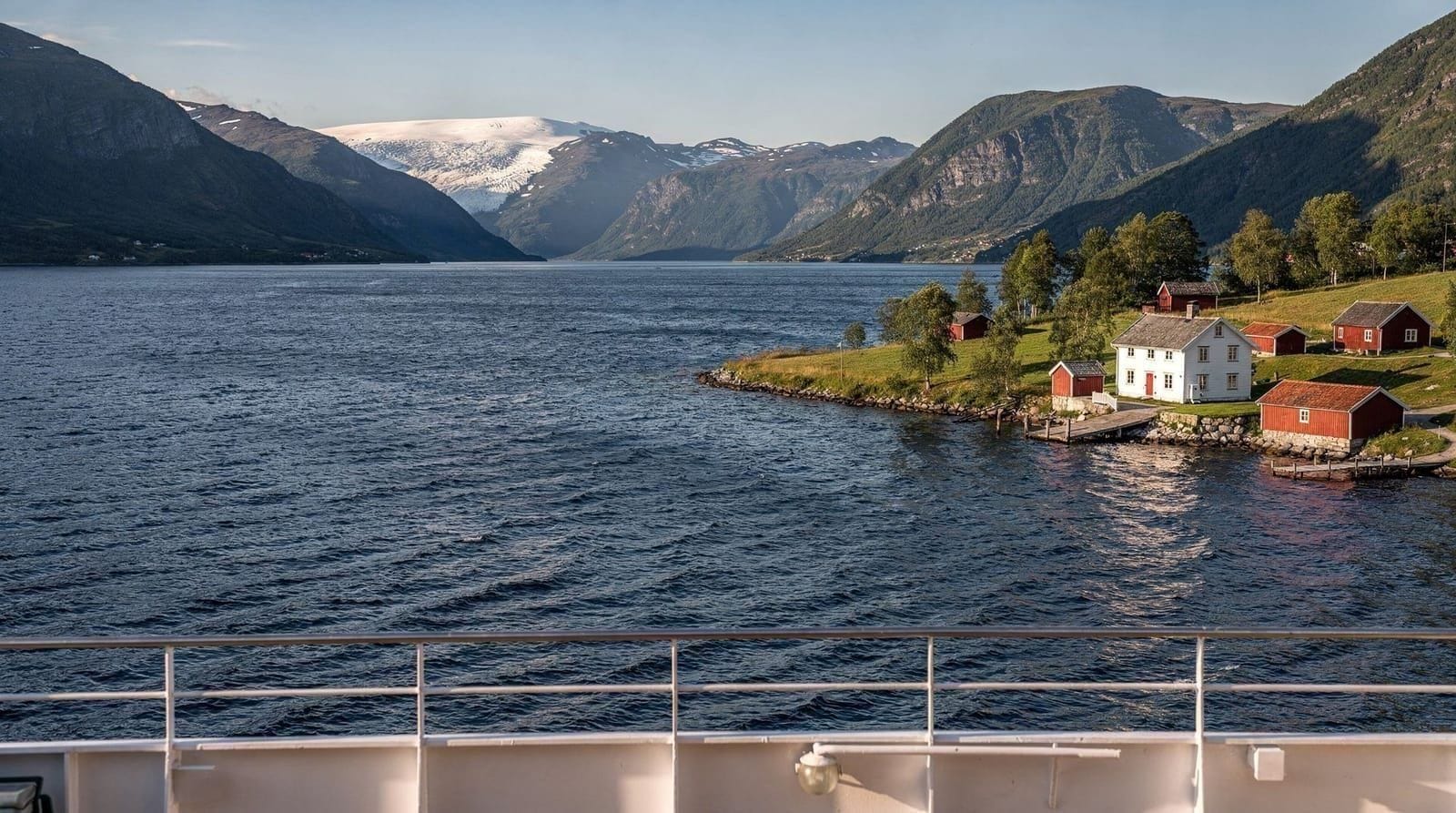
Hardangerfjord is Norway’s second-longest fjord at 179 km and arguably its most culturally layered. Where Nærøyfjord is about vertical drama and raw geology, Hardangerfjord is about the relationship between the landscape and human settlement: orchards climbing the slopes, white-painted farms, a barony with rose gardens, and Norway’s most visited waterfall at its eastern end. It is a fundamentally different fjord experience, and worth treating as such.
| Where | Bergen Strandkaiterminalen to Rosendal/Norheimsund |
| Cost | Around NOK 400–1,800 depending on express boat, car or tour |
| Time needed | 8–10 hours for a day trip; overnight for Vøringsfossen too |
| Getting there | Express boat, self-drive via Hardanger Bridge, or guided tour |
| Best time | Late April–mid-May for blossom season; June–Sept for full access |
What sets Hardangerfjord apart
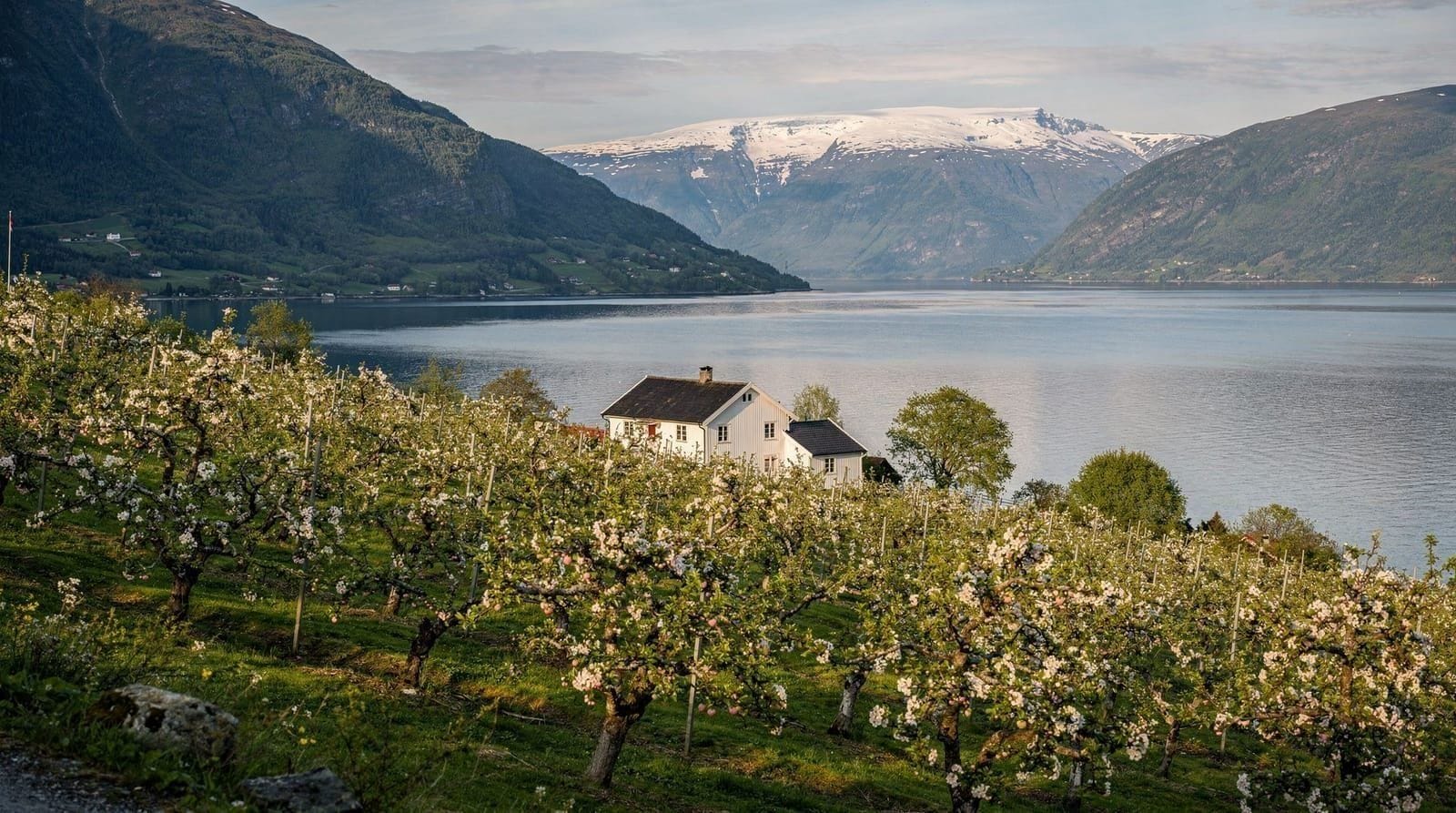
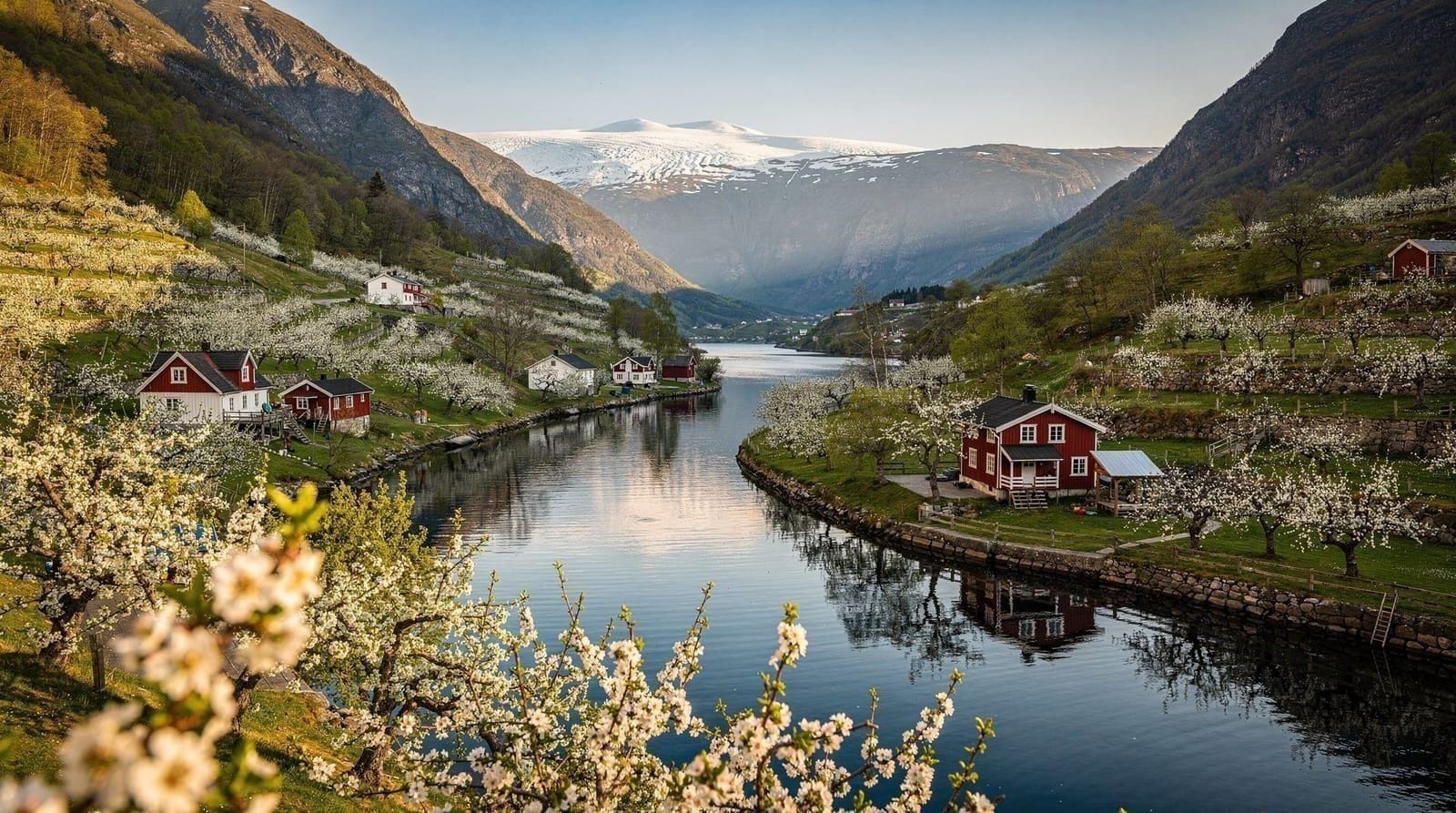
Fruit orchards: The south-facing slopes of Hardangerfjord are sheltered enough to grow cherries, apples, plums and pears — extraordinary given this is 60 degrees north latitude. In late April and May, the blossom season transforms the hillsides into something that seems improbable for Western Norway. This is genuinely unique; no other Norwegian fjord offers anything like it.
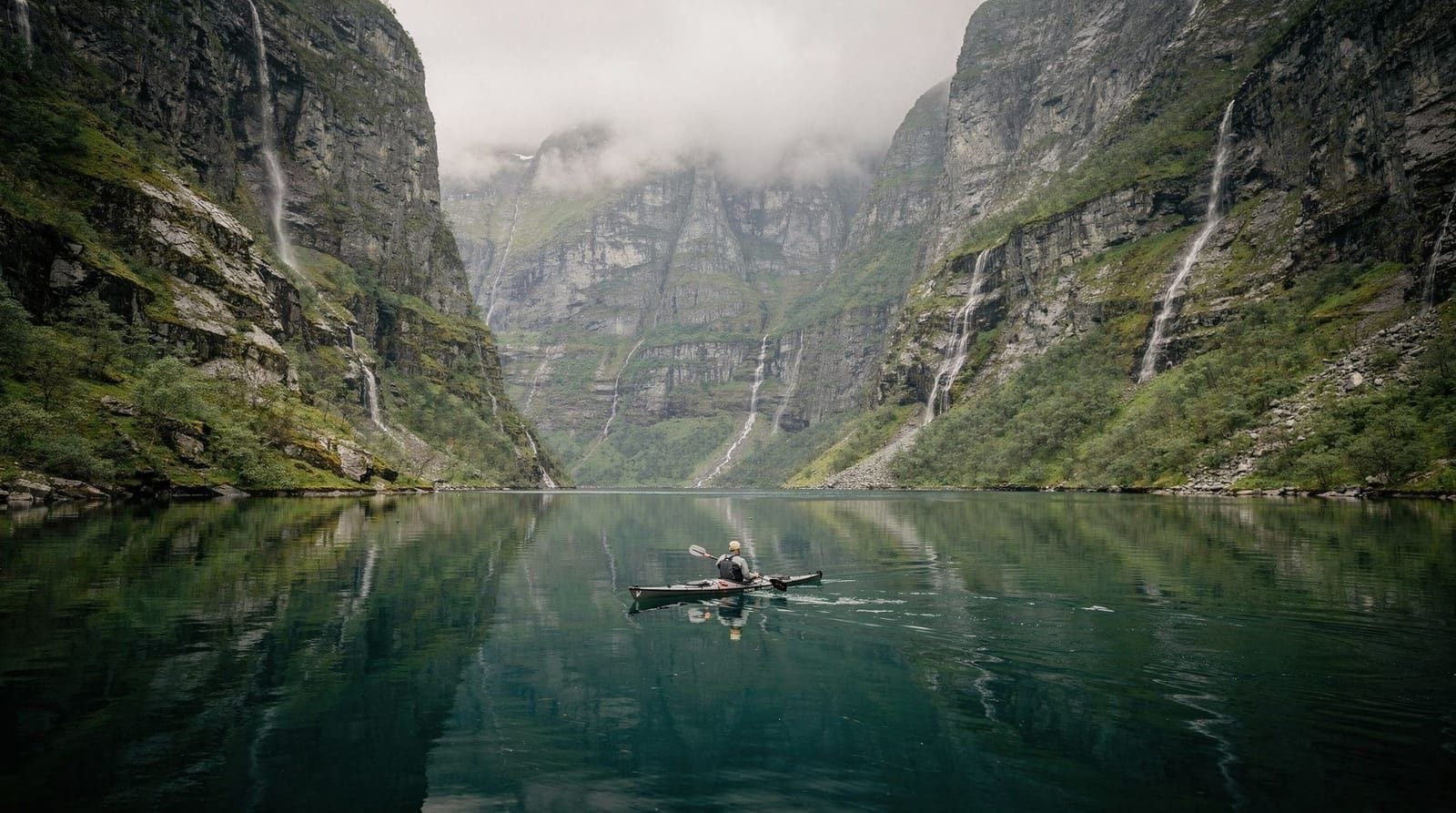
Width and scale: Hardangerfjord is wide — up to 15 km in the main channel. This makes it less claustrophobic than Nærøyfjord but also less vertically dramatic. The scenery is pastoral and grand rather than canyon-intense. Photographers seeking the classic narrow-fjord shot will prefer Nærøyfjord; those wanting broader vistas and a slower pace will appreciate Hardangerfjord.
Waterfalls: Hardangerfjord and its upper valley (Eidfjord/Hardangervidda) have an exceptional concentration of significant waterfalls. Steinsdalsfossen (walk-behind waterfall near Norheimsund), Låtefossen (twin falls at Odda), and Vøringsfossen (182 m free fall, Norway’s most visited) are all within the broader Hardangerfjord region.
Cultural depth: The Baroniet Rosendal, Hardangerfjord Museum, the Norse king’s farm at Utne, and the Hardanger fiddle tradition (the hardingfele is deeply rooted in this region) give Hardangerfjord cultural weight beyond scenery alone.
Getting there from Bergen
Option 1: Express boat (Hardangerfjordekspressen)
The most comfortable option. Departs from Bergen Strandkaiterminalen (central pier). Journey to Rosendal: approximately 2 hours. Journey to Norheimsund: approximately 1.5 hours. Journey to Lofthus (near Ullensvang): approximately 2.5 hours.
Cost: approximately NOK 450–650 per adult each way. Return tickets are proportionally cheaper. The express boat is operated by Skyss and Norled.
This is the recommended option for visitors without a car. You arrive directly in Rosendal or Norheimsund and can explore on foot or by bicycle. Note: the schedule is limited — typically 2–3 departures per day. Check timetables at skyss.no before planning.
Bergen: Cruise to Beautiful Rosendal by the HardangerfjordOption 2: By car
Bergen → Norheimsund → Rosendal loop by road takes 2.5–3 hours depending on ferry crossings. The route via the Hardanger Bridge (Hardangerbrua, opened 2013) eliminates one ferry crossing and is the standard route for self-driving visitors.
By car you can stop at Steinsdalsfossen (walk behind the waterfall, 20 minutes), drive to Rosendal (the barony and village), continue to Lofthus and the orchards, and potentially extend to Eidfjord and Vøringsfossen.
Toll reality: Norway’s road tolls apply via AutoPASS transponder (charged to your rental car account) at approximately NOK 30–80 per toll plaza. Budget NOK 200–400 for a Hardangerfjord driving day including the Hardanger Bridge toll.
Option 3: Guided day tour
Several operators run Hardangerfjord day tours from Bergen, typically by minibus or coach, covering Steinsdalsfossen, Rosendal or Lofthus, and sometimes Vøringsfossen. These are good for visitors who want to cover maximum ground without driving. Prices range from NOK 1,200–1,800 per person including transport and often one entry fee.
Scenic Hardangerfjord, Waterfalls, and Orchards Day TripWhat to see in Hardangerfjord
Rosendal and Baroniet Rosendal
Rosendal is a small village (population around 1,000) on the south shore of Sørfjorden, an inner arm of Hardangerfjord. The Baroniet Rosendal — Norway’s only barony — is a 17th-century manor house set against the Folgefonna glacier above. The rose gardens are impressive in June and July. The interior has period furniture and an art collection. Entry approximately NOK 130–180 per adult.
The surrounding landscape — with the Folgefonna glacier visible above the orchards — is one of the most classically beautiful in Western Norway.
Steinsdalsfossen
A 50-metre waterfall near Norheimsund with a path that passes behind the curtain of water. It is free to visit (parking available, NOK 50) and takes 20–30 minutes to experience properly. Bring waterproof gear — you will get wet. This is one of those genuinely impressive natural features that photographs do not fully prepare you for.
Lofthus and the orchard villages
Lofthus, on the eastern shore of Sørfjorden, is the center of the orchard culture. In blossom season, the view across the fjord with the Folgefonna glacier above is exceptional. The village has the Ullensvang Resort (one of Norway’s grand fjord hotels), a medieval church, and walking paths through the orchards.
Vøringsfossen
Technically in the Eidfjord municipality at the top of the Mabødalfen valley, Vøringsfossen is reached by a detour of 40–60 minutes from the main Hardangerfjord circuit. The waterfall plunges 182 m (83 m free fall) into a gorge. The new viewing platforms (opened 2021, NOK 100–150 entry) are dramatic. A long day trip from Bergen can include Vøringsfossen with an early start; alternatively, basing in Eidfjord overnight is more relaxed.
Best time to visit
Late April – mid-May: Blossom season. This is Hardangerfjord’s signature moment and the single strongest reason to choose it over other fjord options. Crowds are lower than summer. Weather is cool but often clear.
June – August: Full summer operation, orchards now green and leafy (fruit developing but not the blossom spectacle). Tourist volumes peak in July. Waterfalls are strong through June from snowmelt.
September: Harvest season — apples and pears being picked. Autumn color begins to appear. Fewer tourists, pleasant temperatures, lower prices.
October – April: Express boats run on reduced schedules. The fjord is accessible but infrastructure (some cafes, tour operations) is limited.
Combining Hardangerfjord with Voss
A natural extension of a Hardangerfjord day is to stop in Voss on the return to Bergen. The Bergen Railway passes through Voss, which offers adventure sports (paragliding, white-water rafting, the Voss Gondola) and is about 1.5 hours from Bergen by train. The Voss Gondola (Hangursbanene) gives a high mountain viewpoint. If you are driving back, the road via Voss adds perspective on the plateau above the fjord.
Bergen: Hardangerfjord, Voss Gondola & 3 Great WaterfallsHonest caveats
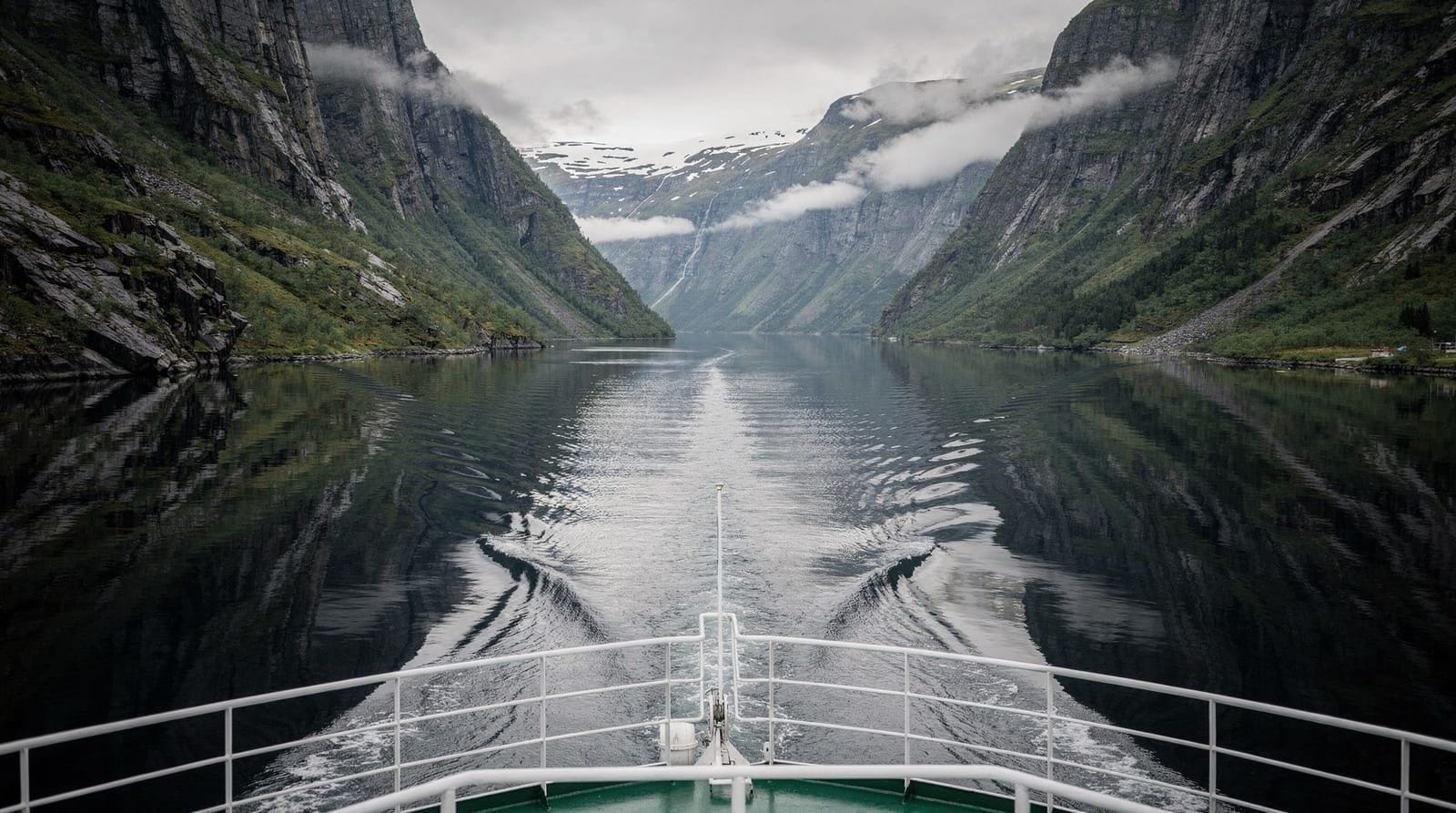
Hardangerfjord is wide. If you are expecting the narrow-canyon intensity of Nærøyfjord, this is a different fjord. The openness is part of its character, not a deficiency — but manage your expectations accordingly.
Vøringsfossen requires a full day or overnight. It cannot be comfortably combined with Rosendal and Norheimsund on a single Bergen day trip without a very early departure (6 am) and a very late return. If Vøringsfossen is a priority, plan a night in Eidfjord.
The express boat schedule limits flexibility. If you miss the return departure, your next option may be several hours away. Check the Skyss timetable and build in buffer time, especially if you are walking to Steinsdalsfossen or spending time at the barony.
Not all fjord cruise tours from Bergen go to Hardangerfjord. Some tours marketed as “Hardangerfjord day trip” cover only the Osterfjord and Norheimsund area, not the full inner fjord reach. Read itineraries carefully before booking.
Practical tips
What to wear: Orchard and coastal weather in Hardangerfjord is unpredictable. A waterproof jacket, layers, and walking shoes (not sandals if you plan Steinsdalsfossen) are essential. Blossom season (April–May) can still have cold winds.
Bicycle rental: Both Rosendal and Norheimsund have bicycle rental options. A half-day cycle along the orchard paths in May is a highlight for those with the time.
Photography: Morning light in blossom season (east-facing slopes catch the sun early) is the prime photography window. Bring a polarizing filter for waterfall shots.
Food: Rosendal has a few good cafes. Ullensvang Resort in Lofthus is a proper lunch destination. Do not rely on finding food at minor waterfall stops — carry snacks.
Hardangerfjord for repeat Bergen visitors
Hardangerfjord makes particular sense for travelers who have already done Bergen once — city sightseeing, Fløibanen, perhaps a Mostraumen or Nærøyfjord cruise on a first trip — and are returning for a second, less rushed visit. Rather than repeating the headline circuit, a Hardangerfjord-focused trip lets you slow down: overnight in Lofthus or Rosendal, take the express boat one way and drive back (or vice versa), and spend a full unhurried day at Vøringsfossen and the orchard villages rather than compressing everything into a single dash from Bergen.
This slower version also suits travelers who found Nærøyfjord’s crowds or the Norway in a Nutshell circuit’s tight scheduling stressful on a first visit. Hardangerfjord’s infrastructure is genuinely less pressured — express boat capacity is the main constraint rather than sold-out headline attractions — which makes for a calmer day even in peak season.
Hardangerfjord in numbers
A few concrete figures help set expectations against the other Bergen fjord options:
| Measure | Hardangerfjord | For comparison |
|---|---|---|
| Length | 179 km | Nærøyfjord: ~18 km (a Sognefjord arm) |
| Maximum width | Up to 15 km | Nærøyfjord: 250 m at its narrowest |
| Vøringsfossen height | 182 m total drop | Steinsdalsfossen: ~50 m |
| Blossom season | Late April–mid-May | Unique among Bergen’s fjord day trips |
| Express boat time (Bergen–Rosendal) | ~2 hours | Bergen–Flåm (rail + connections): ~2.5 hours |
The scale difference — a wide, 179 km fjord system versus Nærøyfjord’s tight 18 km arm — is the single biggest factor in why the two feel so different in person, beyond any seasonal or scheduling consideration.
Connecting to other Bergen experiences
Hardangerfjord makes the most sense as a second or third day from Bergen, once you have done the city basics — Bryggen, Fløibanen, and perhaps Mostraumen or the Nærøyfjord.
The fjord cruises from Bergen comparison guide places Hardangerfjord in context against the other options. For multi-day planning, the Bergen and fjords 5-day itinerary builds in a dedicated Hardangerfjord day alongside the other routes. The Hardangerfjord destination page covers where to stay for an overnight visit.
Frequently asked questions about the Hardangerfjord day trip
Is Hardangerfjord better than Nærøyfjord?
They are different fjord experiences. Nærøyfjord has more dramatic vertical scenery and is UNESCO-listed. Hardangerfjord offers orchards, blossom season, and more cultural stops. Both are worth visiting if you have two fjord days. If forced to choose one: Nærøyfjord for scenery; Hardangerfjord in late April/May for the blossom season.
Can I see Hardangerfjord on a day trip from Bergen?
Yes — comfortably if you focus on Norheimsund/Steinsdalsfossen or Rosendal. Adding Vøringsfossen to the same day is possible with an early start but tiring. Staying overnight in Eidfjord or Ullensvang is the more relaxed option for seeing everything.
Is the Hardanger Bridge worth a detour?
The Hardangerbrua (opened 2013) is one of the world’s longest suspension bridges and eliminates a ferry crossing on the eastern Hardangerfjord loop. It is visible from many angles and there is a small visitor area at each end. Not a primary destination, but a notable landmark if you are driving.
What is the Folgefonna glacier?
Folgefonna is mainland Norway’s third-largest glacier, visible above the south shore of Hardangerfjord. You can see it from Rosendal and Lofthus. Guided glacier walks are available from Jondal (summer only). Not a day-trip addition from Bergen unless you specifically plan for it.
Is Hardangerfjord accessible without a car?
Yes, via the Hardangerfjord Express Boat from Bergen to Rosendal or Norheimsund. The villages themselves are walkable. For visiting Steinsdalsfossen, a guided tour or a short taxi ride from Norheimsund is needed. Vøringsfossen is harder to reach without a car.
What is the Hardanger fiddle?
The hardingfele is a Norwegian folk instrument — a violin with sympathetic strings — that originated in the Hardanger region. It is the traditional instrument of Norwegian folk music (Slåttar), which was listed as UNESCO Intangible Heritage. Regional culture centers and festivals celebrate the tradition; if you are visiting in summer, check for local events.
Are the orchards accessible to walk through?
Many orchard paths are publicly accessible under Norway’s right-to-roam law (allemannsretten), though private farming land with barriers should be respected. The tourist infrastructure in Lofthus and Ullensvang includes designated orchard walks.
Does the express boat have food and drink?
The Hardangerfjordekspressen typically has a small kiosk or café on board for drinks and snacks. For a proper meal, plan to eat in Rosendal or Norheimsund.
Top experiences
Bookable activities with verified prices and instant confirmation on GetYourGuide.