Ulriken cable car guide: Bergen's highest mountain and how to use it
Bergen: Round-Trip Ulriken Cable Car Ticket
Is the Ulriken cable car worth doing in Bergen?
Yes, especially if you have already done Fløibanen. Ulriken (643 m) is significantly higher than Fløyen (320 m) and delivers wider, more expansive views. The cable car ride itself is more dramatic — a longer, steeper ascent with excellent valley views. For hikers, it is the natural launch point for the classic Bergen ridge traverse.
Ulriken is the tallest of Bergen’s seven mountains at 643 m, and the cable car that reaches it — Ulriksbanen, officially branded as Ulriken 643 — is Bergen’s best-kept visitor secret. While Fløibanen funicular to Fløyen gets the tourist crowds, Ulriken sees fewer visitors despite offering substantially better views. On a clear day from the Ulriken summit, you can see all the way to the outer islands, the Osterfjord system, and in excellent conditions, elements of Hardangerfjord to the south.
| Where | Montana valley station, east side of Bergen |
| Cost | around NOK 435 adult return |
| Time needed | 2–3 hours round trip incl. summit time |
| Getting there | Bus 2 from city center, ~15–20 min |
| Best time | Clear mornings; May and September for visibility |
The cable car experience
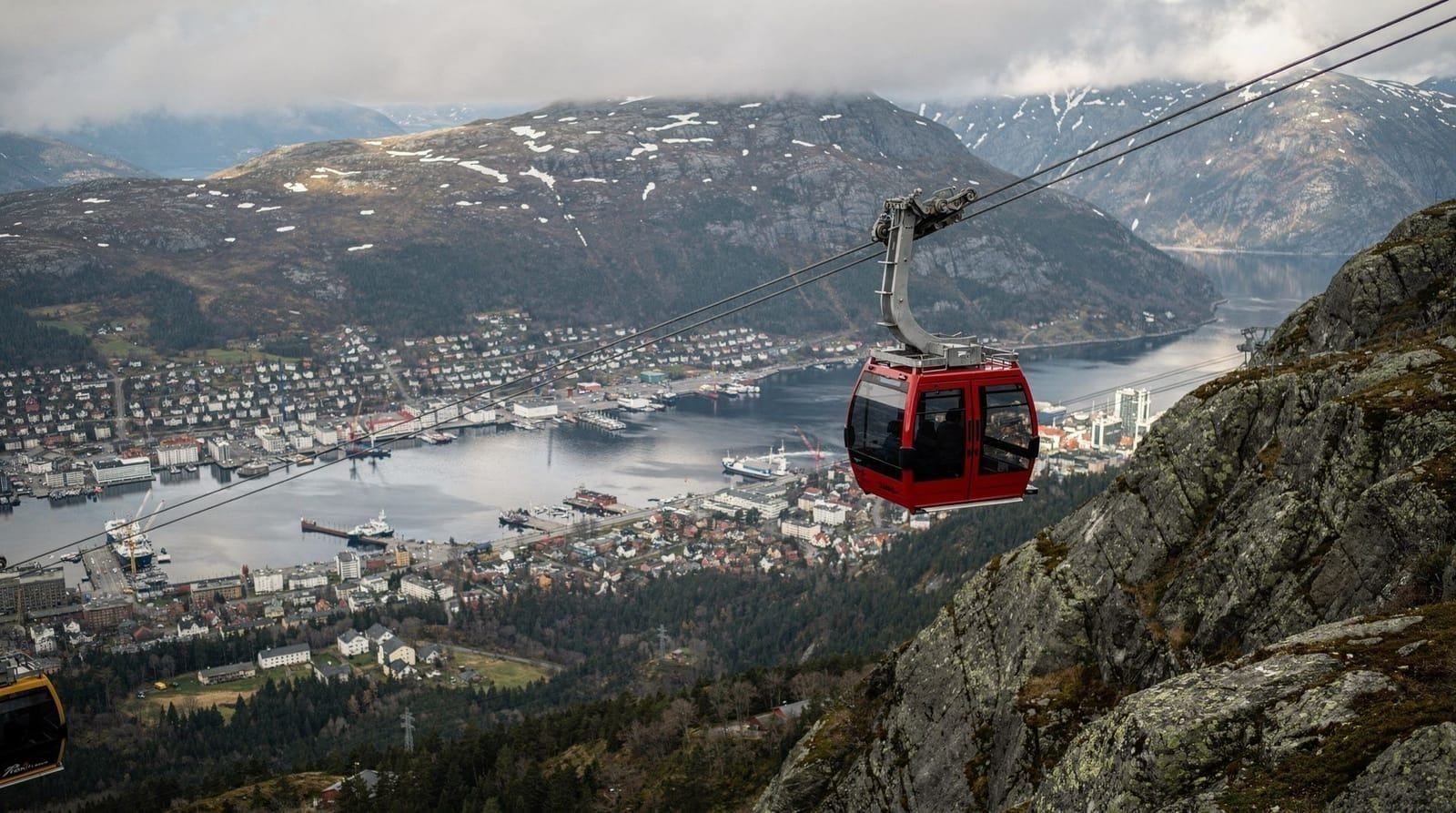
Ulriksbanen is a gondola-style cable car built in 1961 (modernized several times since). Unlike the Fløibanen funicular’s 6-minute up-then-done journey, the Ulriken cable car traverses a longer, steeper route — approximately 7 minutes — that delivers a more dramatic ride with the city falling away sharply below and the mountain face rising above.
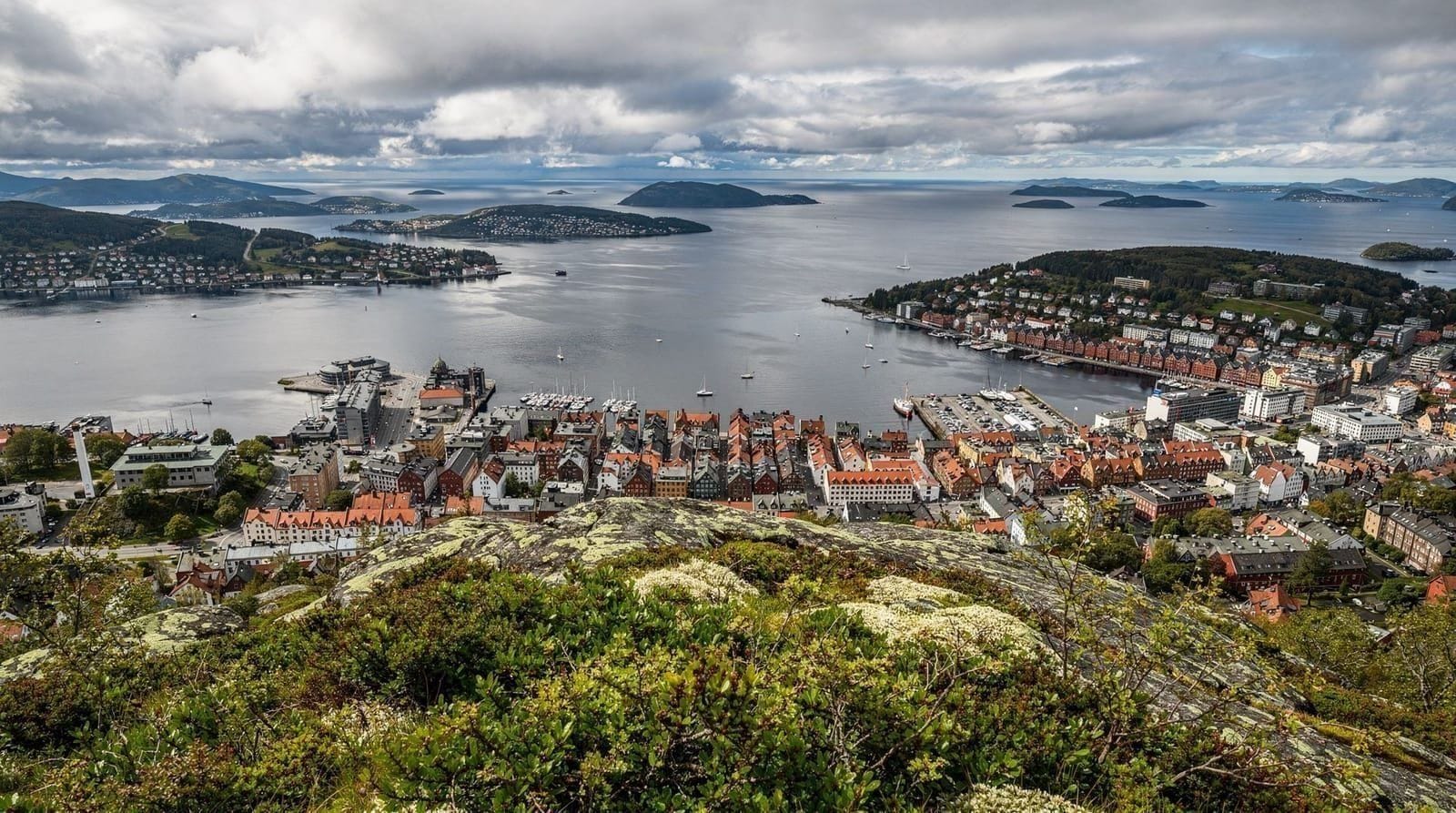
The visual scale is different from Fløyen. At double the height, the view is larger in every direction. Bergen harbor sits below and to the west; the Osterfjord arms extend northeast; the surrounding mountains — Fløyen, Sandviksfjellet, Rundemanen — become peer mountains rather than higher neighbors. On the clearest days, the outer island chain (Sotra, Osterøy) is fully visible.
Practical details:
- Valley station: At Montana, approximately 95 m above sea level
- Summit station: 643 m — the full Ulriken summit
- Ride time: ~7 minutes
- Adult return price (summer 2026): NOK 435
- Operating hours: typically 9:00 am – 11:00 pm (April–September); October–March shorter hours, closed Mondays (varies by season; check ulriken643.no)
- Frequency: Every 20–30 minutes.
Getting there from Bergen center
Ulriken is on the east side of Bergen, a 15–20 minute bus ride from the city center rather than a short walk like Fløibanen. This extra transit effort explains much of the difference in visitor numbers.
Bus route 2 (Byparken/city center → Montana): approximately 15–20 minutes, stopping at “Ulriken” or “Montana.” The ticket is standard Skyss bus fare (NOK 51 within Bergen zone). Alternatively, Bus 400 series routes stop near the cable car base.
Walking: From Bryggen, it is approximately 40 minutes on foot via the city streets to the cable car base. This is an option for early morning or evening visits when bus frequency is lower.
Shuttle bus: In peak summer (June–August), a dedicated shuttle bus runs from the city center to Ulriken on certain days. Check the Ulriken 643 website for current season schedules.
Summit area
The restaurant: Ulriken 643 Restaurant operates at the summit with a full menu of Norwegian cuisine, panoramic views in all directions, and a terrace in suitable weather. The restaurant is a proper dining destination in its own right — several Bergen locals take the cable car specifically for dinner.
The 3-course lunch package (cable car + lunch) is one of Bergen’s better-value premium experiences: the combined ticket (approximately NOK 750–900 per person) delivers both the mountain access and a substantial meal with views that few restaurants in Norway can match.
Enjoy a 3-Course Lunch at the Top of Mount Ulriken, BergenThe summit plateau: Beyond the restaurant, the summit has open moorland with clear sightlines in all directions. A cairn and basic orientation board mark the high point. The terrain is exposed — wind is almost always present, and temperatures run 5–10°C cooler than Bergen city even in summer.
Antennas and infrastructure: The Ulriken summit hosts TV and radio transmission towers — visible and not particularly aesthetic in photographs at the very summit. Position your photography slightly below the summit or along the ridge to the west to minimize them in frame.
Hiking to and from Ulriken
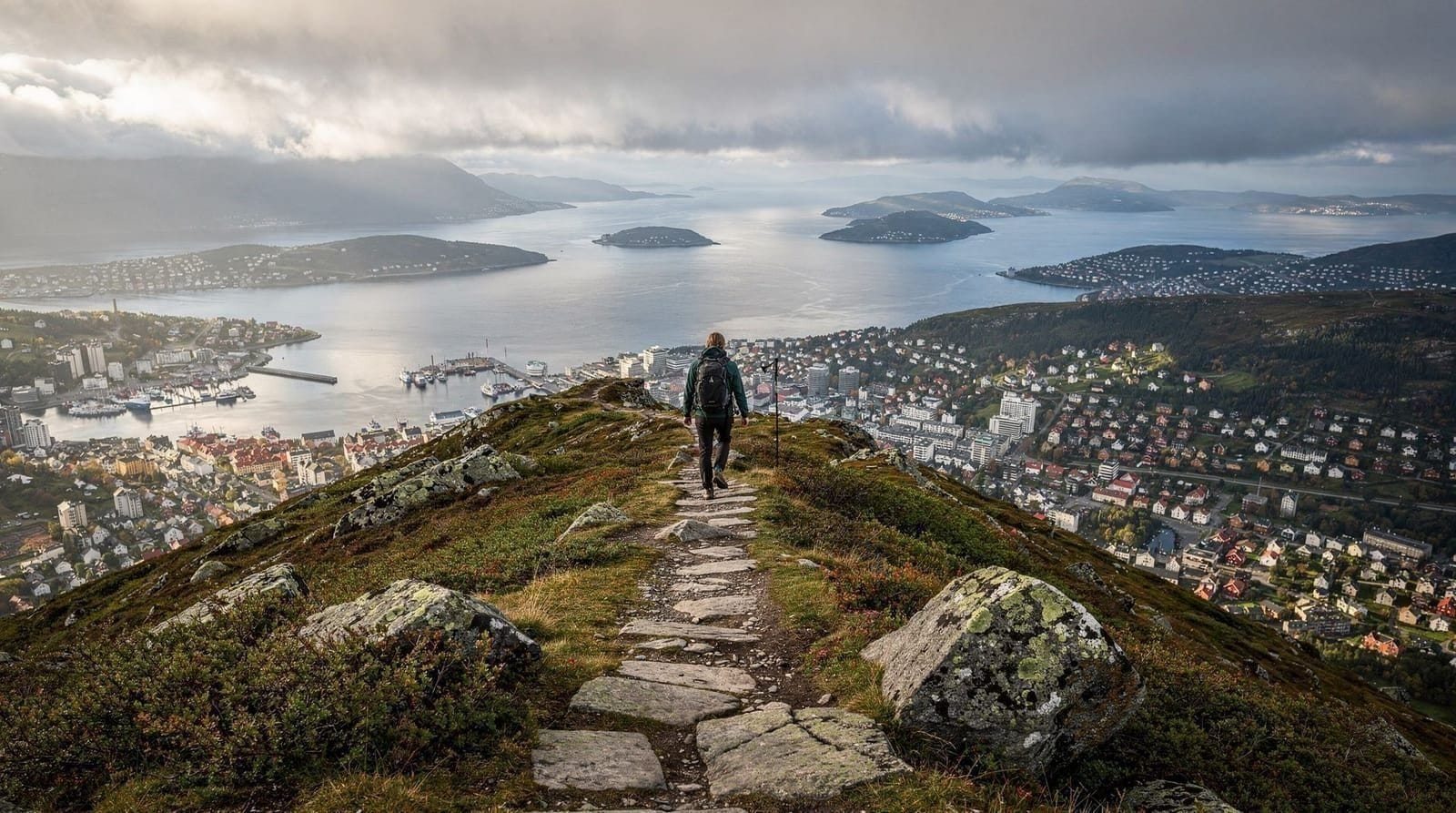
Hiking up from the valley station: A marked trail climbs alongside the cable car line, gaining 548 m in approximately 1.5–2 hours (depending on pace). The trail is steep, rocky in places, and without technical difficulty in summer. This is a genuine mountain ascent rather than a tourist path.
Hiking down: The same trail descends in approximately 1 hour 15 minutes. This is the common approach: cable car up, explore/eat at the summit, hike down. The downhill avoids the cable car queue and adds physical engagement to the visit.
Alternative trails: Several other routes approach Ulriken from different directions — from Haukåsen to the south (a longer, more gradual approach), and from the saddle between Ulriken and Rundemanen (accessible via various paths from the city). The Norwegian Trekking Association’s Ut.no app has all routes mapped.
The Fløyen ridge traverse
The standout hiking experience from Ulriken is the ridge traverse southwest to Mount Fløyen. This 3–4 hour one-way route crosses Bergen’s mountain spine via Rundemanen (568 m), passing through genuinely dramatic mountain terrain with continuous views to both east and west.
Recommended direction: Ulriken cable car up → ridge traverse → Fløyen summit → Fløibanen funicular down. This uses mechanical assistance at the hardest point (Ulriken ascent) and adds the city-view descent at Fløyen. The direction can be reversed but climbing to Ulriken after 3 hours of ridge traversal is demanding.
Navigation requirement: This traverse is not marked as clearly as standard tourist paths. Download the GPS track from Ut.no before starting. The route crosses open mountain with several false paths. A paper map as backup is sensible.
Fitness level: This traverse is for hikers who regularly complete 5+ hours of mountain walking. The terrain is rocky moorland with continuous up-and-down. Not suitable for trail novices or in poor weather without navigation experience.
The full hiking around Bergen guide covers all trail combinations including the 7-mountain circuit that Ulriken is part of.
Ulriken vs. Fløyen: which to choose
Most visitors with limited time are better served by Fløibanen to Fløyen: it is closer to the city center, faster, cheaper, and has more visitor infrastructure (children’s area, bigger restaurant). Fløibanen is the default Bergen viewpoint.
Ulriken earns its place as the second mountain visit, or as the primary choice for:
- Hikers wanting the ridge traverse to Fløyen
- Photography enthusiasts wanting wider, less-photographed views
- Visitors who want a more exclusive experience with fewer crowds
- Diners who want the combined cable car + restaurant experience
If you can only do one: Fløyen first, Ulriken if you have another day.
If you are a serious hiker: Ulriken is the better base, because the summit connects to more demanding mountain terrain.
Weather and visibility
At 643 m, Ulriken is frequently in cloud when Fløyen (320 m) has partial visibility. This is a genuine consideration: check the weather before booking, and if the summit is socked in, Fløyen is a better bet on marginal days. The Ulriken 643 website sometimes posts summit visibility updates in peak season.
On fully clear days (more common in May and September than in July), the Ulriken summit is one of the finest viewpoints in Western Norway — distant enough from the city to encompass the whole urban panorama, high enough to see the fjord system spreading beyond.
Practical notes
What to bring: Wind is constant at 643 m. Even in July, bring a windproof jacket. Temperatures are typically 5–10°C cooler than Bergen city. If rain is forecast, assume you will be in rain at the summit — full waterproofs. Sunscreen matters more than most visitors expect at this altitude.
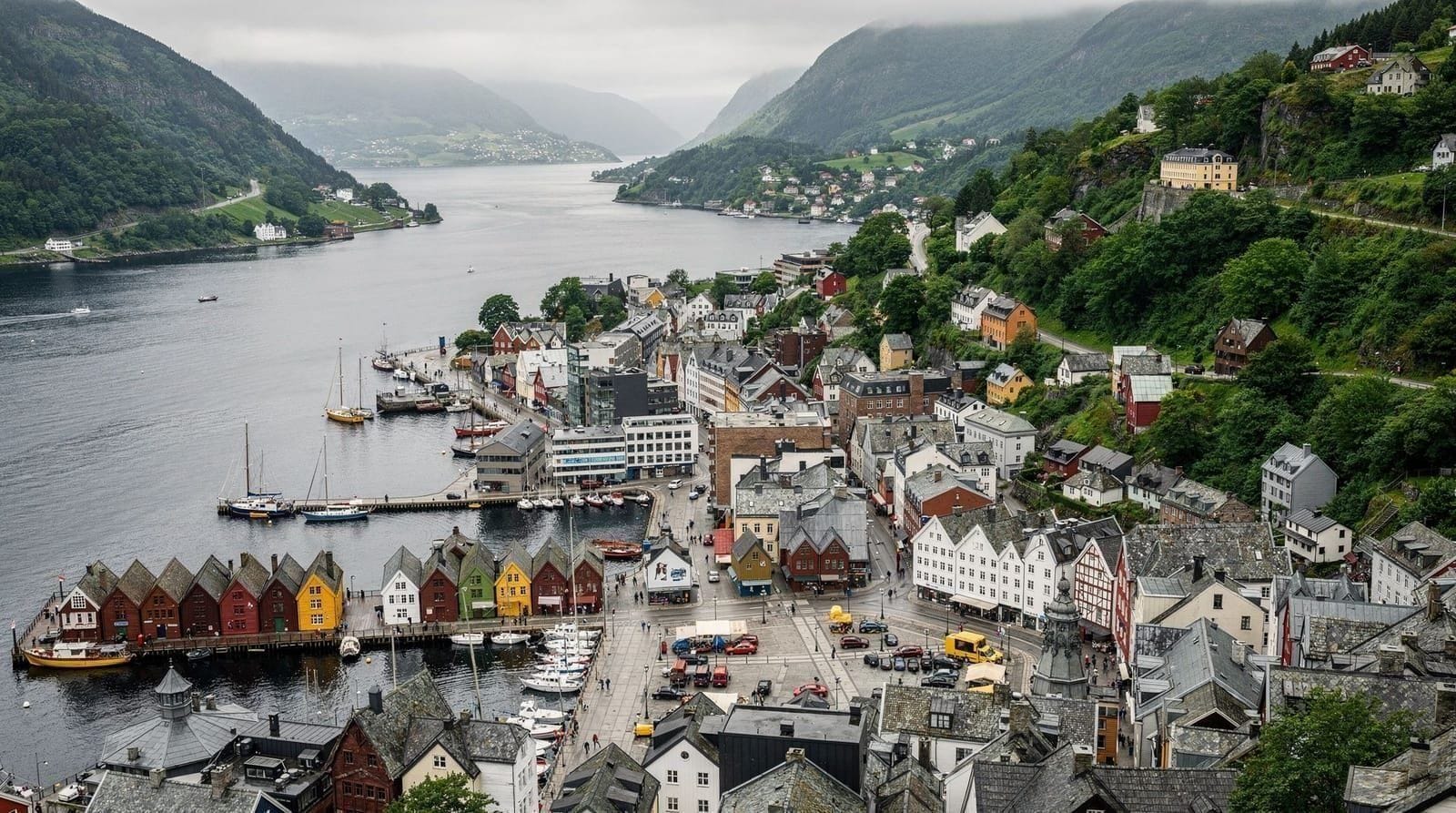
Photography: Morning and evening light are the prime photography windows. The summit faces broadly west for sunset light. For city views, the northwest-facing perspectives give Bryggen and the harbor in frame. For fjord views, the east-facing perspectives show the Osterfjord system.
Restaurant booking: For the 3-course lunch or 5-course dinner package, book via the Ulriken 643 website in advance. Walk-in is possible but not guaranteed in peak season.
Bergen Card: Unlike Fløibanen (where the Bergen Card gives 50% off), Ulriken 643 does not accept Bergen Card discounts as of 2025. Verify the current policy before planning — discount arrangements sometimes change.
Connecting Ulriken to your Bergen trip
Ulriken connects naturally to a Bergen hiking day or a second full day in the city after covering the main sights. The Bergen destination page covers the city neighborhoods and what to prioritize on first arrival. The fjord cruises from Bergen guide is the complement for visitors who want to alternate a mountain day with a fjord day. For a full sense of when the summit is most likely to be clear, best time to visit Bergen breaks down the seasonal weather patterns.
Fitting Ulriken into a wider plan
If this is your first visit, start with the Bergen first-timer guide to see where a mountain trip sits among the city’s other priorities. Visitors with two days can slot Ulriken into the second one, as laid out in the Bergen in 2 days itinerary, keeping the first day for the harbor and old town. Those on a fast turnaround from a ship should read the cruise stopover itinerary before deciding whether the bus ride out to the valley station is worth the time.
Because the cable car sits on the east side rather than in the center, a little planning helps. The getting around Bergen guide explains how local transport works, and the city sightseeing guide shows what to combine with a morning or evening up the mountain. If you would rather see the city from the water on a different day, the fjord cruises from Bergen make a good contrast to a day spent high above it.
Wet weather changes the calculation. When low cloud sits over the city, the Bergen in the rain guide and the rainy day Bergen blog post suggest indoor alternatives, and you can keep the mountain for a clearer day. For photographers, the best photo spots in Bergen puts the summit in context alongside lower viewpoints, and the best fjord viewpoints in Western Norway compares it with higher-profile lookouts further afield.
Timing your visit to avoid queues
Ulriken’s midday summer window (11 am – 3 pm) sees the heaviest cable car queues, especially when a cruise ship is in port. Arriving before 10 am or after 5 pm avoids most of the wait, and the light is better for photography at both ends of the day. If you are hiking down rather than riding both ways, going up early also gives you cooler conditions for the descent — the trail has little shade and afternoon sun on the rocky path is noticeably harder going.
Rainy or fully clouded days are the other timing lever: since the summit is frequently in cloud at 643 m when Fløyen still has partial visibility, checking a live forecast the morning of your visit is worth the two minutes it takes, rather than discovering a white-out view after paying for the ticket up.
Frequently asked questions about the Ulriken cable car
Is the Ulriken cable car the same as the Fløibanen funicular?
No. They are completely different systems on different mountains. Fløibanen (opened 1918) goes to Fløyen at 320 m in the city center area. Ulriksbanen goes to Ulriken at 643 m on the east side of Bergen. They are operated by different companies.
Can I book the Ulriken cable car online?
Yes — tickets available at ulriken643.no. Online booking is recommended in peak summer to guarantee your preferred departure time. Walk-up tickets are available at the valley station if the cable car is not full.
Is the Ulriken cable car accessible for wheelchairs and pushchairs?
The cable car itself is accessible. The valley station has level access. The summit restaurant area has some accessible paths. Mountain trails from the summit are rocky and not wheelchair-accessible. Contact Ulriken 643 directly for specific accessibility questions.
How cold is it at the top of Ulriken?
Summer average at 643 m is approximately 10–15°C when Bergen city is at 18–22°C. Wind chill can make it feel 5–8°C colder. Autumn and spring temperatures at the summit regularly run 2–8°C even when the city is mild. Dress in layers.
Can I paraglide from Ulriken?
Ulriken is a designated paragliding launch site. Tandem paragliding experiences from the summit (with a licensed pilot) are available for visitors. This is booked through specialist operators, not through Ulriken 643 directly.
Is the view from Ulriken better than from Fløyen?
Wider, yes — the extra 323 m of height adds significant visual range. The character is different: Fløyen looks more directly at the city center below; Ulriken gives a broader fjord and mountain panorama. Both are excellent. The “better” view depends on what you are looking for.
Is there a winter operation?
Ulriksbanen operates year-round. Winter visits offer dramatically different conditions — snow-covered summit, occasional fog below, but also stunning clear winter days when the city and fjords are crisp and sharply defined. Reduced frequency and hours in winter; check current schedule at ulriken643.no.
Are there restrooms at the summit?
Yes, at the restaurant/summit station building. No facilities on open mountain trails.
Top experiences
Bookable activities with verified prices and instant confirmation on GetYourGuide.