Preikestolen guided hike — honest 2025 review from a Bergen base
Stavanger: Preikestolen (Pulpit Rock) Guided Hike
Preikestolen (Pulpit Rock) is Norway’s most-visited natural attraction outside Bergen and Oslo. The 604-meter-high flat rock platform above Lysefjord is the defining image of Norwegian hiking: dramatic, photogenic, and — for most physically capable visitors — achievable in a half-day. This review covers the guided option from the Stavanger area, the reality of arriving from Bergen, and an honest assessment of the crowd situation.
| Where | Lysefjord, near Stavanger (not a Bergen day trip) |
| Cost | Around NOK 600–1,200 guided; hike itself is free |
| Time needed | 3.5–5 hours hiking, plus 5.5–6 hours travel each way from Bergen |
| Getting there | Express boat or flight Bergen–Stavanger, then transfer to trailhead |
| Best time | Late May, early June, or September for fewer crowds |
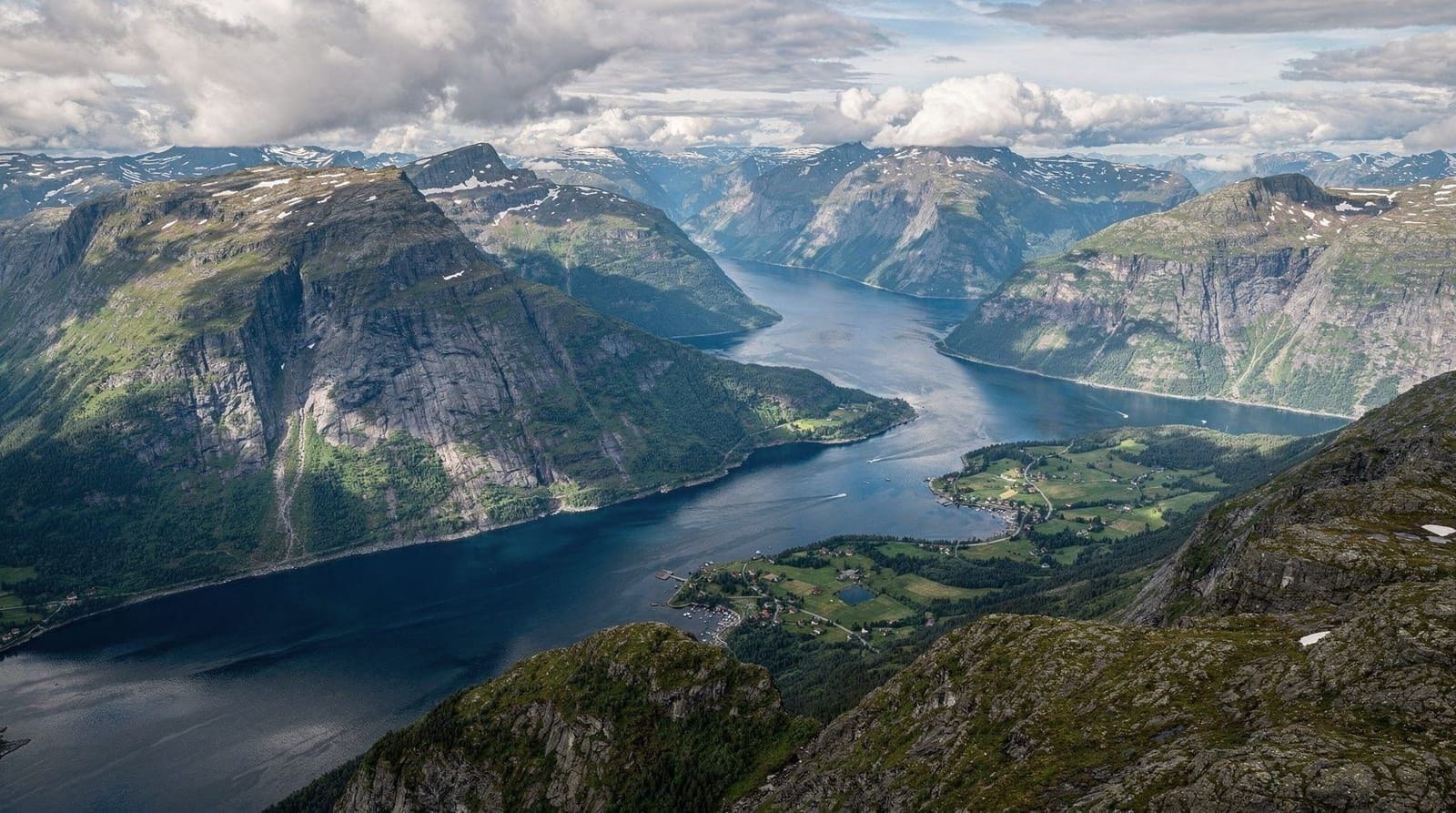
The view from Preikestolen — what you actually see
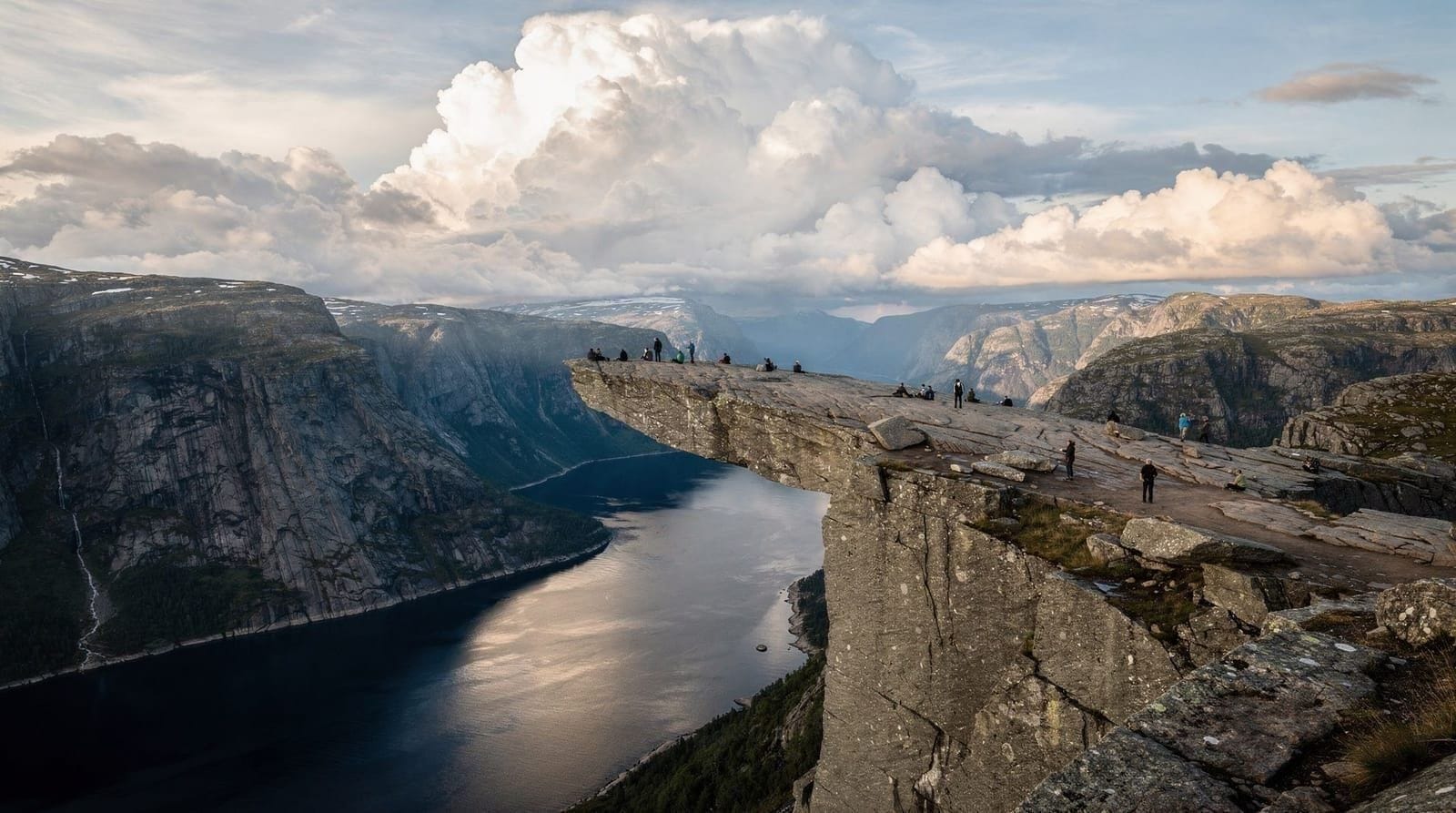
The summit platform is approximately 25×25 meters of flat rock overhanging Lysefjord at 604 meters. On three sides, the platform drops vertically. On the fourth, it connects to the mountain trail. There are no railings, no barriers, and no warning signs beyond the common sense of standing near a vertical cliff.
Looking south from the edge: Lysefjord extends for 42 km — the full length of the fjord is visible, narrowing to a blue thread in the distance. The fjord walls on both sides drop sheer to the water. The scale is difficult to photograph accurately because it requires a wide angle that compresses distances.
Looking straight down: 604 meters of vertical rock. The water surface at the bottom is visible. Most visitors stay a comfortable distance from the edge; some approach the very lip. There is room on the platform for 40–50 people comfortably; in July, 200+ may be present simultaneously.
Getting here from Bergen
Preikestolen is in the Stavanger/Lysefjord area, approximately 200 km south of Bergen. It is not realistically a Bergen day trip without very long travel — total transit time Bergen to trailhead is 5.5–6 hours each way.
Realistic options:
Option 1 — Bergen to Stavanger by express boat (recommended): High-speed passenger ferry from Bergen to Stavanger: 4.5 hours, departures typically 8 am and 3:30 pm, approximately NOK 550–750 one-way. From Stavanger, take the public bus or taxi to Preikestolen Fjellstue (1 hour). Overnight in Stavanger area, hike the next morning, return afternoon.
Option 2 — Bergen to Stavanger by plane: 50-minute flight, NOK 400–900 depending on booking. Widerøe operates most frequently. From Stavanger airport, 45 minutes to the trailhead. Makes a day trip theoretically possible (up at 6 am, trailhead 10 am, hike, back Bergen by evening), but exhausting.
Option 3 — Bergen to Stavanger by car: 4–5 hours each way via Haugesund (no ferry) or via Ryvarden with ferry crossings. Significant drive; not recommended for a day trip.
The honest recommendation: Preikestolen deserves an overnight from Bergen. Stay in Stavanger (good city, excellent food scene, petroleum museum) for one night; hike early the next morning.
The hike itself
Distance: 8 km round trip. Elevation gain: 500 m. Time: 3.5–5 hours round trip at a normal pace, 2.5 hours for very fit hikers.
Trail surface: The first section is a prepared gravel path through birch forest. The upper section becomes rocky — large flat slabs, boulder stepping, and the occasional steep climb on iron grip-steps. No technical scrambling; all movement is on your feet without hands needed on most sections.
The hardest part: A sustained 300m climb in the middle section over 2 km. This is where fitness matters — it is not steep in alpine terms but is sustained. Hikers who are not regularly active find this section harder than expected. Trekking poles make the descent significantly easier (knees absorb a lot over 500 m down).
At the top: The trail emerges onto a boulder field that gives way to the flat platform edge. The view opens suddenly and fully — there is no gradual reveal.
Book the Preikestolen guided hikeGuided vs. self-guided
The trail is straightforward to navigate self-guided (May–October) — red T markers throughout, well-maintained, no navigation skills needed. A guide adds:
- Pace management (crucial for first-time mountain hikers)
- Historical and geological context about the Lysefjord
- Emergency protocol and communication
- Group morale on long sections
The guide is genuinely helpful for: families with mixed fitness levels, first-time hikers in Norwegian conditions, and visitors who want to understand what they are looking at beyond the visual impact.
Winter guided hike: November–April, Preikestolen requires a guide by Norwegian safety authorities. The summit in winter with snow and ice is a technically different undertaking — crampons, trekking poles, and knowledge of avalanche risk are necessary.
See the winter guided Preikestolen hike optionCrowd reality and timing strategy
Peak (July–August): Up to 6,000 visitors per day. The summit can be standing-room only between 11 am and 3 pm. The trail has active management — rangers are present.
How to beat the crowds: Start at 7 am or earlier. The trailhead is accessible at this time (some accommodations at Preikestolen Fjellstue allow early breakfast). By 7:30 am you are ahead of most organized tours (which tend to start at 9–10 am). You reach the summit around 10 am — busier than 7 am but before the peak 11 am rush.
Best months for Preikestolen: Late May (snow possible but trail typically clear), early June, and September. September has autumn colors on the surrounding plateaus, golden light, and dramatically fewer visitors. October is possible but increasingly unpredictable — check trail conditions.
Preikestolen vs. other nearby hikes
Kjeragbolten: The famous boulder-in-a-crevice above Lysefjord is in the same region (also accessible from Stavanger). It is significantly harder (10 km, 5 hours, exposed scrambling sections), considerably less crowded, and the views from Kjerag plateau are excellent. If you want to tick both in one Stavanger trip, it requires a full additional day. See the Stavanger/Lysefjord area hiking guide.
Trolltunga: Harder, further from Bergen (Odda area), and a different landscape (mountain plateau rather than fjord cliff). See the Trolltunga guided hike review for comparison.
Practical costs summary
| Item | Cost |
|---|---|
| Bergen–Stavanger express boat (one-way) | NOK 550–750 |
| Stavanger–Preikestolen local transport | NOK 100–300 |
| Trailhead parking (if driving) | NOK 250/day |
| Guided hike fee | NOK 600–1,200 |
| Preikestolen Fjellstue accommodation | NOK 1,200–2,000/double |
| Stavanger hotel | NOK 1,400–2,200/double |
Allow NOK 2,500–4,000 per person for a Preikestolen overnight from Bergen including transport, accommodation, and guided hike.
Combining with Kjeragbolten
Visitors staying in the Stavanger area for 2+ nights sometimes want to do both Preikestolen and Kjeragbolten — the two signature hikes of the Lysefjord region — on consecutive days rather than choosing one.
See the Kjeragbolten guided hike optionThe honest sequencing advice: do Preikestolen first (shorter, easier, builds confidence in Norwegian trail conditions), then Kjeragbolten the following day if energy and weather allow. Attempting both on the same day is not realistic for most hikers given the combined 8–9 hours of walking plus transfers between trailheads.
Choosing a local guide over a package tour
For visitors who prefer a smaller group and a guide based specifically in the Stavanger area rather than a larger operator, a local-guide option is worth considering — the pace tends to be calmer and the commentary more specific to the immediate Lysefjord geology and history.
Book the Preikestolen hike with a local Stavanger guideThe trade-off is usually a smaller group cap and sometimes less flexible scheduling than the larger operators, so book earlier in peak season if this option appeals.
Frequently asked questions about the Preikestolen guided hike
See the FAQ section at the top of this page. For a complete trail and access guide, see the Preikestolen hike guide. For all Bergen-area hiking options, see the hiking around Bergen guide.