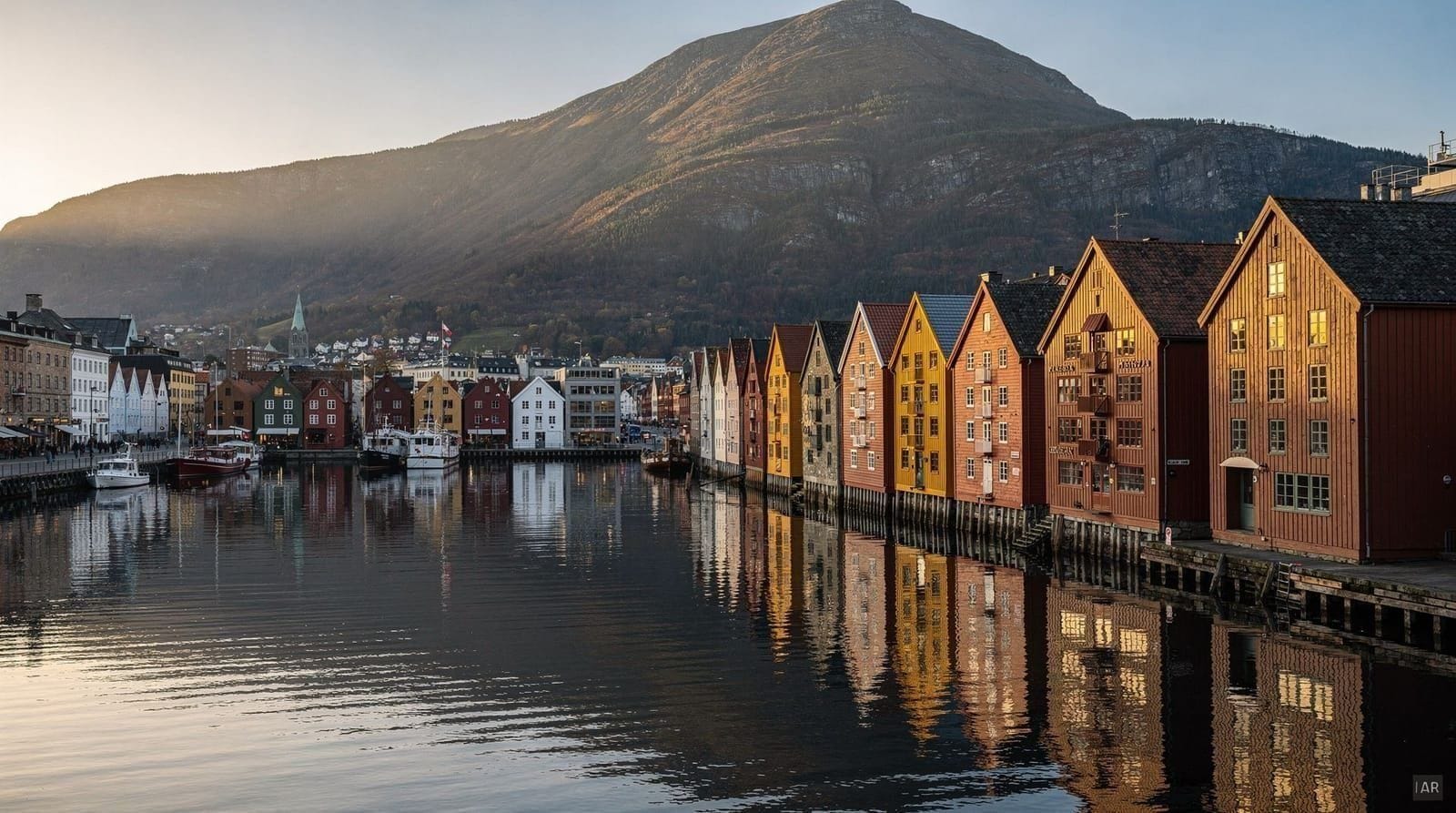
Bergen city walking tour — honest 2025 review
Bergen: Past & Present Small Group Guided Walking Tour
Bergen’s compact city center is one of the most walkable historic districts in Northern Europe. The question for visitors is not whether to walk it — you will, inevitably — but whether a guided tour adds enough to justify the cost over doing it yourself with a good map.
This review answers that honestly, covers the specific walking tours available, and tells you when a guide makes a real difference versus when you are paying for something you would get anyway.
| Where | Starts at Bryggen or Fisketorget, central Bergen |
| Cost | Free (tip-based) to around NOK 2,500 for a private group |
| Time needed | 1.5–3 hours, longer for private/off-circuit routes |
| Getting there | Walkable from any central hotel; 10 min from the railway station |
| Best time | Morning departures (9–10 am), before cruise-ship crowds |
The case for a Bergen walking tour
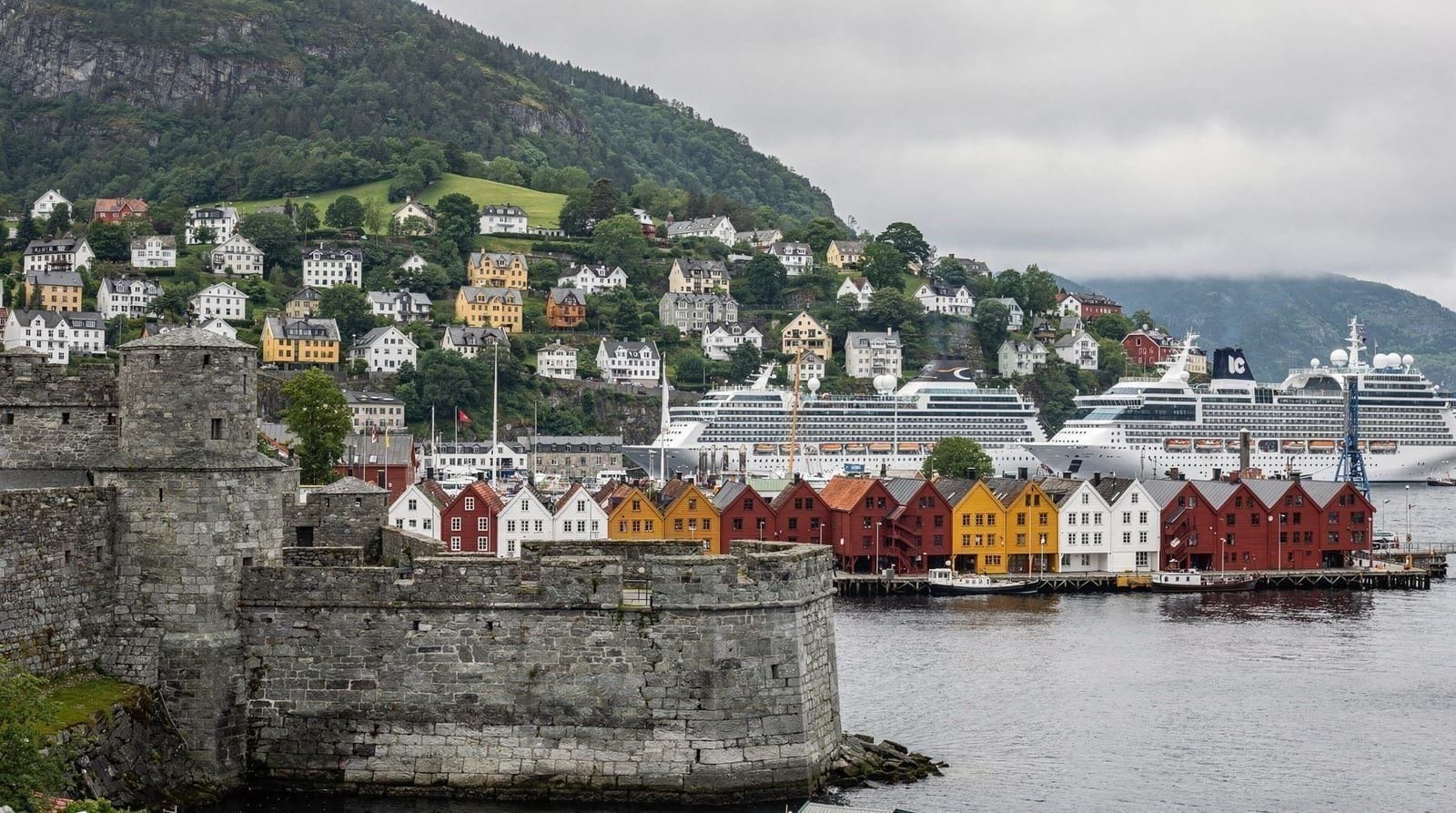
The Bryggen buildings are the obvious centerpiece — you can see them without a guide, walk the alleyways, and photograph the facades. What a guide adds:
Historical depth you would not discover independently:
- The medieval layout of the Bryggen district follows the original 14th-century property boundaries — the modern buildings replicate the exact footprints of the Hanseatic merchant families’ compounds
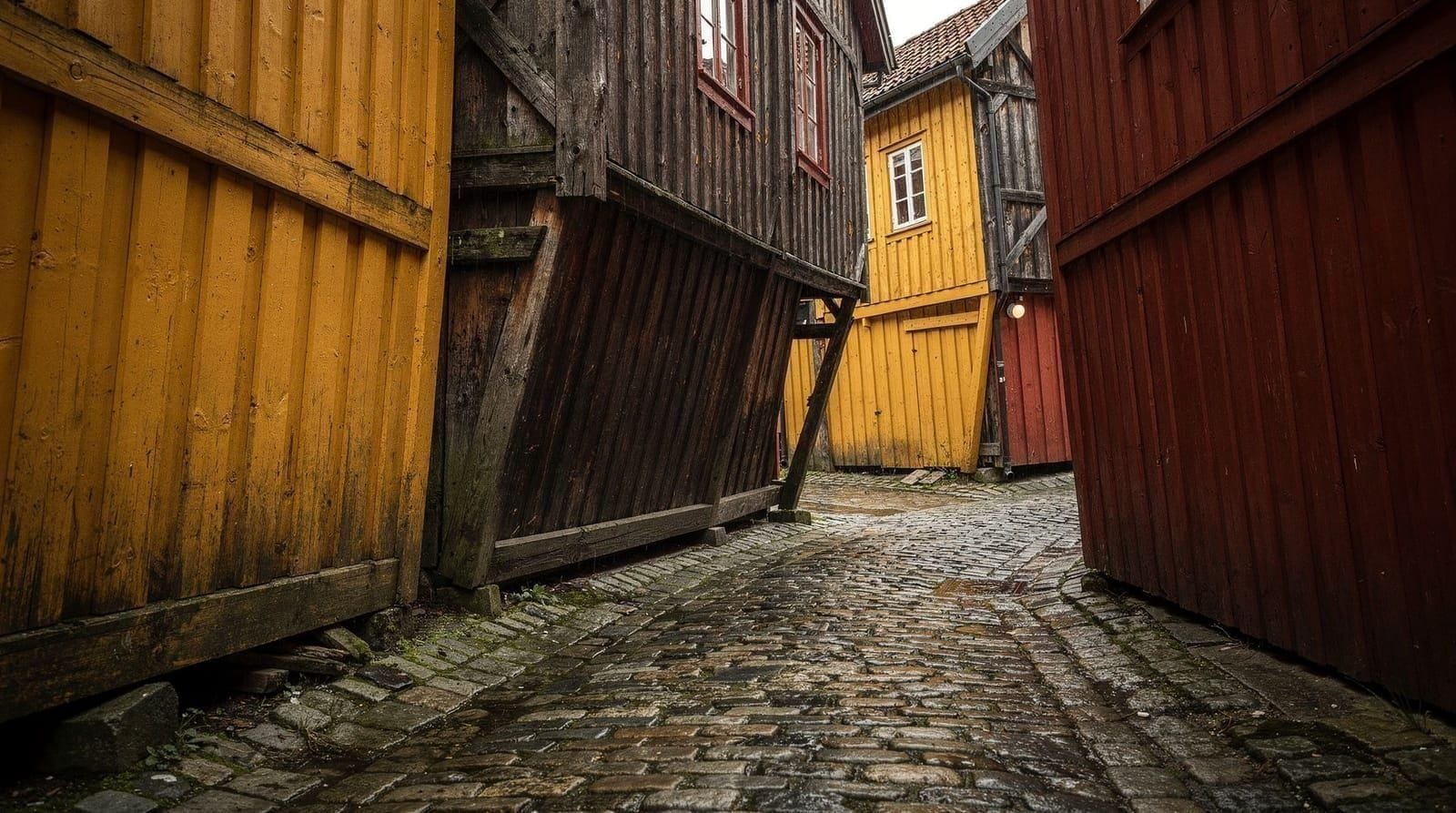
- The narrow alleyways were intentionally kept too narrow for carts, forcing all movement to hand-carried loads (and incidentally creating shared walls that spread fires rapidly — Bryggen burned seven times)
- The buildings lean at varying angles because they are built on the original medieval wooden piling foundations that have settled differently over 500 years
- The Hanseatic merchants who lived here (men only) were prohibited from marrying local Norwegian women or leaving the compound for the winter — a self-imposed isolation maintained for 400 years as a trade discipline
This context transforms what might appear as a row of tourist-facing souvenir shops into something more interesting — a preserved urban organism from medieval long-distance trade.
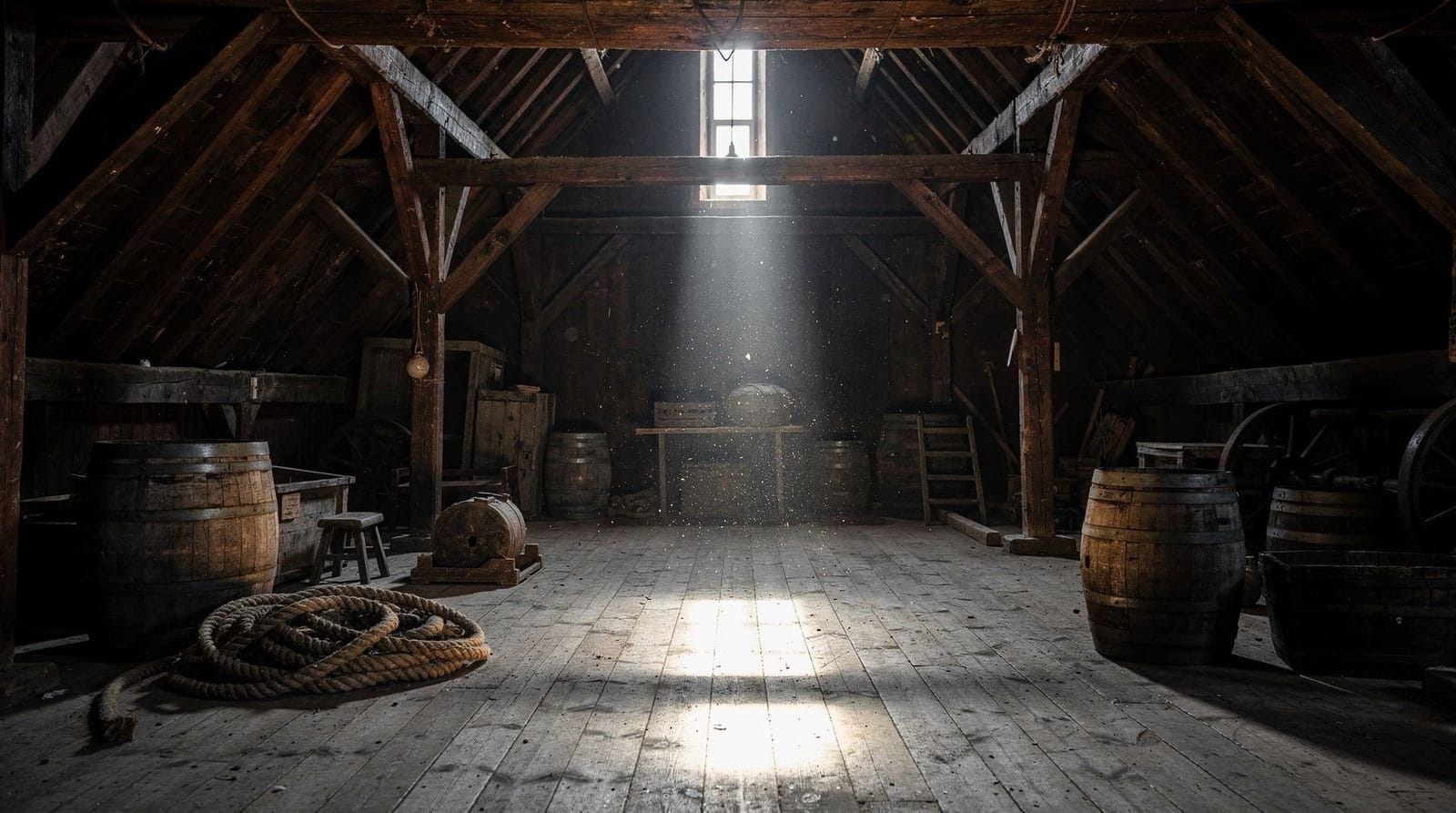
The hidden areas: Good guides take you behind the main frontage to the courtyards (Finnegården, Engelgården), the old storage rooms (packed with wool, fish, and grain in the Hanseatic period), and the maintenance details — like the chalk lines scraped by each year’s building repair team, still visible on some timbers.
The standard tours: what you get
Free walking tours (tip-based)
Bergen has several free walking tours operating on the tip-at-the-end model. The standard departure is from the fish market (Fisketorget) at 10 am and 2 pm in peak season. Duration approximately 2 hours.
What they cover: Bryggen facades, Hanseatic history, Bergenhus Fortress exterior, fish market, Torgallmenningen, and Fløibanen funicular station. Commentary in English; knowledgeable guides (typically young Norwegians or long-term Bergen residents doing this as a main occupation, not a side gig).
Honest assessment: Good value for budget travelers. The historical commentary is genuine. The tours are necessarily fast-paced to cover the ground in 2 hours and cannot spend extended time in any one location. Tip NOK 100–200 per person if you found value.
Standard group tours
Book the Bergen past and present walking tourGuided group tours (10–20 people) run NOK 250–400 per adult, typically departing from Bryggen or the tourist information office. Duration 2–2.5 hours. Standard circuit: Bryggen alleyways, Bryggens Museum exterior, Bergenhus Fortress exterior, fish market, and surrounding historic center.
The advantage over free tours: smaller groups, slower pace, more time for questions. The disadvantage: the price difference is not always reflected in a meaningfully deeper experience.
Private walking tours
Private tours (your group only, usually 1–8 people) run NOK 1,200–2,500 for a 2–3 hour tour. They offer full customization: you can spend an hour in the Bryggen alleyways if that is your focus, extend to the Nordnes peninsula, visit the Theta Museum (resistance cell hidden in Bryggen), and cover whatever interests your group specifically.
See the private Bergen walking tour with a local guideWhen private tours are worth it: For families who want to move at child speed, for photography-focused visitors who want to stop at specific compositions, and for visitors specifically interested in the WWII resistance history (the Theta Museum, the sabotage operations on Bryggen).
Hidden gems and off-circuit tours
Some tours specifically target the areas most visitors miss: the Nordnes peninsula (old residential Bergen, harbor-facing views, the aquarium area), the Sandviken neighborhood north of Bryggen (historic merchant houses predating the tourist circuit), and the streets above Bryggen on the Fløyen foothills where Bergen’s pre-industrial residential character survives.
Book a Bergen hidden gems and Nordnes walking tourThese off-circuit tours are recommended for visitors on a second Bergen visit or those who already know Bryggen well.
What the walking tour does NOT include
Walking tours do not typically include museum entry. You walk past Bryggens Museum, Håkonshallen, and Rosenkrantztårnet — you do not go inside. Budget separately for any museums you want to visit after the tour:
- Bryggens Museum: NOK 130 adult
- Håkonshallen (Bergenhus): NOK 130 adult
- KODE museums combined: NOK 220 adult
Bergen Card holders enter most of these for free — see the Bergen travel budget guide for whether the card saves money on your specific plan.
Self-guided alternative: is it as good?
For confident independent travelers: yes, the self-guided walk is as good for the visual and atmospheric experience. The difference is the historical layer — you can research the Hanseatic history before arriving (the excellent Bryggens Museum covers it well in situ), use audio guides (available at the tourist information office), or simply accept that you are experiencing the buildings without the full narrative.
Bergen’s tourist information office on Strandgaten provides a free walking map covering all the main circuits. The Bryggen buildings are free to walk at any time. No ticket required for the alleyways. See the Bergen city sightseeing guide for a detailed self-guided circuit.
Practical notes for walking tours
Timing: Book morning tours (9–10 am departure) to arrive at Bryggen before the full cruise ship passenger load. By 11 am, the alleyways are crowded; the difference between a 9 am and 11 am start is significant in July.
Footwear: The Bryggen alleyways have uneven stone floors; the historic streets around Bergenhus have cobblestones. Comfortable, closed-toe shoes are necessary — avoid heeled shoes or sandals.
Weather: Walking tours operate in all weather. Bergen rains frequently; a waterproof jacket is essential. See the rainy day Bergen guide for wet-weather alternatives if conditions are severe.
Duration: 2 hours of walking on historic surfaces is more tiring than 2 hours on flat pavement. Allow time to rest before any afternoon activities.
Alternative: hop-on hop-off if walking is not for you
Not every visitor wants a fixed-pace walking route, especially with limited mobility or a tight cruise-port window. Bergen’s hop-on hop-off bus covers a wider loop — Bryggen, Fløibanen, the fish market, and the outer harbor viewpoints — with the flexibility to skip stretches on foot entirely.
Check the Bergen hop-on hop-off sightseeing busIt is not a substitute for the historical depth of a guided walk through the Bryggen alleyways, but it is a genuine option for anyone weighing mobility, weather, or time against the walking-tour experience.
Combining a walking tour with the rest of Bergen
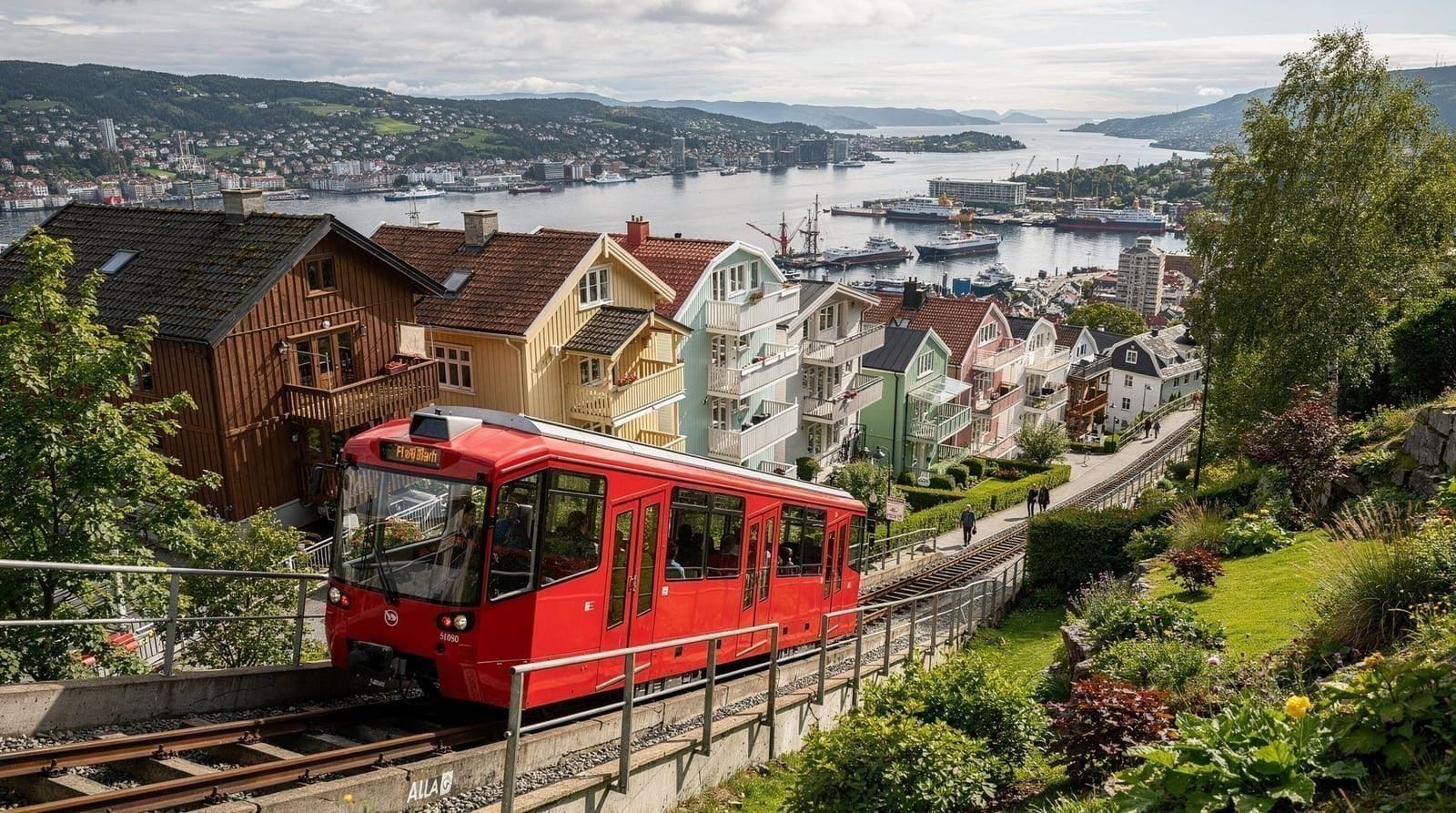
A 2-hour morning walking tour leaves a full afternoon free. The most natural pairing is the Fløibanen funicular up Mount Fløyen for the harbor overview the walking tour builds context for — do the tour first, then ride up with the history fresh. Visitors who want museum time after the tour should budget for Bergen’s museums and culture, since the walking tour itself does not include entry.
If you are only in Bergen for a single day off a cruise ship, sequencing matters more: see the Bergen cruise stopover itinerary for how a walking tour fits around limited port hours. For a longer stay, the Bergen 2-day itinerary builds a full day around the walking tour plus Bryggen free time.
Frequently asked questions about Bergen walking tours
See the FAQ section at the top of this page. For a complete self-guided city circuit, see the Bergen city sightseeing guide. For the Bryggen buildings specifically, see the Bryggen Hanseatic wharf guide.