Bergen vs Oslo — which Norwegian city should you visit first?
Norway has two cities that appear on most first-timer itineraries: Bergen and Oslo. They are about 7 hours apart by train (or 1 hour by plane), different enough to offer genuinely distinct experiences, and similar enough in cost that choosing between them is mainly a question of what you actually want from Norway.
This comparison is written for travelers deciding where to base themselves for a first Norway trip. It does not declare a winner — the right choice depends entirely on your priorities.
| Bergen strength | Fjord access, compact walkable center |
| Oslo strength | Museums, nightlife, wider flight connections |
| Distance between them | 7 hours by train, 1 hour by flight |
| Cost difference | Marginal — Oslo slightly pricier, not decisive |
| Best for first-timers with 7+ days | Do both, joined by the Bergen Line train |
What Bergen does better
Fjord access
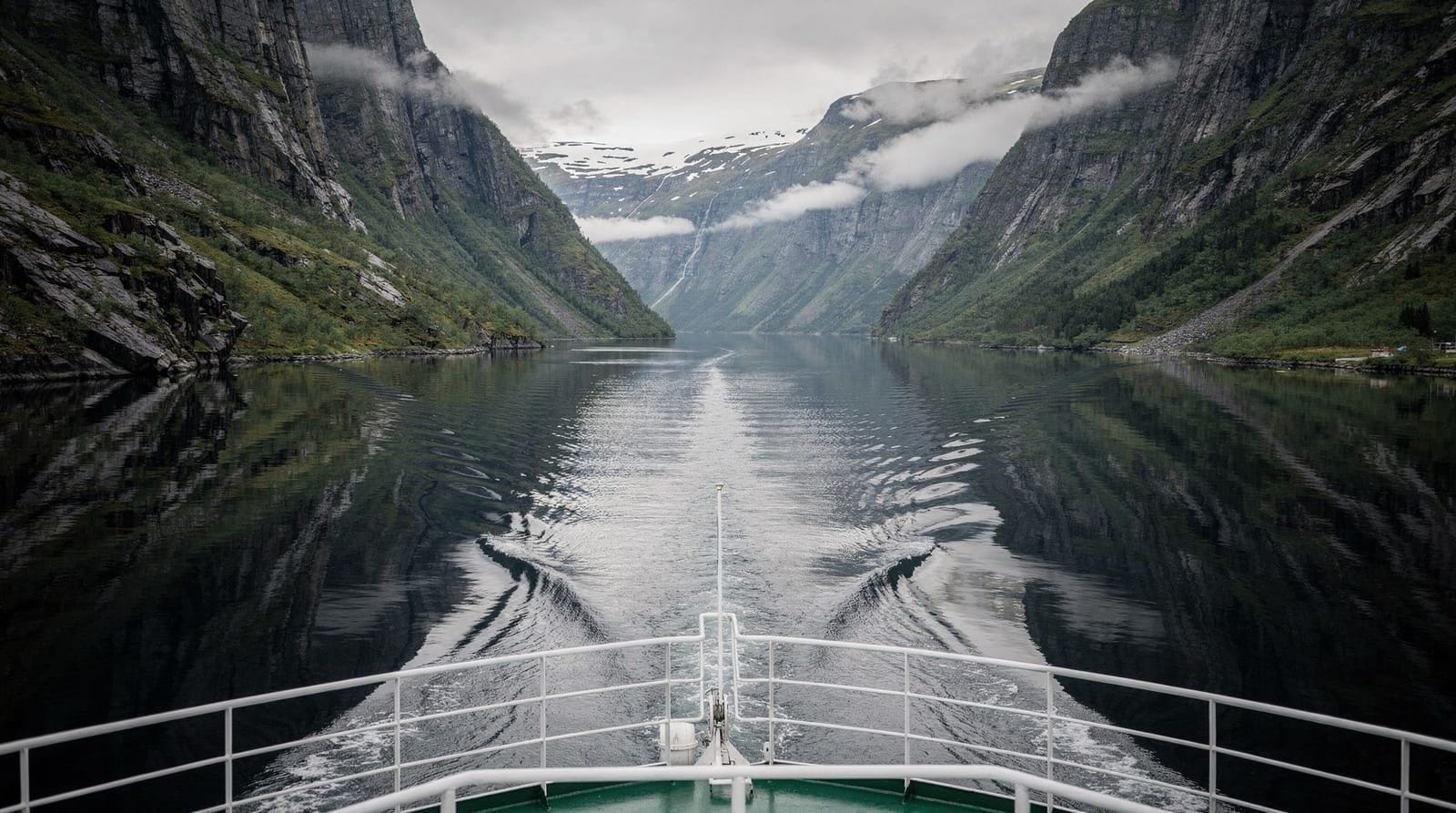
Bergen’s primary advantage is geographic. The city sits at the intersection of several major fjord arms. From Bergen harbor, you can:
- Board the Mostraumen fjord cruise (4.5 hours, leaves from the city pier)
- Reach Flåm and the Nærøyfjord in under 3 hours by train + Flåm Railway
- Take the express boat to Hardangerfjord villages (2 hours)
- Be in Sognefjord country within a morning’s travel
From Oslo, fjord access requires similar or greater logistics. The Oslofjord is a fjord (a very long one), but it is urban and industrial in character — not the narrow, mountain-walled scenery that most international visitors mean when they say “Norwegian fjords.” To reach Western Norwegian fjords from Oslo, you need a flight to Bergen or a 7-hour train journey.
Verdict: Bergen wins decisively on fjord access.
Size and navigability
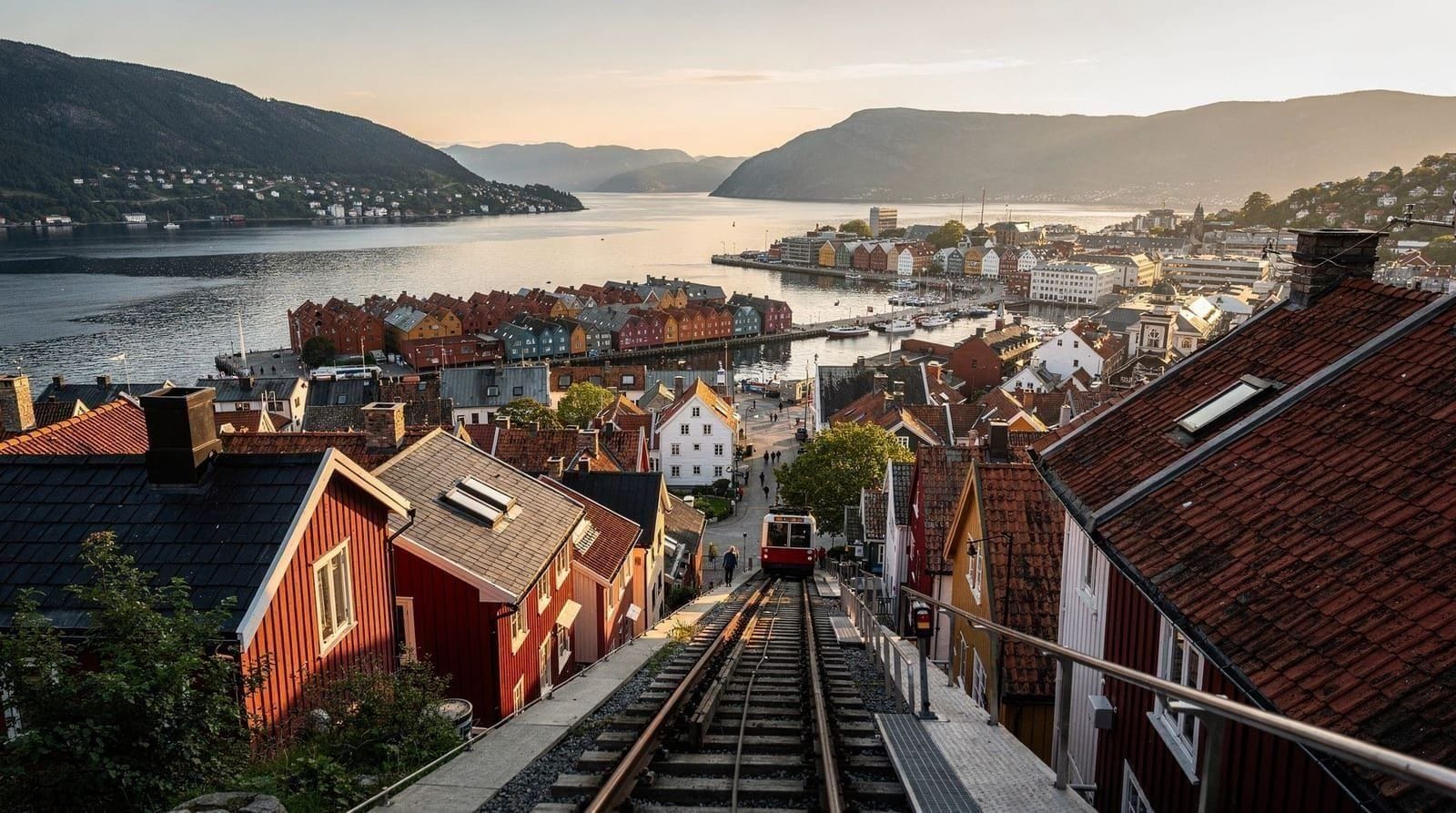
Bergen city center is compact and easily navigable on foot. The core tourist circuit — Bryggen, fish market, KODE, Fløibanen, Bergenhus — can be walked in under 20 minutes in any direction. There is no urban sprawl to navigate, no metro grid to decipher, and almost no risk of getting lost.
Oslo is a significantly larger city (700,000 vs. Bergen’s 290,000 in the metro area). Its attractions — Vigeland Park, the National Museum (new building, holding The Scream), Aker Brygge waterfront, Munch Museum, Holmenkollen — are spread across a wider area requiring the T-bane (metro) or tram. Oslo is very navigable by Nordic standards, but it requires more planning than Bergen.
Atmosphere and identity
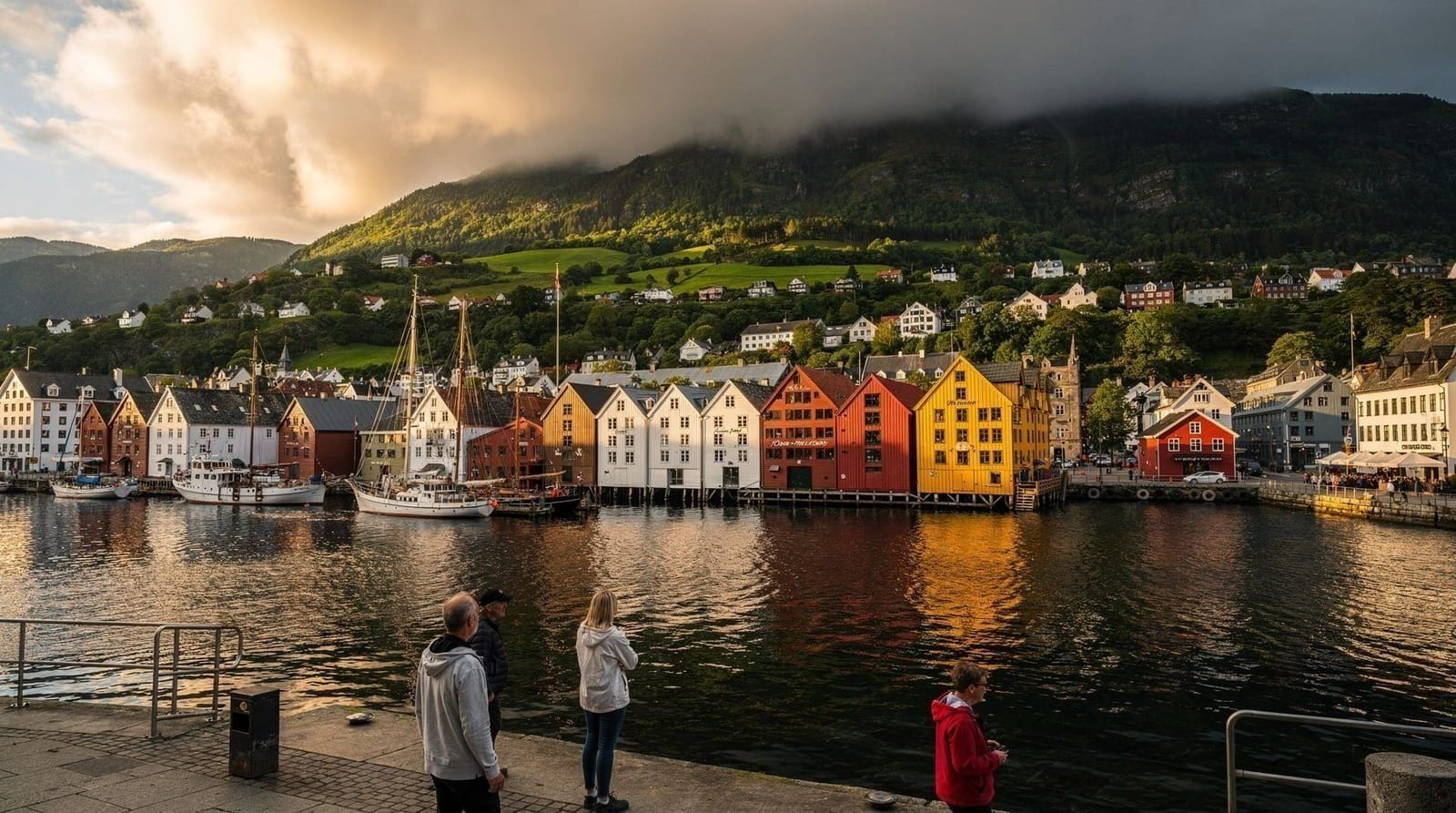
Bergen has a distinct civic identity as a Hanseatic trading city — it was the most important port in Northern Europe for two centuries (14th–16th century) and that history is visible in the architecture. Locals have a particular pride in Bergen that feels different from other Norwegian cities. The expression “Bergen and the rest of Norway” reflects a half-joking sense of separateness.
Oslo is the capital, with all that implies: more cosmopolitan, more internationally diverse, more transactional. It is a modern Scandinavian capital that happens to be in Norway. Bergen feels more specifically itself.
Day trip variety
Bergen’s location gives it a genuinely wider spread of day-trip options for a first-time visitor. Beyond the fjord cruises, you can reach Voss for adventure sports, hike Trolltunga or Preikestolen with an early start, or visit Edvard Grieg’s Troldhaugen in under an hour. Oslo’s day trips (the ski jump at Holmenkollen, the Oslofjord islands) are pleasant but do not match Bergen’s access to genuinely dramatic landscape. See the best day trips from Bergen guide for the full list.
What Oslo does better
World-class museums
Oslo holds Norway’s most important art and cultural collections. The National Museum (Nasjonalmuseet), which reopened in a major new building in 2022, is Norway’s largest and most significant art institution — it includes Edvard Munch’s “The Scream” (the original painting, not a reproduction). Admission: NOK 200 adult.
The Munch Museum (dedicated Munch institution, Bjørvika waterfront) holds 26,000 of Munch’s works across 13 floors. Far more comprehensive than Bergen’s KODE collection, which is very good but focused on a subset of Munch’s output.
Other Oslo museums not matched in Bergen: the Viking Ship Museum (reopening in renovated building, with original Viking ships from Oseberg and Gokstad), the Fram Museum (Arctic exploration vessels), and the Norwegian Folk Museum.
Bergen’s KODE is excellent. Oslo’s museum cluster is significantly larger and deeper for culture-focused travelers.
Nightlife and food scene
Oslo is a genuine European capital city with a corresponding restaurant and nightlife scene. The Mathallen food hall in Oslo is much larger than Bergen’s equivalent; the restaurant scene covers a wider range of cuisines and price points. Oslo has neighborhoods — Grünerløkka, Aker Brygge, Tjuvholmen — with distinct character and active evenings.
Bergen has an honest and growing restaurant scene (particularly good for seafood) and a compact bar culture. It is pleasant but does not compare in scale or variety to Oslo for travelers who prioritize dining out.
Efficiency as a transport hub
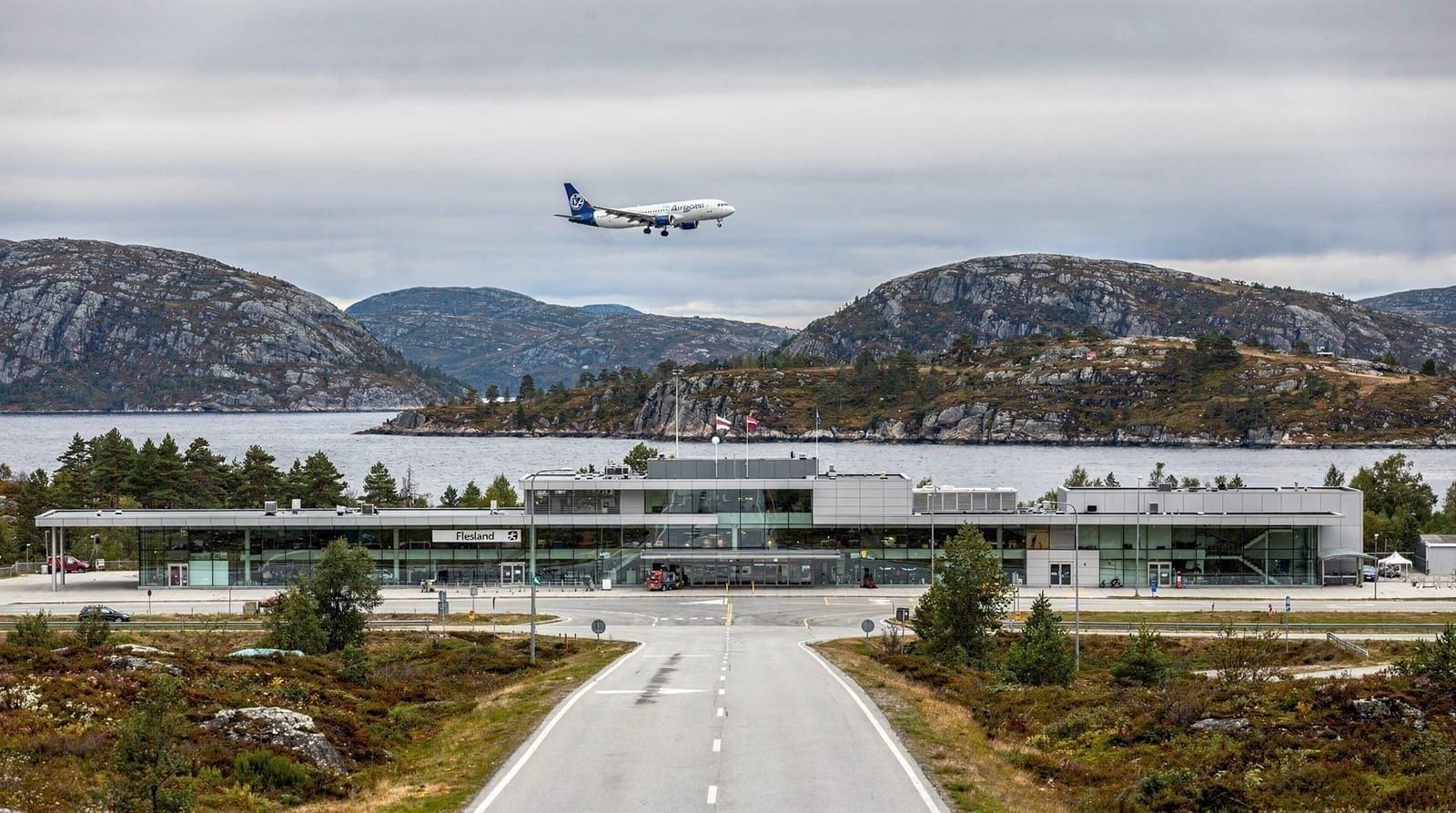
Oslo Gardermoen Airport (OSL) is Norway’s main hub — significantly more international connections than Bergen Flesland (BGO). If you are arriving from outside Europe, you almost certainly land in Oslo first. Bergen is reachable by direct flight from several European hubs, but Oslo has more frequency and more routing options.
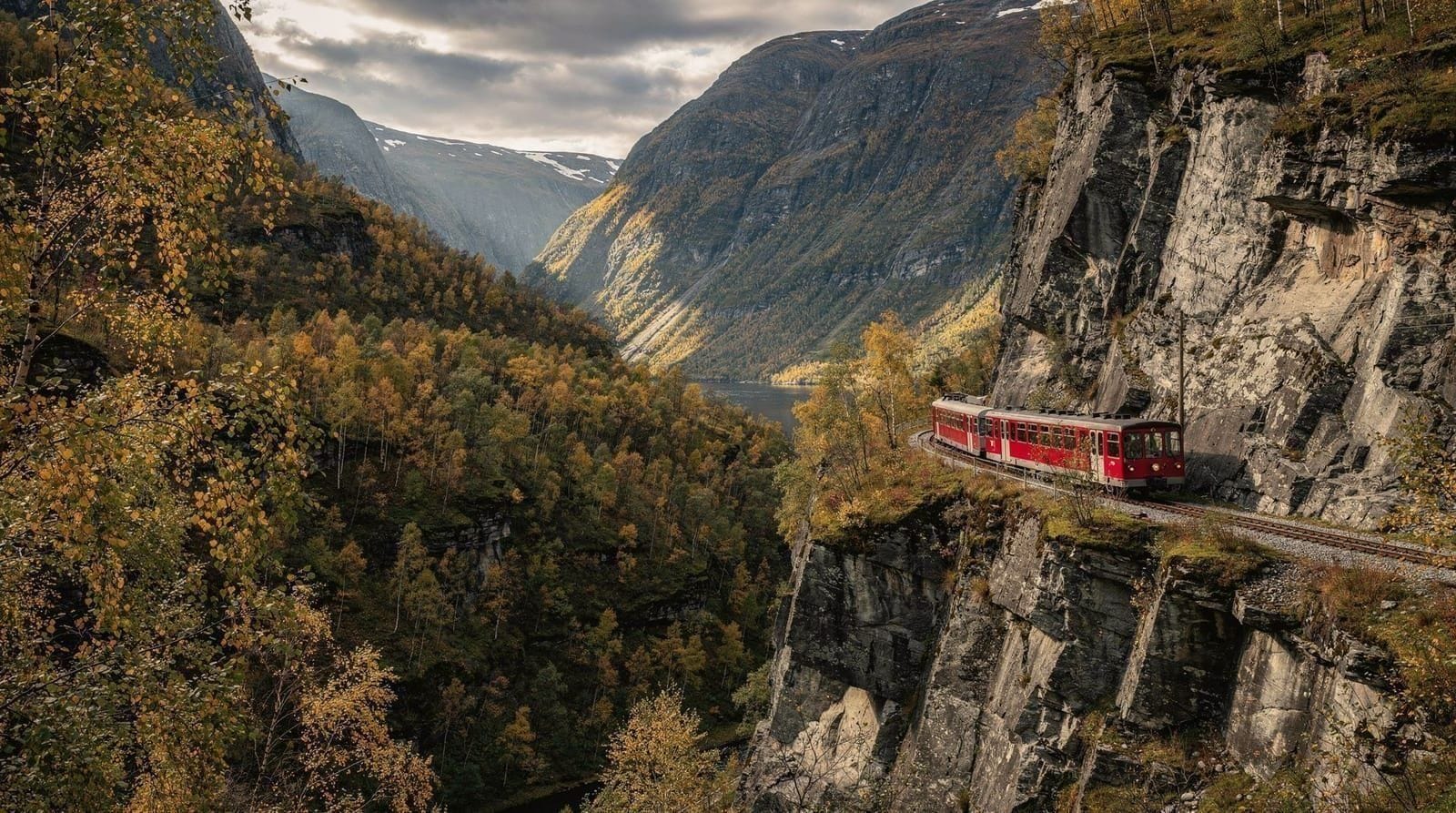
Oslo is also the starting point for Norway’s most ambitious train journey — the Bergensbanen (Bergen Line) from Oslo to Bergen. The 7-hour journey is one of the great scenic rail experiences in Europe, crossing the Hardangervidda plateau. If you want to do this journey, you start in Oslo and end in Bergen (or vice versa).
Getting to the rest of Norway
Oslo’s larger airport and central position make it the more practical hub if your trip extends beyond Bergen and the fjords — Lofoten, Tromsø, and Trondheim are all more directly connected from Oslo. If Western Norway’s fjords are your entire trip, this advantage does not matter; if you are planning a longer Norway itinerary that includes the north, starting in Oslo simplifies logistics.
Cost comparison
Both cities are expensive by European standards. The difference in cost between Bergen and Oslo is smaller than most travelers expect.
| Item | Bergen (NOK) | Oslo (NOK) |
|---|---|---|
| Hostel dorm | 350–600 | 350–650 |
| Mid-range hotel double | 1,600–2,200 | 1,800–2,600 |
| Restaurant main course | 250–420 | 280–440 |
| Beer at a bar | 95–115 | 100–120 |
| Public transport single | 40–51 | 40–42 |
| Airport transfer (public) | 51 (Bybanen) | 220 (Flytoget) / 42 (Metro) |
Oslo is marginally more expensive, particularly for accommodation, but not dramatically so. The biggest practical cost difference is the airport transfer: Oslo’s Flytoget airport express (NOK 220) is significantly more expensive than Bergen’s Bybanen (NOK 51). The metro from Oslo Airport to the center is NOK 42, nearly equivalent to Bergen’s Bybanen.
Both cities are expensive. Do not choose one over the other for budget reasons — you will not save significantly.
Weather
Bergen is wetter. That is the simple truth. With ~230 rainy days per year, Bergen sees significantly more precipitation than Oslo. Oslo has more defined seasons: cold snowy winters, genuinely warm summers (mid-June–August regularly reaches 25°C+), and dry continental weather in spring and autumn.
Bergen is milder in winter (the coast moderates temperature) but rarely dry. Oslo is colder in winter but can be genuinely sunny and warm in summer.
If weather is a primary concern: Oslo wins for summer sunshine probability. Bergen is beautiful in any weather if you are prepared for it.
Which city for a first visit to Norway?
Choose Bergen if:
- Fjords are your primary reason for visiting Norway
- You want easy, no-logistics fjord access from your base
- You prefer a compact, walkable city with a distinct character
- You plan to do Norway in a Nutshell, Nærøyfjord, Hardangerfjord, or Flåm Railway
- You are visiting for 3–5 days focused on natural scenery
Choose Oslo if:
- Museums and cultural institutions are your primary interest
- You want to see The Scream, Viking ships, and Norway’s main art collections
- You prefer a larger, more cosmopolitan city
- You are interested in Norwegian contemporary life, design, and food culture
- You want better nightlife options
Do both if:
- You have 7–10 days in Norway
- Start Oslo (2–3 days, museums, Vigeland Park, architecture)
- Then take the Bergen Line train to Bergen (7 hours, scenic, do it in daylight)
- Spend 3–4 days in Bergen with fjord trips
The Oslo–Bergen train is one of the best things to do in Norway and makes visiting both cities natural rather than redundant. See getting to Bergen guide for train booking details.
Making Bergen count if you only have a few days
If Bergen wins your decision, do not squeeze it into a rushed single day. The city rewards at least 2 days, and a 5-day Bergen-and-fjords itinerary is the realistic minimum to see both the city and a proper fjord excursion without rushing either. First-timers consistently underestimate how much a fjord day actually takes — a Nærøyfjord circuit via the Norway in a Nutshell route is a full 10–14 hour day on its own.
See a one-day Bergen-and-fjord combination tourThe Bergen–Oslo railway crosses the Hardangervidda in seven hours and is itself one of the reasons to make the journey rather than fly: a self-guided trip from Bergen to Oslo with a Sognefjord cruise turns the transfer into the sightseeing.
Frequently asked questions about Bergen vs Oslo
Is Bergen or Oslo better for a 3-day trip?
For 3 days, Bergen wins for fjord-focused visitors — the city is compact, manageable, and offers excellent fjord day trip options. Oslo requires 3 days just to see its major museums thoroughly. If your priority is fjords and Norwegian landscape, Bergen is the better 3-day base.
Which city is safer?
Both are among the safest cities in Europe by any measure. Petty crime (pickpocketing) is more prevalent in Oslo’s T-bane stations and central pedestrian areas. Bergen sees less petty crime in the tourist center. Neither city presents meaningful safety concerns for normal travel.
Can I visit both Bergen and Oslo in one week?
Yes, comfortably. A realistic one-week Norway itinerary: fly into Oslo (day 1), 2 days Oslo, take the Bergen Line train day 4, 3 days Bergen with fjord trip, fly home from Bergen. Or reverse. Allow time for the train journey (7 hours), which is itself an experience worth planning around.
Is the Flåm Railway more accessible from Bergen or Oslo?
Bergen is significantly closer and more convenient. From Bergen: train to Myrdal (2h 10min) then Flåm Railway (55min). From Oslo: Bergen Line train to Myrdal (5+ hours) then Flåm Railway — a very long day. Bergen is the natural base for the Norway in a Nutshell circuit.
Which city has better seafood?
Bergen wins on immediate, accessible seafood — the fish market (Fisketorget), the Mathallen indoor market, and multiple harbor-front seafood restaurants serve fresh fjord and coastal produce. Oslo has excellent seafood restaurants (particularly in Aker Brygge and Tjuvholmen) but Bergen’s geographic position means the product is more immediate and the culture more embedded.
Is Bergen worth visiting without doing fjords?
Yes. The city itself — Bryggen, Fløibanen, KODE, Bergenhus Fortress, the fish market, and the residential Nordnes neighborhood — is a full 2-day itinerary without any fjord excursion. The honest answer is that most visitors come for the fjords, and Bergen is the ideal base for them; but the city is worthwhile independently.
How do I get from Bergen to Oslo?
By train (Bergen Line, Bergensbanen): 7 hours, NOK 199–700 depending on advance booking. Scenic, comfortable, highly recommended. By plane: 1 hour, NOK 400–1,200 depending on airline and timing. Widerøe and SAS operate the route. Norwegian has suspended the route at various times — check current availability. By car: 7–8 hours (480 km), includes at least one car ferry crossing.
Should I fly into Bergen or Oslo first?
If Norway is your only stop, fly into whichever city has better connections from your home airport, since both are well served internationally. If you are combining Norway with other Scandinavian destinations, Oslo often has more flight options. Either way, using the Bergen Line train for the internal leg (rather than a second flight) turns the transfer into a highlight instead of dead time.
Is Bergen or Oslo better for families with kids?
Both work well. Oslo has more dedicated family attractions (Kon-Tiki Museum, Vigeland Park’s open space, the Fram Museum’s ship you can board). Bergen’s compactness is easier logistically with young children, and the aquarium and Fløibanen funicular are reliable kid-pleasers. Neither city presents particular difficulties for family travel.